Crypto Traders Tax India: What Every Indian Investor Needs to Know
When dealing with Crypto Traders Tax India, the tax obligations Indian residents face when buying, selling, or swapping digital assets, the first thing to sort out is Capital Gains Tax, the tax on profit from selling assets, charged at 15% for short‑term and 10% for long‑term crypto holdings. India treats crypto as a capital asset, so every time you convert a token into fiat or another token you generate a taxable event. The key is to track the holding period: under 36 months counts as short‑term, over that as long‑term. Short‑term gains are added to your regular income and taxed at your slab rate, while long‑term gains enjoy a flat 10% (without indexation). crypto traders tax India becomes straightforward once you know which bucket each trade falls into. Most traders use spreadsheets or dedicated crypto tax software to calculate total profit, deduct transaction fees, and apply the correct rate. Remember, the Income Tax Department can cross‑check your bank statements against exchange reports, so accurate record‑keeping is not optional—it’s mandatory.
GST, Exchange Reporting, and the Compliance Chain
Beyond capital gains, Indian crypto activity is also subject to GST, Goods and Services Tax applied on services rendered by crypto exchanges, typically at 18%. While GST is technically a consumption tax, exchanges collect and remit it on every trade, and they must issue a GST invoice to the user. This means every buying or selling transaction carries an extra cost that shows up in your statements. Crypto Exchanges, platforms where Indian users trade digital assets, required to file TDS returns and share Form 26AS data with the tax department play a crucial role in the reporting loop. From April 2022 onward, many exchanges began deducting TDS at 1% on each transaction and reporting it to the government. This data appears in your Form 26AS, making it easier for you to reconcile your tax liability. However, you still need to add the GST component and any other fees before calculating the net profit. Ignoring GST or the TDS information can lead to under‑reporting, which the tax authorities treat seriously.
The final piece of the puzzle is the filing process under the Indian Income Tax Act. You must disclose crypto gains in Schedule CG of your ITR, list total short‑term and long‑term profits, and include GST paid as part of your expense claim. The deadline for filing the previous financial year’s returns is usually July 31st, but extensions are announced each year. If you miss the deadline, you’ll face penalties and interest on the unpaid tax. Many traders opt for a professional chartered accountant or a reliable crypto‑tax tool that can auto‑populate the Schedule CG, generate a summary of GST paid, and even import TDS data from Form 26AS. The goal is to turn a potentially confusing compliance maze into a clear, step‑by‑step workflow. Below you’ll find articles that break down each element—exchange reviews, detailed GST guides, capital‑gains calculations, and real‑world filing tips—so you can stay compliant without spending hours on spreadsheets.
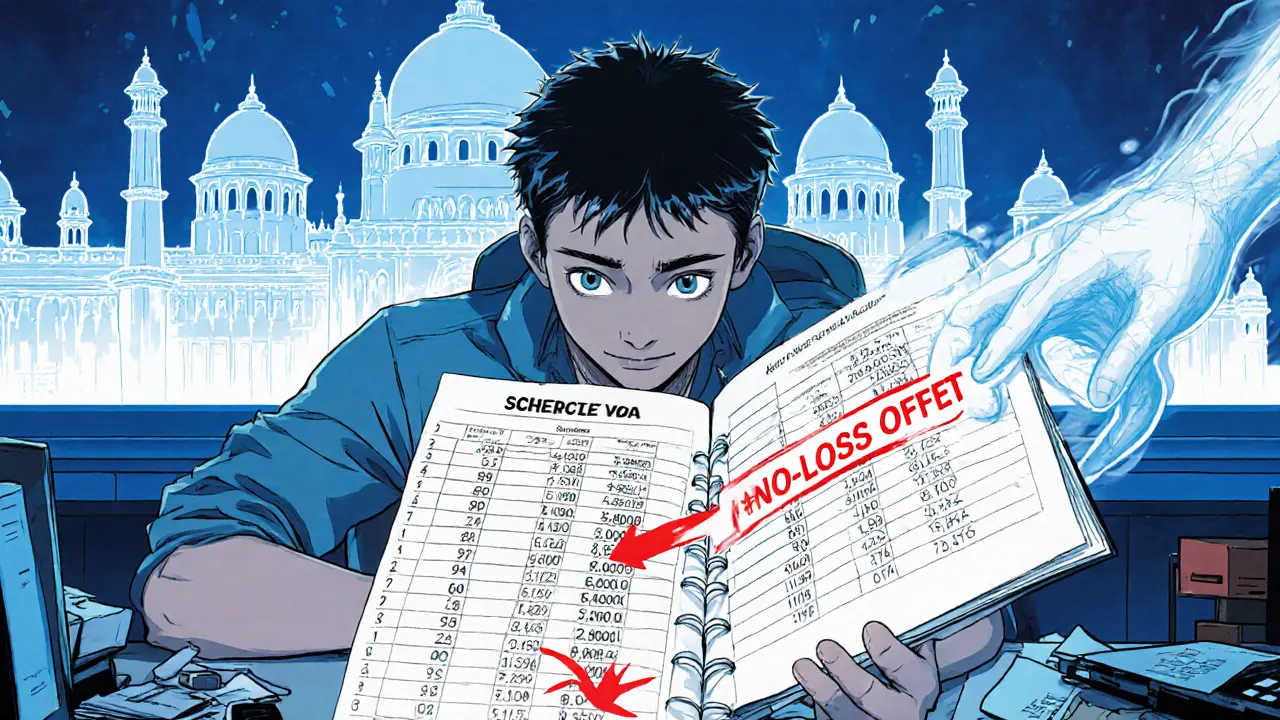
India's No‑Loss Offset Rule: How It Impacts Crypto Traders
Explore how India's no‑loss offset rule and flat 30% crypto tax affect traders, compliance, and strategies to mitigate the impact.