Dead Crypto – The Realities of Failed Coins and Projects
When exploring dead crypto, coins or tokens that have lost liquidity, community backing, and practical utility, rendering them effectively defunct. Also known as defunct cryptocurrency, it often signals deeper market flaws.
One common symptom is a zombie token, a token with no active development, negligible trading volume, and a flat or negative price trajectory. Zombie tokens usually appear after an exchange shutdown, the abrupt closure of a crypto exchange that removes trading pairs and freezes user assets. When an exchange disappears, any coin listed only there can become inaccessible, pushing it into dead status. Add a fake airdrop scam, a fraudulent giveaway that tricks users into handing over private keys or paying fees and you have a recipe for rapid project death. Finally, a crypto tax exemption, a legal provision that reduces or eliminates tax on crypto gains can influence whether investors hold onto a struggling token or dump it, accelerating its demise. In short, dead crypto encompasses zombie tokens, often triggered by exchange shutdowns, and can be hastened by airdrop scams or tax‑driven sell‑offs.
How to Spot a Project That’s Already Dead
Start with the basics: check trading volume on major DEXs and CEXs. If daily volume is under a few hundred dollars, the token is likely a zombie. Look at the development timeline – a GitHub repo with zero commits for six months or more is a red flag. Social media activity matters too; a Discord server with only bots and no recent moderator messages usually means the community has abandoned the project. We saw this with The Currency Analytics (TCAT), which multiple analysts called a zombie token after its price flat‑lined and its roadmap stalled. A real‑world case of exchange shutdown is the GDAC platform: after a 2023 security breach, the exchange halted operations, leaving users unable to trade their listed tokens, effectively turning many of them into dead crypto. Meanwhile, the Bird Finance “CMC×BIRD” airdrop turned out to be a scam; the promised tokens never existed, and the hype dragged attention away from legitimate projects, leaving Bird Finance’s token with almost no liquidity. These examples illustrate the three‑step checklist: volume, development, and community health. When any of these pillars collapse, the token often slides into dead status.
Why does this matter to you? Knowing the signs helps you avoid wasted capital, protects you from tax pitfalls, and keeps your portfolio lean. Below you’ll find detailed guides on Germany’s 12‑month crypto tax exemption, reviews of exchanges like Kodiak V3 and Websea that explain why some platforms survive while others shut down, and deep dives into airdrop realities such as the MurAll PAINT and BNC giveaways. Each article gives you actionable steps—how to verify a token’s activity, what red flags to watch for, and how to report scams—so you can stay ahead of dead crypto and keep your assets in healthy projects.
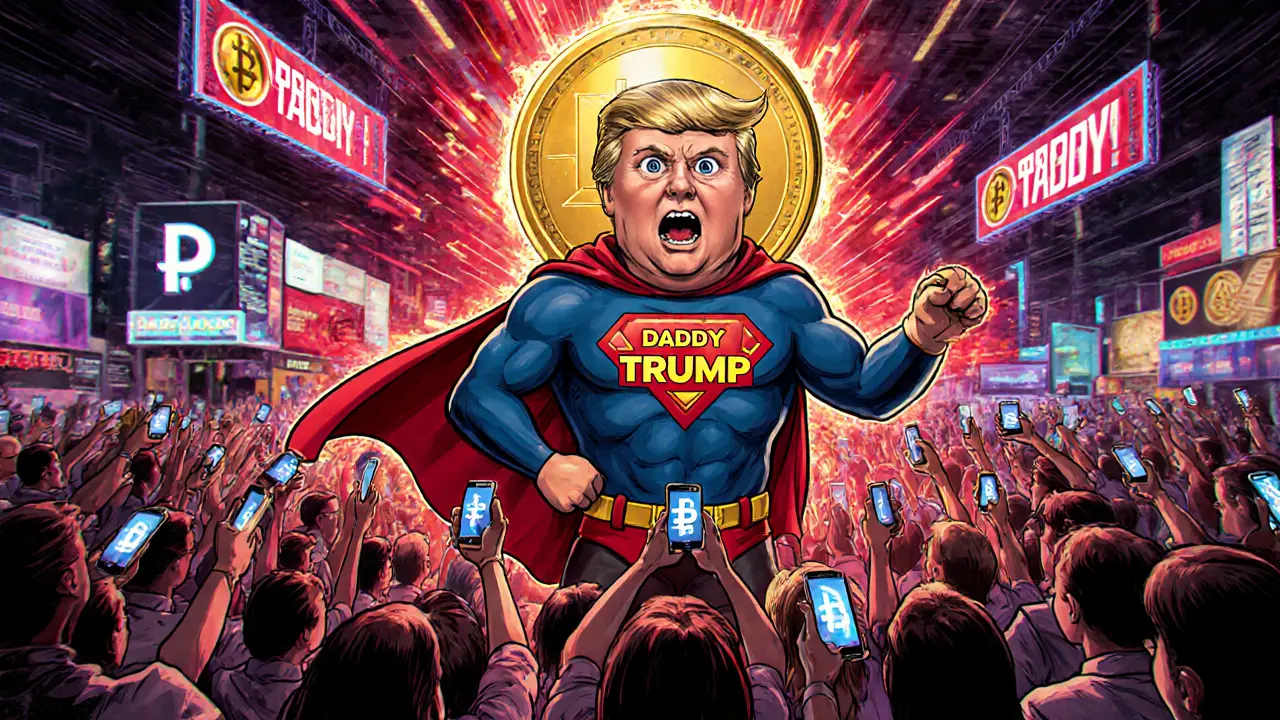
DADDY TRUMP (TADDY) Coin Explained: Origin, Tech, and Why It’s a Dead Meme Token
A deep dive into DADDY TRUMP (TADDY) crypto: its origin, Solana tech, market performance, community status, and why it’s considered a dead meme coin.