NAMA Protocol vs Namada (NAM) Airdrop: Critical Details & Eligibility Guide
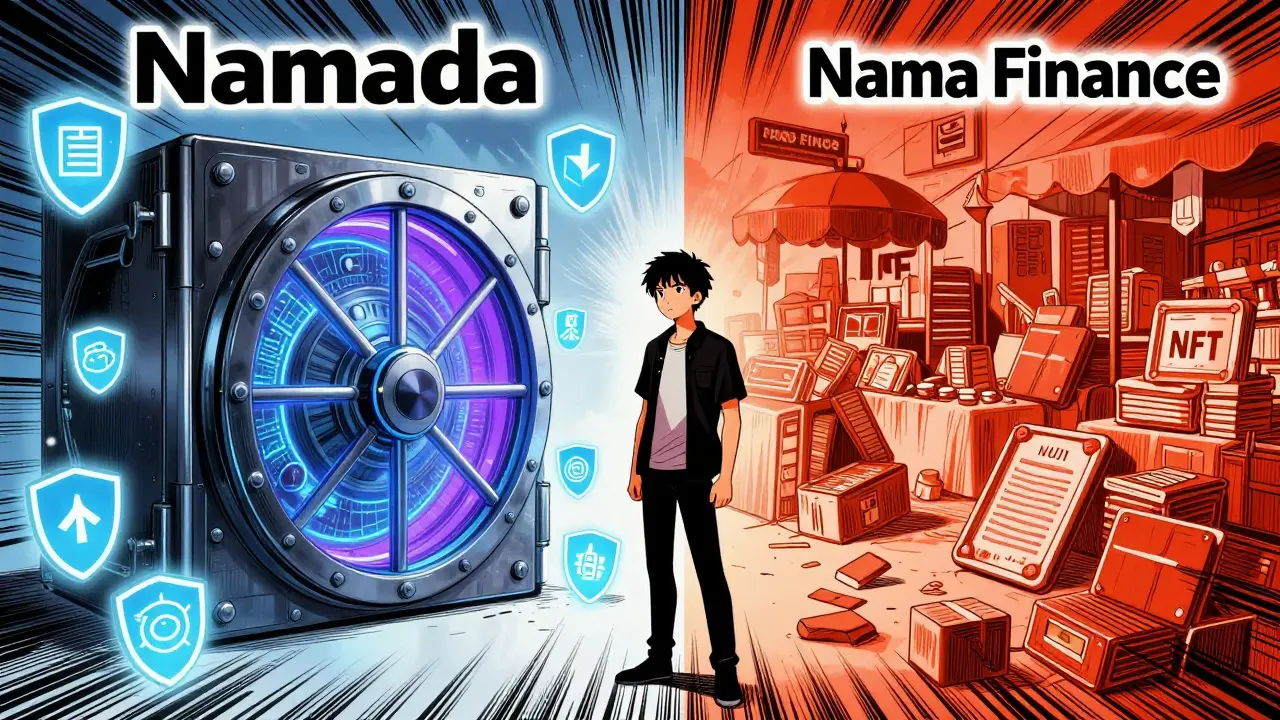
You’ve likely seen the buzz about "NAMA" airdrops flooding social media feeds. It’s easy to get swept up in the hype, especially when two blockchain projects share nearly identical names but operate in completely different corners of the crypto world. Here is the hard truth that many guides miss: **Nama Finance** and **Namada** are not the same project. Confusing them could cost you time, money, or worse-your private keys.
If you are looking for the massive retroactive airdrop news circulating online, you are probably thinking of Namada, which uses the NAM token. This project launched a significant distribution program for privacy-focused contributors. On the other hand, Nama Finance operates a distinct NFT liquidity protocol where users earn tokens through lending and borrowing activities rather than large-scale public drops. Understanding this difference is your first step toward protecting your assets and making informed decisions.
The Namada (NAM) Airdrop: What Actually Happened?
Let’s clear up the biggest source of confusion. The major airdrop activity people discuss belongs to Namada, a privacy-centric blockchain built by the Anoma Foundation. Namada isn’t just another Layer-1 chain; it positions itself as a shielded asset hub designed to protect user privacy across multiple blockchains. Their native token, NAM, powers staking, governance, and transaction fees on the network.
In late 2024, Namada executed a Retroactive Public Goods Funding (RPGF) airdrop. This wasn’t a random giveaway. The team distributed 65 million NAM tokens, which accounted for 6.5% of the total supply. The goal was to reward early supporters who contributed to open-source privacy technologies, zero-knowledge proofs, and the broader interchain ecosystem. Christopher Goes, co-founder of Namada, emphasized that this move was about returning ownership to the creators and supporters of these critical digital goods.
| Attribute | Details |
|---|---|
| Token Distributed | NAM (Namada) |
| Total Amount | 65 Million Tokens |
| Supply Percentage | 6.5% |
| Claim Deadline | December 28, 2024 |
| Primary Goal | Reward Open-Source Contributors |
It is crucial to note that the claiming window for this specific RPGF drop closed on December 28, 2024. If you missed that date, the opportunity to claim from that particular pool has passed. However, understanding how it worked helps you spot future opportunities or recognize scams pretending to be related to it.
Who Was Eligible for the Namada Drop?
Namada didn’t just pick wallets at random. They targeted specific communities that aligned with their mission of privacy and decentralization. If you were wondering if you qualified, here is who made the cut:
- Open-Source Developers: Contributors to Zcash, Rust programming language, and Zero-Knowledge Proof (ZKP) libraries were heavily prioritized.
- Cosmos Ecosystem Stakers: Users who staked ATOM or OSMO tokens worth at least $100 before November 1 were part of the "shielded community" eligible for rewards.
- Gitcoin Donors: Those who donated to ZK Tech and crypto advocacy groups via Gitcoin received allocations.
- BadKid NFT Holders: Holding at least one BadKid NFT by November 14 granted eligibility. Reports suggest these holders claimed values ranging from $200 to $300 per NFT.
- Trusted Setup Participants: Individuals who participated in the previous year’s Namada Trusted Setup ceremony were also included.
To claim, eligible users had to submit their Genesis Namada account on the official portal, rpgfdrop.namada.net. Always verify URLs carefully. Phishing sites often mimic these domains to steal credentials.

Nama Finance (NAMA): A Different Beast Entirely
Now, let’s talk about Nama Finance. This project has nothing to do with Namada’s privacy focus or its RPGF airdrop. Nama Finance is an NFT Liquidity Protocol that allows users to unlock the value locked in their non-fungible tokens.
Think of it this way: if you own a valuable Bored Ape Yacht Club (BAYC) NFT or NBA Top Shot moments, selling them means losing ownership. With Nama Finance, you can use those NFTs as collateral to borrow stablecoins like USDT, USDC, or DAI. You keep your NFT, get cash flow, and pay back the loan later. This works across multiple chains, including Ethereum, Binance Smart Chain, and Solana.
Here is why the name confusion matters: Nama Finance does not have a major public airdrop comparable to Namada’s. Instead, their NAMA token serves as a utility and incentive tool within their lending platform. Lenders earn NAMA tokens by providing liquidity to borrowing pools, potentially seeing APYs up to 35%. Borrowers might receive NAMA rewards for taking out loans against high-value collections.
| Feature | Description |
|---|---|
| Core Function | NFT-backed lending and borrowing |
| Supported Collateral | ERC721, ERC1155, Uniswap V3 LP tokens |
| Lender Rewards | Up to 35% APY + NAMA tokens |
| Borrower Costs | Interest rates starting at ~5% annually |
| Minimum Loan | $500 |
| Airdrop Status | No major public retroactive drop reported |
Market data indicates that NAMA tokens have limited trading volume and circulation compared to established assets. CoinMarketCap lists a maximum supply of 1 billion NAMA tokens, but current trading activity suggests the project is either in early stages or experiencing low market adoption. This makes it a higher-risk environment compared to the more mature Namada ecosystem.
Technical Deep Dive: Why Namada Matters
If you are interested in Namada beyond the airdrop, the technology behind it is genuinely innovative. Namada solves a major problem in blockchain: privacy doesn’t scale well. Most privacy coins struggle because they lack interoperability. Namada changes this with its Multi-Asset Shielded Pool (MASP).
MASP extends Zcash’s Sapling circuit to support any asset type. Whether you are moving fungible tokens like ATOM or non-fungible NFTs, they all share the same privacy set. This means your anonymity scales with the entire network’s usage, not just your individual transactions. It’s a game-changer for cross-chain privacy.
Under the hood, Namada uses Cubic Proof-of-Stake (CPoS). Unlike traditional Proof-of-Stake, CPoS imposes slashing penalties that grow exponentially with the number of validators involved in an attack. This discourages collusion among validators and makes coordinated attacks economically unfeasible. Plus, their zero-knowledge proof generation happens in sub-seconds on consumer devices, meaning you don’t need a supercomputer to enjoy private transactions.

Red Flags: How to Spot Scams
The similarity between "NAMA" and "Namada" is a goldmine for scammers. Here is how to stay safe:
- Check the Token Ticker: Namada uses NAM. Nama Finance uses NAMA. One extra letter changes everything.
- Verify Official Channels: Only trust announcements from verified Twitter accounts, official Discord servers, and GitHub repositories. Never click links from DMs.
- Watch for Urgency: Legitimate airdrops have clear deadlines and transparent criteria. Scams create fake urgency to make you act without thinking.
- Never Share Private Keys: No legitimate protocol will ever ask for your seed phrase or private key to "verify" eligibility.
If a site claims you can claim "NAMA Protocol airdrop" but asks you to connect your wallet and sign a suspicious transaction, disconnect immediately. It is likely draining your funds.
What Should You Do Next?
Your next steps depend on your goals. If you are a developer or contributor to privacy tech, monitor Namada’s GitHub and official announcements for future grants or incentives. The RPGF model may return for subsequent phases. If you are an NFT holder looking for liquidity, explore Nama Finance’s platform cautiously. Start with small amounts to understand the liquidation mechanics. Remember, if you fail to repay the loan plus interest by the due date, your NFT gets liquidated.
For most retail investors, the best strategy is patience. Wait for official documentation. Verify contract addresses on explorers like Etherscan or Solscan. And always remember: in crypto, if something sounds too good to be true-especially when names are confusing-it probably is.
Is there a NAMA Protocol airdrop available right now?
There is no major public airdrop for Nama Finance (NAMA). The widespread airdrop news refers to Namada (NAM), whose RPGF claiming period ended on December 28, 2024. Be cautious of sites claiming otherwise, as they may be scams.
What is the difference between NAMA and NAM tokens?
NAM is the native token of Namada, a privacy-focused blockchain. NAMA is the utility token of Nama Finance, an NFT lending protocol. They belong to entirely different projects with different use cases and ecosystems.
Can I still claim the Namada airdrop?
No, the deadline for the Namada RPGF airdrop was December 28, 2024. Any website currently asking you to connect your wallet to claim this specific drop is likely a phishing attempt.
How does Nama Finance generate revenue?
Nama Finance earns through interest rate spreads on loans. Borrowers pay interest (starting around 5%) to lenders who provide stablecoin liquidity. The protocol takes a portion of this spread to sustain operations and reward NAMA token holders.
Is Namada secure for storing private assets?
Namada employs advanced security measures like Cubic Proof-of-Stake and Multi-Asset Shielded Pools. Its zero-knowledge proof technology ensures transaction privacy while maintaining network integrity. However, always use hardware wallets and verify smart contracts before interacting with any new protocol.