Central Bank of Myanmar crypto: What’s Real and What’s Not
When people ask about Central Bank of Myanmar crypto, the official stance of Myanmar’s monetary authority on digital currencies. Also known as Myanmar central bank cryptocurrency policy, it refers to whether the country’s government has launched, endorsed, or regulated any digital currency. The answer is simple: there is no such thing. The Central Bank of Myanmar has never issued a cryptocurrency, never supported one, and has actively blocked any attempt to use crypto as legal tender. This isn’t a gray area—it’s a hard no.
What you’re seeing online are scams. Fake websites, Telegram groups, and YouTube videos claim the Central Bank of Myanmar is launching a digital kyat or partnering with crypto projects. None of it’s real. The bank has publicly stated multiple times that crypto trading is illegal under Myanmar’s 2013 Payment Systems Law. No licenses are being issued. No pilot programs exist. No CBDC (Central Bank Digital Currency) is in development. The only thing moving in Myanmar’s crypto space is fraud—people pretending to be officials, selling fake tokens, or asking for fees to "register" for a non-existent airdrop.
Compare this to countries like Nigeria or India, where central banks at least engage with the topic—even if they ban crypto. Myanmar doesn’t even pretend to be open. It’s one of the most restrictive regimes in Asia when it comes to digital finance. If you’re a local, using crypto means risking arrest. If you’re an outsider, any project claiming ties to the Central Bank of Myanmar is a red flag. No reputable exchange lists a "CBM" token. No blockchain explorer shows official transactions. No government domain (.gov.mm) references crypto. That’s not oversight—that’s silence.
Why does this matter? Because people are losing money. Scammers use the name "Central Bank of Myanmar crypto" to make their schemes look official. They create fake websites with government logos, copy-paste press releases from 2017, and pretend to be insiders. They even use fake news sites to make it seem like the bank changed its mind. But the bank hasn’t changed its mind. It doesn’t have a website that updates. It doesn’t tweet. It doesn’t hold press conferences. And it definitely doesn’t endorse crypto.
So what’s actually happening on the ground? Some people in Myanmar still use crypto privately—mostly Bitcoin and USDT—to send money across borders or avoid inflation. But they do it in secret. No banks support it. No ATMs accept it. No merchants advertise it. And if you get caught, you’re on your own. There’s no legal protection. No recourse. No help from authorities.
What you’ll find in the posts below aren’t guides on how to use Myanmar’s crypto system—because it doesn’t exist. Instead, you’ll see real cases of scams pretending to be tied to the Central Bank of Myanmar. You’ll see how fake airdrops, fake exchanges, and fake token launches use this name to trick people. You’ll learn how to spot the lies, what real crypto regulation looks like elsewhere, and why you should walk away from anything that claims the Myanmar government is behind it. This isn’t about missing out on opportunity. It’s about avoiding a trap.
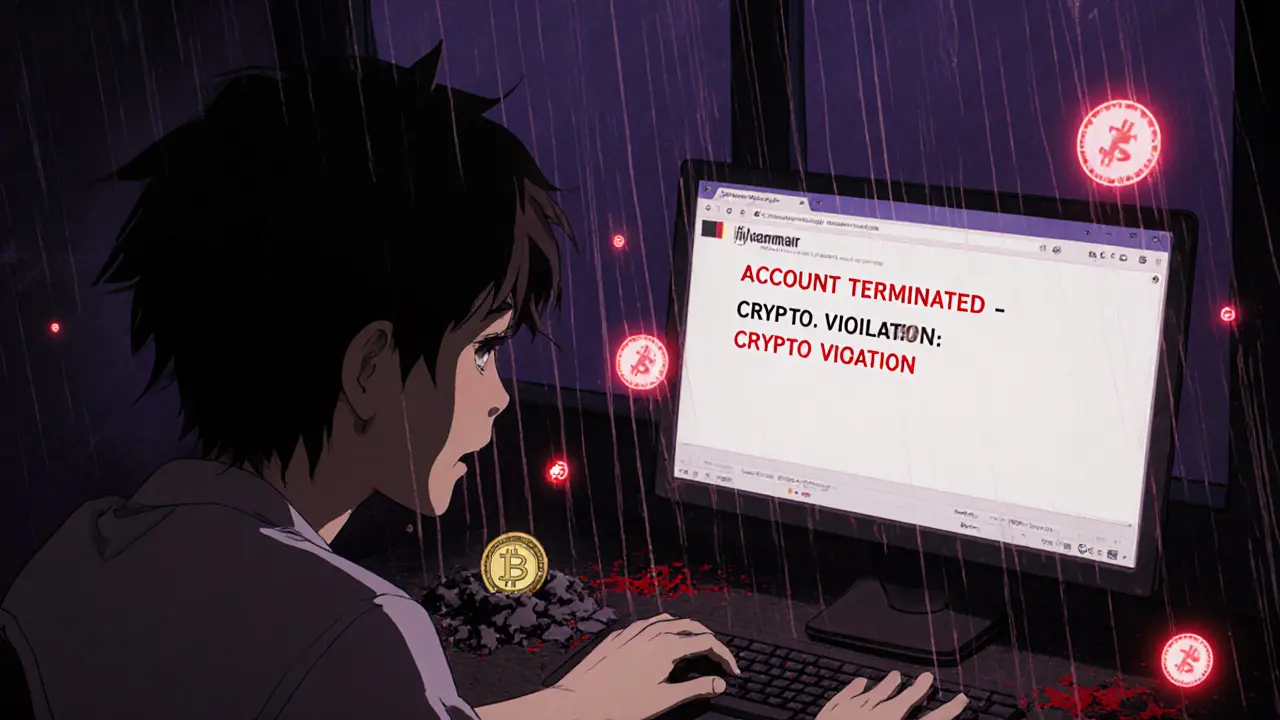
Account Closure Penalties for Crypto in Myanmar: What Happens If You Trade Bitcoin or USDT
Myanmar imposes severe penalties for crypto use, including instant bank account closures, fines, and jail time. USDT, Bitcoin, and mining are all banned. Learn what happens if you trade crypto there in 2025.

Account Closure Penalties for Crypto in Myanmar: What Happens If You Trade Bitcoin or USDT
Myanmar enforces one of the world's strictest crypto bans, with bank account closures, fines, and jail time for trading Bitcoin or USDT. Learn how the Central Bank of Myanmar punishes users and why underground crypto still thrives despite the risks.