Account Closure Penalties for Crypto in Myanmar: What Happens If You Trade Bitcoin or USDT
Crypto Risk Assessment Tool
Assess Your Risk Level
Based on your cryptocurrency activities in Myanmar, this tool calculates your risk of account closure, fines, or legal consequences.
Risk Assessment Results
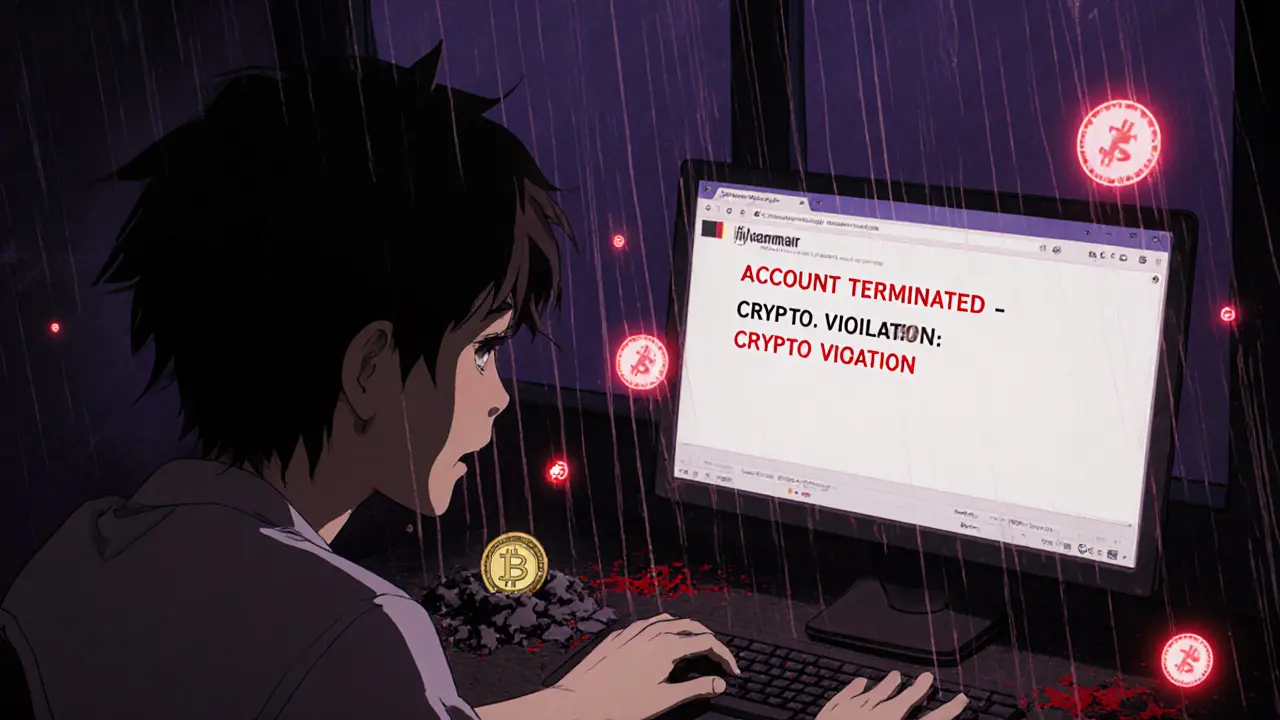
If you're holding Bitcoin, Ethereum, or USDT in Myanmar, your bank account could be shut down tomorrow - no warning, no appeal, no second chance. This isn't hypothetical. Since May 2024, the Central Bank of Myanmar (CBM) has been actively closing accounts linked to cryptocurrency transactions. It’s not just about losing access to your money. You could also face jail time.
Why Myanmar Banned Crypto - And Why It’s Still Enforcing It
Myanmar’s government doesn’t just dislike cryptocurrency. It sees it as a direct threat to its control over the economy. After the 2021 military coup, the kyat collapsed. Inflation soared. People lost faith in the official currency. Suddenly, digital assets like Bitcoin and Tether (USDT) became lifelines - for sending money to family abroad, buying food, or funding resistance efforts. The Central Bank of Myanmar responded by doubling down on control. Under the Central Bank of Myanmar Law the sole legal authority to issue currency in Myanmar, the CBM declared all cryptocurrency activity illegal. Trading, mining, exchanging, even promoting crypto - all violations. The law doesn’t just target big players. It goes after anyone using Facebook, Telegram, or a personal wallet to move digital money.What Happens When Your Account Gets Closed
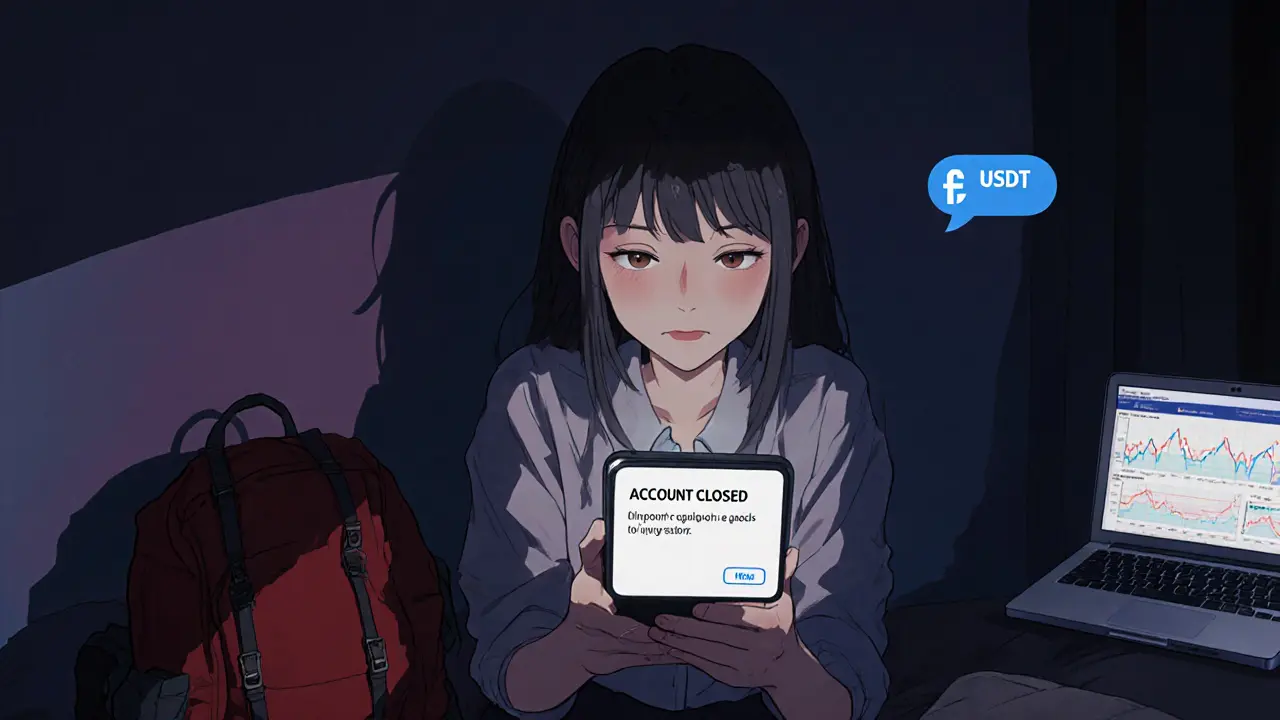
The CBM doesn’t send letters. They don’t call. They just freeze your account - and sometimes permanently close it. You wake up one day and your savings, salary deposits, even your business payments are gone. No explanation. No timeline for restoration. This isn’t rare. In 2024, at least 127 bank accounts were confirmed closed across Yangon, Mandalay, and Naypyidaw for suspected crypto activity. Most were linked to USDT transactions on the Tron network. People were using it to send money to Thailand or Singapore because the kyat was too unstable. The CBM called it “illegal currency conversion.” But account closure is only the start. The Anti-Money Laundering Law criminalizes unregulated financial flows, including crypto transfers allows authorities to pursue criminal charges. That means fines up to 10 million kyat (around $4,500 USD) or prison sentences of up to three years - or both.Who’s Getting Targeted - And How
The CBM isn’t fishing blindly. They’re using digital footprints to find people:- Facebook pages selling crypto or offering wallet addresses
- Telegram groups coordinating USDT trades
- Bank transfers matching known crypto exchange patterns (e.g., small, frequent deposits from overseas wallets)
- Use of Perfect Money or other unregulated digital payment systems
What Cryptocurrencies Are Banned?
The CBM doesn’t name every coin. But their public warnings specifically mention:- Bitcoin (BTC) the most widely traded crypto in Myanmar’s underground market
- Ethereum (ETH) used for smart contracts and DeFi access
- Litecoin (LTC) popular for faster, cheaper transfers
- Tether (USDT) the dominant stablecoin for remittances and daily transactions
- Perfect Money (PM) a long-standing unregulated digital currency platform

The Underground Economy Keeps Growing
Despite the risks, crypto use hasn’t stopped - it’s just gone deeper underground. Between 2024 and 2025, peer-to-peer trading on Telegram exploded. Traders now use burner phones, encrypted chats, and cash meetups to avoid detection. Some even use fake IDs to open bank accounts, then move crypto through them before the CBM catches on. Mining hasn’t disappeared either. Rural areas with cheap electricity - like Shan State - still host hidden mining farms. They run on diesel generators, hide equipment in bamboo sheds, and pay local officials to look the other way. But when the CBM raids one, the penalties are brutal: equipment seized, people arrested, homes searched.The National Unity Government’s Contradictory Move
Here’s the twist: while the military government bans crypto, the opposition National Unity Government (NUG) a shadow government controlling parts of Myanmar declared USDT legal tender in December 2021. In areas under NUG control, people use USDT to pay teachers, doctors, and even soldiers. It’s the only currency that hasn’t collapsed. This creates a dangerous gray zone. If you’re in a NUG-held village and receive USDT, you’re following one set of rules. But if you transfer that same USDT to a bank account in Yangon, you’re breaking the law. There’s no safe way to move between the two systems.What About the New Digital Kyat?
On June 24, 2025, the CBM formed the Central Committee for the Issuance of Central Bank Digital Currency a government body to develop a state-controlled digital currency. This isn’t about innovation. It’s about control. The digital kyat will be fully traceable. Every transaction monitored. No anonymity. No cross-border freedom. The message is clear: if you want digital money, it has to be ours - and ours alone. Meanwhile, international crypto exchanges like Binance and Kraken have stopped serving Myanmar users. Local exchanges vanished years ago. The only way to trade now is through unregulated P2P platforms - and that’s where the risk lives.
Who Should Avoid Crypto in Myanmar?
If you fall into any of these categories, don’t touch crypto:- Anyone with a bank account tied to their real ID
- Government employees or military-connected families
- Business owners who rely on formal banking
- People who use Facebook or Instagram for financial communication
- Anyone who’s ever sent money overseas using digital wallets
What Can You Do Instead?
If you need to move money out of Myanmar, avoid crypto entirely. Use legal channels:- Formal remittance services like Western Union or MoneyGram (if available)
- Bank transfers through approved foreign exchange agents
- Physical cash carried across borders (risky, but less monitored than digital)
Final Reality Check
Crypto in Myanmar isn’t a financial opportunity. It’s a legal gamble with life-altering stakes. The CBM isn’t bluffing. They’ve closed accounts. They’ve arrested people. They’ve seized equipment. And they’re just getting started. The digital kyat is coming. When it does, the last open door for financial freedom will shut. Right now, the underground economy keeps running. But every transaction is a roll of the dice. And the house always wins.Can I get my bank account back after it’s closed for crypto use?
No. Once the Central Bank of Myanmar closes an account for crypto-related activity, it is permanently terminated. There is no appeals process, no reinstatement option, and no official explanation given. Victims are left with no access to their funds and no legal recourse.
Is it safe to use USDT in Myanmar for remittances?
No. While USDT is widely used for sending money abroad, the CBM actively tracks Tron network transactions linked to Myanmar bank accounts. Using USDT for remittances is one of the top reasons accounts are closed and individuals are prosecuted under anti-money laundering laws.
Can I mine Bitcoin legally in Myanmar?
No. All forms of cryptocurrency mining are illegal under Myanmar law. Mining rigs have been seized during raids, and individuals have been detained for operating them. Even if you use private power or hide equipment, the risk of discovery and criminal charges remains extremely high.
What happens if I send crypto to someone in Myanmar from overseas?
If the recipient has a bank account in Myanmar, sending crypto to them can trigger an automatic account freeze. The CBM monitors incoming transfers that match crypto wallet patterns. Even if you’re outside the country, your transaction can cause legal trouble for the person receiving it.
Are there any legal crypto exchanges in Myanmar?
No. All local crypto exchanges were shut down by 2022. International platforms like Binance and Kraken no longer serve Myanmar users. Any website claiming to offer legal trading in Myanmar is either a scam or operating illegally.
Can the National Unity Government protect me if I use crypto?
No. While the NUG declared USDT legal in areas it controls, it has no authority over banks, police, or the Central Bank of Myanmar. If you use crypto in a region controlled by the military government, you are still subject to its laws - regardless of what the NUG says.
Joy Whitenburg
November 12, 2025 AT 02:08Kylie Stavinoha
November 12, 2025 AT 21:53Raymond Day
November 14, 2025 AT 13:12Noriko Yashiro
November 16, 2025 AT 11:54James Ragin
November 18, 2025 AT 00:30Atheeth Akash
November 19, 2025 AT 09:22David Billesbach
November 20, 2025 AT 23:14FRANCIS JOHNSON
November 21, 2025 AT 04:37Michelle Elizabeth
November 21, 2025 AT 16:40Douglas Tofoli
November 23, 2025 AT 10:46Stephanie Platis
November 23, 2025 AT 23:27Ruby Gilmartin
November 25, 2025 AT 18:27Michael Brooks
November 26, 2025 AT 22:26Andy Purvis
November 28, 2025 AT 20:37Diana Dodu
November 29, 2025 AT 02:36