Crypto Sentiment: What Moves Markets and How to Read the Noise
When you hear people say crypto sentiment, the collective mood or feeling among traders and investors that influences buying and selling decisions. Also known as market psychology, it's what turns a quiet coin into a 10x mover overnight—or crashes it without warning. It’s not about whitepapers or team backgrounds. It’s about what people are talking about on Twitter, what’s trending on Reddit, and whether the crowd feels FOMO or fear. And in crypto, where prices swing on a tweet, sentiment isn’t just noise—it’s the engine.
Real crypto sentiment shows up in places you can measure: sudden spikes in Telegram group activity before an airdrop, a flood of posts about a token that’s been dead for years, or the silence that follows a project’s collapse. Look at the posts below. The GMEE airdrop didn’t die because the tech failed—it died because sentiment shifted to WATCoin. Hot Cross and Zenith Coin aren’t down because of bad code—they’re down because trust vanished. Even the failed exchanges like InfinityCoin and xFutures didn’t just lose users; they lost the belief that they’d ever recover. Sentiment isn’t guesswork. It’s the sum of every rumor, every influencer post, every scam alert, and every wallet that gets emptied.
It’s also tied to trader behavior, how individuals act under pressure, fear, or excitement when trading crypto. Why do people still chase meme coins like Lester or SWITCH, even when the data screams risk? Because sentiment overrides logic. Why did Myanmar’s crypto ban fail to stop trading? Because sentiment created underground networks faster than laws could enforce them. And why do some tokens like EMRX or AARK still have trading volume despite low liquidity? Because a small group still believes—and that’s enough to keep the price ticking.
What you’ll find here isn’t fluff about bullish charts or bearish forecasts. It’s real examples of how sentiment moves markets: the airdrops that exploded then vanished, the exchanges that died because no one trusted them, the tokens that fooled everyone with fake hype. You’ll see how sentiment drives everything—from the rise of play-to-earn games to the collapse of decentralized exchanges. No theory. No fluff. Just what happened, why it happened, and how to spot the next shift before it hits your portfolio.
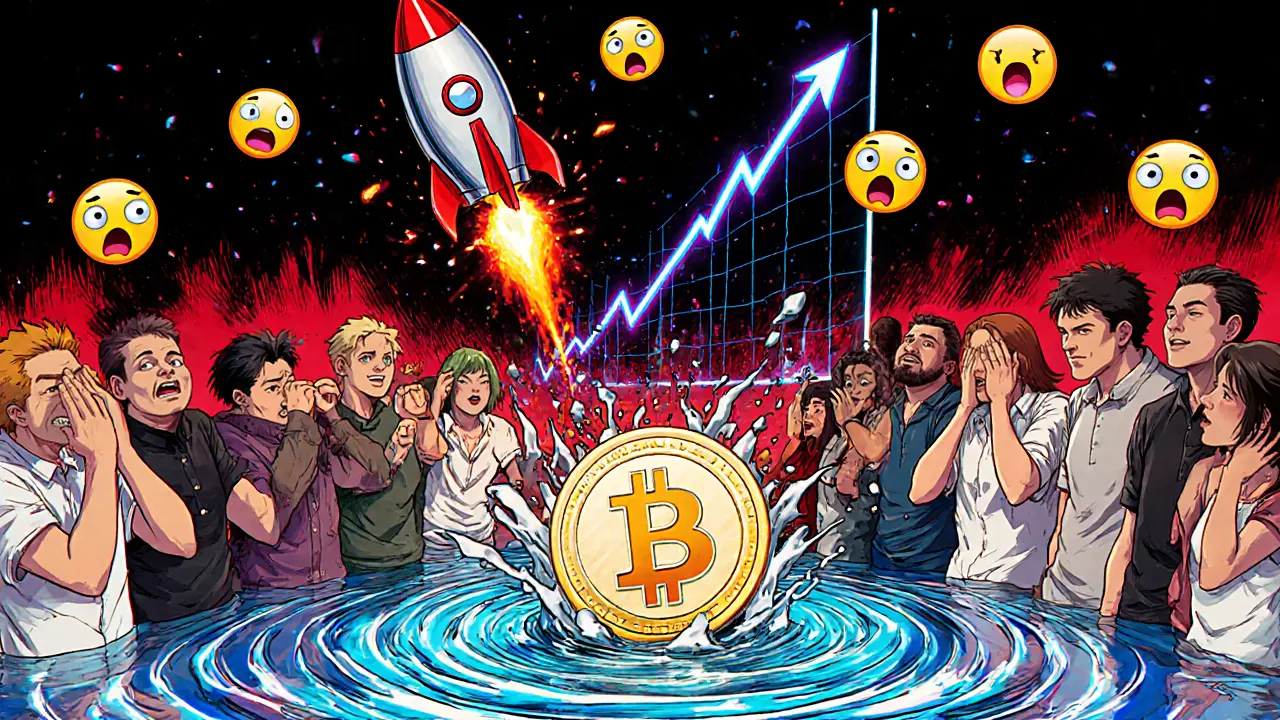
Why Are Crypto Prices So Volatile? The Real Reasons Behind the Rollercoaster
Crypto prices swing wildly because of thin liquidity, fixed supply, emotional traders, macroeconomic shifts, and algorithmic trading. Understanding these forces helps you navigate the chaos instead of being ruled by it.