Why Are Crypto Prices So Volatile? The Real Reasons Behind the Rollercoaster

Crypto Volatility Calculator
Estimate how market factors impact cryptocurrency price volatility using this calculator. Based on the article's key factors: liquidity, sentiment, macroeconomic conditions, and institutional activity.
50
Lower = less trading volume (more volatile), Higher = more liquidity (less volatile)
65
Higher = more emotional trading (more volatile)
40
Higher = more unstable economic environment (more volatile)
60
Higher = more institutional trading (can increase or decrease volatility)
Estimated Volatility
72%
Higher percentage = higher potential price swings
Bitcoin jumped $20,000 in a single week. Then it dropped just as fast. Ethereum surged 30% overnight after a single tweet. A small altcoin doubled in value because a whale bought $5 million worth. If you’ve watched crypto prices move like this, you’re not crazy. It’s not just you. Crypto volatility isn’t a glitch-it’s built into the system. And understanding why helps you stop panicking and start planning.
Liquidity Is Thin-And That Makes Prices Jump
Think of liquidity like water in a pool. In traditional markets like stocks or forex, there’s a deep ocean of buyers and sellers. You can trade millions without making a splash. Crypto? It’s more like a backyard wading pool. Even a small splash can send waves across the whole thing. In 2025, Bitcoin’s daily trading volume averaged around $25 billion. Sounds big? Compare that to Apple stock, which trades over $100 billion daily. That’s four times more. When only a fraction of the money is floating around, even modest trades shake things up. A $50 million buy order on a low-volume altcoin can spike its price 20% in minutes. Same goes for selling. There’s just not enough depth to absorb big moves without price distortion. This is why small-cap coins like Solana or Shiba Inu swing harder than Bitcoin. They have less liquidity. Even Bitcoin isn’t immune. When institutional buyers like BlackRock or Fidelity moved billions into Bitcoin ETFs in July 2025, the price jumped 13% in one month. But when those same buyers paused, the market wobbled. Thin liquidity means every shift in flow gets amplified.Supply Is Fixed-Demand Isn’t
Bitcoin has a hard cap: 21 million coins. That’s it. No more. No inflation. No central bank printing more. That scarcity sounds good, right? But it also means when demand spikes, there’s no way to increase supply to balance it out. In January 2025, Bitcoin hit $104,700. By April, it dropped to $76,500. Why? Not because Bitcoin became less scarce. Its Stock-to-Flow ratio-the measure of how rare it is-actually rose from 97 to 117. That should’ve meant higher prices. But external forces like regulatory fears and macroeconomic uncertainty pushed people to sell. The supply didn’t change. Demand did. And without supply to soak up the shock, the price crashed. This is why whales matter. A single wallet holding 10,000 BTC can move the needle. If that whale sells 500 BTC all at once, and there aren’t enough buyers ready, the price tanks. Same if they buy. The market can’t respond fast enough. That’s not manipulation-it’s structural. The system isn’t built for large-scale, smooth trading yet.Sentiment Moves Faster Than Facts
Crypto isn’t priced like a bond or a utility company. It’s priced like a rumor. And rumors spread fast. In early 2025, a well-known crypto influencer posted a video saying “Bitcoin is going to $150,000 by year-end.” Within hours, trading volume spiked. Thousands of retail investors rushed in. FOMO-fear of missing out-took over. Prices climbed. Then, a week later, another influencer posted a chart showing overbought conditions. Panic set in. The same people who bought in a week ago started selling. Price dropped 12% in 48 hours. This isn’t rare. It’s normal. Crypto markets are mostly retail. People watch YouTube, read Twitter, join Telegram groups. They react emotionally. One bad headline-like “SEC cracks down on crypto exchanges”-can trigger a 10% sell-off across the board, even if the actual regulation is vague or doesn’t apply to most coins. Sentiment tools in October 2025 showed “greed” at 78/100. That’s high. History shows when greed hits above 75, corrections often follow. But that doesn’t stop people from buying. Emotions override logic. That’s why crypto moves in cycles: euphoria → FOMO → panic → fear → bargain hunting → repeat.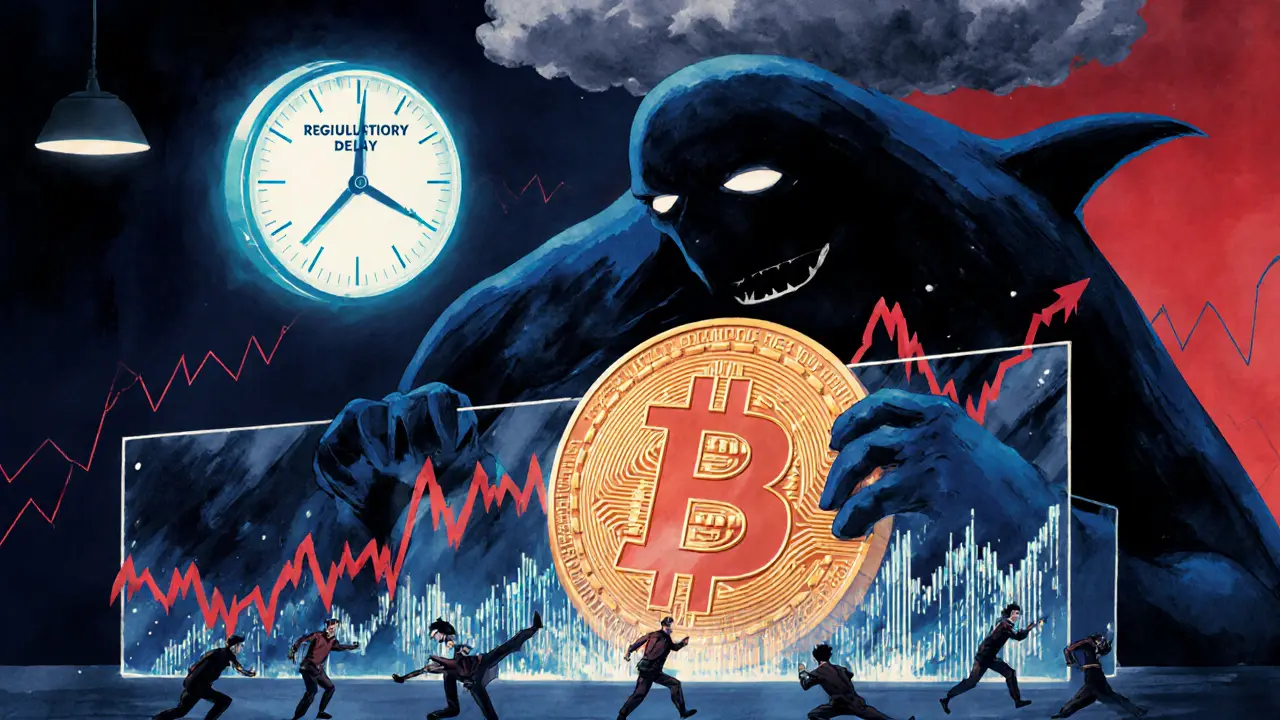
Macroeconomic Winds Blow Through Crypto Too
Crypto doesn’t live in a bubble. It floats in the same ocean as stocks, bonds, and currencies. When the U.S. Federal Reserve raised interest rates in late 2024, money flowed out of risky assets. Bitcoin dropped 18% in two weeks. Investors moved cash into Treasury bonds, which were now paying 4.5%. Why take crypto risk when you can earn safe returns? But when inflation hit 5.2% in early 2025, Bitcoin bounced back. People saw it as digital gold-a hedge against dollar devaluation. Demand rose. Price followed. The same thing happened with global instability. When tensions rose in the Middle East in March 2025, Bitcoin jumped 11% in 36 hours. Investors saw it as a safe haven. Not because it’s proven to be one, but because they thought others would see it that way. Self-fulfilling prophecy. Crypto doesn’t have its own economy. It reacts to the world’s. That’s why you can’t just look at Bitcoin charts. You have to watch the Fed, inflation data, oil prices, and even geopolitical news.Institutions Are Playing Both Sides
Big players like BlackRock, Fidelity, and Grayscale are now major players. Their ETFs brought in $12 billion in net inflows in the first half of 2025. That’s huge. It stabilized Bitcoin’s long-term trend. But institutions don’t buy and hold forever. They trade. When they see technical resistance near $120,000, they might sell to lock in profits. That’s what happened in October 2025. Bitcoin hit $119,000. Algorithmic trading bots triggered sell orders at key resistance levels. Price stalled. Retail traders panicked. Volatility spiked. Ethereum’s rise as the “yield-bearing backbone” of crypto added another layer. With staking yields around 4-5%, institutions are holding ETH not just as speculation, but as income. That’s different from Bitcoin. It means Ethereum’s volatility is shaped by yield trends, staking rewards, and DeFi usage-not just speculation. So institutions help stabilize crypto over time. But in the short term, their trades can trigger big swings. They move faster and bigger than retail. And when they shift, the market shakes.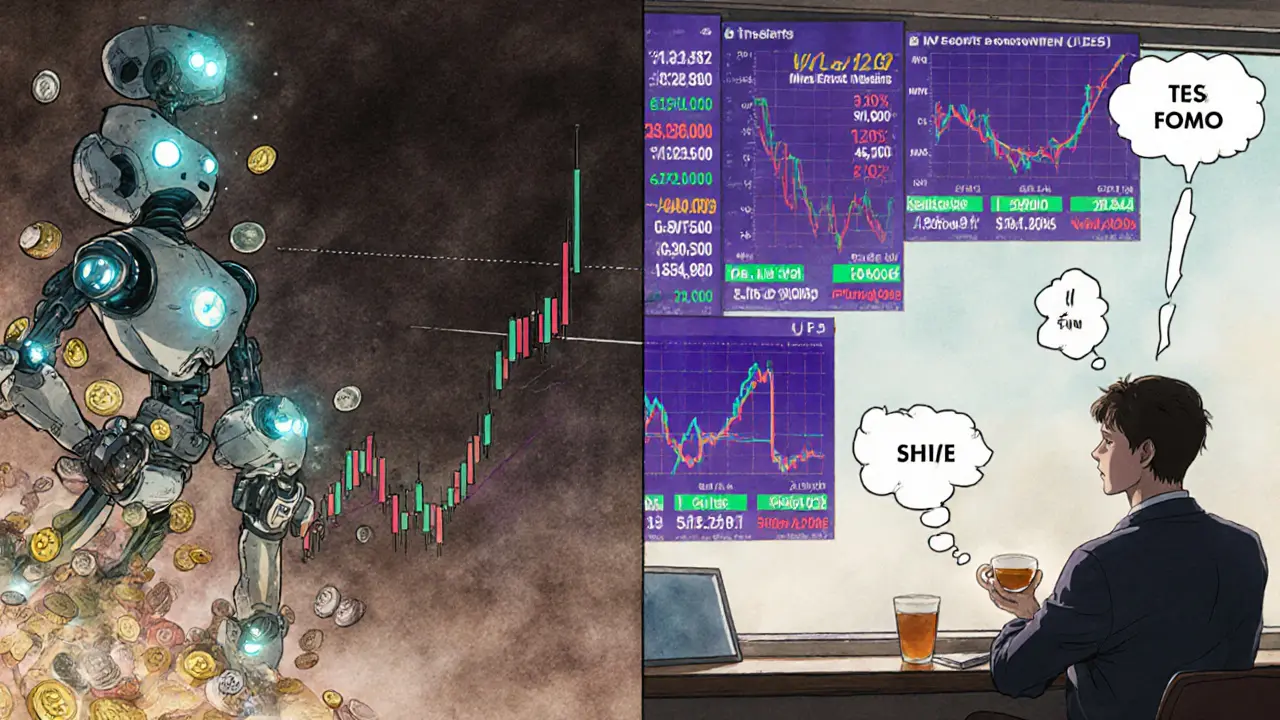
Teresa Duffy
November 15, 2025 AT 15:53Bro, I remember buying BTC at $42k and just screaming into my pillow when it dropped to $38k. Then it went to $119k and I felt like a genius. Turns out I was just riding the emotional rollercoaster like everyone else. The key? Don't trade your peace of mind for a 20% pump. I set my alerts, stick to my dollar-cost averaging, and just watch the chaos like it's a Netflix doc. 😅
Carol Wyss
November 17, 2025 AT 07:15Ugh I feel you!! I literally cried last week when my portfolio dipped 18% in one night 😭 I kept telling myself 'it's just numbers' but my heart didn't believe it. I started journaling my trades now-just writing down why I bought/sold. Helps me remember it's not personal. You're not failing if the market moves. You're just human. 💪
Student Teacher
November 18, 2025 AT 00:13Interesting how liquidity is the real villain here. I never thought about it like a backyard pool. But it makes sense-when you’ve got $25B daily vs Apple’s $100B+, even a $50M trade is a tidal wave. I wonder if we’ll ever get to the point where institutional depth matches traditional markets. Or is crypto’s volatility just the price of decentralization? 🤔
Ninad Mulay
November 18, 2025 AT 02:09Bro, this whole thing is like a Bollywood drama-whales enter, influencers scream, regulators drop a tweet like a bomb, and the crowd goes wild. One guy buys 5 million in Shiba, next thing you know, everyone’s dancing in the streets. Then boom-SEC says 'maybe later' and it’s a funeral. But hey, at least the music’s loud, right? 🎶🇮🇳
Mike Calwell
November 18, 2025 AT 22:40lol so crypto is just like gambling but with more charts? i mean i get the liquidity thing but why do ppl act like its science? its just vibes and memes. i bought doge because a dog pic went viral. no regrets. 🐶
Jay Davies
November 20, 2025 AT 00:00Actually, your liquidity comparison is misleading. Bitcoin’s $25B daily volume is comparable to the entire FTSE 100’s average daily turnover. The real issue isn’t liquidity per se-it’s the disproportionate influence of retail sentiment and algorithmic feedback loops. Also, you mention ‘whales’ as if they’re rogue actors, but institutional flows are now the dominant force. The market is maturing; the volatility is just the transitional noise.
Grace Craig
November 20, 2025 AT 00:08While your analysis is superficially compelling, it lacks the requisite rigor to engage with the deeper structural inefficiencies inherent in asset pricing under decentralized, non-sovereign monetary regimes. The notion that ‘sentiment moves faster than facts’ is not merely descriptive-it is epistemologically foundational to the emergence of a post-fiat speculative ecosystem. One must consider the hermeneutic implications of influencer-driven capital allocation within a post-truth financial landscape. Alas, the market remains a mirror of collective irrationality, beautifully tragic.
Ryan Hansen
November 21, 2025 AT 22:19Man, I’ve been watching this since 2017. Back then, BTC was $1k and people were calling it a scam. Then $10k, then $20k, then $60k, now $120k. Every time someone says ‘this time it’s different,’ they’re right-and wrong. The volatility? It’s not going away. But the trend? It’s been up. Always. I used to panic every dip. Now I just check my portfolio once a week. The market doesn’t care if you’re stressed. It just moves. And honestly? That’s kind of beautiful. The system doesn’t need you to understand it. It just needs you to show up. And keep showing up. Even when you’re scared. Especially when you’re scared.
Derayne Stegall
November 22, 2025 AT 05:18THIS. IS. WHY. I. LOVE. CRYPTO. 🚀🔥 Every dip is a gift. Every pump is a party. I don’t chase, I don’t panic-I just hold my bag and let the chaos do its thing. Last week I bought more ETH at $3,200. Today? $4,100. No tears. No hype. Just vibes. 🙌 #CryptoIsTheFuture
Astor Digital
November 23, 2025 AT 01:48Y’all talking about whales and liquidity like it’s new. In India, we’ve been seeing this since 2018 with local crypto exchanges. One guy buys 1000 LTC, price jumps 40%, everyone rushes in, then it crashes. Same script. But here’s the thing-it’s not broken. It’s just early. The US has ETFs, Europe has MiCA, India’s waiting. When regulation settles, liquidity grows, and retail stops watching YouTube influencers… it’ll calm down. But until then? Enjoy the ride. It’s the only one like it.
Aayansh Singh
November 24, 2025 AT 14:33Pathetic. You call this analysis? You cite ‘sentiment’ like it’s a measurable variable. You mention ‘whales’ like they’re some mysterious force. Newsflash: the entire crypto market is a ponzi dressed in blockchain pajamas. The ‘fixed supply’ myth is a joke-miners dump on every rally. The ‘decentralization’ is a lie-70% of BTC is held by 0.01% of addresses. And you think institutions are stabilizing it? They’re the ones front-running retail. This isn’t innovation. It’s financial exploitation wrapped in libertarian fantasy. Stop romanticizing chaos.