Myanmar Crypto Ban: What Happened and Why It Matters
When Myanmar crypto ban, a nationwide prohibition on cryptocurrency transactions and mining introduced in April 2021 by the military junta. Also known as crypto prohibition in Myanmar, it was one of the strictest moves in Southeast Asia, aiming to control financial flows and prevent capital flight. But the ban didn’t stop people from using crypto—it just made them better at hiding it.
Behind the headlines, the Myanmar crypto ban, a nationwide prohibition on cryptocurrency transactions and mining introduced in April 2021 by the military junta. Also known as crypto prohibition in Myanmar, it was one of the strictest moves in Southeast Asia, aiming to control financial flows and prevent capital flight. didn’t just target exchanges—it cut off access to global remittances, blocked peer-to-peer trading apps, and shut down local mining operations. Many citizens, already struggling with economic collapse after the coup, turned to Bitcoin and USDT anyway. They used Telegram groups, local cash traders, and burner phones to move money. This wasn’t rebellion—it was survival. The ban also hit miners hard. Myanmar had cheap electricity and growing interest in crypto mining before 2021. When the government cracked down, rigs were seized, power was cut, and hardware disappeared into the black market. Today, mining is nearly extinct there, but crypto use persists through informal networks.
The Southeast Asia crypto, the regional ecosystem of digital currency adoption, regulation, and underground usage across countries like Myanmar, Vietnam, and the Philippines. Also known as ASEAN crypto landscape, it includes both legal frameworks and gray-market activity. didn’t stop at Myanmar. Neighboring countries watched closely. Thailand tightened KYC rules. Vietnam cracked down on unlicensed exchanges. But in places like the Philippines and Cambodia, crypto grew faster than ever. Why? Because when governments ban money, people find ways to move it. The crypto mining ban, a government policy that prohibits the use of electricity and hardware to validate blockchain transactions. Also known as crypto mining prohibition, it often targets low-cost energy regions like Myanmar, Iceland, or Kazakhstan. in Myanmar became a case study in what happens when you outlaw technology without offering alternatives. People didn’t stop using crypto—they just stopped trusting banks.
What you’ll find in the posts below aren’t just news stories. They’re real examples of how crypto fails, how exchanges die, how airdrops vanish, and how people get scammed when they’re desperate. The Myanmar crypto ban didn’t kill crypto—it exposed how fragile trust is in traditional finance. And that’s the same story behind every failed exchange, every dead token, every fake airdrop you’ll see here. These aren’t random failures. They’re symptoms of a system where control replaces transparency. And if you’re trying to navigate crypto today, you need to understand that.
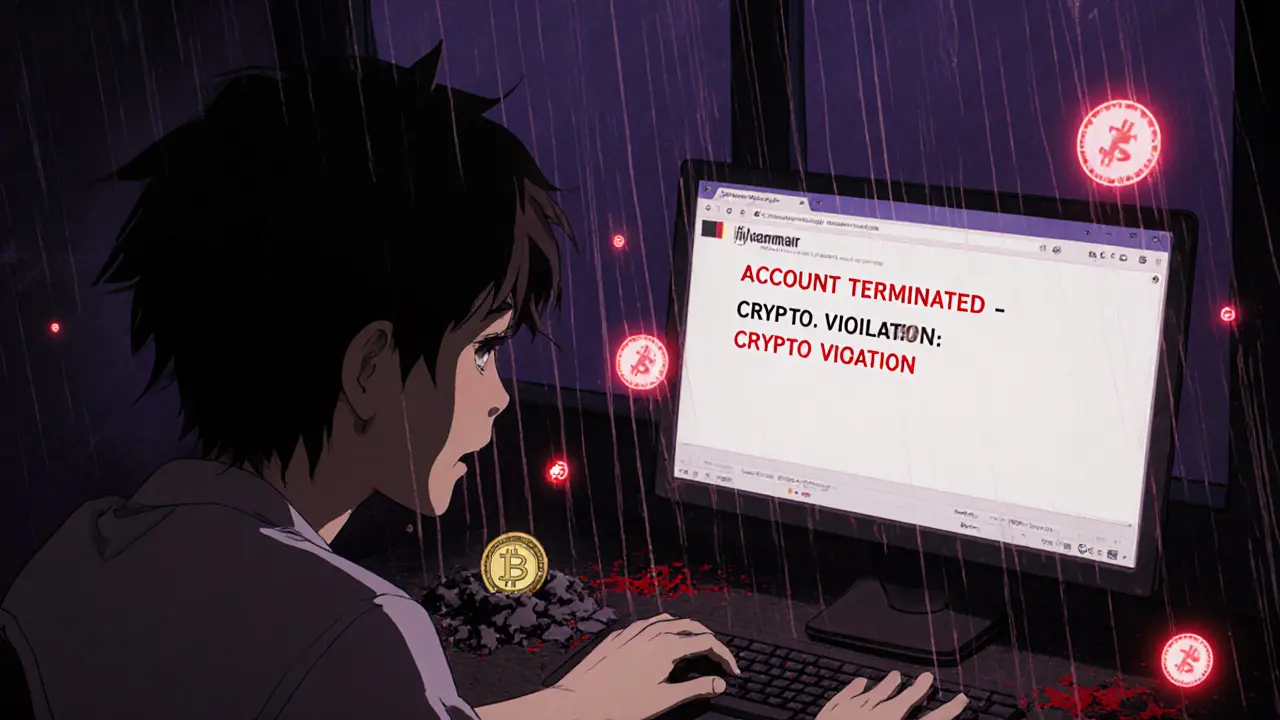
Account Closure Penalties for Crypto in Myanmar: What Happens If You Trade Bitcoin or USDT
Myanmar imposes severe penalties for crypto use, including instant bank account closures, fines, and jail time. USDT, Bitcoin, and mining are all banned. Learn what happens if you trade crypto there in 2025.

Account Closure Penalties for Crypto in Myanmar: What Happens If You Trade Bitcoin or USDT
Myanmar enforces one of the world's strictest crypto bans, with bank account closures, fines, and jail time for trading Bitcoin or USDT. Learn how the Central Bank of Myanmar punishes users and why underground crypto still thrives despite the risks.