What is Shiba Saga (SHIA)? A Guide to the GameFi Meme Coin
You’ve probably seen the hype around Shiba Inu derivatives, but what happens when you mix a meme coin with actual playable games? That’s the core promise of Shiba Saga. It’s not just another dog-themed token hoping for a lucky break; it’s trying to build an entire ecosystem where playing casual games earns you real crypto rewards. But does it actually work, or is it just marketing fluff wrapped in an NFT skin?
If you’re wondering whether this project has legs or if it’s destined to fade into the graveyard of failed altcoins, you need to look past the cute mascot. We’re going to break down exactly what SHIA is, how its economy functions, and why it ranks so low on major aggregators despite its ambitious "GameFi" label.
The Core Concept: More Than Just a Meme
Shiba Saga is a meme-themed GameFi cryptocurrency project built on the Ethereum blockchain. Unlike traditional meme coins that rely solely on community hype and speculation, Shiba Saga aims to integrate utility through gaming. The central idea is simple: create a network of interconnected casual games where the native token, SHIA, serves as the universal currency.
The project describes its vision as the "ShiaVerse." In this universe, you play classic-style games featuring Shiba characters. The twist? Your progress isn’t locked inside one game. If you unlock a character or item in one title, it mirrors across others. This cross-game interoperability is supposed to give SHIA real demand-you need the token to upgrade characters, buy items, and participate in the economy. It’s a bold attempt to prove that meme coins can have functional use cases beyond being speculative assets.
How the Tokenomics Stack Up
Let’s get into the numbers, because they tell a stark story about SHIA’s current market position. As of late 2026, the token operates with a maximum supply of 10 billion SHIA. However, the circulating supply is significantly lower, hovering around 53.9 million tokens. This discrepancy between max supply and circulating supply is common in new projects, often indicating that a large portion of tokens are still locked, reserved for future releases, or held by the team and investors.
Here is a snapshot of the key metrics you should know:
| Metric | Value / Status | Context |
|---|---|---|
| Blockchain | Ethereum (ERC-20) | Standard fungible token on ETH mainnet |
| Max Supply | 10,000,000,000 SHIA | Total potential tokens ever to exist |
| Circulating Supply | ~53.9 Million SHIA | Tokens currently available on the market |
| Market Rank | #7900 - #8100 range | Micro-cap asset on major aggregators |
| Primary Exchange | Uniswap V2 (Ethereum) | Main source of liquidity |
The price action reflects this micro-cap status. SHIA trades at fractions of a cent, often fluctuating between $0.00008 and $0.0001 depending on the exchange and timing. While some data points show slight volatility, the overall trend has been underwhelming compared to broader Ethereum ecosystem gains. For instance, during periods where ETH-based tokens rose by double digits, SHIA saw declines or flat performance. This suggests that while the narrative is strong, the buying pressure hasn’t consistently matched the hype.
The Gaming Ecosystem: What Can You Actually Play?
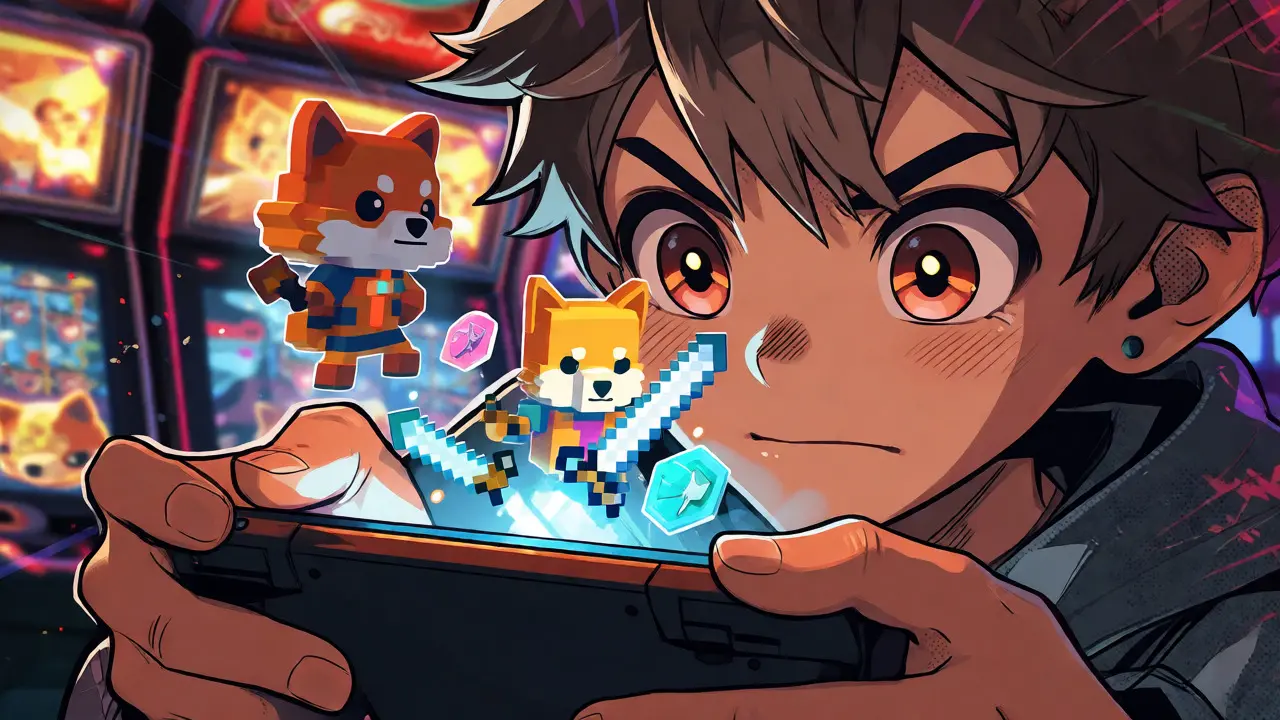
The heart of Shiba Saga is its games. The project promises "classic and casual games you already know and love," reimagined with Shiba protagonists. Think along the lines of simple, addictive mobile games-think runners, puzzlers, or arcade classics-but with blockchain integration.
The technical backbone here involves Non-Fungible Tokens (NFTs). When you earn a reward or unlock a character, it’s minted as an NFT. This isn’t just a digital receipt; it’s a tradable asset. The claim is that these NFTs work across all games in the ShiaVerse. So, if you grind out a rare sword in one game, you might be able to equip it in another. This creates a loop where gameplay drives token utility, and token utility drives player retention.
However, there’s a catch. As of late 2026, detailed user reviews and active player counts are hard to find on major platforms. The games are live, but the community engagement seems fragmented. Most activity appears concentrated on trading the token rather than deep, sustained gameplay. Without a massive, active player base, the utility of SHIA remains theoretical for many holders.
Where to Buy and Trade SHIA
If you want to get your hands on SHIA, don’t expect to find it on every major centralized exchange. Coinbase, for example, tracks the price but explicitly notes that SHIA is not tradable on their platform. Binance lists it, but availability can vary, and sometimes quotes show zero volume due to temporary liquidity issues.
The primary venue for trading is decentralized exchanges (DEXs), specifically Uniswap V2 on Ethereum. This means you’ll need an Ethereum-compatible wallet like MetaMask and some ETH for gas fees. Buying via DEX gives you direct access to the liquidity pool, but it comes with higher slippage risks due to lower trading volumes. Centralized options like HTX and KuCoin do list SHIA, offering a more familiar interface for beginners, though their volume is also modest.
Be cautious with representations on other chains. Some wallets show a Solana address for SHIA, but liquidity there is virtually non-existent. Sticking to the Ethereum mainnet ensures you’re interacting with the primary contract and the deepest liquidity pools.
Risk Assessment: Is It Safe?
Security is always the elephant in the room for small-cap projects. Shiba Saga is monitored by CertiK Skynet, a blockchain security analytics service. Being tracked by CertiK is a good sign-it means someone is looking at the code and on-chain behavior. However, monitoring is not the same as a full, public audit with a high score. The project doesn’t prominently advertise a completed, comprehensive third-party audit in its main listings, which adds a layer of risk.
Rating agencies offer little comfort. Weiss Ratings assigns SHIA a "Market Performance Grade D," labeling its status as "Weak." This grade reflects poor risk-adjusted performance and fundamental strength compared to established cryptocurrencies. Combined with anonymous team details-the founders aren’t prominently named in major profiles-this places SHIA in the high-risk category. It’s a speculative play, not a blue-chip investment.
The Verdict: Should You Hold SHIA?
Shiba Saga is an interesting experiment in merging meme culture with GameFi. It has a clear narrative, a functional token structure, and live games. But it suffers from typical small-cap problems: low liquidity, lack of transparent leadership, and underperformance relative to its sector.
If you’re a gamer who wants to try out blockchain mechanics with low entry costs, SHIA offers a low-barrier entry point. The games are accessible, and the concept of cross-game NFTs is appealing. But if you’re looking for a stable investment with predictable returns, SHIA’s D-grade rating and volatile price action suggest caution. It’s a lottery ticket with a fun wrapper, not a savings account.
Is Shiba Saga a scam?
There is no evidence suggesting Shiba Saga is a outright scam. It has a live website, published whitepaper, and active smart contracts on Ethereum. However, it lacks prominent founder identification and has received low ratings from independent agencies like Weiss Ratings, indicating high risk and weak fundamentals rather than fraud.
Can I mine SHIA tokens?
No, SHIA is an ERC-20 token on Ethereum, which uses Proof-of-Stake consensus. You cannot mine it in the traditional sense. Instead, you can potentially earn SHIA by playing the associated games or staking, depending on specific game mechanics and updates.
Why is SHIA not on Coinbase?
Coinbase has strict listing criteria regarding volume, liquidity, and compliance. SHIA’s relatively low market cap and trading volume likely prevent it from meeting these thresholds. It is primarily traded on decentralized exchanges like Uniswap and some smaller centralized exchanges like HTX.
What makes SHIA different from Dogecoin?
Dogecoin is a pure payment-focused meme coin with no inherent utility beyond transactions and speculation. SHIA attempts to add utility through a GameFi ecosystem where the token is used for in-game purchases, upgrades, and rewards within a network of interconnected games.
Is the Shiba Saga team anonymous?
Yes, major data providers and exchange listings do not name specific individuals as the founding team. This anonymity is common in meme coin projects but makes due diligence harder for investors who prefer known development teams.