2-of-3 vs 3-of-5 MultiSig: Which Configuration Is Right for You?
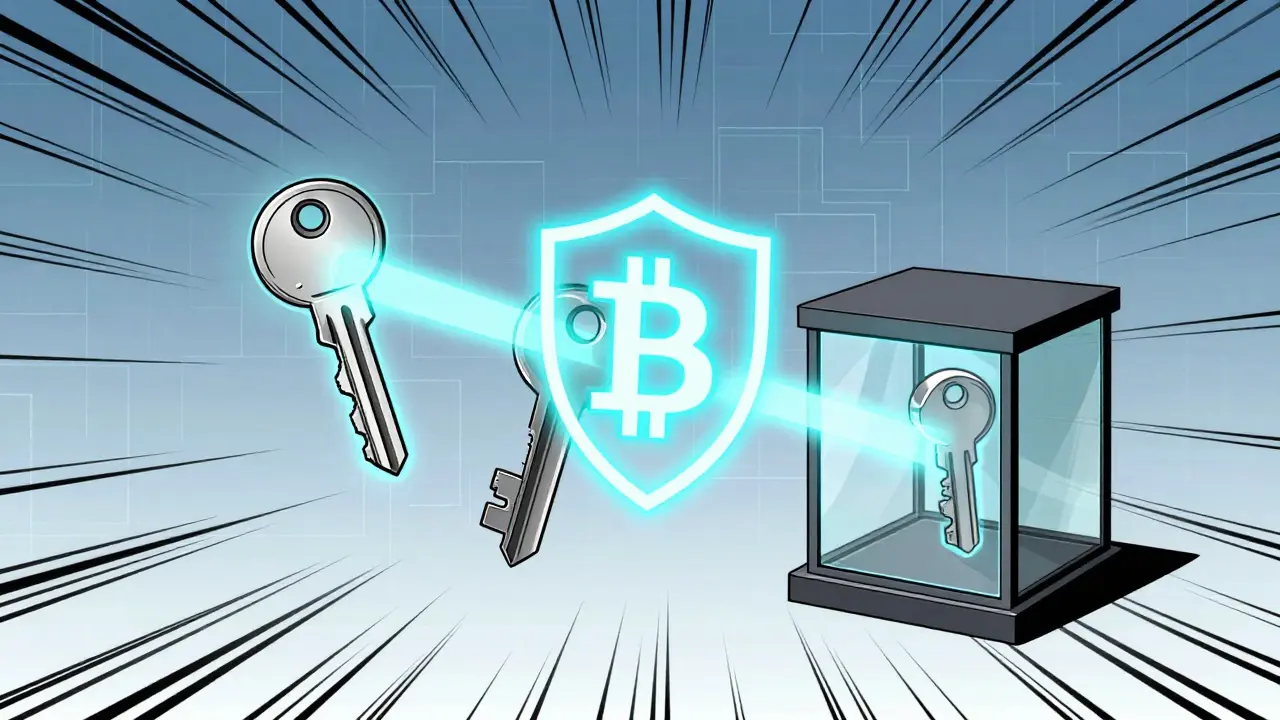
Imagine you have a safe that requires three keys to open. Now imagine losing one of those keys. In a traditional single-signature setup, losing your key means losing everything. But with Multisig wallets, which are cryptocurrency storage solutions requiring multiple private keys to authorize transactions, you don't panic. You just use the remaining keys. This is the core promise of multi-signature technology: it removes the single point of failure that has destroyed countless crypto fortunes since the Mt. Gox collapse in 2014.
The debate isn't about whether multisig is good-it's about how many keys you actually need. The two dominant configurations in the industry are 2-of-3 multisig and 3-of-5 multisig. One is the standard for most users; the other is a heavy-duty solution for complex organizations. Choosing the wrong one can lead to unnecessary complexity or, worse, accidental loss of funds due to human error.
How Multisig Thresholds Work
To understand the difference, you first need to grasp the M-of-N structure. In this formula, 'N' is the total number of private keys generated when you create the wallet, and 'M' is the minimum number of signatures required to spend the funds.
- 2-of-3: You generate three keys. Any two of them can sign a transaction. If you lose one key, you still have access. If an attacker steals one key, they still cannot move your money.
- 3-of-5: You generate five keys. You need three signatures to transact. You can lose up to two keys and still recover your funds. An attacker would need to compromise three separate keys to steal your assets.
Both setups rely on the same cryptographic principles. They embed a script within the blockchain transaction that dictates the required threshold. However, the operational reality of managing these keys differs drastically. The security benefit of adding more keys does not scale linearly; instead, the complexity and risk of user error grow exponentially.
The Case for 2-of-3: The Gold Standard
For the vast majority of individuals and small businesses, the 2-of-3 configuration is the optimal choice. Industry leaders like BitGo, Casa, and Unchained consistently recommend this setup as their default. Why? Because it offers the perfect balance between security and usability.
In a typical 2-of-3 setup, you might distribute your keys like this:
- Key 1 (Hot): Stored on your daily-use device (phone or laptop) for convenience.
- Key 2 (Cold): Stored on a hardware wallet or offline device at home.
- Key 3 (Backup/Geographic): Stored in a safety deposit box or with a trusted family member in a different location.
If your laptop gets hacked, the attacker only has Key 1. They cannot move funds without Key 2 or 3. If your house burns down and you lose Key 2 and 3, you can still access your funds using Key 1 and... wait, you need two keys. So if you lose both cold keys, you're stuck unless you have a backup plan. Actually, in a 2-of-3, if you lose any *one* key, you are fine. If you lose *two*, you lose access. This fault tolerance is sufficient for 99% of scenarios.
Unchained’s analysis confirms that 2-of-3 provides sufficient resistance to malicious attacks while minimizing operational friction. It prevents unauthorized access by a single compromised device but doesn't require you to coordinate with four other people every time you want to buy coffee.
The Case for 3-of-5: Institutional Grade Security
The 3-of-5 configuration is designed for higher stakes and larger teams. It allows you to lose two keys without losing access to your funds. This level of redundancy is crucial for corporate treasuries, large DAOs (Decentralized Autonomous Organizations), or high-net-worth individuals with complex inheritance plans.
Consider a company board with five directors. To prevent any single director from embezzling funds, or to ensure the company can operate even if two directors leave unexpectedly, a 3-of-5 setup makes sense. Each director holds one key. Any three directors can approve a transaction. This creates a robust check-and-balance system.
However, this comes at a steep cost. Managing five seed phrases, ensuring they are backed up securely in different locations, and coordinating three signatures for every transaction is operationally heavy. Wallet software providers report that setting up a 3-of-5 wallet takes approximately 2.5 times longer than a 2-of-3 wallet. More importantly, the rate of user error during setup and maintenance is significantly higher.
| Feature | 2-of-3 Multisig | 3-of-5 Multisig |
|---|---|---|
| Keys Generated | 3 | 5 |
| Signatures Required | 2 | 3 |
| Keys You Can Lose | 1 | 2 |
| Attack Resistance | High (Requires 2 compromises) | Very High (Requires 3 compromises) |
| Setup Complexity | Low to Moderate | High |
| Transaction Friction | Low (Easy coordination) | High (Harder coordination) |
| Best For | Individuals, Small Teams | Enterprises, Large Boards, Heirs |

The Hidden Danger: Human Error Over Hacking
Most people fear hackers. But in the world of self-custody crypto, the biggest threat is often yourself. Trezor, a leading hardware wallet manufacturer, explicitly warns that multisig setups with more than five keys are likely too complex for individuals. They note that excessive complexity increases the chances of losing access to funds due to human error.
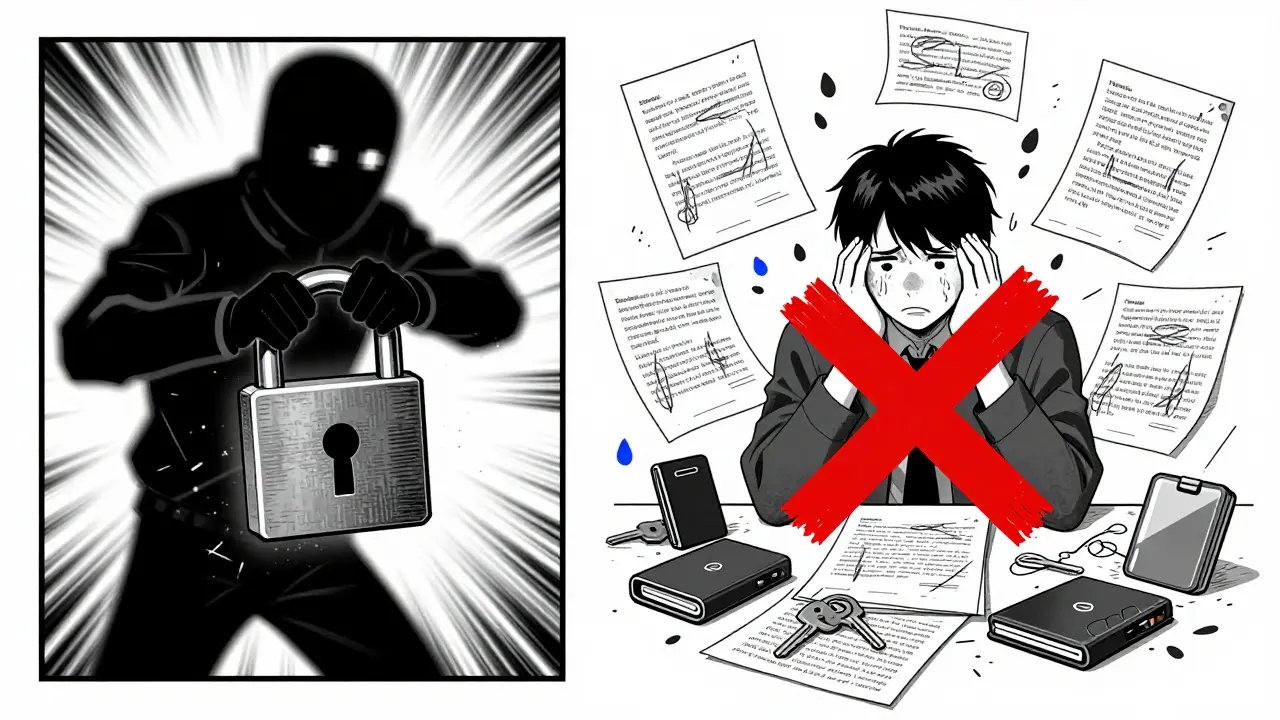
Think about it. With a 3-of-5 setup, you have five seed phrases to write down, store, and protect. What happens if you misplace two of them? You’re locked out. What if you accidentally delete a key file? You’re locked out. The cognitive load of managing five distinct security points is immense. Community discussions on Reddit and specialized crypto forums frequently highlight that users attempting 3-of-5 setups often abandon proper security practices because the process is too cumbersome. They might consolidate keys onto a single device for convenience, which completely defeats the purpose of multisig.
In contrast, 2-of-3 is simple enough that users actually stick to the protocol. You can easily visualize where your three keys are. You can test your recovery procedure without feeling overwhelmed. This usability factor is critical. A security measure that is too difficult to use will eventually be bypassed or botched.
Real-World Use Cases
Understanding where each configuration shines helps clarify the decision.
2-of-3 Examples:
- Trustless Escrow: In a peer-to-peer trade, the buyer, seller, and a neutral arbitrator each hold one key. The buyer and seller must agree to release funds (2 signatures). If there’s a dispute, the arbitrator can step in with their key to resolve it.
- Couple’s Joint Savings: Both partners hold one key, and a third key is held by a trusted lawyer or stored in a bank vault. Either partner can access funds in an emergency, but neither can drain the account alone without the backup key.
- Personal Backup: One key on your phone, one on a hardware wallet, and one printed on metal and buried in your backyard. Simple, effective, resilient.
3-of-5 Examples:
- Corporate Treasury: Five executives hold keys. No single executive can move company funds. Even if two executives leave the company or are compromised, the remaining three can continue operations.
- Complex Inheritance: A parent wants to ensure their children can access funds after their passing, but also wants a safeguard against fraud. Keys are distributed among three children and two trusted lawyers. Three signatures are needed to prove legitimacy.
- DAO Governance: A decentralized organization with five core team members. Major decisions require consensus from at least three members, preventing rogue actors from taking control.
Implementation Challenges and Costs
Switching between these configurations is not easy. Once a multisig wallet is created, its cryptographic structure is fixed. You cannot change a 2-of-3 wallet into a 3-of-5 wallet later. To upgrade, you must create a new wallet and transfer all your funds. This involves transaction fees and the risk of sending funds to the wrong address during migration.
This permanence means you must choose wisely upfront. Market adoption data reflects this caution. Approximately 85% of multisig implementations use 2-of-3 configurations. Only about 12% use 3-of-5, primarily concentrated among institutional users. The remaining percentage uses other variations, but 2-of-3 remains the dominant standard.
Furthermore, not all wallet software handles 3-of-5 gracefully. While major providers like BitGo support both, some consumer-grade interfaces are optimized specifically for 2-of-3 workflows. Using a tool not designed for higher thresholds can make the experience clunky and error-prone.
Future Trends: Simplifying Complexity
The technology behind multisig is evolving. New protocols like Threshold Signature Schemes (TSS) and Multi-Party Computation (MPC) aim to reduce the operational burden of managing multiple keys. These technologies allow keys to be split mathematically rather than physically, potentially making higher-threshold schemes easier to manage.
However, even with these advancements, the principle of simplicity remains king. Regulatory bodies increasingly recognize multisig as a best practice for custody, and 2-of-3 meets most compliance requirements without the overhead of more complex schemes. Future developments are likely to streamline 2-of-3 operations further, reinforcing its position as the practical standard for secure cryptocurrency storage.
Conclusion: Choose Based on Your Reality
There is no universally "better" configuration, only the one that fits your specific risk profile and organizational structure. If you are an individual or a small team, 2-of-3 is almost certainly the right choice. It protects you from theft and loss while remaining manageable enough to use correctly. If you are running a large organization with strict governance needs, 3-of-5 provides the necessary redundancy and checks and balances.
Remember, the strongest lock is useless if you lose the key. Prioritize a setup you can maintain reliably over one that sounds theoretically impenetrable.
Can I convert a 2-of-3 multisig wallet to a 3-of-5 wallet?
No, you cannot change the threshold of an existing multisig wallet. The cryptographic script is embedded in the blockchain transaction at creation. To switch to 3-of-5, you must create a brand new 3-of-5 wallet and transfer your funds from the old wallet to the new one. This process incurs transaction fees and carries the risk of user error during the transfer.
Is 3-of-5 multisig safer than 2-of-3?
Theoretically, yes, because an attacker would need to compromise three keys instead of two. However, in practice, 3-of-5 introduces significant complexity that increases the risk of human error, such as losing keys or mishandling backups. For most individuals, 2-of-3 offers sufficient security without the operational risks associated with managing five keys.
What happens if I lose one key in a 2-of-3 multisig wallet?
You can still access your funds. Since the wallet requires only two signatures out of three, losing one key leaves you with two remaining keys, which is enough to authorize transactions. You should, however, consider creating a new replacement key to restore full redundancy.
Which hardware wallets support 3-of-5 multisig?
Major hardware wallet manufacturers like Trezor and Ledger support multisig configurations, including 3-of-5. However, their interfaces are often optimized for 2-of-3 setups. Ensure you are using compatible software versions and thoroughly test your setup with small amounts before storing significant value.
Why do institutions prefer 2-of-3 over 3-of-5?
Institutions prioritize operational efficiency alongside security. 2-of-3 provides robust protection against single-point failures and unauthorized access while minimizing the administrative burden of key management. Most institutional compliance standards are met with 2-of-3, making the added complexity of 3-of-5 unnecessary for many use cases.