Benefits of Social Tokens for Communities

Most online communities today are built on platforms that take more than they give. Facebook, Discord, Twitter - they host your group, your conversations, your loyalty - but they keep the value. You build the audience. You create the content. You show up every day. And what do you get in return? A like. A share. A fleeting algorithm boost. Meanwhile, the platform makes millions from your effort.
What if your community could own its own value? Not just the content, but the economy around it? That’s where social tokens come in.
What Are Social Tokens, Really?
Social tokens are digital assets issued by a person or a group - not a company, not a corporation - but by the community itself. Think of them like membership passes that also act as shares. Holders aren’t just users. They’re stakeholders. When the community grows, so does the value of the token. And when the community thrives, so do its members.
These tokens run on blockchains like Ethereum, Polygon, or Solana. They’re powered by smart contracts - self-executing code that enforces rules automatically. No middleman. No arbitrary bans. No hidden fees. Just clear, transparent rules everyone agrees to upfront.
There are three main types: personal tokens (for individual creators), community tokens (for groups like collectives or DAOs), and creator tokens (for influencers or artists). But they all share one core idea: ownership.
Turn Passive Members Into Active Owners
Traditional communities rely on motivation you can’t buy: passion, friendship, shared purpose. But passion fades. Energy drops. People leave when they don’t see a return.
Social tokens fix that. They turn participation into economic incentive. Want to write a newsletter? Earn tokens. Host a Discord call? Earn tokens. Design a merch drop? Earn tokens. Every contribution has a measurable reward.
Take BanklessDAO. Before they launched their BANK token, they had a few hundred active contributors. After? That number jumped 300% in six months. Why? Because people weren’t just volunteering - they were investing. Their time had value. And that value grew with the community.
It’s not about paying people to do work. It’s about letting them own a piece of what they help build. That changes everything.
Token-Gated Access: No More Paywalls, Just Proof of Belonging
How do you keep your best content for the people who really care? Most creators use subscriptions. But subscriptions are flat. You pay $10 a month whether you show up once or every day.
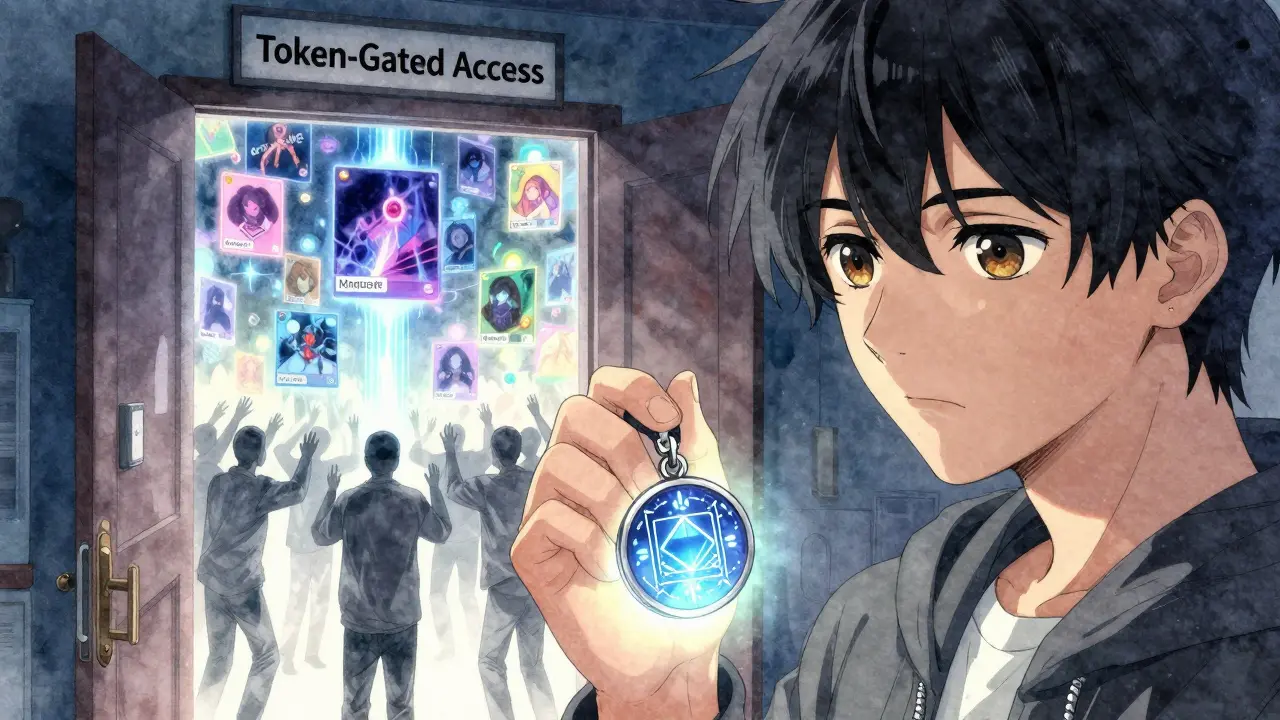
Social tokens make access dynamic. Want to join a private Discord? You need at least 5 tokens. Want to attend the monthly live event? You need 20. Want to vote on next quarter’s budget? You need 100.
The Whale (WHALE) community uses this model perfectly. Hold 10 WHALE tokens? You get access to virtual art shows. Hold 100? You get a physical piece of art mailed to you. No manual approval. No customer service tickets. The blockchain checks your wallet - and grants access instantly.
One professional association switched from a $50/month membership to a token-gated system. Within three months, paid membership went up 40%. Why? Because people didn’t just pay for access - they paid for ownership. And they felt it.
Decentralized Governance: No Bosses, Just Votes
Who decides what your community does? Usually, it’s one person. Or a small team. Or an algorithm. That’s not community - that’s top-down control.
Social tokens enable real decentralized governance. Every token holder gets a vote. More tokens? More voting power. But not always. Some communities use quadratic voting - where 10 votes cost you 100 tokens, not 10. That stops rich members from dominating decisions.
Friends With Benefits (FWB) is a prime example. Their $FWB token lets holders vote on everything: who joins, how the treasury is spent, which events to host. In 2021, they processed 42 governance proposals. Participation? 35% of token holders. Compare that to traditional online communities - where 5-15% show up for votes, if that.
And it’s not just theory. Gitcoin used token-based voting to distribute $1.3 million to public goods projects in late 2021. No board. No CEO. Just thousands of people deciding where money should go - and actually showing up to vote.
Build a Self-Sustaining Economy
Most communities rely on ads, sponsorships, or donations. That’s unstable. One platform change - one algorithm update - and your income vanishes.
Social tokens create a closed-loop economy. Here’s how it works:
- A creator launches a token at $1.50.
- Members buy in early. They contribute. They grow the community.
- The token’s value rises - to $40, then $100.
- Early members profit. The creator earns from initial sales and resale royalties.
- The treasury grows. It pays for events, hires contributors, funds new tools.
- New members join, drawn by the success.
FWB’s token went from $1.50 to over $40 in six months. That’s not luck. That’s design. The community didn’t just grow - it became a business. And every member had skin in the game.
One fitness coach used social tokens to pay trainers. 70% of their pay came in tokens. 30% in cash. Result? Cash expenses dropped 45%. Trainer retention jumped 60%. Why? Because trainers weren’t just employees - they were investors. They wanted the community to win.
Discover New Communities Through Your Wallet
Ever feel like you’re stuck in the same online circles? Social media algorithms trap you in echo chambers. But social tokens unlock a new kind of network.
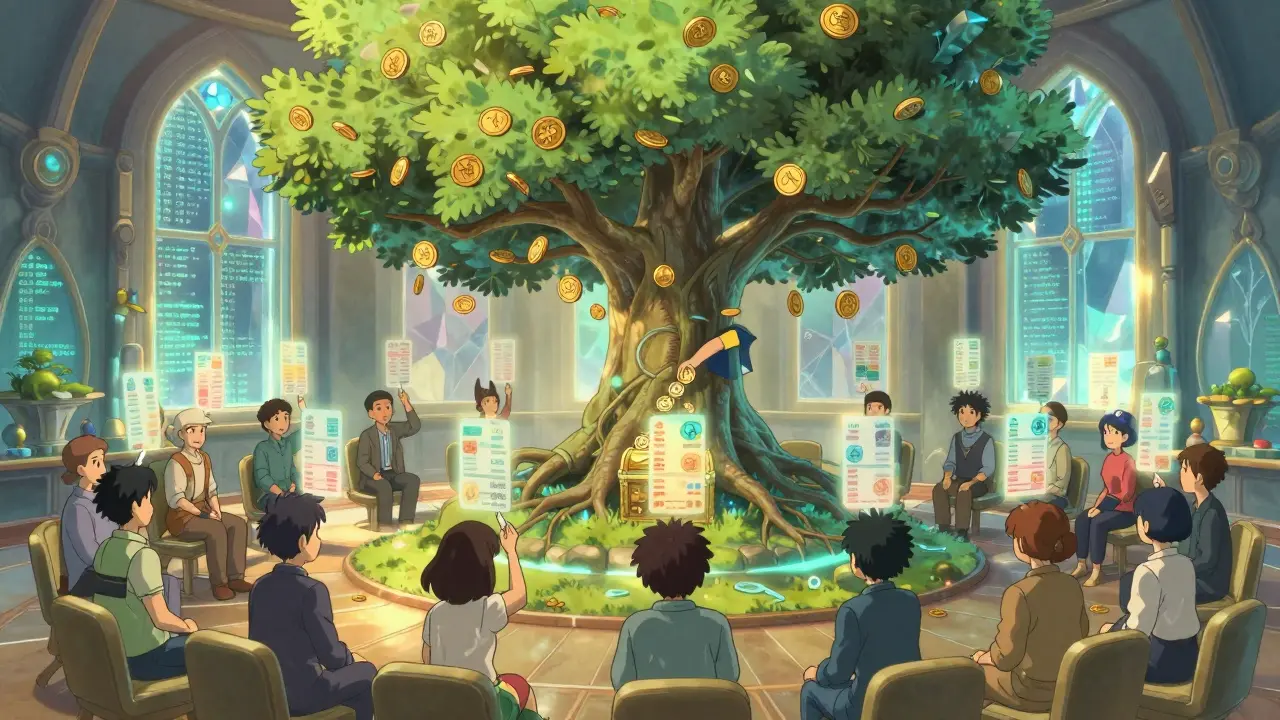
Your wallet becomes your resume. If you hold tokens from FWB, BanklessDAO, and Index Coop, you’re signaling: I’m into Web3, governance, and decentralized finance. Platforms like RabbitHole and Collab.Land scan wallets and suggest communities you might like - based on what you already own.
This solves the biggest problem in community building: the cold start. New groups struggle to find their first 100 people. But if you hold tokens from similar communities, you’re already vetted. You’re not a stranger. You’re a trusted member of the ecosystem.
By Q3 2022, Collab.Land was processing over 5 million token-based access checks per month. People weren’t just joining groups - they were moving between them, bringing skills, connections, and value with them.
Why This Matters More Than Ever in 2026
Platforms are getting more controlling. Twitter’s API changes in 2023 wiped out dozens of bot-driven communities. Instagram buried niche groups under ads. YouTube demonetized creators for no clear reason.
Social tokens are the antidote. They let communities escape platform dependency. If Twitter shuts down your bot, you move to Discord. Your tokens still work. Your treasury is safe. Your members still own their shares.
And it’s not just for crypto fans. Artists, musicians, coaches, educators, local collectives - anyone who builds something meaningful can use social tokens to make it sustainable.
This isn’t a trend. It’s a shift in how humans organize. We’re moving from platforms that extract value to communities that create and share it.
Start Small. Think Long-Term.
You don’t need to launch a million-dollar token. Start with 1,000 tokens. Give them to your most active members. Let them vote on the next meetup. Let them earn more by writing posts or hosting calls. Watch how engagement changes.
Use tools like Roll or Circle to launch your token in days, not months. Set a fixed supply. Define clear benefits. Keep it simple.
The goal isn’t to get rich. It’s to build something that lasts - with people who care enough to own it.
Christina Shrader
January 17, 2026 AT 15:46I’ve seen communities die because they relied on platforms that didn’t care. This isn’t just tech-it’s survival. I launched a token for my book club last month. 12 people joined. Two weeks later, we had a live reading with a local author. No ads. No sponsors. Just us. And yes, the token went up 30%.
It’s not about money. It’s about belonging that doesn’t vanish when a CEO changes the algorithm.
Kelly Post
January 19, 2026 AT 03:32Let me be clear: this isn’t crypto. This isn’t NFTs. This is the first time in decades that ordinary people have been given real leverage over the spaces they build. The fact that you can tokenize a community’s heartbeat-its energy, its trust, its shared rituals-is revolutionary.
FWB didn’t just create a token. They created a culture that pays its own rent. That’s not speculation. That’s sociology with code underneath it.
Tony Loneman
January 20, 2026 AT 12:09Oh wow, another ‘blockchain will save your book club’ fairy tale. You people really believe this? Tokens? You think some dude in Ohio holding 15 of your ‘community coin’ is gonna care when the price dips? You’re not building an economy-you’re building a Ponzi with better UX.
And don’t get me started on ‘quadratic voting.’ That’s just math trying to hide the fact that 5% of people still control everything. Wake up.
Anthony Ventresque
January 21, 2026 AT 04:40Tony, I hear you. But you’re missing the real shift here. It’s not about the price of the token-it’s about the psychology of ownership. When people feel like they’re not just users but stakeholders, they show up differently.
I ran a local art collective for years. We tried Patreon. We tried donations. We tried raffles. Nothing stuck like the day we gave out 50 tokens to our top 10 contributors. Suddenly, people were showing up to clean the space, design posters, even help with taxes. Not because they were paid. Because they owned it.
It’s not magic. It’s human nature.
Anna Gringhuis
January 22, 2026 AT 06:55Oh please. You’re selling snake oil with a whitepaper. You think a token is gonna fix the fact that most people are lazy and don’t want to do anything unless they’re getting paid? Let me guess-you also think NFTs are gonna save jazz music.
Meanwhile, my neighbor’s pottery group just started charging $5 a meeting and got more consistent attendance than your whole DAO. Maybe the solution isn’t blockchain-it’s a damn cash jar.
Michael Jones
January 22, 2026 AT 20:07There is a fundamental distinction between token-based incentive structures and traditional reward systems. In traditional models, rewards are arbitrary, centrally administered, and often non-transparent. Social tokens, by contrast, encode incentives into immutable, publicly verifiable smart contracts.
This reduces transaction costs, eliminates intermediary rent-seeking, and aligns participant behavior with collective outcomes. The BanklessDAO case study is not anecdotal-it is empirical evidence of mechanism design working at scale.
Telleen Anderson-Lozano
January 23, 2026 AT 19:58I’m not sure I agree with everything here… but I also think… maybe… there’s something real? I’ve been in online groups where people just… disappear. No one owns it. No one feels responsible. And then you’re left with a ghost town.
But I’ve also seen people get weirdly emotional about holding a token-even if it’s worth $0.50. Like, they’ll defend it. They’ll explain it to their friends. They’ll stay up late arguing about governance votes.
That’s not about money. That’s about identity. And identity… well, that’s what keeps people coming back.
So maybe… maybe it’s not the token. Maybe it’s what the token represents. I don’t know. I’m still thinking about it.
Shaun Beckford
January 25, 2026 AT 17:45Let me break this down for the crypto bros: You’re giving people digital receipts for emotional labor and calling it an economy. The only thing growing here is your delusion. Who’s going to buy your token when the hype dies? Your mom? Your dog? The 12 people who still follow you on Mastodon?
And ‘token-gated access’? That’s just paywalls with blockchain glitter. You think a $40 token makes someone a better contributor? Or just someone who’s desperate to feel included?
This isn’t innovation. It’s capitalism with a new paint job.
Chris Evans
January 26, 2026 AT 04:56What we’re witnessing here is the ontological reconstitution of communal value through decentralized epistemic authority. The platform-capitalist paradigm has commodified attention; social tokens invert the ontology of participation by embedding value into the very act of co-creation.
The blockchain doesn’t just record transactions-it records intentionality. And intentionality, when aggregated, becomes sovereignty.
FWB isn’t a Discord server. It’s a post-scarcity social contract written in Solidity. You either grasp this or you’re still living in the 20th century.
Pat G
January 28, 2026 AT 01:22So now we’re giving crypto tokens to people who think they’re ‘building community’? What’s next? Free NFTs for voting blue? This is why America’s falling apart. You people think a blockchain can fix your loneliness?
Real communities don’t need tokens. They need shared meals, real faces, and people showing up even when it’s hard. Not some digital badge that lets you whisper ‘I’m special’ in a Discord channel.
Alexandra Heller
January 29, 2026 AT 00:15You’re romanticizing exploitation under the guise of empowerment. Who decides what ‘contribution’ is worth? Who gets to mint the tokens? What if someone’s too shy to host a call but writes amazing essays? What if they’re disabled? What if they’re poor?
This isn’t liberation-it’s a new hierarchy with more steps. You’re just replacing the corporate boss with the token whale. And guess what? The whale still wins.
True community doesn’t need a ledger. It needs compassion.
myrna stovel
January 30, 2026 AT 07:46I’ve been in communities where people burned out trying to ‘earn’ their place. I’ve also been in ones where people just showed up because they cared. I don’t think tokens are the answer-but I also don’t think they’re the villain.
Maybe it’s not about the token. Maybe it’s about how you use it. If you make it a tool for inclusion, not exclusion-if you let people earn it through quiet support, not just loud hosting-then maybe it helps.
I’ve seen it work. Not perfectly. But better than Patreon ever did.
Hannah Campbell
January 30, 2026 AT 15:53Token gated access? LOL so now you need to be rich to be in your own community? What a joke. You think I’m gonna pay $100 for a Discord role when I could just join the free one and get the same info?
And don’t get me started on ‘decentralized governance’-you think some guy in Texas with 1000 tokens is gonna vote on anything besides his crypto portfolio?
This is just another way to make rich people feel like they’re revolutionaries while the rest of us clean up the mess
Bryan Muñoz
February 1, 2026 AT 11:21THEY’RE WATCHING YOU. EVERY TOKEN YOU BUY IS TRACKED. THE GOVERNMENT IS USING THESE ‘COMMUNITIES’ TO BUILD A SOCIAL CREDIT SYSTEM. THEY’LL USE YOUR WALLET TO TRACK YOUR BELIEFS, YOUR FRIENDS, YOUR THOUGHTS.
YOU THINK THIS IS ABOUT OWNERSHIP? NO. IT’S ABOUT CONTROL. THEY WANT YOU TO THINK YOU’RE FREE SO YOU’LL GIVE THEM MORE DATA.
THEY’RE USING CRYPTO TO MAKE YOU THINK YOU’RE BEING EMPOWERED WHILE THEY BUILD THE MATRIX.
STOP BUYING THE LIE. DELETE YOUR WALLET. NOW.
🚨
Rod Petrik
February 2, 2026 AT 07:44Look I get it you think this is some kind of revolution but here’s the thing nobody really owns anything anymore everything is just data and if you think a token gives you power you’re just another sheep in a new pasture
they already own your attention your time your emotions why would you think a digital coin changes that
also how many of these ‘communities’ are just bots running on pre scripted voting bots that make it look like people care
you’re not building a movement you’re building a dashboard