Buyback and Burn Programs: How Token Burning Works in Crypto
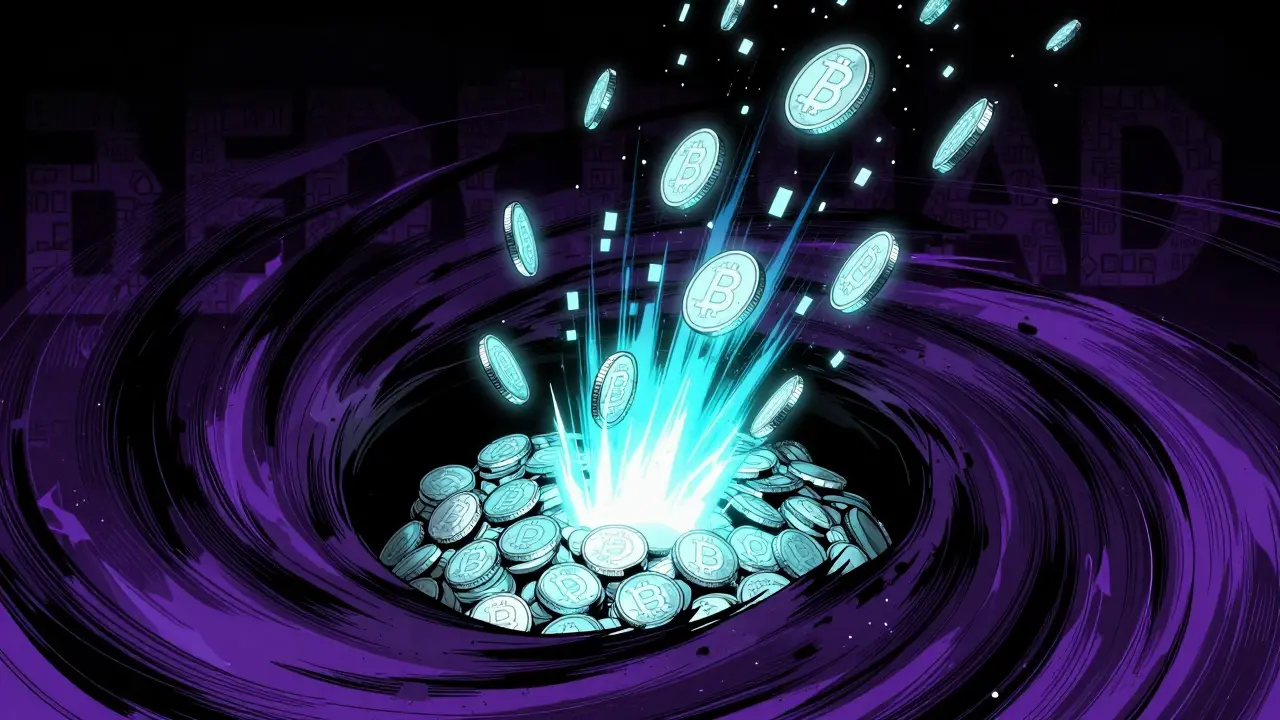
Imagine you own a share in a company. That company decides to buy back its own shares from the market and shred them. Fewer shares exist now. If demand stays the same, your slice of the pie gets bigger. This is the core logic behind buyback and burn programs in cryptocurrency. It is a mechanism where projects take their revenue, buy their own tokens on the open market, and send those tokens to an address that can never be accessed again. The goal is simple: reduce supply to increase value.
This strategy isn't new to finance, but it became a cornerstone of cryptocurrency tokenomics around 2017-2018. Projects realized they needed a way to manage token supply in decentralized environments without a central bank printing money at will. Today, nearly 40% of the top 200 cryptocurrencies use some form of burning mechanism. But does it actually work? And why do some projects thrive with it while others fail?
How Buyback and Burn Actually Works
The process looks technical, but it boils down to two main steps. First, the project sets aside a portion of its revenue. For example, Binance, the world's largest crypto exchange, committed to using 20% of its quarterly profits for this purpose. Second, they send the purchased tokens to a "burn address."
A burn address is essentially a digital black hole. It is a wallet address-like 0x000000000000000000000000000000000000dEaD on the BNB Smart Chain-that has no private key. Because no one holds the key, no one can ever move those tokens out. They are gone forever. You can verify this yourself on blockchain explorers like Etherscan or BscScan. The tokens show up as a zero-balance holding in that specific address, creating an immutable record of supply reduction.
There are two primary ways projects fund these burns:
- Profit-Based Buybacks: Common among centralized exchanges like Binance, Huobi, and KuCoin. They calculate their net profit for the quarter, take a percentage (often 10-25%), and use that cash to buy tokens on the open market before burning them.
- Fee-Based Burns: Common among protocols like Ethereum. Instead of buying back tokens, a portion of every transaction fee (gas fee) is automatically burned. Ethereum’s EIP-1559 update introduced this, permanently removing over 3.5 million ETH since August 2021.
The distinction matters. Profit-based burns depend on the business making money. Fee-based burns depend on network usage. Both aim for scarcity, but they rely on different drivers.
Why Projects Use This Strategy
You might wonder why a project would destroy its own assets. The answer lies in basic economics: supply and demand. If the total supply of a token decreases while demand remains stable or increases, the price should theoretically rise. This creates a deflationary pressure.
However, there is more to it than just math. These programs serve as a signal of confidence. When a project commits to burning tokens, it shows investors that the team believes in the long-term viability of the ecosystem. It aligns the interests of the developers with the holders. If the project fails, the burns stop. If the project succeeds, the supply shrinks, potentially rewarding early adopters.
Consider TRON. In 2018, TRON executed a massive single-burn event, destroying 1 billion TRX tokens-about 50% of its total supply. While dramatic, it was a one-time shock rather than a sustained strategy. Compare this to Binance’s systematic approach. By conducting regular, predictable burns (over 22 times through early 2023), Binance created a sense of reliability. Market impact studies suggest that projects with regular burn schedules experience 15-20% less price volatility than those with irregular events. Predictability builds trust.
| Project | Burn Mechanism | Funding Source | Frequency | Total Value Burned (Approx.) |
|---|---|---|---|---|
| Binance (BNB) | Quarterly Auto-Burn | 20% of Quarterly Profits | Every Quarter | $6.2 Billion+ |
| Ethereum (ETH) | EIP-1559 Base Fee | Transaction Gas Fees | Continuous (Per Transaction) | $10.5 Billion+ |
| TRON (TRX) | Single Event | Initial Supply Allocation | One-Time (2018) | $1.8 Billion (at time) |

The Reality Check: Does It Increase Price?
Here is where things get complicated. Many investors assume that a burn announcement equals a price pump. Sometimes it does. Analyst Wendy O. noted in a 2023 CoinDesk article that burn events often trigger immediate price spikes of 5-8%. But she also pointed out that prices usually revert to their previous trend within 72 hours.
Why? Because burning alone doesn’t create value. It only concentrates existing value into fewer units. If nobody wants the token, burning half the supply won’t make the remaining half worth anything. A study by the University of Cambridge’s Digital Assets Research Group analyzed 15 major burn events and found that only 4 showed statistically significant price impacts beyond 30 days. Their conclusion was blunt: "Burn mechanisms alone cannot overcome weak project fundamentals or negative market sentiment."
Think of it like this. If a restaurant closes down and burns half its chairs, the remaining chairs aren’t suddenly more valuable because people still don’t want to eat there. The utility-the food, the service-is what drives demand. In crypto, that utility is the network’s usefulness, its user base, and its technological edge.
Criticisms and Risks
Not everyone loves the burn model. Some experts argue it undermines the purpose of governance tokens. Chris Burniske, founder of Placeholder VC, argued in a 2020 white paper that burning governance tokens destroys capital assets. His view? "Issuance is key to capitalization." He suggests that instead of burning, projects should redistribute repurchased tokens to stakers-a "buyback-and-make" model. MakerDAO experimented with this in mid-2023, distributing MKR tokens to stakers rather than burning them.
There are also risks of manipulation. A survey by CoinGecko found that 38% of respondents believed burn announcements often coincided with market manipulation attempts. Suspicious trading volume spikes sometimes appear right before major burns. Worse, some projects have been caught faking burns. In one 2022 case documented by CryptoSlate, a project claimed to burn 50 million tokens, but blockchain analysis revealed they were just moved between controlled wallets, not sent to a true burn address. This highlights the importance of transparency and third-party audits.
Regulatory uncertainty adds another layer of risk. The SEC has hinted that certain token structures, including complex buyback schemes, could be viewed as unregistered securities offerings if not structured properly. In China, any form of token supply manipulation is prohibited entirely. Projects must navigate these fragmented legal landscapes carefully.
What to Look For as an Investor
If you are evaluating a cryptocurrency with a buyback and burn program, don’t just look at the burn number. Ask these questions:
- Is the burn funded by real revenue? Look for projects that burn tokens bought with actual profit or transaction fees, not tokens minted from thin air. Binance’s model ties burns directly to exchange profitability, which is a strong fundamental link.
- Is the schedule predictable? Regular, automated burns (like Ethereum’s continuous fee burn or Binance’s quarterly auto-burn) provide stability. One-off burns often feel like marketing stunts.
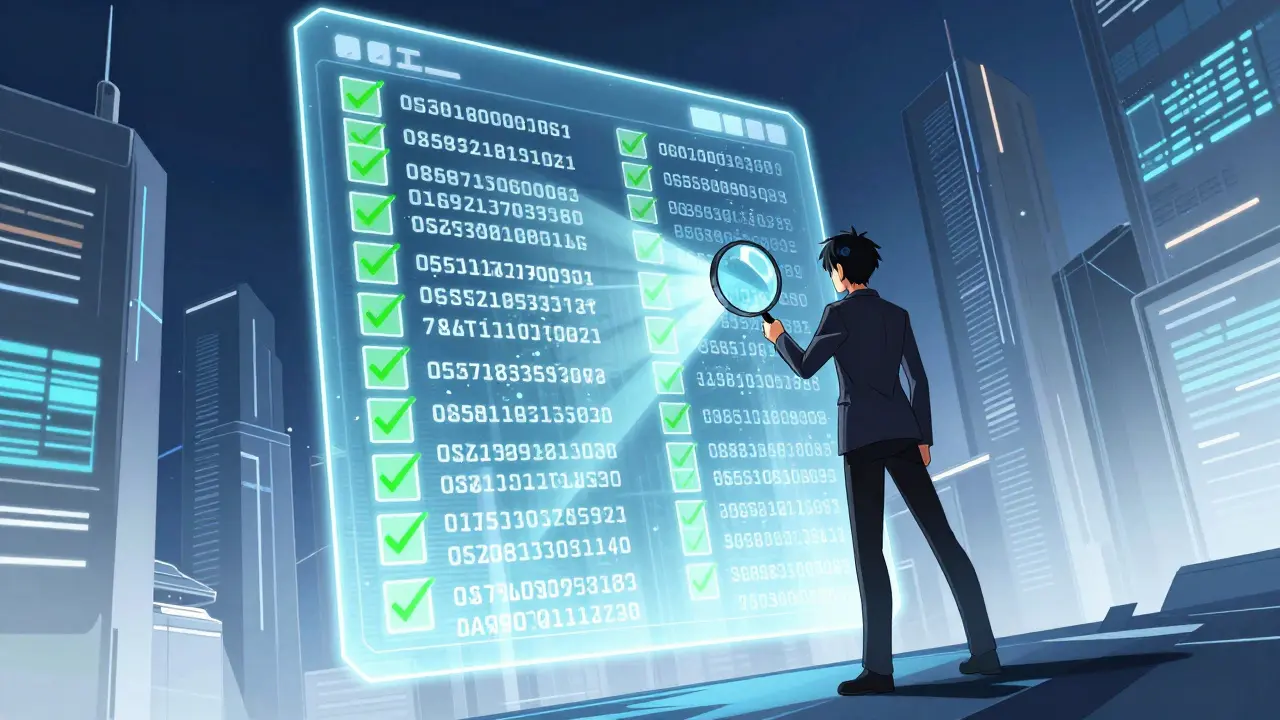
- Can you verify it? Always check the blockchain explorer. Look for transactions going to known burn addresses (like the DEAD address). If the project doesn’t publish the transaction hashes, be skeptical.
- Does the project have utility? Remember the Cambridge study. Burns support price, but utility sustains it. Does the network have users? Is it being used for payments, smart contracts, or storage?
Development costs for robust burn systems vary. A basic system might cost $15,000-$50,000 to build. Sophisticated automated systems, like Binance’s, require over $200,000 in development and auditing. Reputable firms like CertiK and OpenZeppelin audit these processes for $5,000-$15,000 per event. If a small project claims a massive burn but hasn’t paid for an audit, treat it with caution.
The Future of Token Deflation
We are seeing a shift from simple burns to more sophisticated value-capture models. Binance launched "Burn Hub" in early 2023, integrating real-time gas fee burning with quarterly profit burns. This hybrid approach ensures constant supply reduction regardless of market conditions. Ethereum’s upcoming upgrades continue to refine EIP-1559 to maximize burn efficiency during high network congestion.
Industry analysts at Messari predict that by 2025, 65% of major cryptocurrencies will incorporate some form of supply reduction mechanism. However, the focus is moving away from "burn for hype" toward "burn for sustainability." Projects are realizing that transparent, verifiable, and fundamentally linked burns are the only ones that stand the test of time.
In the end, buyback and burn programs are a tool, not a magic wand. They help manage supply and signal commitment. But they cannot replace good technology, active development, and genuine user adoption. As you navigate the crypto landscape, look past the flashy burn announcements and dig into the fundamentals. That is where real value lives.
What is a burn address in cryptocurrency?
A burn address is a special wallet address on a blockchain that has no private key associated with it. Because no one holds the key, tokens sent to this address are permanently inaccessible and effectively removed from circulation. Common examples include the "dead" address (0x00...dEaD) on Ethereum and BNB Chain.
Does burning tokens always increase the price?
No. While burning reduces supply, which can theoretically increase price if demand is constant, it does not guarantee a price rise. If demand drops or the project lacks utility, the price may still fall. Studies show that burn events often cause short-term spikes (5-8%) but prices frequently revert to trend within days unless supported by strong fundamentals.
How does Binance's buyback and burn program work?
Binance uses 20% of its quarterly profits to buy back BNB tokens from the open market. These tokens are then sent to a burn address. The amount burned is calculated based on trading volume and token price. Additionally, Binance implements an "Auto-Burn" mechanism that continuously burns a portion of gas fees on the BNB Smart Chain, ensuring regular supply reduction.
What is the difference between profit-based and fee-based burning?
Profit-based burning involves a project using its business revenue (like exchange fees) to buy back and burn tokens. This depends on the company's profitability. Fee-based burning, like Ethereum's EIP-1559, automatically burns a portion of every transaction fee paid by users. This depends on network activity and usage, not corporate profit.
Can I verify if a token was actually burned?
Yes. You can verify burns using blockchain explorers like Etherscan, BscScan, or TronScan. Look for transactions where the recipient address is a known burn address (e.g., 0x00...dEaD). Legitimate projects will publish the transaction hash in their announcements so anyone can independently confirm the tokens were destroyed.