ByteNext (BNU) Airdrop Details: How the AvatarArt Token Distribution Worked
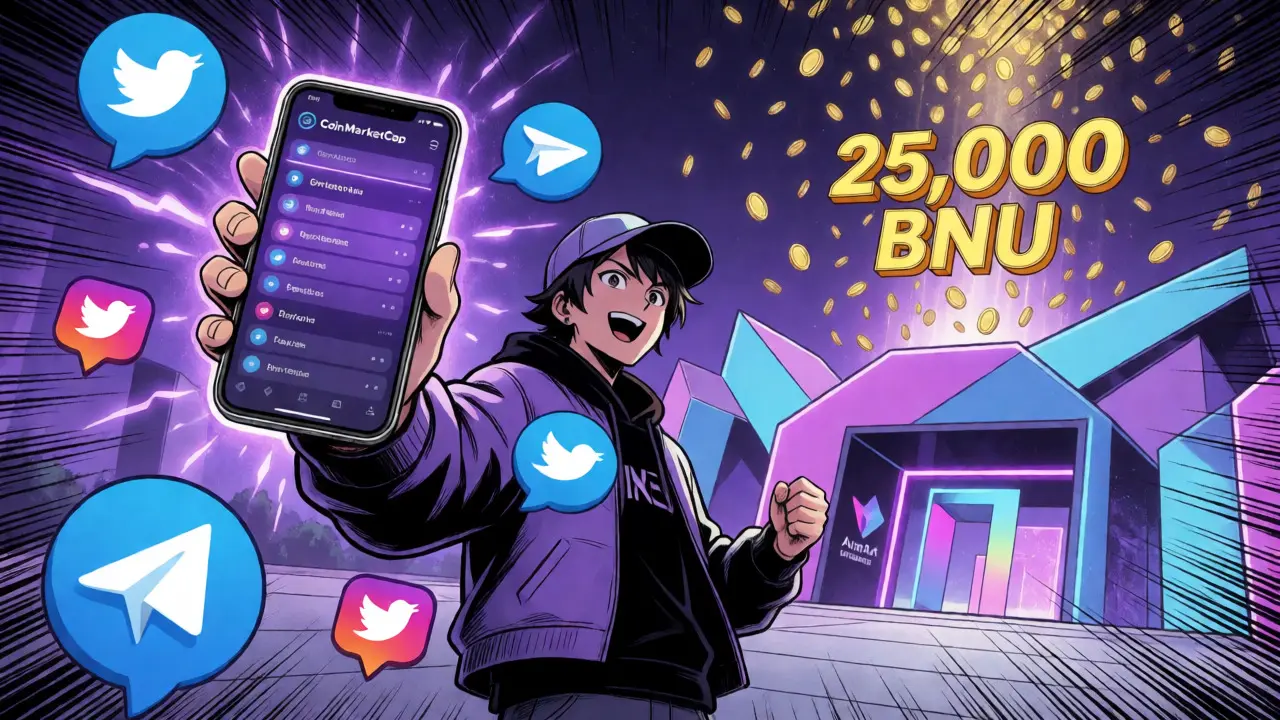
Remember when ByteNext was the hot new thing in the NFT space? If you were active on CoinMarketCap back in July, you might have seen their massive push to get $BNU tokens into people's wallets. It wasn't just a random drop; it was a calculated move to build a community around their AvatarArt NFT Marketplace. But what exactly happened during that campaign, and where does the project stand now?
The Core of the ByteNext Airdrop Campaign
Let's cut through the noise. The ByteNext airdrop wasn't some endless drip-feed of free money. It was a specific, time-bound event designed to generate buzz for their platform. Running from July 3 at 2 PM UTC to July 8 at 2 PM UTC, this five-day sprint aimed to distribute exactly 25,000 $BNU tokens. That sounds like a lot until you realize they were splitting it among 1,000 lucky winners. Each winner walked away with 25 $BNU tokens.
Why so few per person? Because the goal wasn't to make anyone rich overnight. It was about getting users to interact with the brand. By requiring participants to complete social tasks, ByteNext ensured that those receiving tokens were actually engaged with the ecosystem. This is a common tactic in crypto marketing: trade small amounts of capital for user attention and data.
| Parameter | Detail |
|---|---|
| Total Tokens Distributed | 25,000 $BNU |
| Number of Winners | 1,000 |
| Tokens Per Winner | 25 $BNU |
| Campaign Duration | 5 Days (July 3 - July 8) |
| Platform | CoinMarketCap |
| Blockchain Network | Binance Smart Chain (BSC) |
How You Could Have Claimed Your Share
If you missed it, don't kick yourself too hard. The process was straightforward but required a bit of hustle. You couldn't just sit there and wait for magic. Participation hinged on completing five mandatory steps. Miss one, and you were out of the running for the random draw.
- Add to Watchlist: First, you had to go to the official BNU page on CoinMarketCap and add the token to your personal watchlist. This signals interest to the platform's algorithm.
- Follow Social Accounts: You needed to follow both @Bytenextio and @zeusc_ventures on Twitter. This expanded their reach beyond just the crypto crowd.
- Join Telegram Channels: Crypto lives on Telegram. Participants had to join the main group (t.me/ByteNextOfficial) and the announcement channel (t.me/ByteNextAnnouncement).
- Retweet and Tag: You had to retweet the specific campaign post and tag at least five friends. This viral loop helped spread the word organically.
- Provide a BSC Wallet: Since the token runs on the Binance Smart Chain, you needed a valid BSC address to receive the rewards. No Ethereum addresses allowed here.
Winners weren't announced immediately. They waited until July 15, which created a two-week period of anticipation. Actual distribution hit wallets on July 30. This delay is standard practice to allow time for verifying task completion and filtering out bots or duplicate entries.
What Is the $BNU Token Actually For?
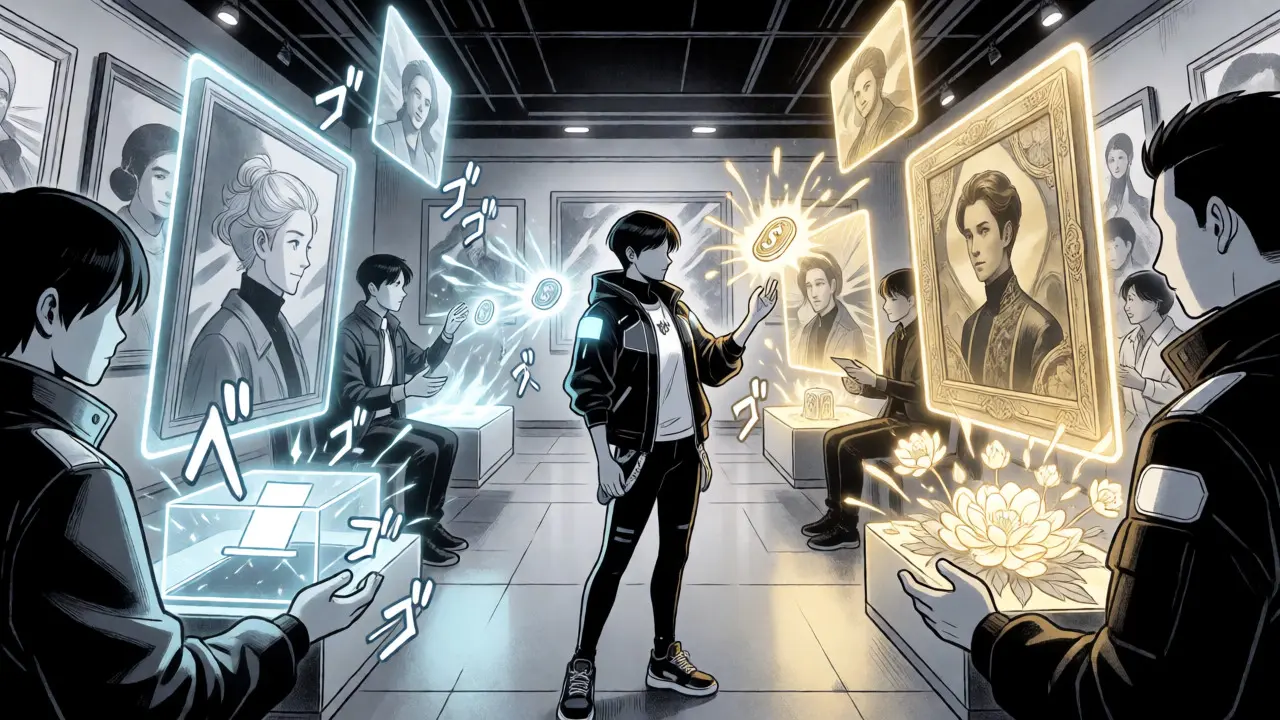
Free tokens are nice, but do they have utility? In the case of ByteNext, yes. The $BNU token isn't just a speculative asset; it's the fuel for the AvatarArt ecosystem. Think of it as the currency you use inside a digital theme park.
The primary use case is paying transaction fees on the AvatarArt platform. If you're buying or selling an NFT artwork, you pay in BNU. Beyond that, artists can use tokens to buy advertising placements in 3D virtual reality exhibitions. Imagine walking through a digital gallery and seeing sponsored art pieces-that's funded by BNU.
There's also a governance aspect. Token holders get voting rights on platform changes. Want to change how artist royalties work? Holders vote. Additionally, the token supports staking and farming capabilities, allowing users to earn more tokens by providing liquidity. This creates a circular economy within the marketplace, keeping value locked inside the system rather than flowing out immediately.
Current Market Reality: Where Is BNU Now?
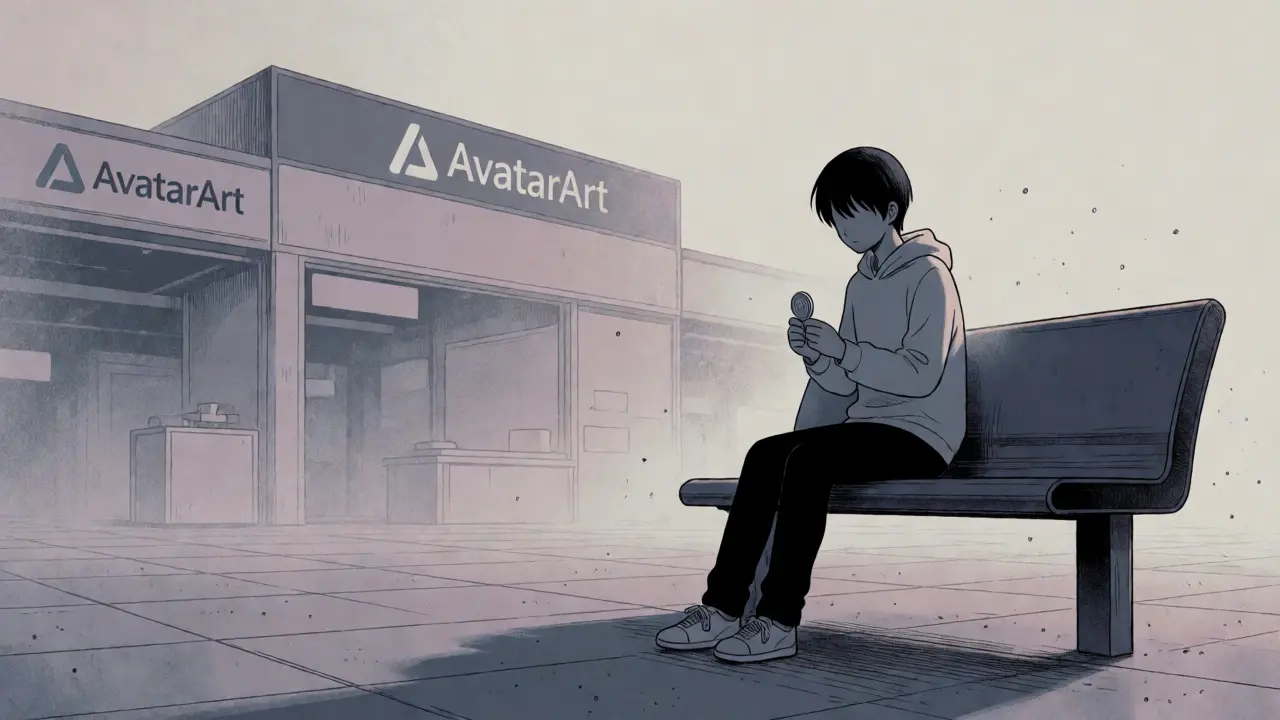
Here is the uncomfortable truth. While the airdrop generated excitement, the market performance of $BNU has been rough. As of September 2026, trading activity has nearly evaporated. According to data from CoinGecko, BNU stopped trading on all listed exchanges roughly 15 days prior to current reporting periods. Trading volume dropped to a mere $4.84 in a 24-hour window. That is essentially zero liquidity.
Coinbase lists the price at approximately $0.000603 per token, though volume remains negligible at $6.36. The token trades about 18.58% below its all-time high of $0.000741. More concerning is the year-over-year decline. A year ago, the token was valued higher, but it has since dropped over 51%. Monthly performance shows a slight dip of 3.06%, while weekly and daily charts remain flat. This stagnation suggests that without active trading pairs or exchange support, the token lacks momentum.
The total market capitalization sits around $120,584 based on a circulating supply of 200 million tokens. For context, many failed meme coins have higher caps. This low valuation reflects the lack of buyer interest and the potential absence of active development updates visible to the public.
Project Status and Future Outlook
Does ByteNext still exist? Technically, yes. Their website (bytenext.io) and GitHub repository remain online. However, the pulse of the community seems faint. The initial focus on building an NFT marketplace on Binance Smart Chain placed them in a crowded field. Competitors like OpenSea, Rarible, and numerous other BSC-based platforms offer similar services with far larger user bases.
The airdrop strategy itself was conservative. Distributing only 0.0125% of the total supply indicates they wanted to avoid dumping pressure early on. But without sustained marketing or product innovation, even a well-executed airdrop can fade into obscurity. Current evidence points to no new airdrop campaigns or major feature launches. The project appears to be in a dormant state rather than actively growing.
If you hold BNU from that airdrop, you likely hold it as a curiosity or a lottery ticket. Betting on a revival requires hope that the team will re-engage with exchanges or release a significant update. Until then, the token serves as a reminder of the volatile nature of niche NFT projects.
Was the ByteNext airdrop legitimate?
Yes, the airdrop was a legitimate campaign organized via CoinMarketCap. It followed standard verification procedures, including social media checks and wallet validation. Winners were selected randomly from qualified participants, and tokens were distributed on the Binance Smart Chain network.
How many BNU tokens did each winner receive?
Each of the 1,000 winners received 25 $BNU tokens. The total distribution amount was 25,000 tokens, which represented a small fraction of the total supply.
Is BNU still tradable today?
Trading activity is extremely low. Recent data shows minimal volume, with some sources indicating trading has effectively ceased on major exchanges. Liquidity is a significant concern for current holders.
What blockchain does BNU run on?
The $BNU token operates exclusively on the Binance Smart Chain (BSC). Participants needed a BSC-compatible wallet address to receive their airdrop rewards.
What is the main use case for the BNU token?
BNU is used for transaction fees on the AvatarArt NFT marketplace, purchasing advertising in VR exhibitions, authorizing payments to artists, staking, and governance voting.