Central Bank of Iraq Crypto Restrictions: What You Need to Know

Imagine trying to use a digital wallet in a country where the government views the very act of processing a crypto transaction as a threat to national security. For many in Iraq, this isn't a hypothetical-it's the legal reality. The Central Bank of Iraq is the primary monetary authority of Iraq, responsible for managing the Iraqi dinar and regulating the country's financial institutions. Since 2017, they have maintained one of the strictest digital asset stances in the world, making Iraq one of only ten nations with a complete prohibition on cryptocurrency.
The Legal Wall: Why Crypto is Banned in Iraq
The Iraqi government didn't just wake up and decide to dislike Bitcoin. Their restrictive approach is rooted in a fear of financial instability and crime. The core of these Central Bank of Iraq crypto restrictions lies in CBI Circular No. (125/5/9), issued in November 2021. This document essentially tells every bank and payment provider in the country: do not touch virtual assets.
If you're a bank in Baghdad or a payment service in Basra, you cannot facilitate any transaction involving cryptocurrencies. The CBI has been very clear that these assets have no legal tender status. This means if you have a contract that says someone will pay you in Ethereum, that contract is legally unenforceable in Iraqi courts. You can't sue someone for not paying you in crypto because the state doesn't recognize the asset as a valid obligation.
To make things even tighter, the CBI updated its rules in March 2022 to align with the Financial Action Task Force (or FATF), an intergovernmental organization that sets global standards to fight money laundering and terror financing. By doing this, Iraq isn't just fighting "internet money"-it's trying to prove to the global financial community that it can stop dirty money from moving through digital channels.
Beyond the Law: The Role of Religious Rulings
In Iraq, a law from the central bank is powerful, but a religious ruling can be even more influential. This is where the restrictions get a cultural layer. For instance, the Supreme Fatwa Authority of the Kurdistan Regional Government (KRG) took a public stand against OneCoin back in 2018.
OneCoin turned out to be one of the biggest scams in history, but the fatwa served as a warning to the public: these digital assets aren't just legally risky; they can be morally or religiously problematic if they are based on fraud. When the financial regulator and the religious authority agree that a specific asset is "forbidden," it creates a massive psychological barrier for the average citizen, far beyond what a government circular could achieve.
| Feature | Iraq (CBI Model) | Regulated Model (e.g., UAE/EU) | Restrictive but Active (e.g., China) |
|---|---|---|---|
| Legal Status | Complete Prohibition | Legal & Licensed | Banned but high underground activity |
| Bank Access | Strictly Forbidden | Fully Integrated | Blocked / Heavily Monitored |
| Consumer Use | Discouraged/Illegal | Protected by Law | Underground/P2P |
| State Digital Asset | CBDC in Research | Various Pilots | Digital Yuan (e-CNY) Active |
The Paradox: Official Bans vs. Street Reality
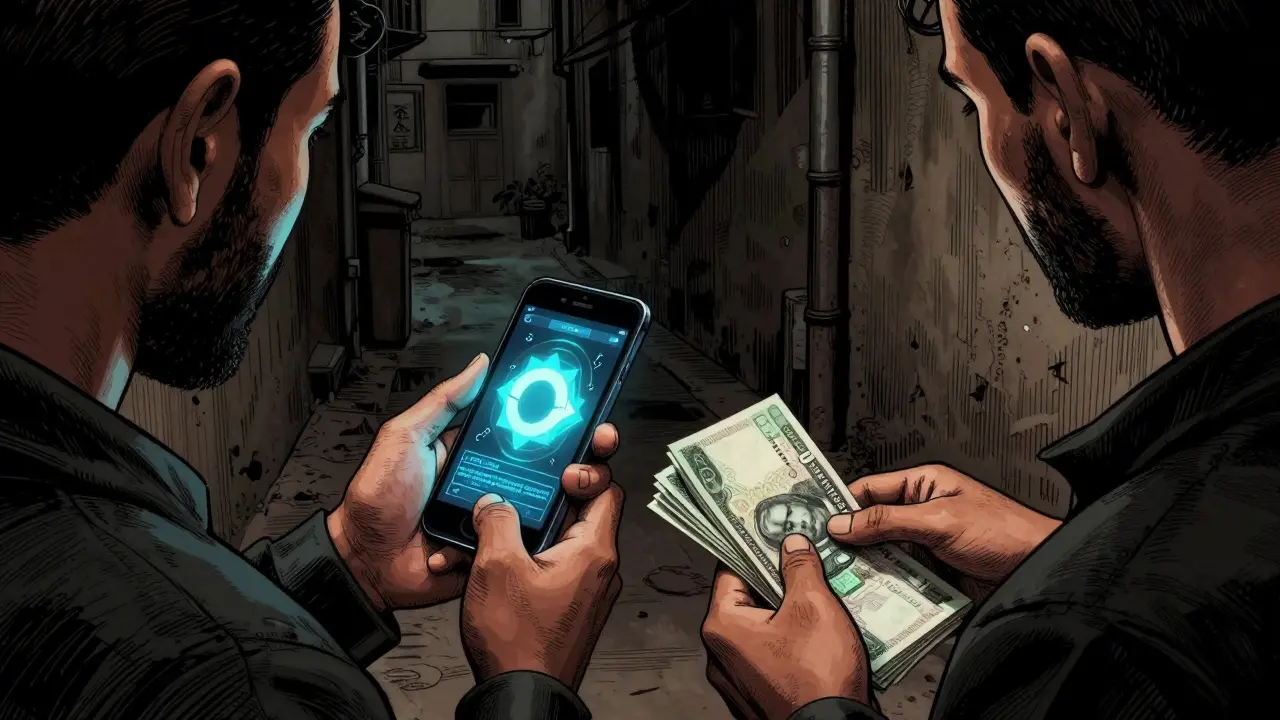
Here is the weird part: while the CBI says "no," people are still doing it. There is a massive gap between policy and practice. Because the government doesn't have a way to track every single private key on a laptop in Baghdad, informal trading persists.
If you are an individual holding some Bitcoin in a private wallet, you aren't necessarily going to be arrested tomorrow. The laws primarily target the institutions. Banks face huge penalties if they let crypto transactions slip through, but the individual user lives in a legal gray area. However, this doesn't mean it's safe. If a user tries to move a large amount of crypto into a local bank account, they might trigger Anti-Money Laundering (AML) alerts, which can lead to frozen accounts or government questioning.
This create a "shadow economy" where people trade peer-to-peer (P2P), avoiding banks entirely. It's a cat-and-mouse game that shows the limits of the CBI's technological reach.
The Shift Toward a State-Controlled Digital Currency
The Iraqi government isn't against the technology of digital currency; they are against the lack of control it represents. This is why they are pivoting toward a Central Bank Digital Currency (or CBDC), which is a digital form of a country's sovereign currency.
In March 2025, Mazhar Mohammed Saleh, an advisor to the Prime Minister, admitted that the CBI is researching a digital version of the dinar. Why would they do this after banning Bitcoin? Because a CBDC gives them the best of both worlds: the efficiency of digital payments and the total control of a central bank. They want to:
- Stop cash leakage (where money leaves the formal banking system).
- Cut down on the massive cost of printing paper dinars.
- Track exactly where money is going to stop money laundering more effectively.
- Bring more people into the formal financial system (financial inclusion).
Essentially, the government wants a "digital leash." A CBDC allows them to see every transaction in real-time, something they can't do with decentralized coins like Bitcoin.
Economic Pain and the Dinar's Struggle
To understand why the CBI is so paranoid about financial flows, you have to look at the state of the Iraqi dinar. Iraq has a serious liquidity problem. Only about 8.8% of the total money supply is actually deposited in banks. Most people keep their cash under mattresses or in home safes.
The government needs roughly 18 to 20 trillion dinars a month to keep the lights on, but the banking system is too fragile to support that flow. This instability led to the 2020 decision to devalue the dinar, moving it from 1,182 to 1,450 dinars per US dollar. When the currency loses value, people lose their purchasing power. In a world where your local currency is shrinking, the temptation to buy "hard assets" like Bitcoin is high, which is exactly why the CBI is doubling down on its restrictions.

The Dark Side: Surveillance and Human Rights
While the government talks about "financial inclusion" and "efficiency," human rights groups are sounding the alarm. The Human Rights Foundation has pointed out that Iraq is an "Electoral Autocracy" with very low scores for civil liberties.
The fear is that a CBDC won't just be a tool for banking; it will be a tool for surveillance. In a country where social media posts can lead to arrests or docked salaries, a government-controlled digital currency could allow the state to freeze the funds of a dissident with a single click. By removing the option for private cryptocurrencies and replacing them with a state-run digital dinar, the government effectively removes the last remaining exit ramp for financial privacy.
Is it illegal to own cryptocurrency in Iraq?
The Central Bank of Iraq (CBI) prohibits all financial institutions from dealing with crypto, meaning you cannot use a bank to buy or sell it. While there is no clear law that explicitly criminalizes the simple possession of crypto for an individual, doing so puts you in a legal gray area and can expose you to Anti-Money Laundering (AML) investigations if you try to convert it to cash through official channels.
Can I use my Iraqi debit card to buy Bitcoin?
No. Under CBI directives, specifically the follow-up to Circular 125/5/9, payment cards and e-wallets are strictly prohibited from being used for cryptocurrency transactions or speculative trading.
What is the difference between the CBI ban and the planned CBDC?
The ban targets private, decentralized cryptocurrencies (like Bitcoin or Ethereum) because the government cannot control them. A CBDC is a centralized digital currency issued and managed by the Central Bank of Iraq itself, giving the government full oversight of every transaction.
Why did the KRG issue a fatwa against OneCoin?
The Supreme Fatwa Authority of the Kurdistan Regional Government issued the ruling in 2018 because OneCoin was an international fraud scheme. The ruling aimed to protect citizens from financial scams by framing the investment as religiously and legally prohibited.
When will the Iraqi digital currency be released?
As of 2025, the Central Bank of Iraq is still in the research phase. There is no official launch date, but the government has signaled it as a "gradual alternative" to paper currency to reduce printing costs and cash leakage.
What to Do Now
If you are a business owner or a resident in Iraq, the best path is extreme caution. Avoid using official banking channels for any crypto-related activity, as the CBI's monitoring of banks is rigorous. If you are looking for a way to modernize your payments, keep an eye on official CBI announcements regarding the CBDC, but be aware of the privacy trade-offs involved.
For those in the fintech sector, the current environment is a "wait and see." Until the Iraqi parliament passes formal legislation to fill the legal vacuum, the only reliable rule is the one coming from the CBI: avoid virtual assets in any formal capacity.
Aaron Zeiler
April 26, 2026 AT 11:05it is basically the same story in every emerging market where the local currency is tanking
people move to btc because the gov can't print it but then the gov bans it to stop the bleed
Carli Bates
April 28, 2026 AT 00:32oh look another government pretending they care about crime while actually just wanting to track every single cent we spend digitally... how revolutionary
Arun Prabhu
April 29, 2026 AT 23:01The sheer audacity of these bureaucratic dinosaurs attempting to stifle the inevitable evolution of fiscal sovereignty is truly a comedic tragedy
It is a pedestrian attempt at control by an intellectually bankrupt regime that fears the transparency of a public ledger more than they fear their own systemic collapse
Rain Richardsson
April 30, 2026 AT 06:24Makes sense that they'd want control.
Ralph Espinosa
May 1, 2026 AT 04:24Actually, the FATF alignment is the most critical part here!!! If Iraq wants to stay connected to the global SWIFT system, they have to show they are fighting money laundering, regardless of how restrictive it feels for the average user...
April D Thompson
May 2, 2026 AT 05:34My heart just breaks for the people there who are just trying to survive a crashing currency and now they're being told their only lifeboat is a crime! It is an absolute tragedy of human freedom when the state decides that financial privacy is a threat to national security. We are witnessing the death of anonymity in real-time and it is honestly terrifying to imagine a world where you can't even buy a loaf of bread without the government knowing your political leanings because they can freeze your digital wallet on a whim. This is the kind of dystopia we were warned about in novels, but now it is just a standard Tuesday in Baghdad. We have to fight for the right to exit these broken systems! We cannot let the 'digital leash' become the new global standard for every struggling nation on earth!
Kara Spadone
May 2, 2026 AT 11:57Typical. They ban the good stuff and then try to sell you a 'state-approved' version that is basically just a surveillance tool 🙄
Jimmy vasquez
May 3, 2026 AT 16:16For anyone wondering about the P2P part, it's usually handled through local trusted circles or escrow services that don't touch the banking system at all, which is why the CBI struggles to stop it
Ipsita Seal
May 5, 2026 AT 04:33Whatever. Just sounds like more government drama that doesn't even matter to most people
Jehan ZA
May 6, 2026 AT 17:51The distinction between the ban on decentralized assets and the implementation of a CBDC is a significant policy maneuver. It is an attempt to modernize infrastructure while maintaining absolute sovereign control.
Chloe Fletcher
May 6, 2026 AT 20:17Omg the surveillance part is literally a nightmare!! 😱 Who is going to protect the people if the gov can just click a button and you're broke? Not okay!! 🚩🚩
Mitali Rajvanshi
May 7, 2026 AT 06:59It's a tough spot to be in, but I get why they are scared of the instability
Amanda Macy
May 9, 2026 AT 01:13The gap between official policy and street reality is where the most interesting economic data usually hides. If the demand for BTC remains high despite the ban, it proves the lack of trust in the Dinar is deeper than just a few policy tweaks can fix.
Iestyn Lloyd
May 10, 2026 AT 10:37One should note that similar patterns have been observed in other jurisdictions attempting to balance modernization with strict capital controls. It's a delicate balance, though often leaning toward the latter in these cases.
Andrew Todd
May 10, 2026 AT 15:55They can't even run a basic bank and they think they can do a digital coin? Laughable. This is why some countries just fail and stay that way