Crypto Adoption in Iran Under Sanctions: How Citizens Bypass Financial Isolation

Iran Crypto Survival Calculator
When international sanctions cut off Iran's access to global banking, ordinary citizens turned to cryptocurrency as a lifeline. This calculator shows how much basic necessities you could buy with cryptocurrency versus Iranian rial at current rates.
Your Survival Value
Enter your cryptocurrency amount to see how much you could buy with it under Iran's sanctions conditions
When banks shut down and foreign currency vanishes, people find another way. In Iran, that way is cryptocurrency. Since 2017, international sanctions have choked off the country’s access to global banking. SWIFT was cut. Dollar accounts frozen. Import payments blocked. What followed wasn’t a collapse-it was a quiet revolution. Millions of Iranians turned to Bitcoin, Ethereum, and stablecoins not to get rich, but to survive.
Why Crypto Became Iran’s Financial Lifeline
Iran’s economy has been under pressure for decades, but the last seven years changed everything. After the U.S. pulled out of the nuclear deal in 2018, sanctions tightened. Banks couldn’t process international transfers. Importers couldn’t pay for medicine, food, or spare parts. Inflation hit 40%. The rial lost over 80% of its value against the dollar since 2018. People didn’t wait for permission. They started buying crypto. Not as speculation. Not as a hobby. As currency. A digital alternative to cash that couldn’t be seized, blocked, or devalued by a central bank. Bitcoin became a store of value. USDT and DAI became the new rial-stable, transferable, and global. By 2024, Iran accounted for nearly 60% of all cryptocurrency activity linked to sanctioned nations. That’s more than Venezuela, North Korea, and Russia combined. It wasn’t because Iranians loved crypto. It was because they had no other choice.The Government’s Double Game
The Iranian government didn’t ban crypto. It co-opted it. In 2019, it legalized mining. Why? Because Iran has cheap electricity and a desperate need for hard currency. The state didn’t want citizens mining for profit-it wanted them mining for the Central Bank. Licensed miners were forced to sell all their Bitcoin and Ethereum directly to the government at fixed prices. The CBI then sold those coins abroad to buy essentials like wheat and medicine. But the rules were brutal. Energy tariffs for miners were raised so high that many couldn’t afford to run their rigs legally. So they went underground. Thousands of unlicensed miners now operate in basements, garages, and warehouses-using stolen power, dodging inspectors, and sending their coins to foreign exchanges through VPNs. Meanwhile, the government built its own platforms. Nobitex, the largest local exchange, became the official gateway. It’s not just a trading site-it’s a surveillance tool. Since December 2024, the Central Bank required all crypto-to-fiat conversions to go through government-approved APIs. That means every deposit, withdrawal, and trade is monitored. User identities, IP addresses, transaction history-all tracked. The message was clear: You can use crypto. But we control it.How Iranians Outsmart the Blockades
Iranians don’t just use crypto-they outmaneuver it. When Tether froze $200 million in Iranian-linked USDT addresses in July 2025, panic hit. But within days, users had already shifted. They moved their holdings from USDT on Ethereum to DAI on Polygon. Why Polygon? Faster transactions. Lower fees. Less scrutiny. And crucially, DAI is decentralized-it can’t be frozen by a single company like Tether. VPNs are everywhere. Even though the government blocks access to foreign exchanges, Iranians use them daily. Telegram groups share step-by-step guides: how to set up a non-KYC wallet, how to swap Bitcoin to DAI via Uniswap, how to use a peer-to-peer platform like Paxful without getting flagged. Some even use cross-chain bridges to move funds between blockchains, fragmenting their trail. A wallet might receive Bitcoin, convert it to USDT on Binance, then swap to DAI on Arbitrum, then send to a wallet on Solana. Each step adds layers. Each layer makes it harder for OFAC to trace. This isn’t tech-savvy hacking. It’s survival. A mother buying insulin. A shopkeeper paying a supplier in Turkey. A student sending money to a cousin abroad. These aren’t criminals. They’re people using the only tools left to them.
The Rise of the IRGC in Crypto
It’s not just civilians. Iran’s military and intelligence apparatus are deeply involved. The Islamic Revolutionary Guard Corps (IRGC) now uses crypto as a core financial tool. Treasury Department reports show direct links between IRGC-affiliated wallets and exchanges like Nobitex. Funds flow from Iranian miners to IRGC-controlled addresses, then out to shell companies in China, the UAE, and Hong Kong. These companies buy machinery, electronics, and dual-use tech-things banned under sanctions. In 2024, OFAC designated 13 crypto addresses tied to Iranian sanctions evasion-the second-highest number in seven years. One wallet, flagged in March 2025, had sent over $12 million to addresses linked to missile component suppliers. Another was tied to a front company in Dubai that imported drone parts. The IRGC doesn’t just use crypto-it shapes it. They pressure miners to sell to state-run exchanges. They control which foreign platforms Iranians can access. And they’ve quietly built their own crypto infrastructure: private wallets, encrypted messaging systems, and internal trading networks that operate outside public exchanges. This isn’t evasion anymore. It’s institutionalized.Iran’s Crypto Tax Law: A Sign of Acceptance
In August 2025, Iran passed its first law taxing cryptocurrency profits. The Law on Taxation of Speculation and Profiteering treats crypto like gold, real estate, and forex. If you make a profit from trading Bitcoin, you pay capital gains tax. At first glance, this looks like crackdown. But it’s not. It’s recognition. The government doesn’t want to kill crypto. It wants to control and profit from it. By taxing it, they legitimize it. They bring it into the open. They create a paper trail they can use to track, audit, and extract revenue. The tax rate? 15% on net gains. Not high. Not punitive. Just enough to make it feel official. And the implementation? Phased. No audits yet. No penalties. No mass crackdowns. That’s because the state knows: if they go too hard, the system collapses. And when it collapses, millions lose their financial lifeline.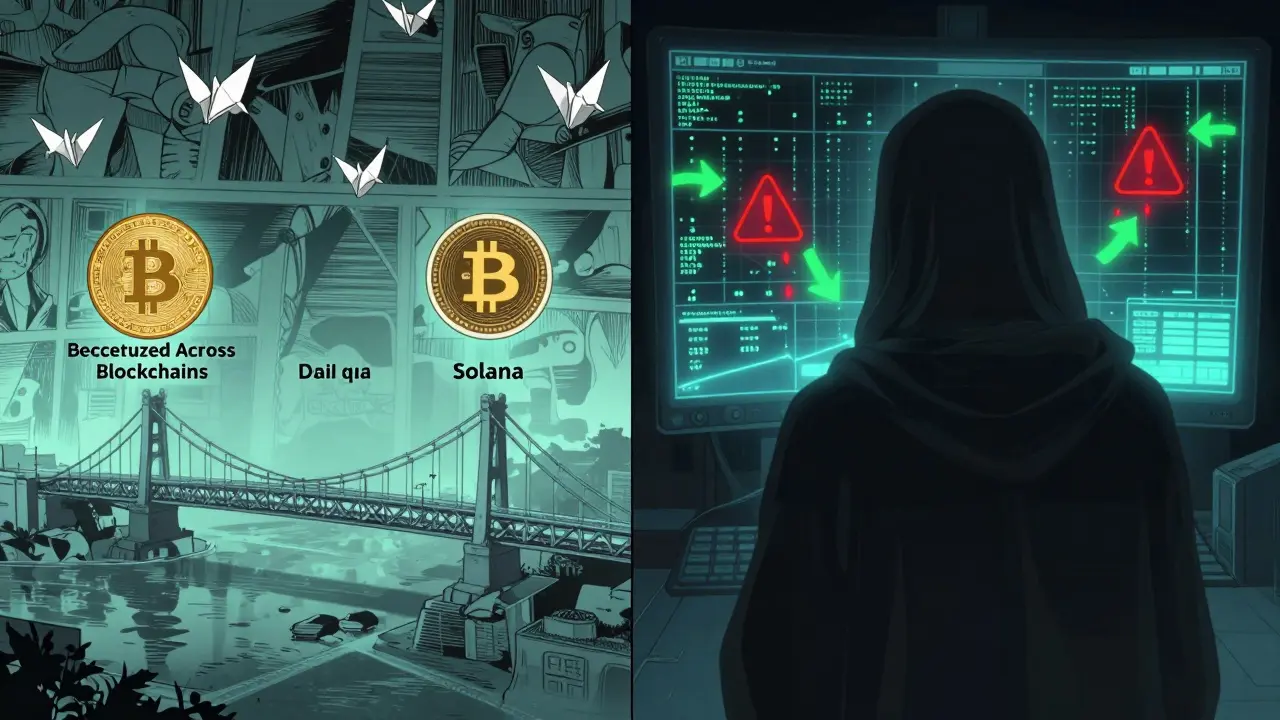
Durgesh Mehta
December 1, 2025 AT 12:19This is wild to see how people adapt when the system fails them
Iranians didn't ask for permission they just built something that works
No bank? No problem. Use crypto. Simple as that.
It's not about politics it's about survival
Sarah Roberge
December 2, 2025 AT 12:01ok but like... if the goverment is controlling it then is it even crypto anymore??
like i get the whole decentralization thing but if ur using nobitex and they track ur ip and ur identity then its just a state run digital rial with a blockchain logo on it
also dai on polygon?? who even knows what that means i just know my uncle lost money on solana last year
Jess Bothun-Berg
December 2, 2025 AT 21:07So let me get this straight: people are using crypto to buy insulin... and somehow that justifies the IRGC laundering millions through private wallets? No. No no no. This isn't "resilience"-it's organized crime with a side of tech bro jargon. The fact that you're romanticizing this is disgusting. Sanctions exist for a reason. You're not a hero-you're enabling a regime that oppresses its own people.
Nora Colombie
December 3, 2025 AT 06:36Oh my god, this is literally what happens when you let a bunch of peasants use technology without a license. The U.S. built the internet, not Iran. And now they’re using it to fund missiles? That’s not innovation-that’s theft. If they want to survive, they should stop being terrorists and start being civilized. Also, why is everyone acting like this is some noble rebellion? It’s not. It’s chaos with Wi-Fi.
Greer Dauphin
December 3, 2025 AT 13:15Man I love how this whole thing is like a real-life game of whack-a-mole
One freeze? They switch to DAI on Polygon
Next ban? They go cross-chain with Solana and ZK-Rollups
They’re not just surviving-they’re upgrading the whole system while the rest of us are still arguing about Dogecoin
Also side note: if you think this is just about Iran-you’re sleeping. The next country to get cut off? Could be anyone. This is the future of finance, whether you like it or not 😅
Bhoomika Agarwal
December 3, 2025 AT 14:39Wow so now the whole world is supposed to feel bad because Iran figured out how to not starve while their government steals their crypto? 🤡
Let me get this straight: mom buys insulin with DAI, IRGC buys drone parts with the same coins-same wallet, same network, same logic
Don’t call it resilience. Call it hypocrisy with a blockchain tattoo.
Katherine Alva
December 5, 2025 AT 05:27This is so deeply human… 🫂
People aren’t trying to outsmart the system-they’re trying to keep their kids alive.
And yes, the regime is exploiting it… but that doesn’t erase the fact that without crypto, thousands would die.
Maybe the real question isn’t "Is this legal?"
It’s "What would you do if your bank froze your account and your medicine vanished?"
We’re all just one crisis away from needing a digital lifeline.
Mark Stoehr
December 5, 2025 AT 12:26Iranians are geniuses using crypto to survive
Also the government is evil
Also the US is evil
Also crypto is evil
Also everyone is evil
Also I’m tired
Also why are we still talking about this
Shari Heglin
December 7, 2025 AT 11:34There is a fundamental flaw in the narrative presented: the assumption that crypto is a neutral tool. In reality, its adoption under state-controlled infrastructure transforms it into a vector of state power. The legal recognition of mining, the mandatory sale of mined coins to the Central Bank, and the implementation of surveillance APIs constitute a centralized financial architecture disguised as decentralization. This is not innovation-it is state capture of a disruptive technology. The moral equivalence drawn between civilian survival and institutionalized sanctions evasion is logically unsound and empirically unsupported.
Reggie Herbert
December 8, 2025 AT 05:52Let’s cut through the noise: this isn’t about survival, it’s about sanctions arbitrage. Iran’s crypto ecosystem is a state-sponsored money laundering pipeline wrapped in a hoodie. You call it resilience? I call it financial terrorism. The IRGC doesn’t want DAI-they want weapons. The civilians? They’re collateral damage in a game they didn’t start. And now the West is supposed to just… let it slide? That’s not justice. That’s surrender. And if you think this is the future of finance, you haven’t been paying attention to the fact that every single one of these "decentralized" tools is being weaponized by authoritarian regimes. Crypto isn’t free. It’s just… different chains.