Crypto as Payment Ban in Russia: Domestic vs International Bitcoin Use Regulations and Compliance Framework
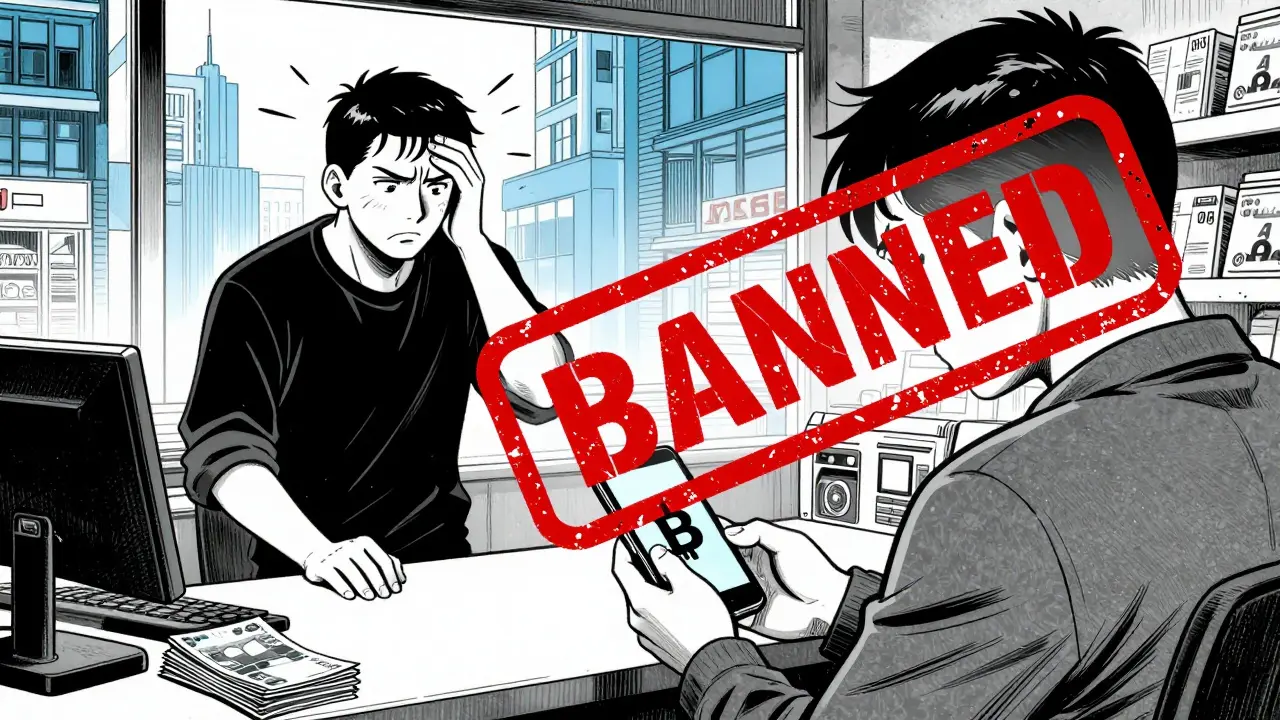
Imagine trying to buy a loaf of bread with Bitcoin in Moscow. You can’t. The law says no. But imagine that same merchant exporting software to Beijing. They might just get paid in Bitcoin. This is the confusing reality for anyone navigating Russia’s cryptocurrency regulations, which are defined by a strict split between what you can do at home and what you can do abroad.
If you are looking to use digital assets in or with Russia, understanding this divide isn't just about compliance; it’s about survival. The rules have hardened significantly since 2021, and with new penalties kicking in during 2026, the stakes are higher than ever. Here is how the system actually works on the ground.
The Hard Line: Why Domestic Payments Are Banned
Since January 1, 2021, using cryptocurrency to pay for goods or services within Russia has been illegal. This stems from Federal Law No. 114-FZ, signed by President Vladimir Putin in 2020. The law was clear: crypto is a digital asset, not money. It belongs to you, but it cannot circulate like rubles.
The Bank of Russia, led by Chair Elvira Nabiullina, drives this policy. Their argument is straightforward. Crypto is volatile, unbacked by any state, and risky for ordinary people. In April 2025, Nabiullina reiterated that cryptocurrencies are unsuitable as payment instruments for most Russians due to price swings. For the average citizen, this means if you try to pay your rent or buy groceries with Bitcoin, you are breaking the law.
The consequences for breaking this rule are becoming severe. Starting January 1, 2026, fines will hit hard. Individuals caught making domestic crypto payments face penalties of 100,000 to 200,000 rubles (roughly $2,500-$5,000). Businesses face even steeper fines of 700,000 to 1,000,000 rubles ($8,750-$12,500), plus mandatory confiscation of the crypto involved. These figures come from a bill drafted by the Ministry of Finance and announced by State Duma Committee head Anatoly Aksakov in July 2025.
The Loophole: International Trade and the EPR
While domestic use is dead, international use is alive and well-but only for a select few. In summer 2024, Russia passed Law No. 382-FZ. This legislation allowed digital currency payments for international trade. This was a direct response to Western sanctions that cut off many Russian businesses from traditional banking channels like SWIFT.
However, you can’t just open an account and start trading. To participate, entities must join the Experimental Legal Regime (EPR). This is a sandbox approved by the Central Bank. The barriers to entry are incredibly high. To qualify as an "especially qualified investor" under the EPR, an individual needs financial assets exceeding 100 million rubles (about $1.2 million) or an annual income over 50 million rubles ($580,000).
For businesses, the process is equally grueling. You need to register with the Central Bank, implement real-time transaction monitoring systems capable of handling 1,000 transactions per second with 99.9% uptime, and integrate with the Federal Tax Service’s CryptoTrack system. As of July 2025, only 1,842 entities had registered, far below the target of 10,000. Most were financial institutions, not regular exporters.

Taxation and Ownership Rules
Even if you aren’t paying for coffee with Bitcoin, owning it comes with strings attached. As of January 1, 2025, the Tax Code officially recognizes cryptocurrency as property. This means you owe taxes on it.
- Capital Gains Tax: You pay a 13% tax rate on profits from selling crypto. You must report these gains quarterly.
- Mining Regulations: Mining is legal but heavily regulated. Operations must register with Roskomnadzor and adhere to strict energy limits of 150 MW per facility.
- AML Monitoring: Financial institutions must monitor peer-to-peer (P2P) transactions. Any transaction over 600,000 rubles (~$7,500) triggers mandatory reporting to authorities.
This framework turns crypto ownership into a bureaucratic exercise. You can hold it, mine it, and trade it on exchanges, but every move is tracked, taxed, and scrutinized.
How Russia Compares Globally
Russia’s approach is unique because it sits between total prohibition and full adoption. Let’s look at how it stacks up against other major economies.
| Country | Domestic Payments | International Trade | Investor Threshold |
|---|---|---|---|
| Russia | Banned | Allowed (EPR only) | 100M RUB (~$1.2M) |
| El Salvador | Legal Tender | Allowed | None |
| China | Banned | Banned | N/A |
| European Union | Allowed (MiCA) | Allowed | Varies by jurisdiction |
| Singapore | Allowed | Allowed | S$50,000 (~$37k) |
Unlike China, which banned all crypto activity in 2021, Russia allows ownership and limited international use. Unlike the EU’s MiCA framework, which launched in June 2024 with consumer protections, Russia prioritizes control over access. The 100 million ruble threshold is one of the highest in the world, effectively locking out everyone except the ultra-wealthy.

The Reality on the Ground: User Challenges
Laws on paper don’t always match life in practice. For the 18 million estimated crypto users in Russia (about 12.3% of the population), the daily experience is fraught with friction.
Many users turn to offshore exchanges to bypass domestic restrictions. On Reddit’s r/CryptoRussia, user 'MoscowTrader88' noted in August 2025 that using offshore platforms adds 3-5 business days to transactions and costs an extra 2.5% in fees. Others use non-custodial wallets to avoid KYC checks, but converting crypto back to rubles remains difficult. A Chainalysis report from July 2025 found that 42% of Russian users struggled with fiat conversion due to bank reluctance.
Businesses face even bigger hurdles. An IT exporter in Moscow reported abandoning crypto payments despite the international allowance because the EPR registration required 17 documents and took eight weeks. With only 37 Central Bank-approved compliance consultants nationwide, getting help is slow and expensive. Companies spend an average of 220 staff hours and 1.8 million rubles ($22,500) just to achieve compliance.
What Comes Next?
The trend is toward tighter control, not looser. The Central Bank plans to expand monitoring to non-custodial wallets by Q2 2026 and introduce biometric verification for transactions over 500,000 rubles by Q4 2026. There are also proposals to ban stablecoins domestically by 2027, citing risks similar to the TerraUSD collapse.
Despite these restrictions, international crypto-facilitated exports grew to $3.2 billion in the first half of 2025, mostly going to China, Iran, and Belarus. The Central Bank forecasts this could reach $8.5 billion in 2026. So, while you won’t be buying sushi with Bitcoin in St. Petersburg, Russian companies are increasingly using it to sell machinery to Tehran.
The system is designed to protect the ruble domestically while providing a lifeline for sanctioned trade internationally. If you are operating in this space, expect more red tape, higher costs, and stricter surveillance. The window for casual crypto use in Russia is closed; the door for institutional, highly-regulated cross-border trade is slightly ajar.
Can I legally buy goods with Bitcoin in Russia?
No. Since January 1, 2021, using cryptocurrency for domestic payments for goods or services has been illegal under Federal Law No. 114-FZ. Violators face significant fines starting in 2026.
Who can use crypto for international trade in Russia?
Only entities registered in the Experimental Legal Regime (EPR). Individuals must have over 100 million rubles in assets or 50 million rubles in annual income. Businesses must meet strict technical and compliance standards set by the Central Bank.
What are the penalties for breaking the crypto payment ban?
Starting January 1, 2026, individuals face fines of 100,000-200,000 rubles, and legal entities face 700,000-1,000,000 rubles. Additionally, the cryptocurrency used in the illegal transaction will be confiscated.
Is mining cryptocurrency legal in Russia?
Yes, mining is legal but regulated. Operators must register with Roskomnadzor and comply with energy consumption limits of 150 MW per facility. Profits are subject to a 13% capital gains tax.
How does Russia's crypto regulation compare to China's?
China banned all cryptocurrency transactions in 2021. Russia bans domestic payments but allows ownership, trading, and limited international trade through the EPR, making its approach more nuanced but still restrictive.