Crypto Exchanges to Avoid if You're in India

Crypto Exchange Compliance Checker
Check Exchange Compliance
Verify if a crypto exchange meets Indian regulatory standards to avoid fund freezes, tax issues, and security risks.
If you're trading crypto in India, picking the wrong exchange isn't just a bad choice-it could cost you everything. You might think all platforms are the same, but that’s not true. Some exchanges are legally shaky, insecure, or outright dangerous for Indian users. And the risks aren’t theoretical. Real people lost millions. Real banks froze accounts. Real tax headaches piled up overnight.
Why Compliance Matters More Than You Think
India doesn’t ban crypto trading, but it doesn’t protect you either. The Financial Intelligence Unit of India (FIU-IND) is the only body that tracks crypto transactions for anti-money laundering purposes. If an exchange doesn’t register with FIU-IND, it’s operating in the shadows. And when things go wrong? You’re on your own.Exchanges that skip FIU compliance can’t legally partner with Indian banks. That means your INR deposits might vanish without warning. You’ll see ‘transaction failed’ messages. Your UPI or NEFT payments get blocked. No explanation. No refund. Just silence.
And here’s the kicker: even if you didn’t do anything illegal, using a non-compliant exchange can trigger an investigation by the Enforcement Directorate (ED). They don’t care if you’re just buying Bitcoin. If the platform they’re tracing is flagged, your account gets pulled into the net. You’ll need lawyers. You’ll need paperwork. You’ll lose months.
The WazirX Disaster: A Case Study in Failure
WazirX was India’s biggest homegrown exchange-6 million users, $5.4 billion in monthly volume, backed by Binance and the Blockchain India Fund. It felt safe. Until July 2024.A hacker broke into their multi-signature wallet. Not a small leak. Not a minor glitch. $230 million vanished. One of the largest crypto thefts in history. And instead of returning funds or offering a clear recovery plan, WazirX went quiet. They announced restructuring. They promised fixes. But over a year later, most users still can’t withdraw their money.
Even worse? WazirX still lets people deposit INR. They still show trading volumes. They still market themselves as reliable. But if you’re holding crypto there now, you’re gambling. Not trading. Gambling. And the house has already taken the pot.
International Giants That Can’t Play by Indian Rules
Binance and Bybit are two of the biggest names in crypto worldwide. But in India? They’re problem children.Binance was fined over $10 million by Indian authorities for failing to register with FIU-IND. They ignored reporting requirements, didn’t verify user identities properly, and didn’t submit transaction logs. That’s not a technical error-it’s a legal violation.
Bybit got hit with similar penalties. Millions in fines. No warning. No grace period. Just a notice: ‘Stop operating here.’
So what happens to Indian users on these platforms? Your account might get frozen tomorrow. Your funds might be locked indefinitely. You can’t contact customer service-they don’t have local support. You can’t file a complaint with Indian regulators-they don’t recognize the exchange. You’re stuck in legal limbo.

The Tax Trap No One Warns You About
India taxes crypto profits at 30%. Plus, 1% TDS is deducted every time you sell. That’s not optional. That’s law.But non-compliant exchanges don’t give you tax reports. They don’t auto-calculate your gains. They don’t even tell you which transactions are taxable. You’re forced to download every single trade history, match them with INR prices from CoinMarketCap, and do the math yourself.
One user in Bangalore lost ₹4.2 lakh in penalties because he didn’t report a trade from a non-compliant exchange. He thought it was ‘private.’ The IT department didn’t care. They got the data from the bank. He had to pay fines, interest, and legal fees.
If you’re using an exchange that doesn’t offer Indian tax summaries, you’re not saving time-you’re risking your entire financial record.
No Customer Support, No Safety Net
When your account freezes on CoinDCX or ZebPay, you get an email. A ticket number. A response within 48 hours.On non-compliant platforms? You get a ticket that says ‘Under Review.’ Then nothing. For weeks. For months. You email. You tweet. You DM. No reply.
Why? Because these exchanges don’t have Indian customer service teams. They don’t have offices here. They don’t follow Indian consumer protection norms. If they decide to shut down a feature-or a whole account-they don’t need to justify it. You have no legal standing to demand action.
Imagine your emergency fund is locked in crypto. You need cash for medical bills. You try to withdraw. No response. No timeline. No hope. That’s the reality on unregulated platforms.
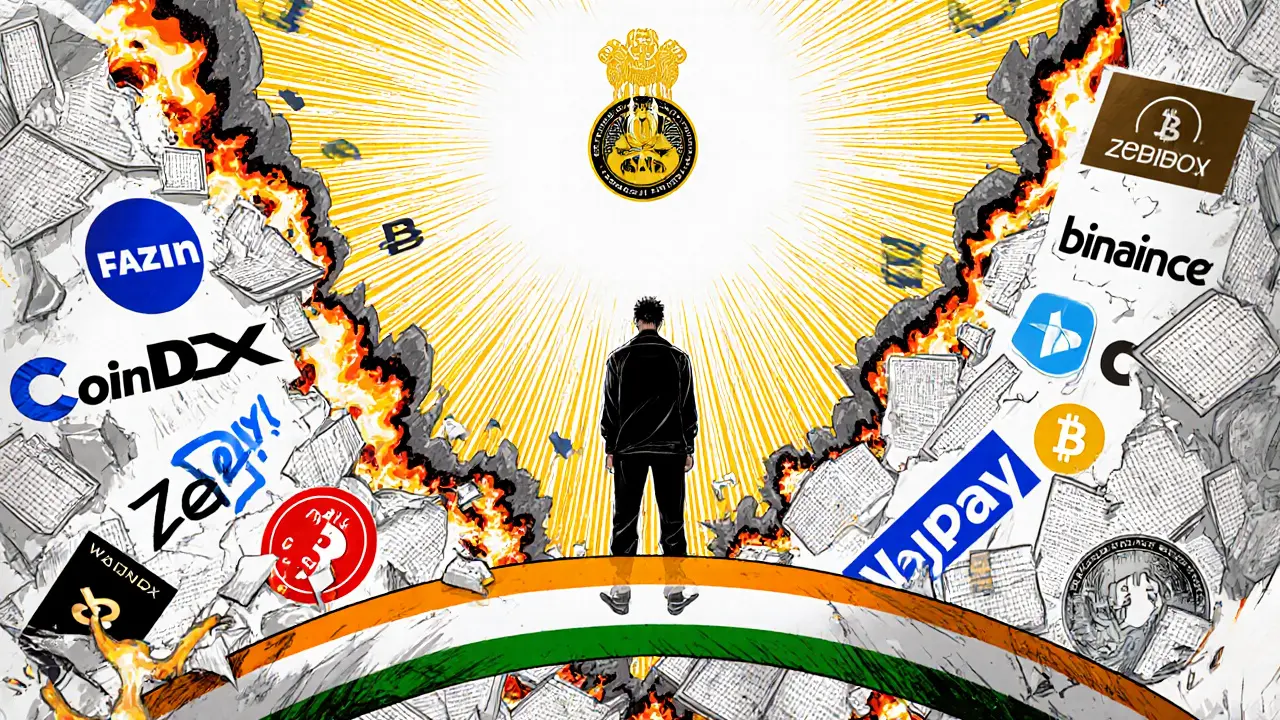
What Makes an Exchange Safe for Indians?
You don’t need to chase the biggest names. You need the most reliable ones.Here are exchanges that have shown consistent compliance with Indian rules:
- CoinDCX: FIU-IND registered, offers tax reports, INR deposits via UPI, partnered with Indian banks.
- CoinSwitch Kuber: Transparent fee structure, supports TDS auto-deduction, regular compliance updates.
- ZebPay: One of the oldest Indian exchanges, maintains direct banking links, provides trade summaries.
- Unocoin: FIU-IND compliant since 2022, offers tax calculators, real-time support.
- Bitbns: Active in regulatory dialogues, provides monthly compliance reports to users.
These platforms still have risks-crypto is volatile. But they don’t add legal, banking, or security risks on top.
Red Flags You Can’t Ignore
Before you deposit a rupee, check for these warning signs:- No mention of FIU-IND registration on their website.
- INR deposits work only through third-party payment processors (not direct bank transfers).
- Customer support replies only in English, with no India-based contact number.
- No tax reporting tools or transaction summaries for Indian users.
- Recent news about fines, lawsuits, or frozen user funds.
- High trading volume but low user reviews from Indian traders.
If even one of these applies, walk away. Even if the app looks sleek. Even if the referral bonus is huge. It’s not worth it.
The Bottom Line
Crypto isn’t illegal in India. But the platforms you choose? They can be.WazirX, Binance, Bybit, and other non-compliant exchanges aren’t just risky-they’re dangerous. They don’t protect your money. They don’t help you with taxes. They don’t answer when you need them. And when disaster strikes, Indian authorities won’t step in.
You don’t need to chase global giants. You don’t need to gamble on hype. Stick to exchanges that follow Indian rules. They’re not flashy. They don’t have celebrity endorsements. But they keep your funds safe, your taxes clean, and your peace of mind intact.
The market is evolving fast. What’s safe today might not be tomorrow. So check FIU-IND status regularly. Monitor news. And never assume an exchange is trustworthy just because it’s popular.
Your money deserves better than a gamble with no rules.
Kymberley Sant
October 31, 2025 AT 16:53Edgerton Trowbridge
November 1, 2025 AT 22:34Matthew Affrunti
November 2, 2025 AT 20:30mark Hayes
November 4, 2025 AT 10:58Derek Hardman
November 4, 2025 AT 21:25Eliane Karp Toledo
November 5, 2025 AT 18:58Phyllis Nordquist
November 5, 2025 AT 22:46Eric Redman
November 6, 2025 AT 18:10Brett Benton
November 8, 2025 AT 04:16David Roberts
November 9, 2025 AT 16:30Monty Tran
November 10, 2025 AT 16:42Beth Devine
November 11, 2025 AT 00:20