Crypto in Pakistan: Why 27 Million People Defy Restrictions
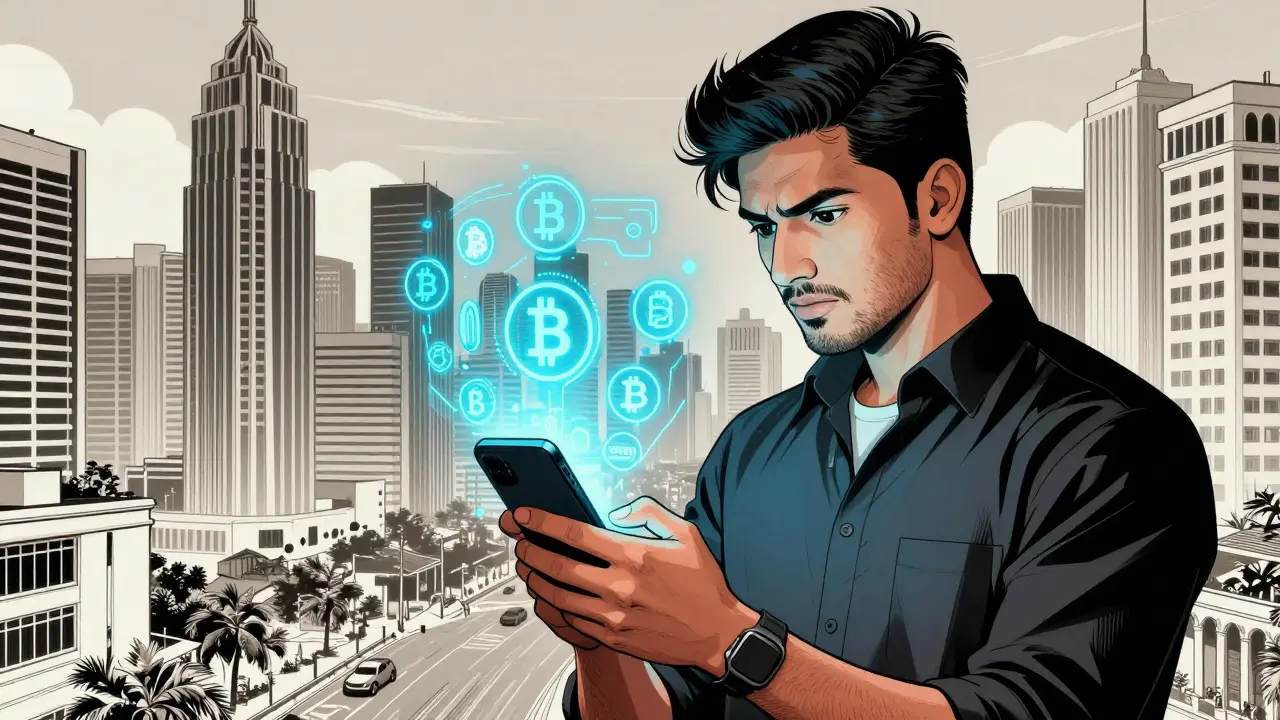
Imagine living in a country where the government tells you that a certain technology is a legal gray area, yet nearly 27 million of your fellow citizens are using it anyway. That is exactly what is happening right now in Pakistan. While official regulators have danced around the issue for years, a massive wave of people-mostly young, tech-savvy, and desperate for financial stability-has decided that the benefits of digital assets outweigh the risks of regulatory uncertainty.
Quick Takeaways on Pakistan's Crypto Boom
- User Base: Estimates range from 18.2 million verified users to over 40 million total holders.
- Main Drivers: High inflation of the Pakistani Rupee and the need for efficient freelance payment gateways.
- Regulatory State: No clear legal framework, though a Central Bank Digital Currency is in development.
- Market Role: Pakistan is now a top ten global leader in grassroots crypto adoption.
The Push Toward 27 Million Users
It isn't just a few speculators playing with digital coins; we are seeing a structural shift in how people handle money. By the end of 2025, projections suggest the number of cryptocurrency is a digital or virtual currency secured by cryptography, making it nearly impossible to counterfeit or double-spend users in Pakistan will exceed 27 million. This surge is driven by a simple truth: when the traditional banking system feels slow or unreliable, people look for an exit.
For many, the appeal isn't about getting rich overnight. It is about survival. With the Pakistani Rupee facing significant volatility, digital assets have become a popular tool for capital preservation. Instead of watching their savings evaporate due to inflation, people are moving their wealth into stablecoins or established assets to keep their purchasing power intact.
Why Freelancers are Leading the Charge
If you look at the hubs of Karachi and Lahore, you will find a massive community of remote workers. Pakistan has one of the largest freelance populations in the world, and for these professionals, Blockchain is a distributed ledger technology that allows data to be stored globally across multiple computers isn't just a buzzword-it is a payroll solution.
Traditional wire transfers can take days and eat up a huge chunk of earnings in fees. In contrast, receiving a payment in crypto takes minutes and costs a fraction of the price. This utility has turned the freelance economy into the primary engine for adoption. When you can get paid by a client in New York or London and have the funds instantly available without waiting for a bank manager's approval, the choice is obvious.
The Regulatory Tug-of-War
The relationship between the government and crypto users in Pakistan is... complicated. Back in 2022, there were serious talks about a total ban. The authorities have considered blocking crypto-related websites and cracking down on exchanges. Yet, the growth hasn't slowed down. Why? Because the demand is grassroots.
Currently, the State Bank of Pakistan is the central bank of Pakistan, responsible for monetary policy and regulating the banking system attempting a balancing act. They are planning to launch a Central Bank Digital Currency (or CBDC) by 2025. This suggests that while they might dislike decentralized coins, they recognize that the future of money is digital. A CBDC would allow the government to maintain control while offering the speed and efficiency that users are already finding in the private crypto market.
| Country | Estimated Users | Population Adoption % | Primary Driver |
|---|---|---|---|
| Pakistan | 18M - 40M | ~4.1% | Inflation Hedge & Freelancing |
| India | 97.5M | 7.1% | Speculation & Tech Investment |
| Vietnam | High (Top APAC) | Varies | Gaming & DeFi |
The Digital Divide: The Infrastructure Gap
Despite the enthusiasm, there is a massive hurdle: the internet. In a country of over 255 million people, only about 45.7% are expected to have stable, high-speed internet by 2025. This creates a strange dichotomy where urban centers are sprinting toward a digital future while rural areas are left behind.
This divide means that crypto adoption is heavily skewed toward the youth in cities. If you live in a village with spotty 3G, the idea of managing a digital wallet is far less appealing. However, as mobile penetration increases and 5G becomes more common, the potential for those "unbanked" rural populations to enter the crypto ecosystem is enormous.
Real-World Use Cases in the Pakistani Market
To understand why people are risking it, look at these common scenarios:
- The Hedge: A middle-class family converts their monthly savings from PKR into a USD-pegged stablecoin to avoid losing value to inflation.
- The Remote Earner: A graphic designer in Faisalabad receives payment in a digital asset, avoiding the 3-5 day wait and high fees of traditional banks.
- The P2P Trader: Since some exchanges face restrictions, many users rely on peer-to-peer (P2P) networks, trading crypto for cash directly with other locals.
This focus on utility is what separates Pakistan from markets like the US, where many people buy crypto simply hoping the price goes up. In Pakistan, crypto is a tool for financial agency. It's about getting your money where it needs to be, as fast as possible, without a middleman taking a cut.
What Happens Next?
The discrepancy in data-where verified exchange users count 18.2 million but industry estimates soar to 40 million-tells us that a huge portion of the market is operating "off the grid." These are the P2P users and those using non-custodial wallets who don't leave a paper trail for regulators.
The trajectory is clear: growth will continue as long as the economic pressures remain. If the Rupee stays volatile and the freelance economy grows, 27 million users is just a starting point. The real question is whether the government will eventually embrace this by providing a legal framework, or if they will continue the cat-and-mouse game of restrictions and grassroots defiance.
Is cryptocurrency legal in Pakistan?
It exists in a legal gray area. While there is no law explicitly making it a crime to own cryptocurrency, the State Bank of Pakistan and other regulators have issued warnings and discouraged its use. There is no official legal framework providing protection or regulation for users.
Why are so many Pakistanis using crypto despite the risks?
The primary drivers are economic. High inflation of the Pakistani Rupee makes digital assets attractive for preserving wealth. Additionally, the large freelance community uses crypto to receive international payments faster and cheaper than through traditional banks.
What is a CBDC and how does it differ from Bitcoin?
A Central Bank Digital Currency (CBDC) is a digital version of a country's fiat currency, issued and regulated by the central bank. Unlike Bitcoin, which is decentralized and not controlled by any government, a CBDC is centrally controlled and acts as a digital replacement for physical cash.
How do users handle restrictions on exchanges?
Many users turn to Peer-to-Peer (P2P) trading. This involves buying or selling cryptocurrency directly with another person via a platform that escrow's the funds, allowing the trade to happen without a centralized entity controlling the currency flow.
Will the internet gap stop crypto growth in Pakistan?
It slows it down in rural areas, but not in urban centers. With over 45% of the population expected to have high-speed access by 2025, the core demographic (young, urban professionals) is already well-connected enough to drive the market forward.
Next Steps for Users and Investors
If you are a freelancer, focus on using stablecoins to avoid the volatility of the broader crypto market while still enjoying the speed of blockchain transfers. For those looking at the market from an investment perspective, keep a close eye on the State Bank of Pakistan's progress with the CBDC; this will be the first real signal of how the government intends to integrate digital assets into the formal economy.
Always remember that in a gray-market environment, security is your own responsibility. Use hardware wallets and be cautious with P2P traders to avoid scams that often target new users in emerging markets.
Prachi Bhadarge
April 15, 2026 AT 15:01Imagine thinking a CBDC is a solution when the whole point of crypto is getting away from central banks. Typical government logic.
Shantal Sanjur
April 16, 2026 AT 18:59Oh please, the CBDC is just a fancy way for the state to track every single cent you spend in real-time. It is a digital panopticon disguised as convenience. They hate Bitcoin because they cannot freeze your wallet when you start thinking for yourself. Wake up people, this is just the precursor to a social credit system tailored for the global south!
Ian Chait
April 17, 2026 AT 13:28Suttin' fishy here. The feds always use "stability" as a cover for total control. Probablly some IMF puppet strings pullin' the strings behind the State Bank. Ledger tech is the only way to stop the great reset of our wealth. Absolute madness how people trust the system after the 2008 crash.
Trudy Morse
April 19, 2026 AT 09:47It's basic economics. When the local currency fails, people seek a store of value.
Adam Mann
April 21, 2026 AT 02:01It is truly inspiring to see how the younger generation in Pakistan is taking charge of their own financial destinies by leveraging these new tools. Even though the regulatory path is a bit bumpy right now, the sheer determination of the freelance community to find a way to get paid fairly and quickly is a testament to human ingenuity. I really believe that as more people get access to stable internet, we will see a massive uplift in the quality of life for rural families who have been locked out of the banking system for decades. It is all about empowering the individual to build a bridge toward a more stable future, and it's heartening to see the grassroots movement leading the way!
Shannon Kelly Smith
April 22, 2026 AT 20:35Spot on! 🚀 Giving people the tools to bypass broken systems is what it's all about. Keep pushing those boundaries! 💪✨
Andrew Southgate
April 24, 2026 AT 16:06For anyone just starting out, I highly recommend focusing on non-custodial wallets if you're in a gray area like this. Having your own private keys means that no matter what the State Bank decides tomorrow, your assets are still yours and cannot be frozen by a centralized exchange. It takes a bit more responsibility to manage your own security, but the peace of mind is worth it. Pair that with a reputable P2P platform and you've basically built your own personal bank that doesn't charge you for the privilege of holding your own money, which is a game changer for freelancers.
Gaurav Undirwade
April 26, 2026 AT 11:03It is profoundly regrettable that the youth are engaging in such reckless speculation. One must maintain a level of moral discipline and adhere to the laws of the land, regardless of the economic climate. To defy state regulations is to invite chaos into the social order.
Sean Douglas
April 26, 2026 AT 12:32The sheer audacity of a government trying to ban a mathematical certainty is just poetic. It's an absolute tragedy that people have to live in such a precarious financial state that they're forced into a digital wild west just to keep their heads above water. My heart literally aches for the designer in Faisalabad just waiting for a bank manager's mood to swing in their favor so they can buy groceries. It is an exquisite nightmare of bureaucratic incompetence!
Ankit Sindhu
April 27, 2026 AT 12:49I totally get the frustration, but let's try to look at this as a learning curve for everyone involved. It's a great opportunity for the community to mentor each other on security and risk management while the laws catch up.
Chintu Parikh
April 28, 2026 AT 02:52I believe we should all strive to find a middle ground where innovation can thrive without compromising national security. It would be most beneficial if the authorities collaborated with the tech community to create a framework that protects users while ensuring a stable economy for the entire nation.
Kevin Lư
April 28, 2026 AT 13:27Whatever, it's all just numbers on a screen anyway. But yeah, banks are the worst, so I'm with the crypto crowd on this one.
Vicky Duffala
April 30, 2026 AT 11:43This is such a vibe! 🌟 Turning a financial crisis into a tech revolution is the most philosopher move ever. It's about reclaiming agency over your own life. Let's gooo!
Mike Kempenich
May 2, 2026 AT 00:40The numbers are pretty clear. If 40 million people are doing it, the ban is basically a suggestion at this point.
Vicky Duffala
May 3, 2026 AT 05:11Exactly! The collective will of the people always overrides a piece of paper from a central bank. It's just nature taking its course in the digital age. 🌈