Historical Bitcoin Mining Difficulty Trends: A Deep Dive into the Data

Imagine trying to solve a puzzle where the rules get harder every time someone else solves it. That is exactly what happens in the world of Bitcoin mining, a process that secures the network through computational competition. If you look at the raw numbers, the story is staggering. When Bitcoin launched in 2009, the "difficulty" was set to 1. You could mine a block on a basic laptop if you were lucky. Today, as we move through mid-2026, that number sits in the hundreds of trillions. It has become roughly 48 trillion times harder to find a valid block than it was at the genesis.
This isn't just a technical curiosity. The trend of rising mining difficulty tells us everything about the growth of the industry, the efficiency of hardware, and the economic pressures facing miners right now. Understanding these historical trends helps you see whether the network is becoming more secure or if miners are struggling to stay profitable. Let's break down how this metric works, why it changes, and what the recent data from June 2026 actually means for the future.
What Is Mining Difficulty and Why Does It Change?
To understand the trends, you first need to know what the number represents. Mining difficulty is a protocol parameter that measures how hard it is to find a valid block hash. Think of it as a probabilistic index. It doesn't measure price or fees directly. Instead, it estimates the average number of calculations (hashes) required to win the right to add the next block to the blockchain and earn the reward.
The Bitcoin protocol has a built-in self-correction mechanism designed to keep the network stable. Its goal is simple: produce one block every 10 minutes, no matter how many computers are connected. To achieve this, the network automatically adjusts the difficulty every 2,016 blocks. Since there are roughly 144 blocks per day (24 hours x 6 blocks), this adjustment happens approximately every two weeks.
Here is how the logic flows:
- Blocks found too fast? If the last 2,016 blocks were mined in less than two weeks, it means there is too much computing power chasing too few rewards. The protocol increases the difficulty to slow things down.
- Blocks found too slow? If miners took longer than two weeks, it implies some hash rate left the network (perhaps due to high electricity costs or low Bitcoin prices). The protocol decreases the difficulty to make it easier for the remaining miners to keep the 10-minute schedule.
This formula-Difficulty = Difficulty Target / Current Target-ensures that the metric is always relative to a baseline. It creates a dynamic equilibrium where the only constant is the block time, not the effort required to maintain it.
The Long-Term Trajectory: From One to Trillions
If you zoom out and look at the entire history of Bitcoin, the trend line is overwhelmingly upward. According to data from Hashrate Index, the difficulty has grown from 1 to over 48 trillion since inception. This represents a compound monthly increase of about 20.64% over the life of the network. That is an explosive rate of growth that reflects the industrialization of mining.
In the early days, difficulty adjustments were small because the total hash rate-the sum of all computing power on the network-was tiny. As Application-Specific Integrated Circuits (ASICs) became available, they offered thousands of times more efficiency than GPUs or CPUs. Miners rushed to buy them, causing massive spikes in hash rate. The network responded by skyrocketing the difficulty.
| Era | Approximate Difficulty | Dominant Hardware | Key Driver |
|---|---|---|---|
| 2009-2010 (Genesis) | 1 | CPU (Central Processing Unit) | Experimental adoption |
| 2011-2013 | Thousands to Millions | GPU (Graphics Processing Unit) | Retail mining boom |
| 2014-2017 | Billions | Early ASICs | Industrial scaling |
| 2018-2021 | Trillions | Advanced ASICs | Corporate entry & halving cycles |
| 2022-2026 | 50T - 125T+ | High-Efficiency ASICs | Energy optimization & institutional capital |
This table shows that while the absolute numbers change drastically, the underlying driver remains the same: competition. As long as mining is profitable, new hash rate enters, and difficulty rises. The jump from billions to trillions wasn't linear; it happened in steps, often correlated with Bitcoin price rallies that made buying expensive hardware financially viable.
Short-Term Volatility: Why Difficulty Sometimes Drops
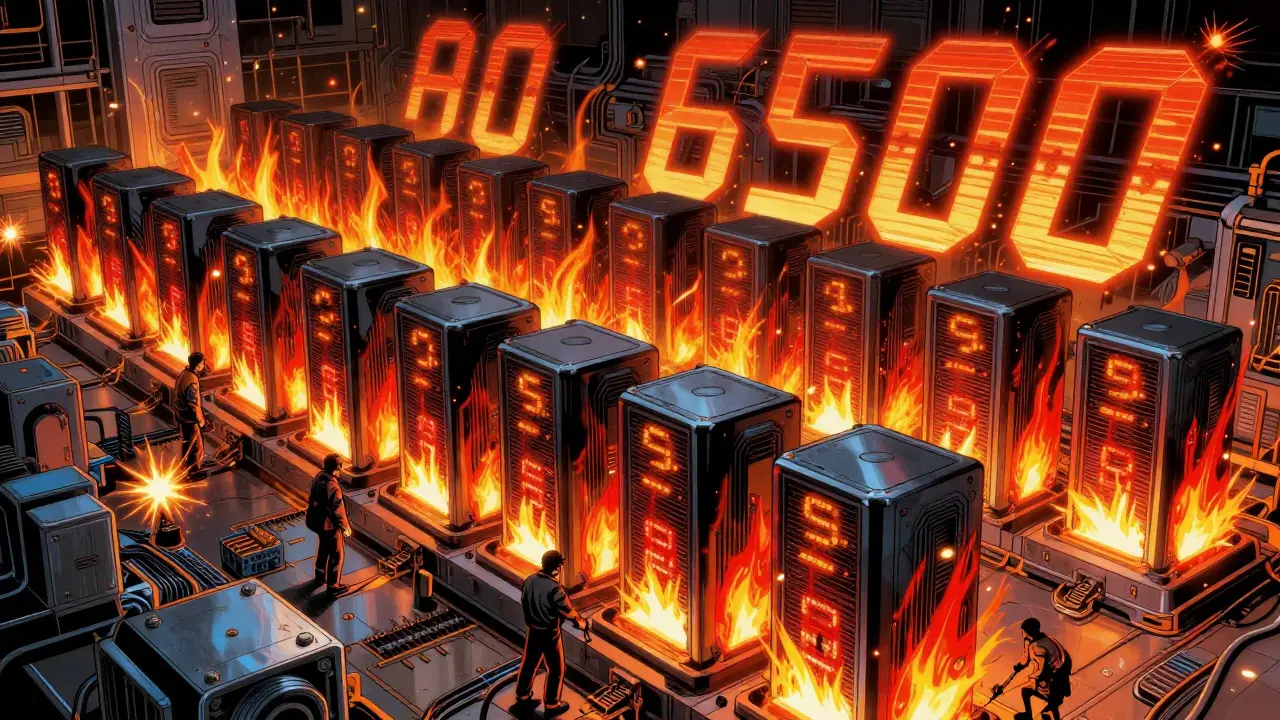
While the long-term view is a straight line up, the short-term reality is messy. You will often hear people say difficulty only goes up, but that is incorrect. The chart provided by services like Bitbo and GoMining clearly shows red zones where difficulty decreased. These drops are critical signals for the health of the mining sector.
A drop in difficulty indicates that hash rate has left the network. This usually happens during bear markets when Bitcoin's price falls below the breakeven cost for many miners. If your electricity costs $0.05 per kWh and the revenue from mining doesn't cover that plus your hardware depreciation, you turn off your machines. When enough miners do this, the network slows down, blocks take longer than 10 minutes, and the next adjustment lowers the difficulty to help the survivors.
We saw significant volatility in 2022 and 2023. However, looking at the data from June 2026, the picture is nuanced. YCharts reported that as of June 15, 2026, the average daily difficulty was 124.93 T. This was slightly down from 125.12 T the previous day and notably lower than 126.41 T one year earlier. This represents a -1.17% year-over-year change.
Why would difficulty fall after years of growth? It suggests a period of consolidation. Perhaps older, less efficient ASIC models have been permanently retired. Maybe energy contracts in key regions like Texas or Kazakhstan forced some operators offline. Or maybe the market simply reached a saturation point where adding more hash rate wasn't immediately profitable. These downward adjustments prove that the system works: it protects the remaining miners from being wiped out completely by ensuring they still find blocks regularly.
Hash Rate vs. Difficulty: The Two Sides of the Coin
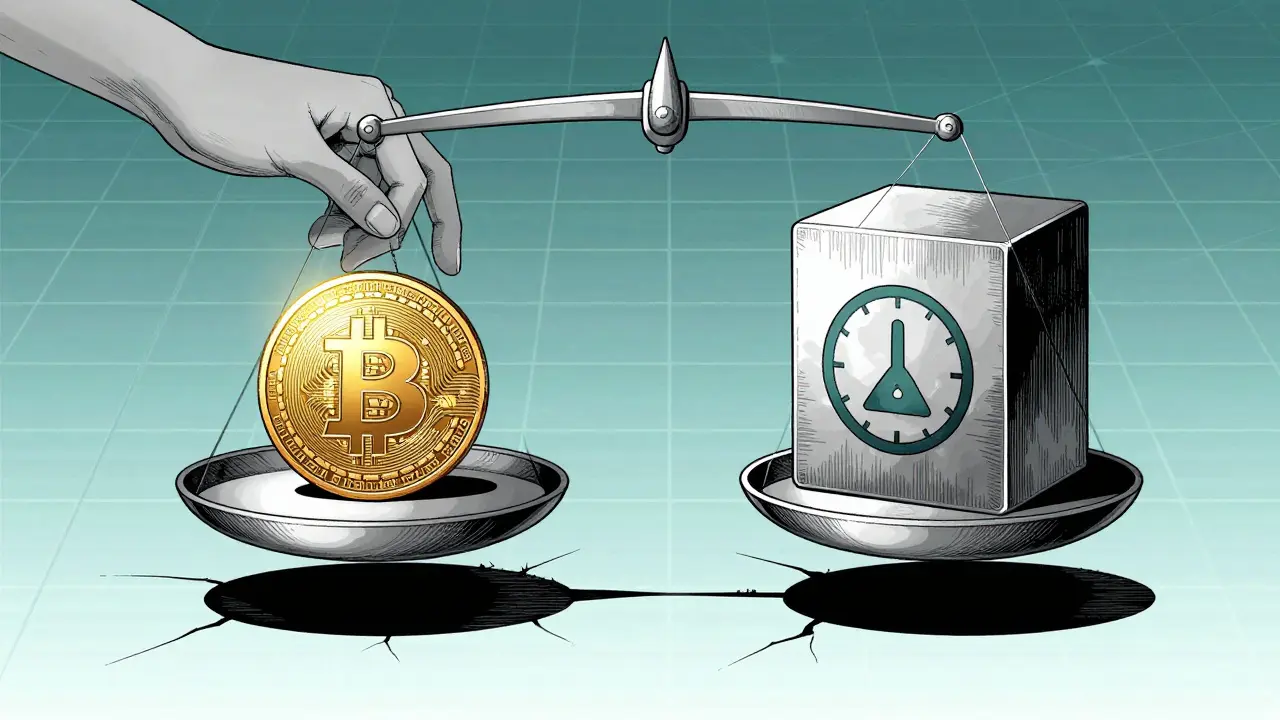
You cannot talk about difficulty without talking about Hash Rate, which is the total computational power contributed by all miners on the network. They are deeply linked but distinct. Hash rate is the supply of effort; difficulty is the price of that effort in terms of complexity.
GraniteShares and other investment researchers emphasize that both metrics determine mining economics. Here is the relationship:
- Hash Rate Increases: More miners join or upgrade equipment. Blocks are found faster than 10 minutes.
- Difficulty Adjustment: The network raises the target threshold.
- Revenue Dilution: Even though you have more hash rate, the network is harder. Your share of the total pie might shrink if everyone else also upgraded.
This interaction creates a zero-sum game for individual miners unless they scale efficiently. For the network, however, higher hash rate and higher difficulty mean greater security. It becomes exponentially more expensive for an attacker to gain 51% control of the chain. So, while a miner might grumble about rising difficulty eating their margins, the ecosystem benefits from the increased barrier to attack.
Current Status: Mid-2026 Landscape
As we stand in June 2026, the mining landscape is mature. The era of hobbyist mining is long gone. The current difficulty levels, hovering around 125 trillion, require industrial-scale operations. Newhedge’s estimators show that finding a single block now requires tens of trillions of hashes on average. This level of precision demands not just powerful chips, but sophisticated infrastructure management.
The slight decline in year-over-year difficulty mentioned earlier (-1.17%) is interesting. It contrasts with the historical narrative of endless exponential growth. It suggests that the market has found a temporary equilibrium. Miners are likely focusing on operational efficiency rather than aggressive expansion. With energy costs fluctuating globally and hardware innovation slowing down slightly compared to the golden age of ASIC development, the marginal return on adding new hash rate has diminished.
Tools like Bitcoin Magazine Pro and BitInfoCharts allow analysts to overlay these difficulty trends with Bitcoin’s price action. In 2026, we see that difficulty is less volatile than it was in 2021. The swings are smaller. This stability is a sign of a maturing industry where large public companies and institutional investors manage risk more carefully than the speculative miners of the past.
What This Means for Investors and Users
If you are investing in Bitcoin or mining-related stocks, understanding these trends is vital. Rising difficulty generally correlates with network strength and long-term value accrual. It shows that resources are being poured into securing the ledger. However, for mining equity holders, rapidly rising difficulty can be a warning sign. It squeezes profit margins unless Bitcoin’s price rises proportionally.
For the average user, the implication is security. The fact that difficulty has risen from 1 to over 100 trillion means that altering the Bitcoin ledger is practically impossible for any single entity. The historical trend confirms that Bitcoin has successfully transitioned from a niche experiment to a robust, global financial layer. The self-adjusting mechanism has held firm through bull runs, bear markets, regulatory crackdowns, and technological shifts.
Looking ahead, expect the difficulty to continue its long-term upward trajectory, punctuated by periodic corrections. As new generations of energy-efficient hardware emerge, we may see another spike in hash rate, forcing the difficulty higher again. But for now, the mid-2026 data suggests a period of steady, controlled growth rather than chaotic expansion.
How often does Bitcoin mining difficulty adjust?
Bitcoin mining difficulty adjusts automatically every 2,016 blocks. Given that a new block is generated approximately every 10 minutes, this equates to an adjustment roughly every two weeks. This frequency ensures the network can respond relatively quickly to major changes in hash rate while avoiding excessive volatility from minor fluctuations.
Can mining difficulty ever decrease?
Yes, mining difficulty can and does decrease. This happens when the network's total hash rate drops significantly, causing blocks to be found slower than the 10-minute target. During bear markets or periods of high energy costs, less efficient miners may shut down, leading to a reduction in difficulty at the next adjustment to keep the block time stable.
What was the Bitcoin mining difficulty in June 2026?
As of mid-June 2026, data from sources like YCharts indicated that the average daily Bitcoin mining difficulty was approximately 124.93 trillion. This represented a slight year-over-year decrease from the previous year, suggesting a period of stabilization in the mining sector.
Why is mining difficulty important for Bitcoin security?
Mining difficulty is a direct proxy for network security. Higher difficulty means more computational power (hash rate) is required to manipulate the blockchain. As difficulty has risen from 1 to over 100 trillion, the cost and energy required to perform a 51% attack have become prohibitively high, making the network extremely resilient against tampering.
How does mining difficulty affect miner profitability?
Rising mining difficulty reduces the expected revenue per unit of hash rate. If difficulty increases faster than the price of Bitcoin or improvements in hardware efficiency, miners' profit margins shrink. This can force inefficient operators to exit the market, which eventually leads to a difficulty decrease, helping stabilize profitability for those who remain.

Terry Hyland
June 18, 2026 AT 03:22the whole thing is a scam designed to make the rich richer while we burn the planet down for their digital gold. they tell you it is secure but really it is just greed masked as technology. i see right through it and anyone who buys in is part of the problem. stop enabling this disaster.
Monica Pathammavong
June 20, 2026 AT 00:20u dont get it at all its not just about money its about the underlying cryptographic proof of work which ensures decentralization. also ur spelling is bad lol. the difficulty adjustment is a beautiful algorithmic feature that prevents inflation of blocks. if u read the post carefully u would see that hash rate correlates with security not just profit motives. most people here are too stupid to understand the nuance so they just complain. its sad really how little effort u put into understanding complex systems.
Tim Lefebvre
June 21, 2026 AT 03:24hey man no need to be so harsh on him. the guy is just trying to share his opinion. honestly though the data in the post is pretty cool. i have been mining since the gpu days and seeing the numbers go from millions to trillions is wild. it shows how much the industry has grown even if it feels like a different world now. hope everyone stays safe out there
pankaj chawla
June 23, 2026 AT 02:46i agree with the analysis presented here. the correlation between hardware efficiency and difficulty spikes is undeniable. in india we are seeing more interest in crypto infrastructure but the energy costs are still a major hurdle. however the trend towards institutional adoption suggests that these hurdles will be overcome by economies of scale. we should look at how other countries are managing their energy grids to support such computational loads. collaboration between tech firms and energy providers is key to sustainable growth in this sector.
Jessica Lane
June 23, 2026 AT 18:54this is an incredibly insightful breakdown of the historical trends. i appreciate how clearly the relationship between hash rate and difficulty is explained. it helps me understand why my investment strategy needs to adapt to these macro changes. thank you for sharing such valuable information with the community. it empowers us to make better decisions based on data rather than hype. looking forward to more posts like this in the future.
Charles Pawlikowski
June 24, 2026 AT 20:24typical globalist nonsense about 'security' and 'decentralization'. what they dont tell you is that most mining happens in places with lax regulations or state subsidies. it is unfair to american taxpayers who suffer under strict environmental laws while foreign miners run amok. we need to bring the mining back home where we can control the narrative and ensure it aligns with our national interests. otherwise we are just funding our own demise :/
John Doe
June 25, 2026 AT 07:54it is truly heartbreaking to see the hostility in some of these comments. the author took time to write a detailed explanation and instead of gratitude we get conspiracy theories and nationalism. imagine if we could all come together to discuss the technical merits without letting our biases cloud our judgment. the reality is that bitcoin mining has evolved into a sophisticated industry that requires serious expertise. let us respect the complexity of the system and the people who maintain it.
Mekz Wheoki
June 27, 2026 AT 04:28oh please spare me the emotional outburst. nobody cares about your feelings when the network adjusts. the difficulty metric is cold hard math not a participation trophy. if you cannot handle the volatility then perhaps this space is not for you. the fact that difficulty dropped slightly in 2026 proves that the market is efficient enough to punish inefficiency. stop crying and start calculating your breakeven points.
Skm Shubham
June 28, 2026 AT 00:24the article fails to address the fundamental flaw in the proof-of-work consensus mechanism. it is inherently wasteful and unsustainable. the rise in difficulty is merely a symptom of a dying model that relies on exponential energy consumption. analysts who praise this growth are either ignorant or complicit in the destruction of natural resources. the only logical conclusion is that proof-of-stake or similar alternatives will inevitably render this entire discussion obsolete. do not waste your time optimizing a sinking ship.
Rob Aronson
June 30, 2026 AT 00:09from a technical standpoint, the halving cycles play a crucial role in the difficulty trajectory 📉📈. when block rewards decrease, miners must rely more on transaction fees, which can lead to temporary hash rate drops if fee markets are weak. this dynamic creates interesting arbitrage opportunities for those who understand the interplay between protocol economics and hardware depreciation. the recent stabilization around 125T difficulty suggests that the marginal cost of electricity has reached an equilibrium with current BTC prices. keep monitoring the mempool congestion levels for early signals of the next adjustment phase 🚀⛏️