History of Proof of Work: From Anti-Spam to Bitcoin's Backbone
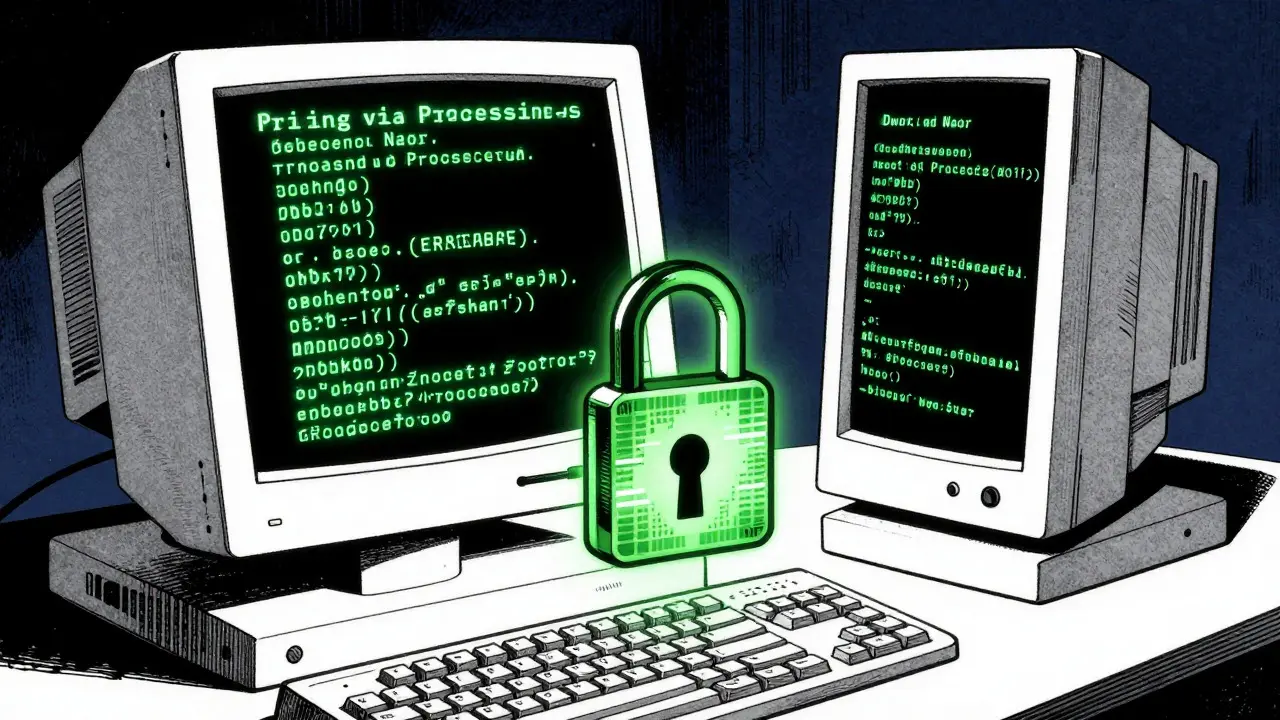
Imagine a world where sending an email cost you nothing but time. Now imagine spammers exploiting that freedom to clog the internet with billions of useless messages. This exact problem sparked the invention of Proof of Work. Today, it secures trillions of dollars in digital assets, but its origins are far more mundane than most people realize. It started as a simple anti-spam tool, not a revolutionary financial protocol.
Key Takeaways
- Origin: Proof of Work (PoW) began in 1993 as an anti-spam measure by cryptographers Cynthia Dwork and Moni Naor.
- Bitcoin Connection: Satoshi Nakamoto adapted PoW in 2008 to solve the double-spending problem without a central authority.
- Hardware Evolution: Mining shifted from CPUs to GPUs, then to specialized ASICs, drastically increasing efficiency and centralization concerns.
- Energy Debate: While critics cite high energy use (comparable to Norway), proponents argue for security guarantees and renewable energy integration.
- Current Status: Despite Ethereum’s move to Proof of Stake, PoW remains dominant for store-of-value assets like Bitcoin and Litecoin.
The Birth of Proof of Work: Fighting Spam
Before blockchain existed, the internet struggled with denial-of-service attacks and email spam. In 1992, American cryptographers Cynthia Dwork and Moni Naor proposed a solution in their paper "Pricing via Processing." Their idea was simple: make every action on a network cost something. If sending an email required solving a complex mathematical puzzle, spammers would be deterred because the computational cost would outweigh the benefit.
This concept evolved into Hashcash, developed by British scientist Adam Back in 1997. Hashcash required senders to perform specific calculations before an email could be sent. The term "proof of work" itself was formally defined in 1999 by Markus Jakobsson and Ari Juels. At this stage, PoW was purely a defensive tool-a digital toll booth to keep networks clean. It had no connection to money or decentralized ledgers.
From Tokens to Bitcoin: The Digital Cash Revolution
The bridge between anti-spam tools and cryptocurrency was built by Hal Finney, a prominent cryptographic activist. In 2004, he created Reusable Proofs of Work (RPOW). These were tokens based on Hashcash that could be transferred between users. However, RPOW still relied on a trusted server to prevent double-spending, meaning it wasn't truly decentralized.
Then came the game-changer. On October 31, 2008, the pseudonymous developer Satoshi Nakamoto published the Bitcoin whitepaper. Nakamoto took the core idea of PoW and repurposed it for a peer-to-peer electronic cash system. Instead of just preventing spam, PoW now served three critical functions:
- Decentralized Consensus: Allowing independent nodes to agree on the state of the ledger without a bank.
- Double-Spending Prevention: Ensuring a coin can only be spent once.
- Security: Making attacks economically prohibitive.

How Proof of Work Actually Works
To understand why PoW is so secure, you need to look at the mechanics. Miners compete to solve a cryptographic puzzle using the SHA-256 algorithm. This puzzle involves finding a specific number (nonce) that, when hashed with the block data, produces a result starting with a certain number of zeros. The difficulty of this task adjusts automatically every 2,016 blocks (roughly two weeks) to maintain a consistent block time of 10 minutes.
Why does this matter? Because it ties security to real-world resources. To attack the network, an adversary needs to control over 50% of the total computational power (hash rate). For Bitcoin, this is known as a 51% attack. As of 2023, executing such an attack would require approximately $13.5 billion in hardware and electricity costs, according to Crypto51.app. This economic disincentive keeps the network safe. Unlike systems relying on trust or reputation, PoW relies on physics and economics.
| Year | Hardware Type | Algorithm | Key Characteristic |
|---|---|---|---|
| 2009 | CPU (Central Processing Unit) | SHA-256 | Accessible to anyone with a standard computer; low hash rate. |
| 2010 | GPU (Graphics Processing Unit) | SHA-256 | Parallel processing capabilities allowed for significantly higher hash rates. |
| 2013 | ASIC (Application-Specific Integrated Circuit) | SHA-256 | Specialized chips designed solely for mining; rendered CPUs/GPUs obsolete. |
The Hardware Arms Race: CPU to ASIC
In the early days of Bitcoin, you could mine coins on your laptop. But as the network grew, so did competition. By 2010, miners switched to Graphics Processing Units (GPUs), which could handle multiple calculations simultaneously. Then, in 2013, Bitmain released the Antminer S1, the first dedicated ASIC miner. This device used a 28nm process to achieve 180 GH/s, instantly making general-purpose hardware irrelevant.
Today, modern ASICs like the Antminer S19 XP achieve hash rates of 25.1 TH/s while consuming 3,010 watts. That is 139 million times faster than the early CPU miners. This evolution has led to industrial-scale mining farms. The average facility size grew from 1.2 MW in 2019 to 38.7 MW in 2023. While this increases network security through sheer power, it also raises concerns about centralization, as only wealthy entities can afford entry-level equipment costing around $4,500.
Alternatives and Adaptations: Litecoin and Scrypt
Not all cryptocurrencies followed Bitcoin’s path. In 2011, Charlie Lee launched Litecoin, which used the scrypt algorithm instead of SHA-256. Scrypt was designed to be memory-hard, requiring 128 KB of fast memory per instance. The goal was to resist ASICs and keep mining accessible to regular users with CPUs and GPUs. Initially, this worked. Litecoin offered faster block times (2.5 minutes) and lower fees.
However, market forces intervened. By 2014, scrypt-specific ASICs emerged, undermining Litecoin’s decentralization goals. This highlights a recurring theme in PoW history: algorithms designed to resist specialization eventually face specialized hardware. Other projects like Monero continue to update their algorithms to stay resistant to ASICs, prioritizing privacy and decentralization over raw speed.
The Energy Debate: Environmental Impact vs. Security
No discussion of PoW is complete without addressing energy consumption. Critics point out that Bitcoin’s network consumes roughly 121.72 TWh annually, comparable to Norway’s national electricity usage. Alex de Vries, founder of Digiconomist, warned that this could rise to 297 TWh by 2025 if adoption continues unchecked.
Proponents, however, argue that this energy expenditure is the price of security. Nic Carter of Castle Island Ventures noted that 67.3% of Bitcoin mining uses renewable energy, including stranded hydro and flared natural gas. Adam Back, the inventor of Hashcash, stated, "The security budget must be proportional to the value secured." With over $1 trillion in network value, the argument goes, significant energy use is rational. Furthermore, many mining facilities now locate near renewable sources, turning wasted energy into valuable digital assets.
The Great Transition: Ethereum Moves to Proof of Stake
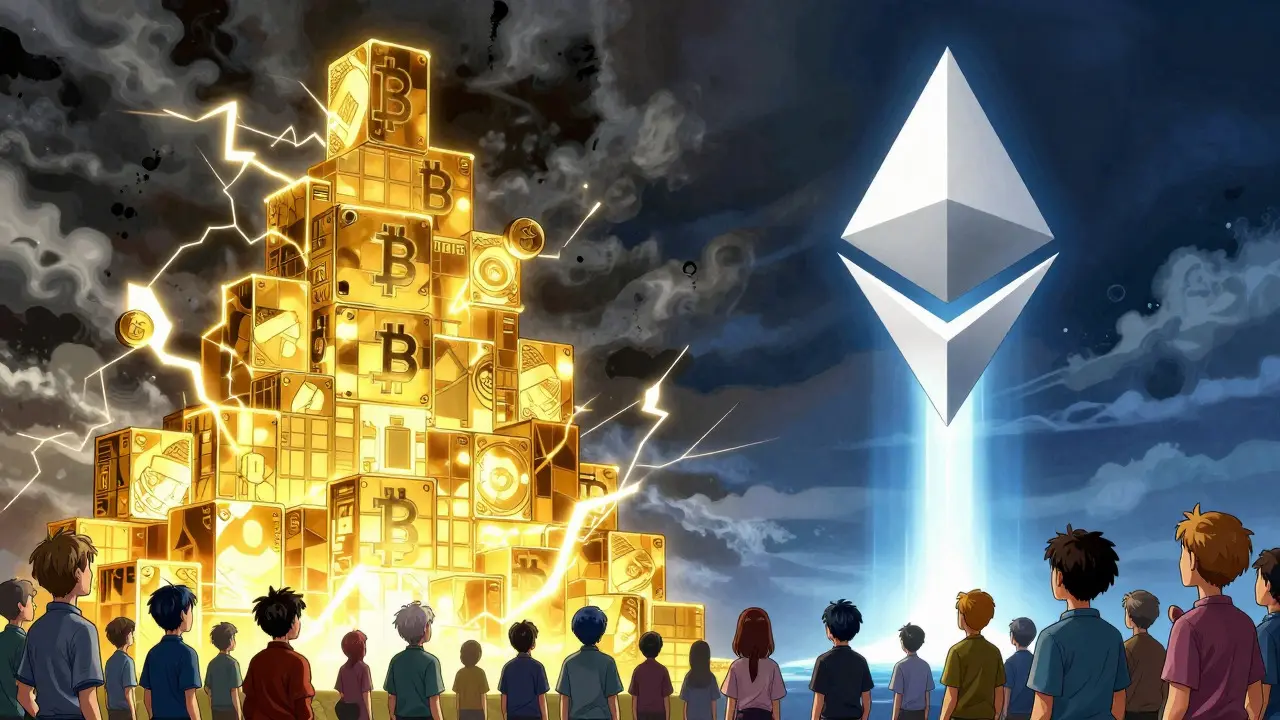
In September 2022, Ethereum-the second-largest cryptocurrency-transitioned from Proof of Work to Proof of Stake (PoS) in an event known as "The Merge." Vitalik Buterin, Ethereum’s co-founder, cited environmental concerns as the primary driver. The switch reduced Ethereum’s energy consumption by 99.95% almost overnight.
This shift marked a turning point for the industry. PoS requires validators to lock up (stake) coins rather than burn electricity. While PoS is more efficient, some argue it lacks the battle-tested security of PoW. Bitcoin, meanwhile, has remained steadfast. Over 89% of core developers oppose switching to PoS, believing that PoW’s physical anchoring provides unparalleled neutrality and security. As a result, PoW remains the standard for "digital gold," while PoS dominates scalable transaction platforms.
Future Outlook: Where Does PoW Go From Here?
Despite the rise of PoS, PoW is far from dead. Bitcoin’s Taproot upgrade improved privacy and efficiency without altering the consensus mechanism. Newer projects like Litecoin are exploring hybrid models. Gartner predicts PoW’s market share will decline to 38% by 2027, but it will remain dominant in store-of-value applications.
Regulatory pressure is increasing. The EU’s MiCA framework requires sustainable consensus mechanisms, pushing miners toward greener solutions. Meanwhile, emerging markets like Nigeria and Vietnam continue to adopt PoW networks due to their permissionless nature. The future of PoW likely lies in optimizing energy use and integrating with renewable grids, ensuring it remains a viable, secure backbone for decentralized finance.
What is the main purpose of Proof of Work in cryptocurrency?
The main purpose of Proof of Work (PoW) is to secure the blockchain network, prevent double-spending, and achieve decentralized consensus without a central authority. It does this by requiring miners to solve computationally difficult puzzles, making attacks economically unfeasible.
Who invented Proof of Work?
The concept was first proposed by Cynthia Dwork and Moni Naor in 1993 as an anti-spam measure. Adam Back later implemented it as Hashcash in 1997. Satoshi Nakamoto adapted it for Bitcoin in 2008.
Is Proof of Work environmentally friendly?
This is debated. Critics highlight high energy consumption, comparable to small nations. Proponents argue that much of this energy comes from renewables or stranded sources (like flared gas), and that the energy cost ensures robust security for the network.
What is the difference between Proof of Work and Proof of Stake?
Proof of Work relies on computational power and electricity to validate transactions, while Proof of Stake relies on validators locking up coins as collateral. PoS is significantly more energy-efficient but is less battle-tested than PoW.
Can I mine Bitcoin with my home computer?
Practically, no. Since the introduction of ASICs in 2013, home computers (CPUs/GPUs) are too slow to compete with specialized mining hardware. Solo mining now requires industrial-scale operations to be profitable.
Heather Austin
July 24, 2026 AT 13:21hey guys just wanted to drop a quick note about the hashcash origins its wild how adam back basically invented the concept for email spam but nobody really used it until satoshi came along i mean think about it we had all this tech sitting there waiting for the right application so yeah history is weird like that
John Harman
July 26, 2026 AT 07:50Let me save you the trouble of reading the entire article because I know exactly where this is going. Everyone loves to talk about the 'energy debate' like it's some new revelation, but let's be real here. The energy consumption of Bitcoin is negligible compared to the global banking system and gold mining combined. You people act like PoW is burning down the rainforest while ignoring that traditional finance runs on massive server farms and physical security infrastructure that consumes way more resources. It’s not just about the electricity bill; it’s about the thermodynamic cost of creating trust in a permissionless environment. If you want security that doesn’t rely on a central point of failure, you have to pay for it with entropy. That’s physics, not politics.
Linda Hilliard
July 26, 2026 AT 16:38Oh please. Another technocrat waving around buzzwords like 'entropy' and 'thermodynamics' to justify an inefficient legacy protocol. The reality is far more mundane: Proof of Work is essentially a subsidy for hardware manufacturers and energy conglomerates. While Ethereum wisely moved to Proof of Stake to align incentives with actual economic value rather than brute force computation, Bitcoin remains stuck in the past. It’s not 'security'; it’s obsolescence masked as tradition. The fact that 89% of developers oppose change isn't a feature; it's a bug in their groupthink. :P
John Harman
July 27, 2026 AT 00:58You’re confusing efficiency with security. PoS is efficient sure, but it’s also centralized by design. You need capital to stake, which means wealth concentrates at the top. PoW allows anyone with electricity and hardware to participate, theoretically speaking anyway. The ASICs are a problem yes, but they’re a natural evolution of competition. Don’t pretend PoS is the utopia you think it is.
Lisa Chong
July 27, 2026 AT 09:27The whole thing is a setup isnt it? They tell us its anti-spam then suddenly its money then suddenly its saving the world from banks. Its all connected to the deep state control grid. Cynthia Dwork and Moni Naor were probably funded by black ops agencies to create a tracking mechanism for every transaction. We are being watched through our wallets. Wake up sheeple. The zeros in the hash are counting down to something sinister. Trust no one especially not Satoshi who might be a collective of CIA agents.
Ran Tao
July 27, 2026 AT 21:11Ugh, can we stop pretending this is about 'math'? It’s about power! 💪 The real story isn’t the code, it’s the drama of the miners vs. the elites! 😱 Look at the hardware race-it’s literally an arms race! 🚀 First CPUs, then GPUs, now these giant ASIC monsters eating up entire neighborhoods’ power grids! ⚡ It’s tragic, really. The little guy gets crushed by Bitmain and Coinbase. It’s not decentralized; it’s just decentralized-looking! 📉 And don’t get me started on the environmental guilt trip-hypocrites! 🌍🔥 #BitcoinIsDead #PoWIsPoison
Kat Barr
July 28, 2026 AT 15:35I think we should try to see the bright side here!!! It’s amazing how technology evolves right?? Like sure, the energy use is high, but imagine if all that power was coming from renewable sources!! 🌞💚 Many miners are actually using stranded energy like flared gas which is SO much better than letting it go to waste!! It’s kind of beautiful when you think about it!! Let’s keep supporting innovation and hope for a greener future together!! 🌱✨
Ran Tao
July 29, 2026 AT 04:06Bright side? 😒 There is no bright side when your 'green' mining farm is built on indigenous land! 🏞️🚫 It’s always the same narrative shift. First it’s 'it’s secure,' then 'it’s deflationary,' now 'it’s green!' 🤡 Just admit it’s a casino run by venture capitalists! 🎰💸
Antony Lopez
July 29, 2026 AT 09:10America leads the world in crypto mining for a reason. Our energy infrastructure is superior. Other countries with weak grids can’t handle the load. This is why US-based miners dominate. Globalists want to ban it to weaken our financial sovereignty. Keep mining American.
Kristine Lawson
July 29, 2026 AT 19:45It is quite ironic that a system designed to eliminate trust in institutions has created a new class of industrial monopolies. The decentralization narrative is largely a myth perpetuated by marketing departments. When only entities with access to cheap hydroelectric power or subsidized natural gas can mine profitably, we are left with a highly centralized oligarchy disguised as a peer-to-peer network. Furthermore, the environmental impact is not merely a 'debate' but a measurable crisis. To claim that PoW is sustainable without rigorous, independent auditing of every major mining facility is intellectually dishonest. We must demand transparency.
Tawny Holmes
July 30, 2026 AT 02:39PoW is dead. Move to Solana.