How Blockchain is Accelerating Insurance Claims Processing

Waiting 30 to 90 days for an insurance payout is a relic of the past. For most of us, the worst part of an accident or a flight delay isn't just the event itself, but the endless paperwork and the "black hole" of waiting for a claim to be approved. However, a fundamental shift is happening. By using a decentralized ledger, the industry is moving from a world of manual verification to one where payments can trigger in minutes. Blockchain is a decentralized, immutable ledger system that records transactions across many computers so that the record cannot be altered retroactively. In the insurance world, this means replacing slow, human-led trust checks with mathematical certainty.
The Bottleneck: Why Traditional Claims Are So Slow
To understand why we need a new system, we have to look at why the old one fails. Traditional claims rely on a chain of intermediaries-brokers, adjusters, and reinsurers-all using different databases. When you file a claim, these parties spend weeks reconciling data, verifying documents, and manually checking if you meet the policy terms. This administrative overhead can eat up 10% to 30% of total processing costs. For a simple claim, you're looking at 15 to 30 days; for complex cases, it can stretch to three months.
The Engine of Speed: Smart Contracts and Oracles
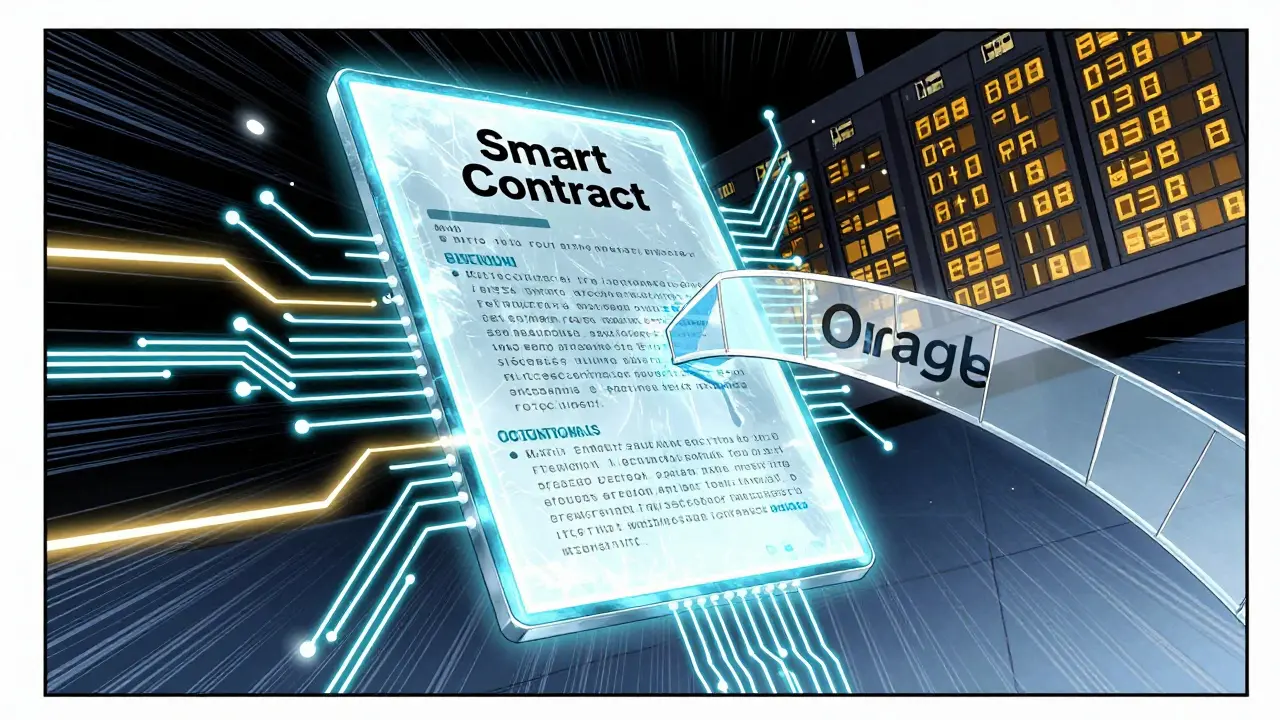
The real magic happens when you combine the ledger with Smart Contracts is self-executing contracts with the terms of the agreement directly written into lines of code. These contracts don't need a human to click "approve." Instead, they act as an "if-then" statement: If the flight is delayed by more than two hours, then release the payment to the policyholder.
But how does a blockchain know if a plane is actually late? It uses Blockchain Oracles is third-party services that feed external, real-world data into a blockchain smart contract. The oracle pulls data from a trusted source-like an airport's flight board-and feeds it to the smart contract. Once the data is verified, the payment is triggered instantly. This removes the need for the customer to even file a claim, as seen in AXA's Fizzy platform, which automates flight delay compensation.
| Metric | Traditional Systems | Blockchain-Enabled |
|---|---|---|
| Settlement Time (Simple) | 15-30 Days | Minutes to Hours |
| Settlement Time (Complex) | Up to 90 Days | Hours to Days |
| Verification Process | Manual / Human-led | Automated / Algorithmic |
| Admin Overhead | 10-30% of costs | Significantly Reduced |
| Fraud Rate | Higher (manual detection) | 15-25% Lower (immutable logs) |
Parametric Insurance: The Gold Standard for Speed
The fastest implementation of this tech is in Parametric Insurance is a type of insurance that pays out a set amount based on the occurrence of a predefined event rather than an assessment of the actual loss. Unlike traditional indemnity insurance, which asks "how much did you lose?", parametric insurance asks "did the event happen?"
Because there is no subjective judgment involved, these claims are perfect for automation. If a sensor in a cargo container detects a temperature spike above 5°C, a blockchain record is created, and the claim is paid. This reduces the time from incident to payment from weeks to mere minutes. According to data from the World Economic Forum, complex claims that once took weeks can now be settled in hours using these automated frameworks.
Reducing Fraud Through Immutability
Speed is useless if the insurer is paying out fraudulent claims. This is where the "immutable" part of the ledger comes in. Once a record is written to a blockchain, it cannot be changed or deleted. This creates a permanent, tamper-proof audit trail. Insurers can easily spot anomalies-like two different people claiming the same loss from the same event-because all parties share a single source of truth.
KSA Insurance notes that this transparency helps reduce fraudulent claims by 15-25%. When the data is shared and verifiable in real-time, the "trust gap" between the insurer and the customer disappears. You no longer have to wonder if the insurance company is trying to find a loophole to avoid paying; the rules are written in the code for everyone to see.
The Reality Check: Where Blockchain Struggles
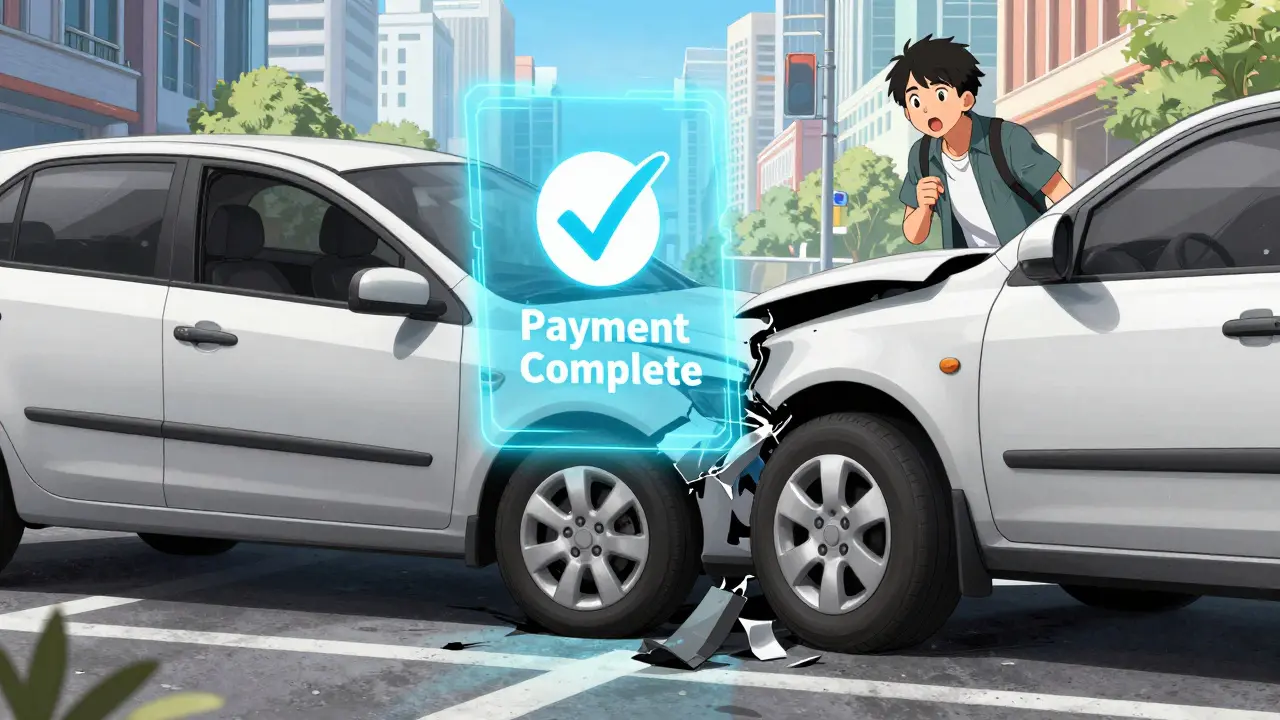
It sounds like a perfect system, but there's a catch: not every claim can be automated. If you have a car accident with three cars involved, an insurance company can't just use a smart contract. They need a human adjuster to look at the damage, interview witnesses, and decide who was at fault. This requires subjective judgment, something a blockchain cannot do.
Currently, only about 20-30% of insurance claims are suitable for full automation. Complex liability assessments still require human intervention. This is why blockchain is most effective when used as part of a larger digital strategy, rather than a total replacement for human expertise. It handles the "easy" 30% of claims instantly, freeing up human adjusters to focus on the complex cases that actually need their attention.
How Companies are Implementing the Tech
If an insurance firm wants to move away from legacy systems, they don't just flip a switch. Most follow a specific path. First, they build a pilot for a narrow use case, like travel or cargo insurance. Then, they integrate the blockchain with their existing policy administration systems. This usually requires developers skilled in Solidity is the primary programming language used for writing smart contracts on the Ethereum blockchain
or frameworks like Hyperledger Fabric is a modular enterprise-grade permissioned blockchain framework designed for business use cases
. The goal is to create a shared ledger where the insurer, the policyholder, and the reinsurer all see the same data at the same time. This eliminates the "reconciliation phase" where companies spend days emailing spreadsheets back and forth to agree on a number.
What This Means for the Future
We are heading toward a world where insurance is invisible. Imagine a car equipped with IoT sensors that automatically files a claim the millisecond a collision occurs. The blockchain verifies the impact, the smart contract checks the policy, and the money is in your account before you've even called a tow truck. McKinsey suggests that this transition could save the industry $21 billion annually by 2030.
While we aren't quite there yet for every type of insurance, the momentum is undeniable. With the global market for blockchain in insurance projected to hit $1.4 billion by 2026, the shift from "paper-heavy" to "code-heavy" is no longer an experiment-it's a competitive necessity.
Does blockchain replace the need for an insurance adjuster?
Not entirely. While it replaces adjusters for standardized, data-driven claims (like flight delays or weather events), human adjusters are still needed for complex claims involving subjective judgment, such as determining fault in a multi-car accident or assessing unique property damage.
Is a blockchain claim actually safer than a traditional one?
Yes, in terms of data integrity. Because the ledger is immutable, records cannot be altered after the fact, which reduces fraud and provides a transparent audit trail that both the insurer and the client can trust.
How long does it take for a company to implement this?
Typical implementation timelines range from 6 to 18 months. Small pilot programs for specific products usually take about 6 to 9 months to launch.
What is a "blockchain oracle" in simple terms?
An oracle is like a bridge. Since blockchains can't "look" outside their own network, the oracle feeds them real-world data (like flight status or weather reports) so the smart contract knows when to trigger a payment.
Will this make insurance premiums cheaper?
Potentially. By reducing administrative costs by 10-30% and cutting fraud by 15-25%, insurers have a strong incentive to pass some of those savings on to customers to remain competitive.



Suvoranjan Mukherjee
April 6, 2026 AT 12:37This is a fantastic breakdown of the current paradigm shift in InsurTech! The integration of Chainlink or similar decentralized oracles is really where the alpha is, because it mitigates the single point of failure risk that traditional APIs have. In India, we're seeing a huge surge in micro-insurance for farmers where parametric triggers for rainfall are changing lives by eliminating the long wait for crop loss assessments. It's all about moving from a trust-based system to a truth-based system using cryptographic proofs. If you're looking into this, definitely check out how Layer 2 scaling solutions are making these transactions cheaper so that even small claims are viable without high gas fees!
Emily 2231
April 7, 2026 AT 22:28Total surveillance state trap. They want every accident and flight delay recorded on a permanent ledger so the globalists know exactly where you are and what you're doing at all times. This isn't about speed it's about control and the death of privacy in the name of efficiency
JERRY ORTEGA
April 9, 2026 AT 11:21it's basically just automated if-then logic but the ledger part is what makes it actually work without a middleman taking a cut. honestly the 20-30% automation cap is the most realistic part of this because humans are messy and a smart contract can't tell if someone is lying about who hit who in a parking lot
Robert Coskrey
April 9, 2026 AT 19:37I find the comparison table quite illuminating,,, it clearly demonstrates the efficiency gains!!!
shubhu patel
April 11, 2026 AT 10:37I completely agree with the point about administrative overhead and it's quite fascinating how the industry is finally catching up to the digital age since we've been dealing with these tedious manual processes for decades and it's just such a relief to think that we might not have to spend hours on the phone with agents anymore.
Lauren Gilbert
April 12, 2026 AT 21:25It makes me wonder about the philosophical shift in how we view "trust" when we replace a human relationship with a mathematical certainty, as there is something deeply human about the negotiation and empathy involved in a traditional claim process that we might be sacrificing for the sake of mere speed and algorithmic precision.
Sonya Bowen
April 13, 2026 AT 22:36Immutability is the core value here. It solves the double-spending of claims.
Carol Prates
April 15, 2026 AT 00:23Omg imagine the drama when a smart contract glitches and pays out a million dollars to the wrong person lol! The insurance companies are probably shaking in their boots thinking about the legal nightmares this will actually create despite the "efficiency"
Carmelita Gonzales
April 16, 2026 AT 23:12hope this helps people get their money faster especially families who cant afford to wait 90 days after a disaster
Nicholas Whooley
April 17, 2026 AT 19:36The prospect of reducing administrative costs by 30% is truly promising for the consumer. I believe that as these frameworks mature, we will see a more inclusive insurance market where the barrier to entry for coverage is significantly lowered due to decreased operational overhead.