How Genesis Blocks Are Created: The Technical Process Behind Blockchain's First Block
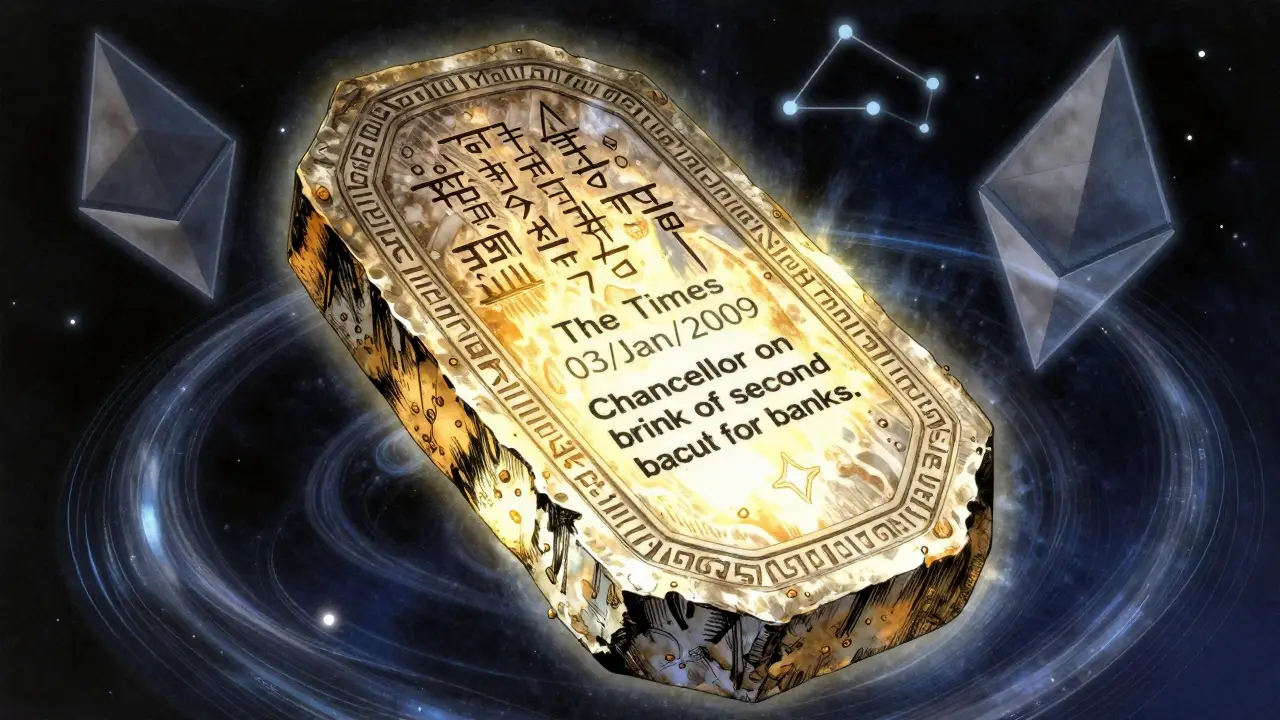
The first block in any blockchain isn’t just another block-it’s the genesis block. It’s the anchor. The origin. Without it, nothing else exists. Every Bitcoin, Ethereum, or Solana chain starts with this single, unchangeable block. But how is it actually made? It’s not mined like the others. It’s not downloaded from a peer. It’s built from scratch, by design, before the network even turns on.
What Makes a Genesis Block Different?
All blocks after the genesis block link back to the one before them. That’s how blockchains stay secure: each block contains the cryptographic hash of the previous one. But the genesis block? It has no predecessor. It stands alone. That’s why it’s hardcoded into the software. It doesn’t get validated by the network-it starts the network.The Bitcoin genesis block, created on January 3, 2009, contained a single message embedded in its coinbase transaction: "The Times 03/Jan/2009 Chancellor on brink of second bailout for banks." That wasn’t random. It was a statement. A timestamp. A protest. And it became the first piece of data ever recorded on a blockchain.
How Genesis Blocks Are Built
Creating a genesis block isn’t a single step. It’s a multi-part configuration process. Developers don’t just press a button. They define every rule the network will follow from day one. Here’s how it works:- Define the consensus rules. Is this a Proof of Work (PoW) chain like Bitcoin? Or Proof of Stake (PoS) like Ethereum 2.0? The genesis block must specify which algorithm will validate future blocks.
- Set the block time. How often should new blocks be added? Bitcoin targets 10 minutes. Ethereum used 12 seconds. This affects transaction speed and network stability.
- Set the initial difficulty. In PoW, the first mining challenge must be hard enough to prevent spam, but easy enough to allow the first miner to succeed. Too high? No one mines. Too low? The network floods with fake blocks.
- Assign the initial supply. Who gets the first coins? Are they pre-mined? Distributed through a sale? Locked in smart contracts? The genesis block holds these balances.
- Assign a unique network ID. This prevents nodes from accidentally connecting to the wrong blockchain. A testnet won’t mix with mainnet because their genesis block IDs are different.
- Embed the genesis hash. The entire block’s data-header, timestamp, nonce, and message-is hashed using SHA-256 (for Bitcoin) or Keccak-256 (for Ethereum). That hash becomes the root of trust.
This configuration is saved in a file-often called genesis.json, genesis_block.blob, or config.json-depending on the framework. It’s not a running program. It’s a blueprint.
PoW vs PoS: Two Different Approaches
Not all genesis blocks are made the same. The method depends on the consensus model.Proof of Work (Bitcoin-style)
In PoW, the genesis block is pre-configured. Developers write the parameters, compile them into the software, and release the code. Miners download the client, start hashing, and the first one to find a valid hash broadcasts the block. Other nodes check: Does this hash meet the difficulty target? Is the timestamp valid? Is the embedded message correct? If yes, they accept it. The network begins.
There’s no auction. No sale. Just code and computation. The first block is mined like any other-but it’s the only one that doesn’t need a parent.
Proof of Stake (Ethereum-style)
PoS doesn’t rely on miners. It relies on validators. So the genesis block doesn’t need a mining difficulty. Instead, it lists the first validators and how much stake they’re locking in. Ethereum’s 2015 genesis block allocated 72 million ETH to early contributors, developers, and the Ethereum Foundation. Those balances weren’t mined-they were assigned.
Validators are chosen based on their initial stake. No one had to solve a puzzle. They just had to deposit ETH before the network launched. The genesis block holds that list. It’s like a starting lineup for a game. Once the validators are in place, the chain starts producing blocks based on their votes.

Tools and Frameworks That Make It Easier
You don’t have to code a blockchain from scratch to create a genesis block. Frameworks like Klayr, Substrate, and Tendermint provide tools to automate this.For example, Klayr lets developers generate a genesis block using CLI commands. You run:
kladr genesis generate --config config.json --validators dev-validators.json --assets genesis_assets.jsonIt reads your settings, computes the hash, and outputs a genesis_block.blob file. That’s the file you distribute to every node in your network. No manual math. No guesswork.
Even Ethereum’s developers used automated tools to generate the genesis block before launch. They didn’t hand-calculate hashes. They wrote scripts that did it for them.
Why It Matters
If the genesis block is flawed, the whole chain is compromised. Too much supply? Inflation from day one. Wrong difficulty? Network stalls. Wrong validator list? Centralized control. A single typo in the genesis file can break decentralization.That’s why most public blockchains have their genesis block audited by multiple developers before launch. Bitcoin’s was reviewed by early adopters. Ethereum’s was published openly. Even private blockchains-used by banks or enterprises-audit their genesis blocks for compliance and security.
It’s also why you can’t change the genesis block later. Ever. It’s immutable. Not because of encryption. But because it’s the root. If you change it, you break every block that came after. The chain dies.

Real-World Examples
- Bitcoin: Genesis block hash:
000000000019d6689c085ae165831e934ff763ae46a2a6c172b3f1b60a8ce26f. Contains one transaction with 50 BTC sent to an address no one can spend from. The embedded message is part of the block’s data. - Ethereum: Genesis block hash:
0xd4e56740f876aef8c010b86a40d5f56745a118d0906a34e69aec8c0db1cb8fa3. Contains 72 million ETH distributed to 100+ addresses. No mining. Just allocation. - Cardano: Uses a hybrid approach. The genesis block defines stake pools, delegation rules, and initial ADA distribution-all set before the first block was mined.
Each one is different. Each one was carefully engineered. None were accidental.
What Happens If You Modify the Genesis Block?
You don’t get a new blockchain. You get a fork. Or worse-a scam.Some projects clone Bitcoin’s code, change the genesis block, rename the coin, and call it a "new innovation." But if the genesis block is altered, the entire history changes. Nodes won’t sync. Wallets won’t recognize it. Exchanges won’t list it. It’s not a blockchain-it’s a copy with a new name.
True innovation doesn’t come from copying the genesis block. It comes from improving what comes after it.
Final Thoughts
The genesis block isn’t flashy. It doesn’t get headlines. No one talks about it during bull runs. But every time you send crypto, every time a smart contract runs, every time a node verifies a transaction-it all traces back to that one block. It’s the foundation. The seed. The first spark.Creating it requires understanding cryptography, consensus, and trust. It’s not about mining. It’s about design. And if you’re building a blockchain, getting it right the first time isn’t optional. It’s everything.
Can you change the genesis block after a blockchain is live?
No. The genesis block is immutable by design. It’s the root of the entire chain. Changing it would invalidate every block that came after it, breaking consensus. Any attempt to modify it results in a fork-not a change to the original chain. That’s why genesis blocks are thoroughly tested before launch.
Who creates the genesis block for public blockchains?
The original developers or core team behind the blockchain create it. For Bitcoin, that was Satoshi Nakamoto. For Ethereum, it was Vitalik Buterin and the founding team. They define the parameters, embed the initial data, and compile it into the software. After launch, no one can alter it-not even them.
Is the genesis block mined like other blocks?
In Proof of Work blockchains like Bitcoin, the genesis block is technically "mined" by the developer before launch. But it’s not mined by the network. It’s pre-calculated and hardcoded. Once the network starts, miners begin working on block 1, not the genesis block. The genesis block is already there-waiting to be the anchor.
Why do some blockchains embed messages in the genesis block?
It’s a way to timestamp the network’s birth and make a statement. Bitcoin’s message about bank bailouts was a political act. Other blockchains embed quotes, poems, or code references. It’s not functional-it’s symbolic. But because the block is immutable, that message becomes part of history.
Can a genesis block be created without coding?
Not really. While tools like Klayr or Substrate automate the process, you still need to configure parameters like consensus rules, token distribution, and network ID. These require technical input. You can’t generate a valid genesis block with a click-and-drag interface. It’s not a setting-it’s a protocol.
Robert Conmy
February 27, 2026 AT 00:05Lilly Markou
February 27, 2026 AT 09:48McKenna Becker
February 27, 2026 AT 22:06precious Ncube
February 28, 2026 AT 03:34Amita Pandey
March 1, 2026 AT 15:27Jan Czuchaj
March 2, 2026 AT 02:15Tracy Peterson
March 2, 2026 AT 13:43George Suggs
March 2, 2026 AT 20:23Dianna Bethea
March 3, 2026 AT 21:04KingDesigners &Co
March 5, 2026 AT 16:58Felicia Eriksson
March 5, 2026 AT 20:15