How NFTs Store Verified Credentials: A Technical Guide to Decentralized Identity
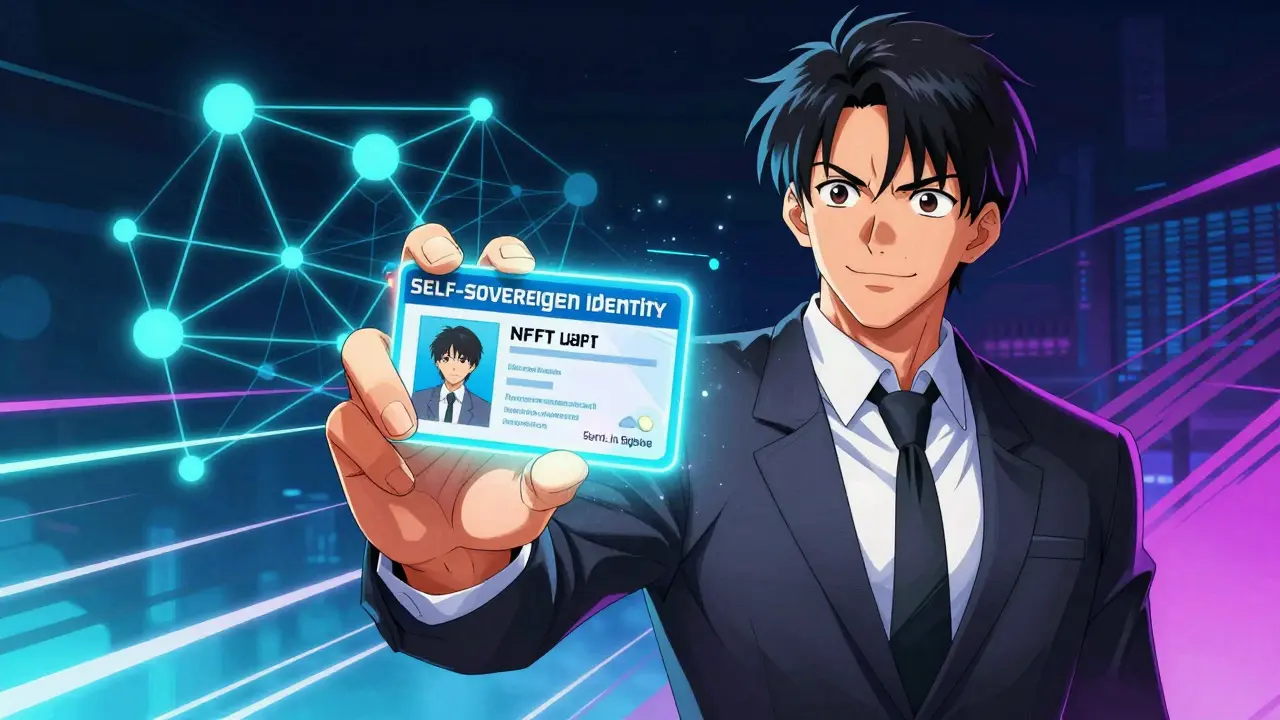
You might remember when Non-Fungible Tokens (NFTs) were just digital jpegs of monkeys or bored apes. That era feels distant now. In 2026, the real revolution isn't in art; it's in identity. Specifically, how we prove who we are and what we know without handing over our entire life history to a corporation. This is where NFT verified credentials come into play. They are changing how universities issue degrees, how companies verify certifications, and how you control your own professional narrative.
If you've ever waited weeks for a physical transcript or worried about a fake certificate, this technology offers a solution that is instant, tamper-proof, and entirely yours. But how does it actually work under the hood? Let’s break down the mechanics of storing verified credentials on the blockchain.
The Core Concept: From Collectibles to Credentials
To understand how an NFT stores a credential, you first have to unlearn the idea that an NFT is just a picture file. An NFT is essentially a unique receipt. It proves ownership of a specific digital asset. When applied to credentials, that "asset" is a claim about you-like "Yolanda holds a Master’s in Computer Science" or "John is certified in Project Management."
Traditionally, these claims live in centralized databases owned by universities or certification bodies. If that database gets hacked, or if the institution goes out of business, your proof of achievement can vanish or become unverifiable. With NFT-based credentials, the record of issuance lives on a public ledger, like Ethereum. This makes it immutable. No one can delete your degree, and no one can forge it because the cryptographic signature from the issuer is permanently recorded.
This shift aligns with the concept of Self-Sovereign Identity (SSI). Instead of relying on a middleman to say you are who you say you are, you hold the key to your own identity. The NFT acts as the container for this identity proof.
Technical Standards: ERC-721 vs. ERC-1155
Not all NFTs are built the same way. The technical standard used matters significantly for credentials. Most people know ERC-721, the original standard for unique tokens. Each ERC-721 token is distinct. This works well for one-off achievements, like a specific award or a unique diploma.
However, many institutions prefer ERC-1155. This standard allows for semi-fungible tokens. Think of it like this: if a university issues 1,000 identical diplomas, ERC-1155 lets them mint them more efficiently than creating 1,000 separate smart contracts. It reduces gas fees and simplifies the management process for the issuer. For individual users, the difference is minimal-you still get a unique token ID representing your specific credential-but for the issuing body, efficiency is key.
| Feature | ERC-721 | ERC-1155 |
|---|---|---|
| Uniqueness | Every token is unique | Can be batched or semi-fungible |
| Gas Efficiency | Higher cost per transaction | Lower cost for bulk issuance |
| Best Use Case | Unique awards, rare certificates | Degrees, course completions, badges |
| Complexity | Simpler logic | More complex contract structure |
Where Is the Data Actually Stored?
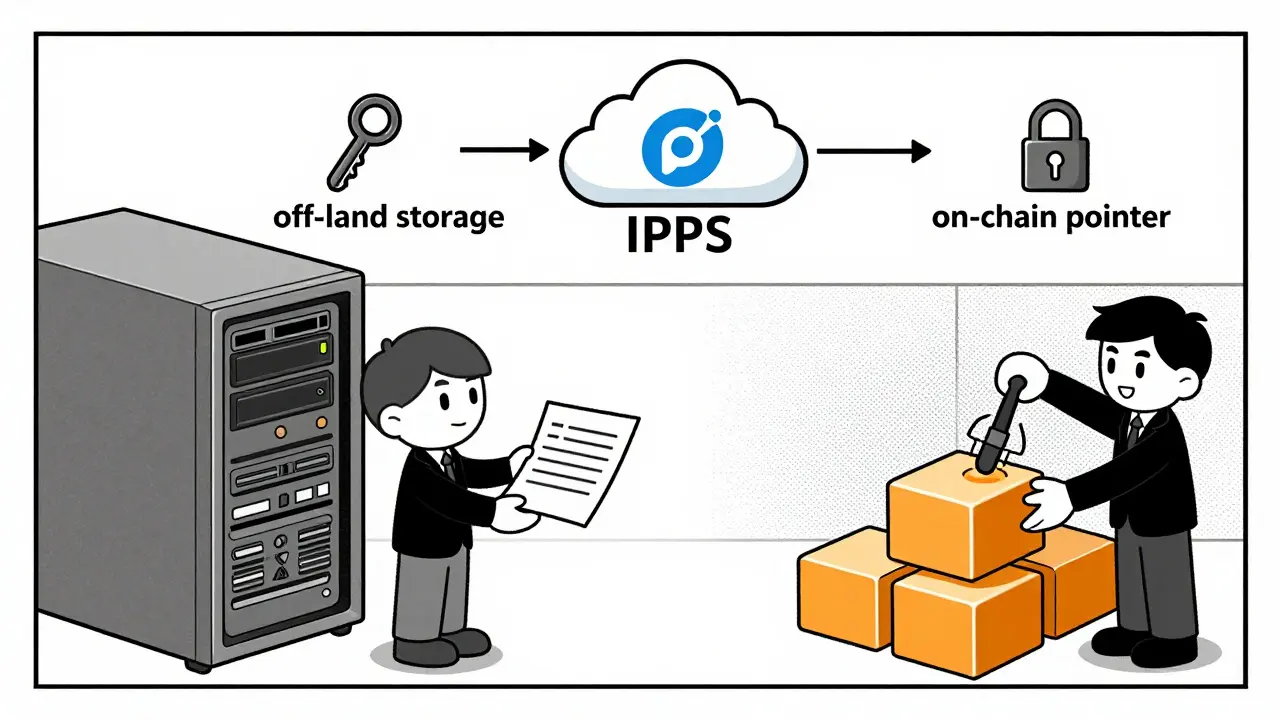
A common misconception is that the actual PDF of your diploma sits on the blockchain. It doesn’t. Blockchains are not designed for large files; they are expensive and slow for data storage. Instead, the NFT contains a pointer-a link-to where the data lives.
This is where decentralized storage comes in. Most systems use IPFS (InterPlanetary File System) or Arweave. Here is the flow:
- The issuer creates the credential metadata (your name, the course, the date).
- This data is uploaded to IPFS, which generates a unique Content Identifier (CID).
- The NFT is minted on the blockchain with the IPFS CID embedded in its metadata.
- The blockchain verifies the existence and integrity of the link via a cryptographic hash.
So, while the NFT itself is on-chain, the readable content is off-chain but secured by the chain’s immutability. If someone tries to alter the file on IPFS, the hash changes, and the verification fails. You’ll know immediately that the document has been tampered with.
Decentralized Identifiers (DIDs) and Privacy
Storing the credential is only half the battle. How do you prove it belongs to you without revealing your private key? This is handled through Decentralized Identifiers (DIDs). Your wallet address isn't just a bank account number; it can function as a DID.
When you receive an NFT credential, it is sent to your wallet. To prove you hold it, you don't send the NFT to the employer. Instead, you generate a cryptographic signature using your private key. This signature says, "I am the owner of this wallet, and I authorize this verifier to see this credential."
This process supports Zero-Knowledge Proofs (ZKPs) in advanced implementations. ZKPs allow you to prove a statement is true without revealing the underlying data. For example, you could prove you are over 18 or that you hold a valid license without showing your birthdate or the full text of the license. This preserves privacy while ensuring trust.

Real-World Adoption and Challenges
By mid-2026, the adoption curve is steepening. Major universities are piloting NFT diplomas, and Fortune 500 companies are testing internal certification systems. The World Bank noted earlier that this could cut verification time from weeks to seconds. In practice, HR departments are starting to integrate blockchain verifiers into their applicant tracking systems.
However, there are friction points. The biggest hurdle remains user experience. Managing private keys is hard. If you lose your seed phrase, you lose access to your credentials forever. There is no "forgot password" button on the blockchain. Recent studies show that nearly 80% of credential compromise incidents stem from poor key management by users, not system failures.
Additionally, interoperability is still a work in progress. While Ethereum is the dominant platform, other chains exist. Cross-chain verification protocols are being developed, but until then, a credential issued on Polygon might not be instantly recognizable by a verifier looking at an Ethereum-only dashboard.
The Future of Digital Identity
We are moving toward a world where your professional identity is portable. Imagine applying for jobs across borders without needing notarized translations or waiting for official transcripts. Your NFT wallet becomes your global resume. As standards like the European Blockchain Services Infrastructure (EBSI) mature, we will see more seamless integration between government IDs and professional credentials.
The technology is ready. The challenge now is making it accessible enough for everyone to use without needing a computer science degree. Until then, NFT verified credentials remain a powerful tool for those willing to navigate the learning curve.
Is my personal information public if I store my credential as an NFT?
Not necessarily. While the transaction is public on the blockchain, the actual data (like your GPA or specific skills) is often stored off-chain on IPFS and encrypted. You choose what to reveal during the verification process using cryptographic signatures. Advanced systems use Zero-Knowledge Proofs to verify facts without exposing raw data.
What happens if I lose my crypto wallet?
If you lose your private key or seed phrase, you lose access to the NFTs in that wallet. Unlike traditional systems, there is no central authority to reset your password. This is why backing up your seed phrase securely is critical. Some newer wallets offer social recovery features, but native blockchain recovery is generally not possible.
Do employers accept NFT credentials?
Adoption is growing. Many forward-thinking tech companies and universities already accept them. However, traditional industries may still require physical copies. Always check with the employer. Most NFT credentials also provide a downloadable PDF version for backward compatibility.
Are NFT credentials legally binding?
Legality depends on local regulations. In many jurisdictions, digital signatures and blockchain records are recognized as legal evidence. However, specific laws regarding educational credentials vary by country. The EU is actively establishing standards through EBSI to ensure legal recognition across member states.
Which blockchain is best for storing credentials?
Ethereum is the most widely supported due to its robust ecosystem and standards like ERC-721 and ERC-1155. However, Layer 2 solutions like Polygon or Arbitrum are popular for lower transaction fees. The choice often depends on the issuer's infrastructure and the need for speed versus security.