How to Prepare for an Upcoming Crypto Fork: The Complete Security Guide
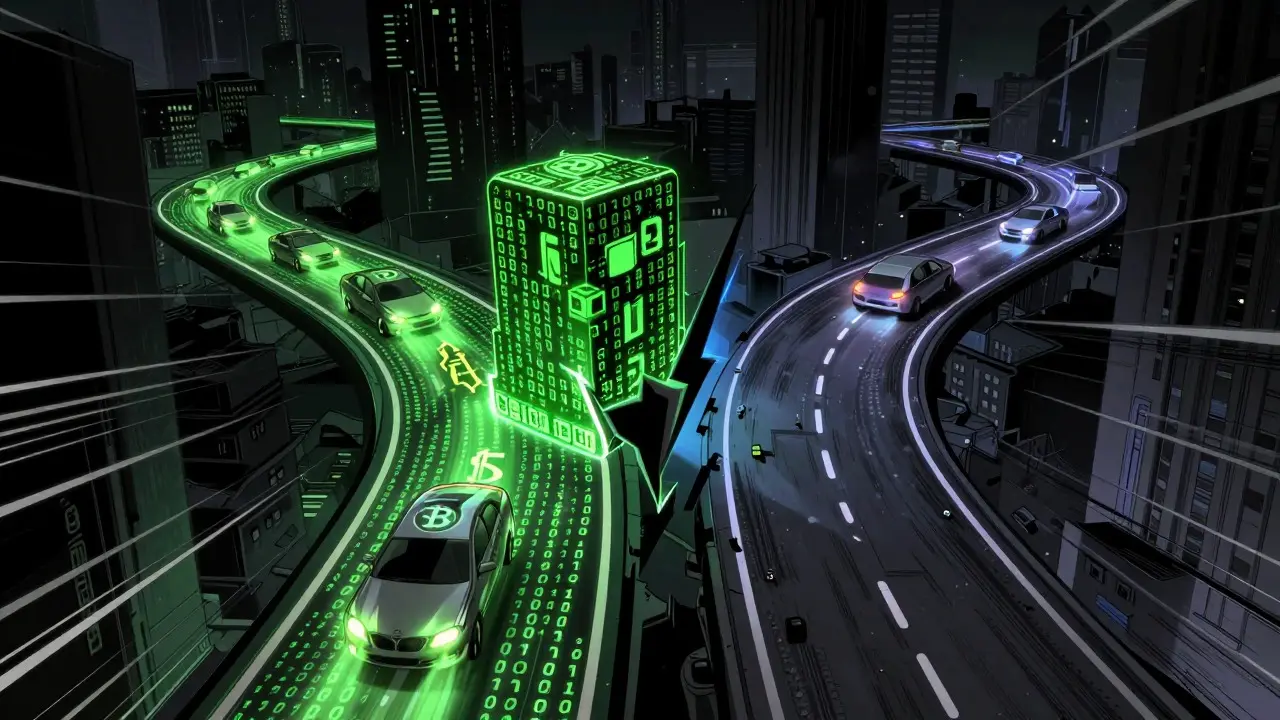
Imagine waking up one morning to find your crypto wallet balance has doubled. It sounds like a dream, but if you aren't prepared, it can quickly turn into a nightmare of lost funds and hacked accounts. This is the reality of a crypto fork, which is a protocol change that splits a blockchain into two separate chains with different rules and native assets. When a hard fork happens, every coin you held before the split exists on both the original chain and the new one. If you leave your coins on an exchange or skip a few simple security steps, you might end up with zero value on the new chain-or worse, lose your original coins too.
The good news? You don’t need to be a computer scientist to survive a fork. You just need to take control of your keys and follow a strict timeline. This guide walks you through exactly what to do before, during, and after a fork to ensure you keep access to all your assets.
Understanding What Actually Happens During a Fork
Before you move a single satoshi, you need to understand the mechanics. A hard fork is an incompatible upgrade to the blockchain software that creates a permanent divergence from the previous version. Think of it like a road splitting in two. Cars (transactions) going down Road A can no longer talk to cars on Road B. Both roads have valid traffic history up to the split point.
Because the transaction history is identical up to that block height, anyone who held coins at the moment of the fork technically owns those same coins on both chains. However, this duplication creates a massive security vulnerability known as a replay attack, which is a malicious act where a valid transaction broadcast on one blockchain is copied and sent to another blockchain to spend funds twice. If you send Bitcoin from Wallet X to Wallet Y on the main chain, an attacker could copy that exact transaction signature and broadcast it on the new forked chain, draining your funds there too unless you take specific precautions.
Soft forks are different-they are backward-compatible upgrades that don't create a new currency. For this guide, we are focusing on hard forks because they require active user intervention to secure assets.
Step 1: Get Off Exchanges and Into Self-Custody
This is the most critical step. If your coins are sitting on Coinbase, Binance, or any other centralized exchange, you do not own them-not really. You own an IOU. When a fork happens, the exchange decides whether to credit you with the new coin, when to do it, and how much to charge for withdrawals. Some exchanges ignore small forks entirely.
To guarantee access to both sides of the fork, you must hold your coins in a non-custodial wallet where you control the private keys. Here is the hierarchy of safety:
- Hardware Wallets: Devices like Ledger Nano S or Trezor are the gold standard. They store your keys offline, making them immune to online hacks. Most major hardware wallets have built-in support for forking protocols or allow you to import keys easily.
- Software Wallets: Apps like Electrum, Exodus, or Coinomi work well if your computer is clean and secure. Ensure the software allows you to export your private keys or seed phrase.
- Paper Wallets: Good for long-term storage, but harder to use for active claiming processes. Only use these if you know how to "sweep" funds later.
Withdraw your funds from the exchange to your personal wallet address at least one week before the scheduled fork date. This gives you time to resolve any unexpected withdrawal issues.
Step 2: Secure Your Seed Phrase and Test Restores
Your seed phrase is a list of 12 to 24 random words that serves as the master backup for your cryptocurrency wallet. If you lose your device, this phrase is the only way to recover your funds. If someone else gets it, they own your money.
Do not just write it down and hope for the best. Perform a test restore. Here is how:
- Write your seed phrase on a piece of metal or high-quality paper. Store it in a fireproof safe or safety deposit box.
- Download a fresh instance of your wallet software on a separate device (or a different browser profile).
- Restore the wallet using only the seed phrase.
- Verify that the balance matches your actual holdings.
- Crucial: Close the restored wallet and delete it if it was on a shared computer. Never leave a restored wallet connected to the internet with real funds unless it is your primary daily driver.
If the restore fails, fix it now. Not during the chaos of the fork.
Step 3: Address Type Awareness (SegWit vs. Legacy)
Not all forks support all address types. Bitcoin introduced Segregated Witness (SegWit) addresses (starting with 'bc1') to improve efficiency. Many older forks, like Bitcoin Gold or early versions of Bitcoin Cash, did not natively support SegWit.
If your coins are in a SegWit address and the new fork doesn't recognize that format, you might think you have zero balance on the new chain. While some tools can map these addresses, it adds unnecessary complexity and risk. To be safe, consider moving your funds to a legacy address (starting with '1' or '3') a few days before the fork if you plan to claim the new asset manually. Check the documentation of the specific fork to see which address formats they support.

Step 4: The Transaction Pause
Timing is everything. Around the fork block height, the network can become unstable. Miners may switch back and forth between chains, causing reorganizations (reorgs). Transactions confirmed on one chain might get wiped out and replaced by blocks from the other chain.
Follow this strict pause schedule:
- 48 Hours Before: Stop sending and receiving coins. Let your current balance settle.
- Fork Day: Do nothing. No transactions. No checking balances obsessively. Just wait.
- 48-72 Hours After: Continue the pause. Wait for the community to confirm which chain has majority hash power and that the split is stable.
Rushing to move coins immediately after the fork is the number one cause of loss. Patience protects your portfolio.
Step 5: Protecting Against Replay Attacks
Once the dust settles and you are ready to interact with the new chain, you must prevent replay attacks. The safest method is called "coin splitting."
Here is the process recommended by security experts like Diogo Monica:
- Generate a brand new wallet address on the original chain (e.g., Bitcoin).
- Move all your original coins from your old wallet to this new address on the original chain.
- Wait for six confirmations. This ensures the transaction is deeply buried in the blockchain and cannot be reversed.
- Now, download the software for the new forked chain.
- Import your old private keys into the new software. You will see your balance on the new chain.
- Immediately sweep those new-chain coins to a fresh, unique address on the new chain.
By moving the original coins first, you break the link. Even if an attacker replays that transaction on the new chain, they are moving empty air because the original coins are already gone from that address. Now your original coins are in New Wallet A, and your forked coins are in New Wallet B. They are separated and secure.
Comparison: Custodial vs. Non-Custodial Fork Handling
| Feature | Centralized Exchange (Custodial) | Personal Wallet (Non-Custodial) |
|---|---|---|
| Control | Exchange decides if you get the new coin | You decide when and how to claim |
| Replay Risk | Handled internally by exchange | You must manually split coins |
| Fees | Often high withdrawal fees post-fork | Standard network transaction fees |
| Availability | New coins may take weeks/months to trade | Access immediately after stability |
| Technical Skill | Low | Medium (requires key management) |

Common Mistakes to Avoid
Even experienced users make errors during forks. Watch out for these pitfalls:
- Ignoring Small Forks: Just because a fork has low market cap doesn't mean it's worthless. Bitcoin Gold started small and became significant. Always check if your wallet supports the new asset.
- Using Unverified Claim Tools: Many scams pop up right after a fork, offering "easy claiming" websites. These sites often ask for your private key. Never enter your private key into a website. Only use official software from reputable developers.
- Forgetting Taxes: In many jurisdictions, including New Zealand and the US, receiving forked coins is considered taxable income at fair market value at the time of receipt. Keep records of the date, time, and value of the new coins when you first access them.
- Sending to Wrong Chains: Double-check network types. Sending Bitcoin to a Bitcoin Cash address can result in permanent loss if the addresses happen to match (which is rare but possible) or if the exchange rejects the deposit due to chain mismatch.
What If You Are Not Technically Confident?
If the idea of managing seed phrases and replay attacks makes you nervous, there is a middle ground. Some large exchanges have a track record of supporting major forks. If you choose this route:
- Read the exchange’s official announcement carefully. Look for explicit statements about supporting the fork.
- Check their fee structure for withdrawing the new asset.
- Understand that you are trusting a third party. If they go bankrupt or decide the fork isn't worth supporting, you get nothing.
However, for any significant holding, self-custody is always the superior choice. The learning curve is steep, but the reward is absolute ownership.
Final Checklist Before the Fork Date
Print this out or save it offline:
- [ ] Coins withdrawn from exchanges to personal wallet.
- [ ] Seed phrase backed up in multiple physical locations.
- [ ] Wallet software updated to the latest version.
- [ ] Test restore performed successfully.
- [ ] Transaction pause initiated 48 hours prior.
- [ ] Research completed on replay protection methods for the specific fork.
- [ ] Paper trail created for tax purposes (screenshots of balances pre-fork).
Preparing for a crypto fork is less about technology and more about discipline. By taking control of your keys, pausing your activity, and methodically splitting your coins, you turn a potential disaster into a routine maintenance task. Stay calm, verify twice, and never rush.
Do I need to do anything for a soft fork?
Generally, no. Soft forks are backward-compatible upgrades that do not create a new cryptocurrency. Your existing coins remain on the same chain, and the changes happen automatically at the protocol level. You only need to worry if the soft fork introduces new rules that require you to update your wallet software to continue transacting, but this rarely affects asset ownership.
What happens if I send coins during the fork window?
Sending coins during the fork window is risky. Due to network instability and potential chain reorganizations, your transaction might be confirmed on one chain but rejected on the other, or vice versa. This can lead to confusion about your balance and potential loss of funds if the transaction is replayed incorrectly. It is best to wait until the network stabilizes, usually 48-72 hours after the fork.
Can I claim forked coins if I used a SegWit address?
It depends on the specific fork. Older forks like Bitcoin Gold did not support SegWit addresses natively, meaning coins held in bc1 addresses appeared as zero balance. Newer forks often have better compatibility. To be safe, check the fork's documentation. If unsure, moving funds to a legacy address (starting with 1 or 3) before the fork ensures maximum compatibility, though it incurs a small transaction fee.
Is it safe to use online claiming tools?
Be extremely cautious. Many phishing sites mimic official claiming tools. Never enter your private key or seed phrase into a website. Legitimate claiming processes usually involve importing your private key into desktop or mobile wallet software, not a web browser. Always verify the URL and cross-reference with official project announcements.
How long should I wait after the fork to transact?
A minimum of 48 to 72 hours is recommended. This allows miners to stabilize on the new chain and ensures that the split is permanent. For contentious forks with uncertain hash power distribution, waiting a week or more is safer. Monitor block explorers and community forums for signs of stability before moving your funds.