How to Set Stop-Loss for Bitcoin: A Practical Guide to Protecting Your Capital
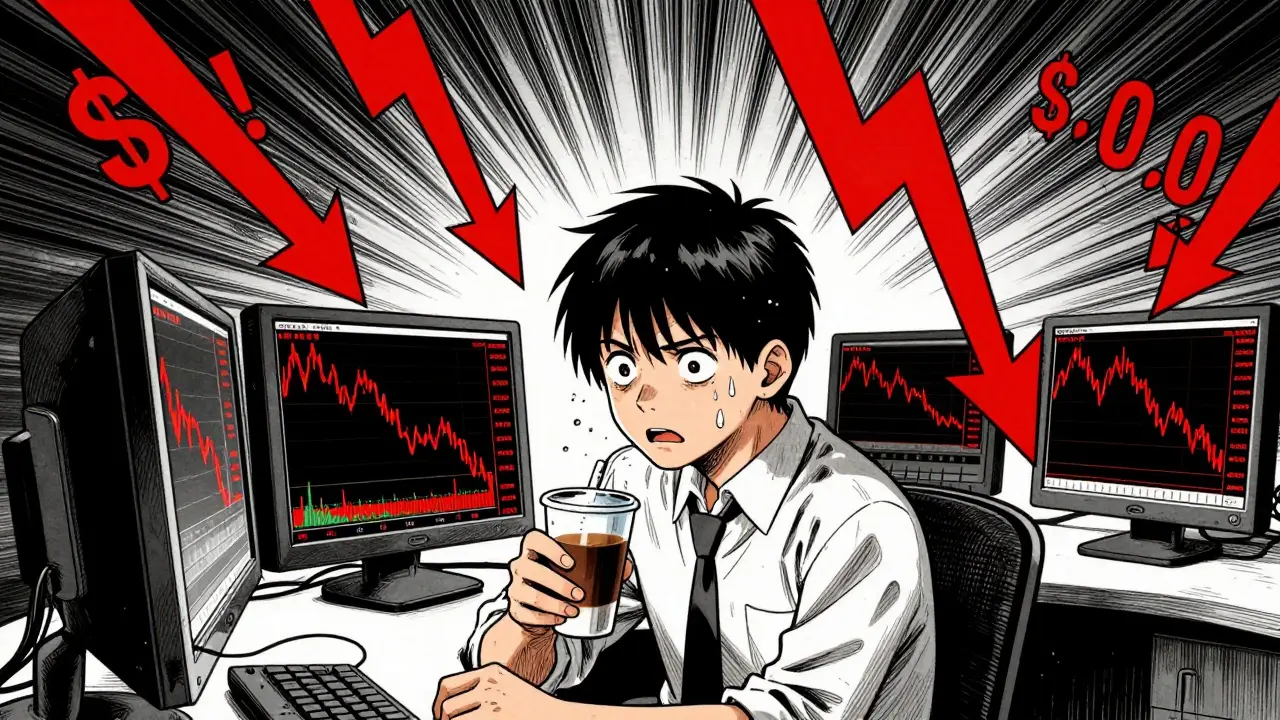
Imagine you bought Bitcoin at $60,000. You’re watching the chart, coffee in hand, when a sudden news headline hits. The price drops to $58,000. Then $57,000. You hesitate. By the time you click 'sell,' it’s $55,000. You just lost thousands because you couldn’t act fast enough. This is exactly why professional traders don’t rely on instinct-they use automation.
A stop-loss order is your safety net. It’s a pre-set instruction that tells your exchange to sell your Bitcoin automatically if the price falls to a specific level. In the volatile world of cryptocurrency, where markets never sleep and prices can swing 10% in an hour, this tool isn’t optional-it’s essential for survival.
Why You Need a Stop-Loss for Bitcoin
Bitcoin is not like gold or stocks. It trades 24/7, 365 days a year. You can’t watch it constantly. Even if you could, emotions get in the way. Fear makes you hold too long; greed makes you ignore warning signs. A stop-loss removes emotion from the equation.
The primary purpose of a stop-loss is to limit downside risk. Without one, a bad trade can wipe out a significant portion of your portfolio. With one, you define your maximum loss before you even enter the trade. This discipline is what separates amateur traders from professionals who stay in the game long-term.
Consider this: if you have a $10,000 trading account, risking more than 1-2% (or $100-$200) on a single trade is dangerous. If Bitcoin drops 20%, you lose $2,000. That’s a 20% hit to your entire capital. Recovery becomes incredibly difficult. A properly set stop-loss ensures that no single mistake destroys your ability to trade again.
Types of Stop-Loss Orders Explained
Not all stop-losses are created equal. Understanding the difference between them helps you choose the right tool for your strategy. There are two main types you’ll encounter on exchanges like Binance, Coinbase, or Kraken.
- Standard Stop-Loss (Stop-Market): When the price hits your trigger level, this order converts into a market order. It sells immediately at the best available price. This guarantees execution but doesn’t guarantee the price. During a crash, you might sell slightly lower than your target due to slippage.
- Stop-Limit Order: This adds a layer of control. You set a stop price (the trigger) and a limit price (the minimum you’ll accept). If Bitcoin hits $50,000 (your stop), the system places a limit order at $49,900. The risk? If the price crashes past $49,900 instantly, your order won’t fill, and you’re left holding the bag.
For most beginners, the standard stop-market order is safer. The risk of missing the exit entirely during high volatility outweighs the small cost of potential slippage.
Where to Place Your Stop-Loss: Strategic Levels
Setting a stop-loss isn’t about guessing. It’s about reading the market structure. Placing it randomly leads to premature exits or catastrophic losses. Instead, look for technical evidence.
Support Levels: These are price zones where Bitcoin has historically bounced back up. If Bitcoin consistently bounces off $52,000, that’s strong support. A logical place for a stop-loss is just below this level, say $51,800. If the price breaks through support, the trend may be reversing, and exiting makes sense.
Percentage-Based Stops: If you’re unsure about technical analysis, use a fixed percentage. Many traders use 5-10% below their entry price. For example, if you buy at $60,000, a 5% stop-loss sits at $57,000. This method is simple but less precise than using support levels.
Average True Range (ATR): Advanced traders use the ATR indicator to measure volatility. If Bitcoin’s average daily move is $2,000, setting a stop-loss only $500 away will likely get triggered by normal noise. Using 1.5x or 2x the ATR gives the trade room to breathe while still protecting against genuine reversals.

Dynamic Strategies: Trailing Stop-Losses
Static stop-losses protect you from losses, but they don’t help you lock in profits. Enter the trailing stop-loss. This dynamic order adjusts upward as the price rises, locking in gains while still providing downside protection.
Here’s how it works: You buy Bitcoin at $60,000 and set a trailing stop of 5%. Initially, your stop is at $57,000. As Bitcoin climbs to $65,000, your stop-loss moves up to $61,750 (5% below $65,000). If the price then drops to $61,750, you sell, securing a profit. If it keeps rising, your stop follows. This allows you to ride trends without needing to manually adjust your orders.
Trailing stops are particularly useful in bull markets. They prevent you from exiting too early and ensure you capture the majority of an upward move. However, in choppy, sideways markets, they can lead to frequent small exits.
| Feature | Standard Stop-Market | Stop-Limit | Trailing Stop |
|---|---|---|---|
| Execution Guarantee | High | Low (risk of non-fill) | High |
| Price Control | Low (slippage possible) | High | Medium |
| Best For | Volatile markets, quick exits | Calm markets, precise exits | Trending markets, locking profits |
| Complexity | Low | Medium | Medium |
Common Mistakes to Avoid
Even with the right tools, mistakes happen. Here are the most common pitfalls new Bitcoin traders face when setting stop-losses.
- Setting Stops Too Tight: If you set a stop-loss just 1% below your entry, normal market noise will kick you out repeatedly. Bitcoin often wicks down before continuing its trend. Give your trade enough space to survive minor fluctuations.
- Placing Stops at Round Numbers: Many retail traders place stops at obvious levels like $50,000 or $55,000. Smart money knows this. Prices often dip slightly below these levels to trigger mass sell-offs (liquidity grabs) before reversing. Place your stop a bit further away, perhaps $54,800 instead of $55,000.
- Moving Stops Against the Trend: Never widen your stop-loss to avoid being triggered. If you bought at $60,000 and your stop was at $57,000, don’t move it to $55,000 because the price is dropping. This violates risk management principles and exposes you to unlimited loss. Only move stops tighter to lock in profits.
- Ignoring Position Sizing: A stop-loss is only part of the equation. If your stop is 5% away, but you put 50% of your portfolio into that trade, you’re still taking massive risk. Always calculate position size so that hitting your stop-loss only costs you 1-2% of your total account.
Slippage: The Hidden Risk
You set your stop-loss at $50,000. The news breaks, and Bitcoin crashes. Your order executes at $49,200. What happened? Slippage.
Slippage occurs when there aren’t enough buyers at your desired price. During high volatility or low liquidity periods, the next available buyer might be significantly lower. This is especially common in Bitcoin during major news events or weekend gaps.
To mitigate slippage:
- Use larger, more liquid exchanges.
- Avoid trading during major economic announcements.
- Consider using limit orders for entries and exits if you can monitor the market.
While you can’t eliminate slippage entirely, understanding it helps you set more realistic expectations. Always assume your exit price might be slightly worse than your stop price.
Practical Steps to Set a Stop-Loss on Major Exchanges
The interface varies by platform, but the logic remains similar. Here’s how to do it on popular exchanges.
On Binance:
- Navigate to the Bitcoin trading pair (e.g., BTC/USDT).
- Select "Limit" or "Market" to buy your position.
- After purchase, go to the "Orders" tab and select "Open Orders."
- Click "Stop-Limit" or "Stop-Market" depending on your preference.
- Enter your stop price (trigger) and, if applicable, your limit price.
- Confirm the order. It will now sit in your pending orders until triggered.
On Coinbase Pro:
- Go to the Trade tab and select BTC-USD.
- Choose "Stop Limit" or "Stop Market" from the order type dropdown.
- Set the stop price. For Stop Limit, also set the limit price.
- Review the order details and submit.
Always double-check your numbers before submitting. A misplaced decimal point can turn a protective stop into a disaster.
Integrating Stop-Losses into Your Overall Strategy
A stop-loss is not a standalone solution. It must fit into a broader trading plan. Ask yourself:
- What is my thesis for this trade?
- Where does my thesis break? (This is your invalidation point.)
- Is the reward-to-risk ratio favorable? (Aim for at least 2:1.)
If you believe Bitcoin will rally to $70,000 from $60,000, but you set a stop-loss at $59,000, you’re risking $1,000 to make $10,000. That’s a great setup. But if your stop is at $59,000 and your target is $61,000, the risk isn’t worth the reward.
Regularly review your stop-loss placements. As the market evolves, support levels shift. Adjust your stops accordingly, always moving them in the direction of profit, never against it.
Can I change my stop-loss after placing it?
Yes, most exchanges allow you to modify or cancel existing stop-loss orders. You can tighten your stop to lock in profits or widen it slightly if the market is consolidating, though widening should be done cautiously to maintain risk discipline.
Do stop-losses work during extreme crashes?
They attempt to, but execution is not guaranteed at the exact price. During flash crashes or liquidity droughts, slippage can cause your order to execute significantly below your stop price. This is a known risk in volatile assets like Bitcoin.
Should I use a stop-loss for long-term Bitcoin holdings?
It depends on your goals. If you’re investing for years, tight stop-losses may force you out during normal corrections. However, a wide trailing stop can help protect accumulated gains without interfering with long-term growth.
What is the ideal distance for a Bitcoin stop-loss?
There is no single ideal distance. It depends on volatility, timeframe, and technical levels. Short-term traders might use 2-5%, while swing traders may use 5-10%. Always base it on support/resistance or ATR indicators rather than arbitrary percentages.
Does a stop-loss guarantee I won’t lose money?
No. A stop-loss limits potential loss but doesn’t eliminate it. Slippage, gaps, and execution delays can result in losses greater than anticipated. It is a risk management tool, not a insurance policy.