How to Spot Memecoin Pump and Dump Schemes: A Survival Guide
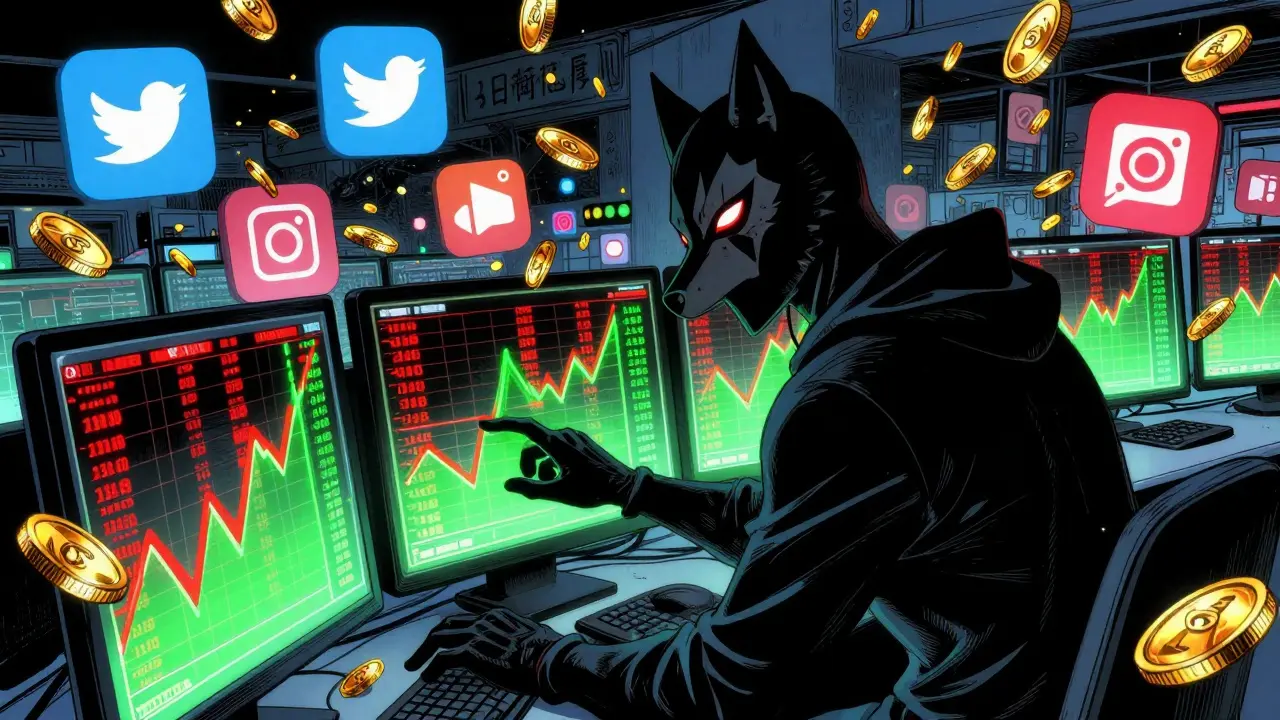
You see it on Twitter. You hear about it in a Discord server. Your friend swears he made ten times his money overnight with a new dog-themed token. It feels like the easiest opportunity of your life. But here is the hard truth: for every person who gets rich quick, there are hundreds who lose everything. This is not an investment; it is a trap known as a memecoin pump and dump scheme.
In the chaotic world of cryptocurrency, these schemes have become sophisticated businesses. They don't just rely on luck anymore. Organized groups use bots, paid influencers, and psychological warfare to manipulate prices. If you are looking at low-market-cap tokens, you need to know how to spot the signs before the music stops. Let's break down exactly how these traps work so you can keep your capital safe.
The Anatomy of a Trap: How Pump and Dumps Work
To avoid a scam, you first need to understand the mechanics behind it. A memecoin pump and dump is not a random event. It is a coordinated attack on market liquidity, usually following a strict four-phase timeline. Understanding this structure helps you recognize where you stand in the cycle.
It starts with the Accumulation Phase. In this stage, the perpetrators-who are often the token creators or early insiders-quietly buy up large amounts of the token while the price is still dirt cheap. They do this anonymously, using multiple wallets to hide their true holdings. At this point, the token looks dead. There is no hype, no news, and very little trading volume. To the average observer, it seems worthless. That is exactly what they want you to think.
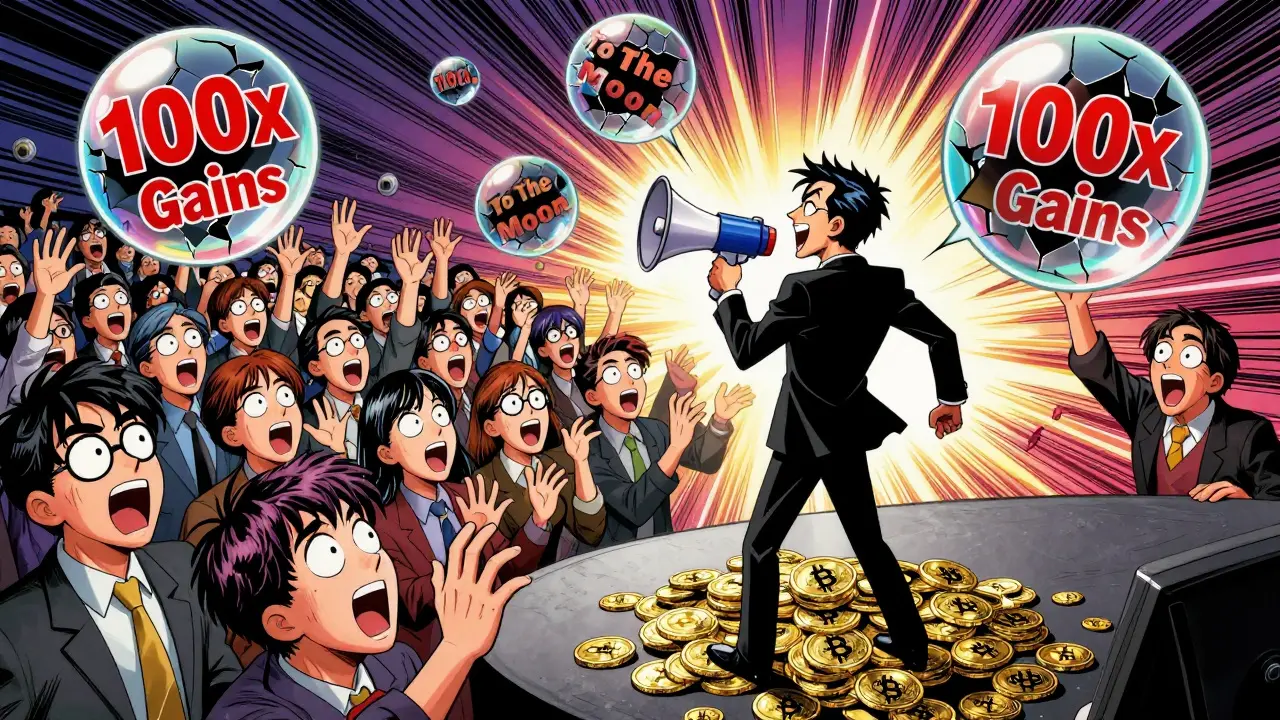
Next comes the Promotion Phase. Suddenly, the silence breaks. Telegram channels start posting about the coin. Twitter influencers begin tweeting about "the next big thing." Reddit threads pop up claiming insider knowledge. The goal here is not education; it is recruitment. These promoters are building a base of unsuspecting buyers. They use aggressive marketing, promising unrealistic returns like "100x gains" or "to the moon." They create a sense of urgency, telling you that if you don't buy now, you will miss out forever. This is Fear Of Missing Out (FOMO) weaponized against your wallet.
Then hits the Pump Phase. As more people buy in due to the hype, the price spikes dramatically. Charts turn green. Traders celebrate their paper profits. The volume explodes. This is the most dangerous phase because greed takes over. New investors jump in, thinking they can sell before the crash. They believe they are smarter than the crowd. But remember, the insiders are still holding their massive bags from the accumulation phase. They are watching the price rise, waiting for the perfect moment to exit.
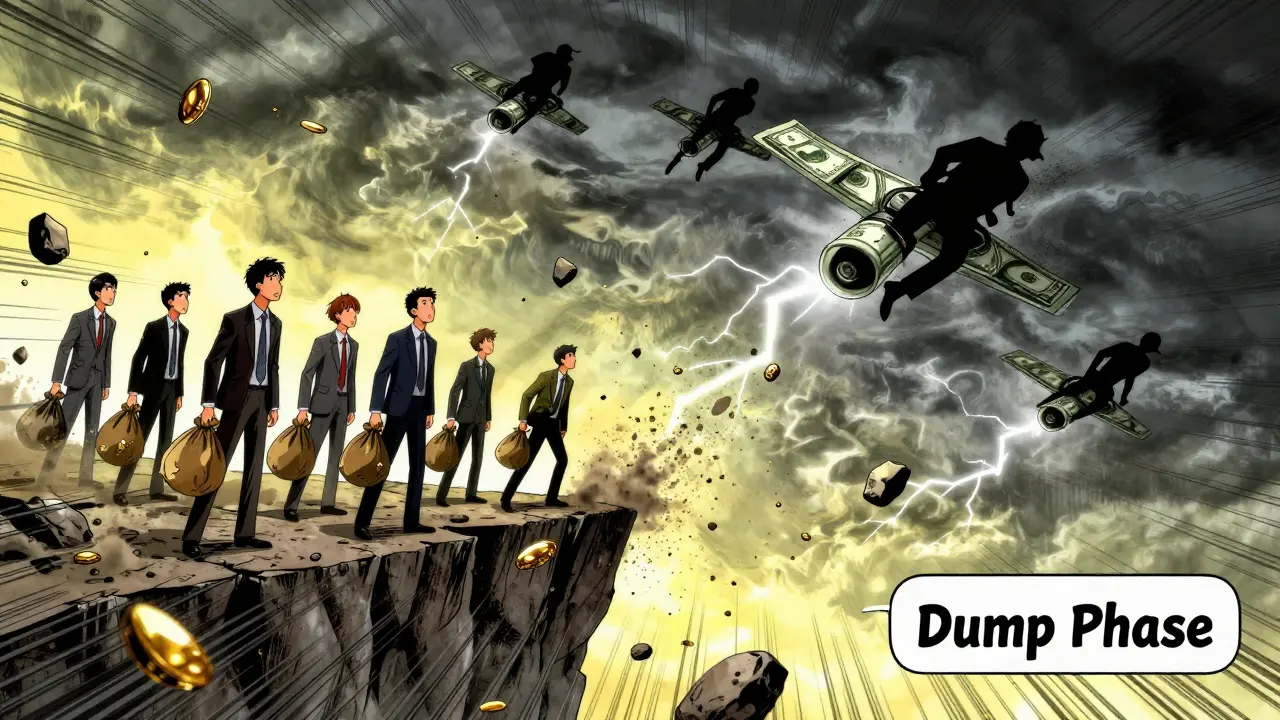
Finally, the Dump Phase begins. Once the price reaches a peak and liquidity is high, the orchestrators sell everything. They dump their holdings onto the latecomers. Because the supply suddenly floods the market, the price collapses instantly. Often, it drops by 90% or more within hours. The insiders walk away with millions, while the retail investors are left holding worthless tokens. The social media accounts go silent. The Telegram group gets deleted. The dream is over.
Key Red Flags You Cannot Ignore
Not every volatile coin is a scam, but certain patterns scream danger. If you see these red flags, step back and analyze the situation carefully. Trust your gut if something feels off.
- Anonymous Teams: Legitimate projects usually have public founders with verifiable identities. If a team is completely anonymous or uses pseudonyms without any track record, be wary. Anonymity makes it easy for scammers to vanish after the dump.
- Unrealistic Promises: If a project guarantees specific returns or claims it is backed by major companies without official confirmation, it is likely a lie. No one can guarantee profits in crypto.
- Low Market Cap and Liquidity: Tokens with market caps under $1 million are easy to manipulate. A small amount of money can move the price significantly. Low liquidity means you might not be able to sell your tokens even if you want to.
- Sudden Price Spikes Without News: If a coin jumps 500% in an hour with no fundamental reason-no partnership, no update, no adoption-it is almost certainly artificial buying.
- Aggressive Social Media Campaigns: Be skeptical of coins promoted heavily by paid influencers or bot networks. Check if the influencer has disclosed their sponsorship. Many do not.
- Locked Liquidity Issues: Always check if the liquidity pool is locked. If developers can withdraw liquidity at any time, they can pull all the funds and leave the token valueless. This is often called a "rug pull," which is similar to a pump and dump but involves stealing the underlying assets directly.
Digital Footprints: Analyzing On-Chain Data
Social media lies, but the blockchain does not. One of the most powerful ways to identify a potential pump and dump is to look at the on-chain data. You don't need to be a programmer to do this; several free tools make it accessible.
Start by checking the token distribution. Use platforms like Etherscan, BscScan, or Solscan to view the holder list. Look for concentration. If the top 10 wallets hold more than 20-30% of the total supply, that is a huge risk. These whales can dump their holdings at any time, crashing the price. Ideally, you want to see a wide distribution among many holders.
Next, examine the transaction history. Are there sudden bursts of transactions from new wallets? This could indicate bot activity. Bots often create thousands of fake accounts to simulate interest and drive up the price artificially. Real organic growth looks different-it is steadier and comes from diverse sources.
Also, check the smart contract code. Is it verified? Has it been audited by a reputable firm? Unverified contracts can contain hidden functions that allow the creator to mint new tokens, blacklist addresses, or halt trading. Tools like Token Sniffer or GoPlus Security can automatically scan contracts for these vulnerabilities. If a tool flags the contract as risky, assume it is until proven otherwise.
| Characteristic | Legitimate Project | Potential Pump and Dump |
|---|---|---|
| Team Identity | Public, Doxxed, Verifiable | Anonymous, Pseudonymous, Fake Profiles |
| Token Distribution | Wide distribution, fair launch | Concentrated in few wallets, pre-minted |
| Liquidity | Locked for long periods | Unlocked, removable by devs |
| Marketing | Community-driven, transparent | Aggressive, paid shills, FOMO tactics |
| Contract Audit | Audited by reputable firms | Unaudited, unverified code |
The Role of Social Engineering and Influencers
Modern pump and dump schemes rely heavily on social engineering. Scammers exploit human psychology, particularly trust and fear. They build communities that feel exclusive and supportive. In Telegram groups, admins encourage positivity and discourage skepticism. Dissenters are banned. This creates an echo chamber where critical thinking dies.
Influencers play a crucial role. Many crypto influencers are paid to promote specific tokens. They may not even disclose this payment. When an influencer with millions of followers tweets about a coin, their audience buys in immediately. This drives the price up, allowing the influencer and the scammers to sell. By the time the average user realizes the promotion was paid, the damage is done.
Be cautious of "alpha groups" or private channels that claim to have early access to winning coins. These are often fronts for pump and dump operations. The "early access" is actually the final call before the dump. The people selling you the signal are the ones planning to sell the token.
Regulatory Landscape and Future Risks
The regulatory environment for cryptocurrencies is evolving. Agencies like the Commodity Futures Trading Commission (CFTC) and the Securities and Exchange Commission (SEC) are increasing scrutiny on market manipulation. In recent years, several individuals have been charged with running pump and dump schemes in traditional stocks, and similar actions are beginning in crypto.
However, enforcement remains challenging. The decentralized nature of blockchain makes it hard to trace anonymous actors across jurisdictions. While exchanges are improving their monitoring systems, many trades happen on decentralized exchanges (DEXs) where oversight is minimal. This lack of regulation means investors must protect themselves. There is no insurance fund for lost crypto investments.
Looking ahead, we expect more sophisticated detection tools. Blockchain analytics firms are developing AI-driven systems to detect unusual trading patterns and wallet clustering. Social media platforms are also cracking down on undisclosed crypto promotions. But as long as anonymity exists, scammers will find new ways to exploit it.
Practical Steps to Protect Your Portfolio
Knowledge is your best defense. Here is a checklist to follow before investing in any memecoin:
- Do Your Own Research (DYOR): Never invest based solely on a tweet or a friend's recommendation. Read the whitepaper, check the website, and verify the team.
- Check On-Chain Metrics: Use block explorers to analyze holder distribution and transaction history. Look for red flags like high concentration or bot activity.
- Verify Contract Safety: Ensure the smart contract is verified and audited. Check if liquidity is locked.
- Beware of Hype: If everyone is talking about it, it might be too late. Avoid FOMO-driven decisions.
- Invest Only What You Can Lose: Memecoins are extremely volatile. Treat them as entertainment, not investments. Never put in money you need for rent or bills.
- Use Stop-Losses: If you do trade, set stop-loss orders to limit potential losses. This automates your exit strategy when things go wrong.
Remember, the goal is not to get rich quick. It is to survive in the market long enough to grow your wealth steadily. Pump and dump schemes prey on impatience and greed. By staying informed and disciplined, you can avoid becoming a victim.
What is the difference between a pump and dump and a rug pull?
A pump and dump involves artificially inflating the price through hype and then selling holdings to crash the price. A rug pull occurs when developers remove all liquidity from the trading pool, making the token unsellable and effectively stealing the invested funds. Both result in losses, but rug pulls involve direct theft of assets.
Can I recover money lost in a memecoin scam?
In most cases, no. Cryptocurrency transactions are irreversible. Unless law enforcement identifies and seizes the scammer's assets, which is rare and difficult, the money is gone. This highlights the importance of prevention over recovery.
Are all memecoins scams?
No, not all memecoins are scams. Some, like Dogecoin or Shiba Inu, have established communities and legitimate use cases. However, the vast majority of new memecoins are highly speculative and vulnerable to manipulation. Extreme caution is always advised.
How do scammers hide their identities?
Scammers use multiple wallets, mixers, and cross-chain bridges to obscure the trail of funds. They may also use pseudonyms online and avoid linking their real-world identity to their crypto activities. Blockchain analysis can sometimes trace these links, but it requires expertise.
Is it illegal to participate in a pump and dump?
Yes, organizing or participating in a coordinated pump and dump scheme is illegal in many jurisdictions, including the US, where it violates securities laws. Individuals have been prosecuted and fined heavily for such activities.

Filbert Reeves
June 11, 2026 AT 11:12look i know what you think but the whole 'scam' narrative is just propaganda from the establishment to keep us poor and obedient. they want you to believe in rules so you dont realize that the real game is about who controls the narrative. when you see a coin pump its not bots its the collective consciousness of the masses rising up against the banking system which has been stealing our value for centuries through inflation and interest rates that are nothing more than legalized theft designed to enslave the working class into debt peonage forever.
Nick Rice
June 13, 2026 AT 00:36I have to say that while your perspective on systemic control is certainly unique, it is dangerously close to ignoring the tangible financial risks involved in unregulated markets. We must approach these opportunities with a level head and recognize that volatility is not merely a tool of oppression but a fundamental characteristic of speculative assets that require rigorous due diligence before any capital is committed.
Amit Thakur
June 13, 2026 AT 19:01You need to understand the technical architecture behind these rug pulls because it is not just about psychology it is about smart contract vulnerabilities and liquidity pool manipulation by insider wallets that execute high-frequency trading algorithms to front-run retail orders thereby creating an artificial price discovery mechanism that benefits only the deployers who hold majority token supply allocations prior to public listing events.
Eric Scheinberg
June 15, 2026 AT 17:49The distinction between market manipulation and legitimate price discovery remains blurred in decentralized finance ecosystems yet regulatory bodies continue to assert jurisdiction over activities that occur on permissionless networks this creates a legal gray area where participants operate without clear precedent or protection mechanisms which necessitates a highly formalized approach to risk assessment and contractual verification before engaging with any novel digital asset class
pankaj chawla
June 17, 2026 AT 03:53I agree with the points raised here regarding the importance of checking on-chain data as it provides transparent evidence of holder distribution patterns that can reveal potential whale accumulation strategies before the promotional phase begins thus allowing informed investors to avoid entering positions during the late stages of the cycle when downside risk is maximized.
Jessica Lane
June 18, 2026 AT 19:38It is truly concerning how many individuals enter these spaces without understanding the basic mechanics of liquidity provision and the inherent conflicts of interest present in anonymous development teams which often leads to significant emotional distress and financial loss for those who are misled by aggressive marketing campaigns that exploit human tendencies towards optimism bias and social proof rather than rational analysis of project fundamentals.
Fede Faith
June 20, 2026 AT 09:39If you really want to stay safe you should always verify if the liquidity is locked using tools like Unicrypt or Team Finance because unlocked liquidity is the biggest red flag indicating that developers can pull all funds at any moment leaving holders with worthless tokens regardless of how good the community looks or how much hype is generated around the project.
Josh Dodson
June 20, 2026 AT 17:44just check the contract bro most scams are easy to spot if u use tokesniffer
Akeem Whittaker
June 21, 2026 AT 15:49We need to foster a culture of education within our communities where new entrants are encouraged to utilize available analytical resources such as block explorers and audit reports rather than relying solely on social media signals which are frequently manipulated by bad actors seeking to offload their positions onto unsuspecting buyers who lack the necessary knowledge to assess the true risk profile of these highly speculative instruments.