International Response to El Salvador's Bitcoin Legal Tender Law: A Global Analysis

When El Salvador became the first sovereign nation to adopt Bitcoin as legal tender alongside the US dollar in September 2021, it didn't just change its own economy-it threw a wrench into the global financial machine. The world watched with a mix of fascination, skepticism, and outright alarm. Fast forward to May 2026, and the initial hype has settled into a complex reality. The international response hasn't been uniform; it’s a fractured landscape of regulatory crackdowns, academic scrutiny, and cautious observation.
This article breaks down how the rest of the world reacted to this unprecedented move, focusing specifically on the restrictions, legal challenges, and policy shifts that emerged globally. We’ll look at why major institutions pushed back, how other countries adjusted their own crypto laws, and what the data actually tells us about the viability of forced digital currency adoption.
The IMF and Global Financial Institutions: Skepticism and Sanctions
The most vocal critics of El Salvador’s experiment have been traditional financial giants, led by the International Monetary Fund (IMF). The IMF viewed the Bitcoin Law not as an innovation, but as a significant risk to fiscal stability. Their primary concern wasn't just volatility; it was the loss of monetary sovereignty. By adopting a decentralized asset, El Salvador effectively ceded control over its money supply to a network it couldn't regulate.
In 2023, the IMF withheld crucial funding from El Salvador, explicitly citing the Bitcoin policy as a barrier. This wasn't just a diplomatic snub; it was a hard restriction on financial aid. The IMF argued that the country lacked adequate safeguards against money laundering and terrorism financing, key pillars of international financial compliance. For developing nations watching closely, the message was clear: align with global standards, or face isolation.
| Entity | Stance | Primary Concern / Action |
|---|---|---|
| IMF | Critical | Withheld loans; cited lack of anti-money laundering controls |
| US Treasury | Restrictive | Enhanced sanctions screening for entities linked to the Chivo Wallet |
| European Union | Regulatory | Accelerated MiCA framework to prevent similar unregulated adoptions |
| Crypto Industry | Supportive | Viewed as validation of Bitcoin's utility despite operational flaws |
Legal Restrictions and the "Forced Tender" Controversy
One of the most contentious aspects of El Salvador’s law was Article 7, which mandated that all economic agents accept Bitcoin as payment. This "forced tender" clause triggered a wave of legal analysis worldwide. Experts like Dror Goldberg argued that such mandates violate fundamental principles of contract freedom and property rights. If you can be forced to accept a volatile asset, your ability to price goods and manage risk is severely compromised.
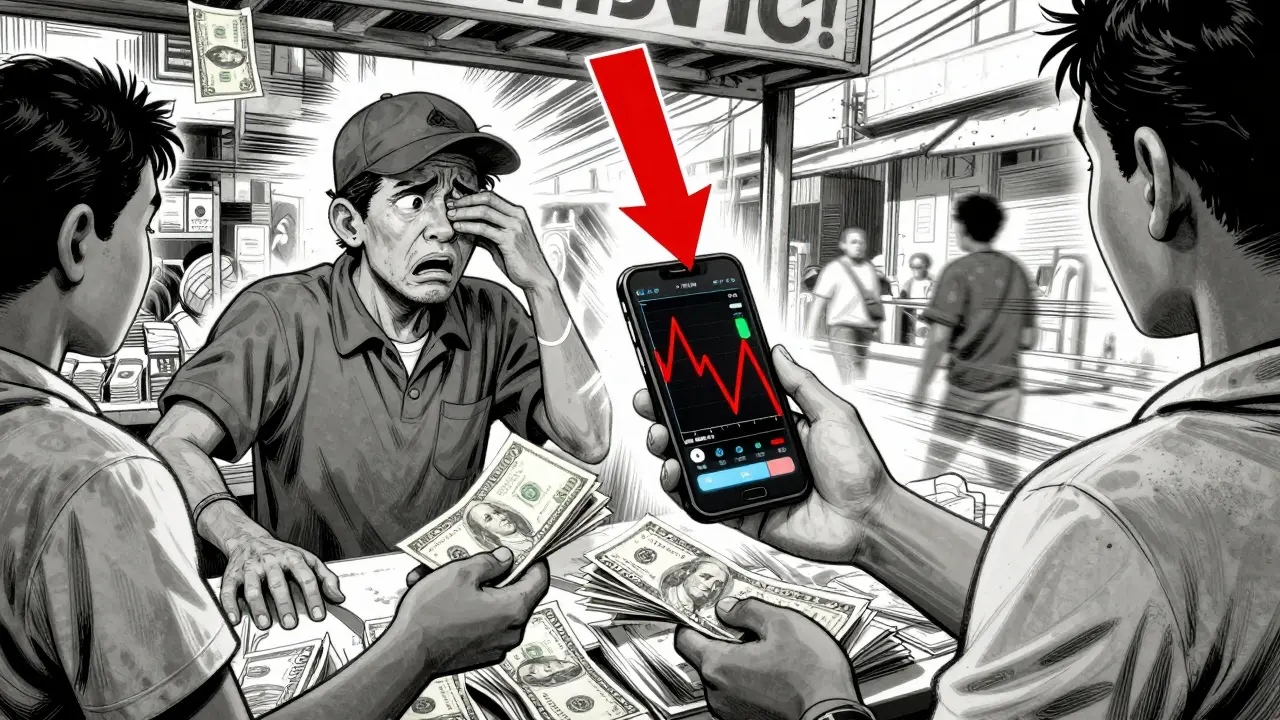
Internationally, this sparked a reevaluation of tender laws. In the United States and much of Europe, cash is often considered "legal tender," but businesses are generally allowed to operate as "cashless" if they offer alternative payment methods. El Salvador’s approach flipped this script. The result? Many small businesses found themselves in a legal gray zone. They were required to accept Bitcoin but lacked the infrastructure to do so safely. Consequently, many simply refused, risking penalties, or immediately converted any received Bitcoin into US dollars-a practice known as "instant off-ramping."
This created a de facto restriction on Bitcoin’s use as a medium of exchange. While legally tender, it was practically useless for daily transactions because merchants didn’t want to hold it. Data from NBER Working Paper 29968 confirmed this: 88% of firms immediately converted received Bitcoin into dollars. The law created a mandate, but market forces created a restriction.
Regulatory Backlash: MiCA and Global Compliance Standards
El Salvador’s experiment acted as a catalyst for stricter regulations elsewhere. The European Union accelerated the implementation of the Markets in Crypto-Assets (MiCA) regulation, partly in response to the risks highlighted by El Salvador. MiCA imposes strict licensing, consumer protection, and transparency requirements on crypto service providers. It essentially says, "If you want to operate here, you must follow these rules," creating a high barrier to entry that decentralized experiments struggle to meet.
In Asia, countries like China had already banned crypto mining and trading, but El Salvador’s move reinforced their stance. Chinese regulators pointed to El Salvador’s struggles as evidence of crypto’s inherent instability. Meanwhile, in Latin America, neighbors like Mexico and Brazil tightened their own anti-money laundering (AML) laws. They didn’t ban Bitcoin, but they made it harder for banks to interact with unregulated wallets like Chivo.
The US Treasury Department also stepped up its game. Through FinCEN (Financial Crimes Enforcement Network), they issued guidance emphasizing that virtual asset service providers must adhere to the same AML/KYC (Know Your Customer) standards as traditional banks. This put pressure on El Salvador’s Chivo Wallet, which faced scrutiny for its initial lack of robust identity verification processes. The international community’s response was essentially a tightening of nooses around unregulated crypto adoption.
The CBDC Alternative: Why Governments Chose Control Over Chaos
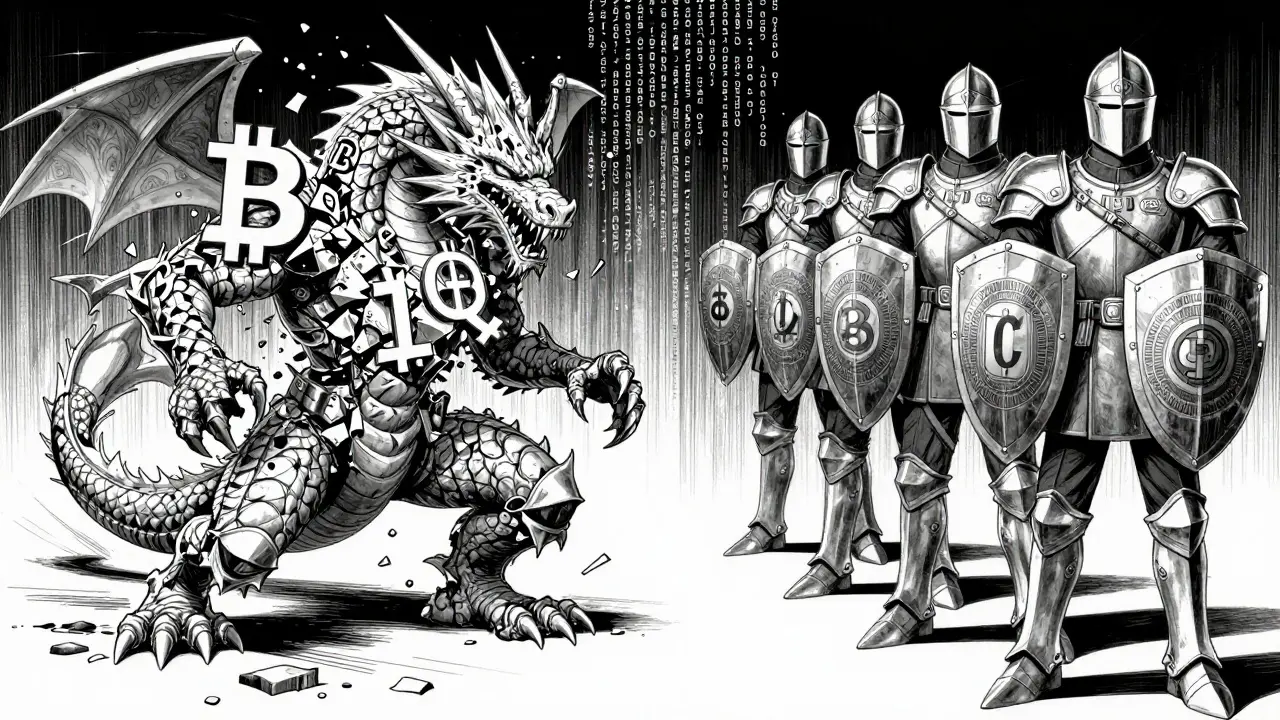
While El Salvador went decentralized, the rest of the world went centralized. More than 100 countries began exploring Central Bank Digital Currencies (CBDCs). Unlike Bitcoin, CBDCs are digital versions of fiat currency, fully backed and controlled by national central banks. Countries like the Bahamas (Sand Dollar), Jamaica (Jam-Dollar), and Nigeria (eNaira) launched their own digital currencies.
The contrast is stark. CBDCs offer the efficiency of digital payments without the volatility of Bitcoin. They allow governments to maintain monetary policy control, track inflation, and enforce sanctions. For policymakers, this was the logical response to El Salvador. Instead of adopting a wild card, they built their own cards. This shift represents a massive restriction on the narrative that Bitcoin could replace fiat currencies globally. It shows that governments prefer innovation they can control.
Real-World Adoption vs. Legal Mandate: The Data Speaks
By 2026, the data paints a sobering picture. Research indicates that while half of El Salvador’s households downloaded the Chivo Wallet initially, active usage stalled. Only about 5% of sales were paid in Bitcoin, and the user base skewed toward young, educated, male users-hardly the unbanked population the policy aimed to help.
This mismatch between legal mandate and actual behavior has influenced international perceptions. Other developing nations, facing similar challenges with remittances and financial inclusion, looked at El Salvador and saw more problems than solutions. The promise of cheaper remittances was undermined by transaction fees and volatility. The promise of financial inclusion was undermined by the complexity of using a smartphone-based wallet without reliable internet or banking support.
As a result, few countries have followed El Salvador’s lead. Instead, they’ve opted for hybrid models: allowing crypto ownership while restricting its use as legal tender. This pragmatic approach reflects a broader international consensus: crypto has value, but forcing it into the role of national currency creates more friction than flow.
Conclusion: A Cautionary Tale for Global Policy
The international response to El Salvador’s Bitcoin law has been defined by restriction rather than replication. Major financial institutions imposed funding limits, legal scholars challenged the constitutionality of forced tender, and regulators tightened compliance standards. Meanwhile, governments pursued CBDCs to capture digital benefits without sacrificing control.
For anyone interested in the future of money, El Salvador serves as a critical case study. It demonstrates that technology alone cannot override economic fundamentals. Without stability, trust, and voluntary adoption, even a law cannot make a currency work. The global reaction suggests that while Bitcoin may remain a valuable asset, its path to becoming a universal legal tender is blocked by significant institutional and practical barriers.
Did any other country follow El Salvador's example?
No, as of 2026, no other sovereign nation has adopted Bitcoin as legal tender. Most countries have instead focused on regulating crypto assets or launching their own Central Bank Digital Currencies (CBDCs).
Why did the IMF criticize El Salvador's Bitcoin policy?
The IMF criticized the policy due to concerns over financial stability, lack of anti-money laundering safeguards, and the potential for increased debt vulnerability. They withheld loans until El Salvador addressed these issues.
What is the "forced tender" controversy?
The "forced tender" aspect refers to Article 7 of El Salvador's law, which requires businesses to accept Bitcoin. Critics argue this violates freedom of contract and exposes merchants to unnecessary volatility risks.
How did the US respond to El Salvador's Bitcoin adoption?
The US maintained a restrictive stance, enhancing sanctions screening and requiring stricter compliance with anti-money laundering laws for any entities interacting with El Salvador's crypto ecosystem.
Is Bitcoin widely used in El Salvador today?
Usage remains limited. Data shows that only a small percentage of transactions are conducted in Bitcoin, with most merchants converting received Bitcoin to US dollars immediately.
Bianca Vilas Boas Lourenço
May 22, 2026 AT 14:22Oh look, another article telling us that forcing people to use a volatile asset is a bad idea. Groundbreaking stuff. 🙄 The IMF didn't withhold loans because they hate fun, they withheld them because the whole thing was a fiscal nightmare waiting to happen. It’s almost like governments know something about economics that we don’t. But sure, keep pretending it was just about 'control' and not basic financial stability. 💅
Yash Lodha
May 22, 2026 AT 18:30The so-called 'international response' is merely a smokescreen for the globalist agenda to maintain their stranglehold on your soul. They fear Bitcoin because it exposes the inherent weakness of their paper fiat system. The IMF, the Treasury, the EU-they are all part of the same shadowy cabal designed to prevent true freedom. Do not be fooled by their regulatory crackdowns; these are the desperate flailings of a dying order. Wake up.
Jesse Alston
May 24, 2026 AT 03:54Great breakdown! 👍 It’s really important to distinguish between legal tender status and actual utility. As the data shows, when merchants can’t manage risk effectively, adoption stalls regardless of mandates. This case study highlights why voluntary adoption and infrastructure support are crucial for any new payment system to succeed. Thanks for sharing this detailed analysis! 📊💡
Sarah C
May 24, 2026 AT 09:43I think this is a very balanced perspective. It makes sense that other countries would choose CBDCs if they want to maintain monetary policy control while still offering digital convenience. El Salvador’s experiment certainly provided a lot of real-world data that regulators could learn from. It’s interesting to see how different nations prioritize stability versus innovation in their financial systems.
Kimberly Herbstritt
May 25, 2026 AT 11:21Actually, I think you’re missing the bigger picture here. The 'failure' of El Salvador isn’t proof that Bitcoin doesn’t work as money; it’s proof that centralized institutions are terrified of losing their monopoly. The fact that no one else followed suit just shows how risk-averse traditional finance has become. Maybe the restrictions themselves are the reason it hasn’t spread, not the technology. Just saying! 😊
Sharada Vakkund
May 27, 2026 AT 09:30This is such an insightful analysis! 🌟 It’s fascinating to see how El Salvador’s bold move acted as a catalyst for global regulatory changes like MiCA. While the outcome wasn’t what proponents hoped for, it definitely sparked necessary conversations about financial inclusion, volatility, and the role of government in currency. Let’s keep learning from these experiments! 💬👇
Sudarshan Anbazhagan
May 28, 2026 AT 15:25One must consider the profound implications of such a hasty and ill-conceived legislative maneuver which ultimately served only to validate the cautious approach taken by established financial bodies worldwide who understood from the outset that the introduction of a highly volatile decentralized asset into the realm of national currency without adequate safeguards against money laundering and terrorism financing was bound to result in significant fiscal instability and loss of monetary sovereignty thereby necessitating the withholding of crucial funding by the International Monetary Fund as a direct consequence of these egregious oversights
Jerry CUNNINGHAM SR
May 29, 2026 AT 21:32A well-reasoned article that clearly outlines the complex interplay between technological innovation and regulatory necessity. It is evident that while El Salvador aimed for financial inclusion, the lack of robust AML/KYC frameworks led to international scrutiny. The shift towards CBDCs by other nations demonstrates a preference for controlled digital evolution, ensuring both efficiency and monetary stability. This serves as a valuable lesson for policymakers globally.
H F
May 31, 2026 AT 20:03Bloody hell, talk about a cautionary tale! 🇬🇧 The whole 'forced tender' bit sounds like a recipe for disaster. Imagine being a small shop owner and having to accept Bitcoin when you’ve got no idea how to handle it. No wonder everyone else ran screaming in the opposite direction towards CBDCs. At least those are backed by someone who won’t vanish into thin air. Brilliant piece though, really spells out why regulation matters!
Michael Berggren
June 1, 2026 AT 02:25This raises some deep philosophical questions about the nature of trust in currency. 💭 Is trust derived from state backing or from mathematical certainty? El Salvador tried to force the latter, but without the former, social cohesion fractured. The global retreat to CBDCs suggests that humanity still craves the comfort of central authority, even in the digital age. Fascinating dichotomy! 🧠✨
Kiran CS
June 2, 2026 AT 20:46How utterly predictable. The masses, incapable of grasping the nuanced beauty of decentralized finance, naturally gravitate towards the comforting embrace of state-controlled digital tokens. El Salvador’s ‘experiment’ was never going to succeed among the uninitiated. Only those with the intellectual fortitude to withstand volatility truly understand the value proposition. The rest are mere sheep following the IMF’s shepherd. 🎩
Bijan Das
June 4, 2026 AT 08:53Yeah right, another boring article about why crypto failed. Like anyone cares about the IMF or whatever. It’s all just hype anyway. The elites always win. Whatever. 😒
Ashley Rodriguez
June 4, 2026 AT 21:50i think its kind of sad that they forced people to use bitcoin when they didnt even have the internet or phones to do it properly and then everyone just converted it back to dollars right away because nobody wanted to hold it which makes sense i guess but it feels like they should have thought more about how regular people actually live instead of just passing laws that sound good on paper but dont work in real life at all
Bridget Coogle
June 5, 2026 AT 22:59It’s clear that stability and trust are key for any currency to function effectively. While the intention behind El Salvador’s move was noble, the execution lacked the necessary support systems. Moving forward, hybrid models seem like a pragmatic solution that balances innovation with security. Great read! 💪