Mimo Governance Token (MIMO) Explained: Utility, Risks & Market Reality

Most people searching for MIMO crypto are likely looking for a hidden gem in the DeFi space. But here is the hard truth: while the concept of a euro-pegged stablecoin is appealing to European users, the reality on the ground is quite different from the hype. If you are holding MIMO or considering buying it, you need to understand exactly what this token does, where it lives on the blockchain, and why its market performance has been so volatile.
This guide breaks down the Mimo Governance Token without the fluff. We will look at how the protocol works, the specific risks involved with forked code, and what the current market data actually says about its viability. By the end, you will have a clear picture of whether MIMO fits your portfolio or if it’s just another forgotten project in the vast ocean of DeFi tokens.
What Is the Mimo Governance Token?
Mimo Governance Token (MIMO) is a utility and governance asset used within the Parallel Protocol ecosystem to manage decisions and mint the PAR stablecoin. It was launched in March 2021 by an anonymous development team. Unlike major projects with famous founders, MIMO operates behind the scenes, which adds a layer of mystery-and risk-to its identity.
The core function of MIMO is simple but critical: it allows holders to vote on how the protocol runs. This includes setting interest rates, adjusting collateral requirements, and managing the treasury. But there is a catch. To get voting power, you don’t just hold the token; you must lock it for a specific period. The longer you lock your MIMO, the more influence you have. This mechanism is designed to align long-term holders with the health of the protocol.
MIMO also serves as the fuel for minting PAR, a decentralized stablecoin pegged to the Euro. Users lock MIMO to create PAR, creating a direct link between the governance token and the stablecoin supply. This makes MIMO essential for anyone using the Parallel Protocol for euro-denominated DeFi activities.
How the Parallel Protocol Works
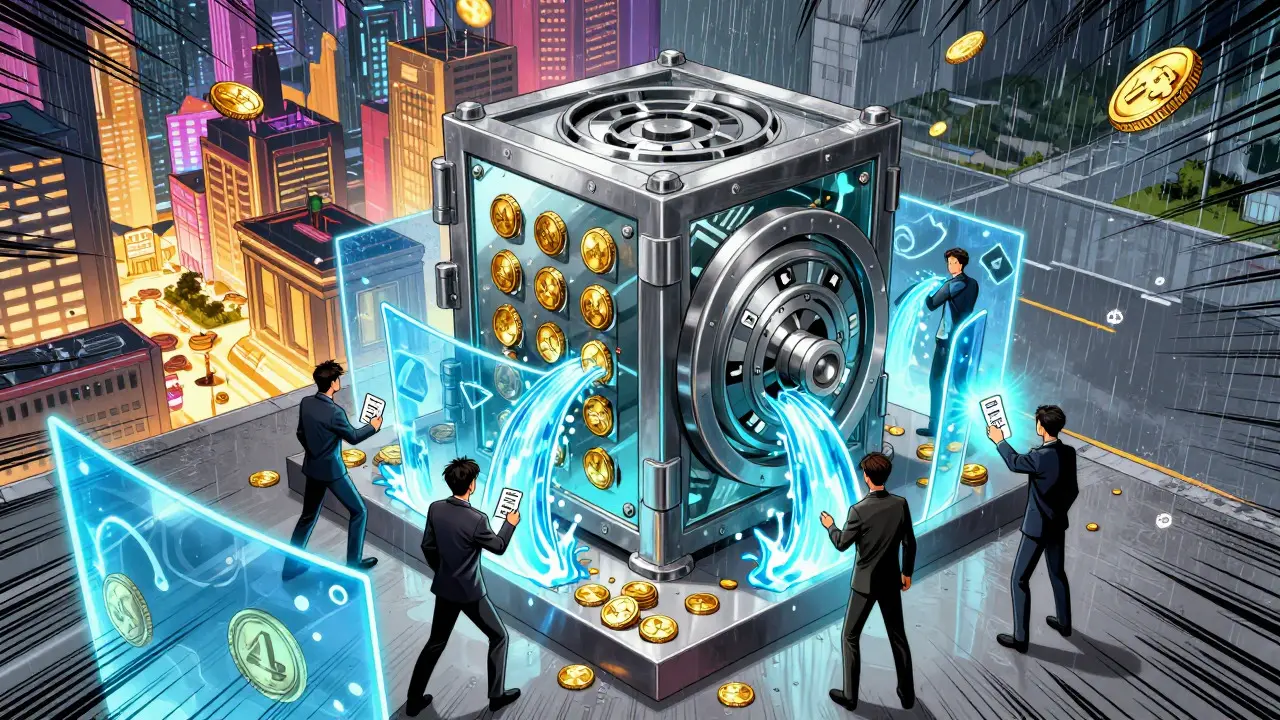
To understand MIMO, you have to understand the machine it powers: the Parallel Protocol. This platform is built for European DeFi users who want to avoid dollar volatility and use euros instead. The system relies on a parallel structure where MIMO holders lock their assets to generate liquidity for PAR.
Here is how the flow typically works:
- Locking Assets: You deposit MIMO into the protocol.
- Minting Stablecoins: In exchange, you receive PAR, which is backed by the locked MIMO and other collateral.
- Governance Voting: Your locked MIMO gives you voting rights on protocol upgrades.
- Emergency Recapitalization: If the system faces a shortfall, new MIMO can be minted and sold to restore stability.
This setup is similar to other major DeFi protocols like MakerDAO, but with a specific focus on the Euro. However, technical analysis from Stack Money revealed that 100% of Mimo Governance’s code repositories were forked from another project. While forking is common in open-source software, it raises questions about original innovation versus replication. For investors, this means the technology is proven but not unique, relying heavily on execution rather than breakthrough engineering.
Technical Specs and Blockchain Presence
MIMO isn’t stuck on one chain. It operates across multiple networks, giving users flexibility in where they store and trade their tokens. Here is where you can find MIMO:
| Blockchain Network | Token Standard | Launch Date | Contract Address (First 6 digits) |
|---|---|---|---|
| Ethereum | ERC-20 | March 10, 2021 | 0x90b831... |
| Polygon | ERC-20 | June 30, 2021 | 0xADAC33... |
| Fantom | ERC-20 | November 3, 2021 | 0x1D1764... |
While multi-chain support sounds impressive, it doesn’t solve the biggest problem: liquidity. As of recent data, MIMO is available on very few exchanges. Some trackers show it listed on only one major venue, leading to near-zero trading volume. If you try to sell a large amount of MIMO, you might struggle to find buyers without moving the price significantly against you.
The total supply is capped at 1 billion tokens. However, the circulating supply hovers around 588 million, according to CoinMarketCap. This means a significant portion of tokens are still locked or held by early backers, which can impact price dynamics when those locks expire.
Market Performance and Price Analysis
Let’s talk numbers, because they tell a stark story. MIMO hit an all-time high of $0.35 during the 2021 bull run. Since then, it has suffered a massive decline. Data from Coinbase indicates a drop of over 99% from that peak. In April 2025, the price was reported at roughly $0.000462, reflecting a 90% decrease from just one year prior.
Why such a crash? Several factors contribute:
- Liquidity Crisis: With trading volume often hitting $0.00 in 24-hour periods, the token lacks the active user base needed to sustain value.
- Regulatory Headwinds: The MiCA regulation in the EU took full effect in June 2025. This creates compliance hurdles for euro-pegged stablecoins like PAR, potentially slowing adoption.
- Competition: Established players like MakerDAO (MKR) and Aave (AAVE) dominate the governance token space. MIMO’s market cap is under $1 million, placing it far behind giants with billions in market value.
Price prediction models from CoinLore suggest further downside, forecasting a potential drop to $0.002656 by late 2025. While predictions are never guaranteed, the trend line is undeniably downward. For any investor, this signals high risk. You are betting on a niche product in a consolidating market.
Risks and Challenges for Investors
If you are thinking about buying MIMO, you need to weigh these specific risks carefully:
1. Lack of Transparency
The development team remains anonymous. There is no public whitepaper, limited documentation, and no active community channels like Discord or Telegram mentioned in reliable sources. In crypto, anonymity can lead to rug pulls or abandonment. Without a visible roadmap, it’s hard to know if the project is even being maintained.
2. Forked Codebase
As mentioned, the code is 100% forked. This means the team didn’t build the engine from scratch. While efficient, it offers no competitive advantage. If the original protocol improves, MIMO may lag behind unless the team actively ports those updates-a task they haven’t publicly documented doing recently.
3. Regulatory Uncertainty
With MiCA now in force, euro-stablecoins face stricter rules. If PAR fails to comply, the entire ecosystem could shrink. MIMO’s value is tied directly to PAR’s success. If PAR loses users due to regulatory friction, MIMO becomes less useful.
4. Low Community Engagement
Reddit threads about MIMO are virtually non-existent. Trustpilot reviews are absent. This silence suggests that the average user has moved on. A healthy crypto project needs community buzz to drive adoption. MIMO currently lacks this momentum.
Comparing MIMO to Major Governance Tokens
To put MIMO in perspective, let’s compare it to established governance tokens. The differences are striking.
| Feature | MIMO | MakerDAO (MKR) | Aave (AAVE) |
|---|---|---|---|
| Primary Focus | Euro-pegged Stablecoin (PAR) | Dollar-pegged Stablecoin (DAI) | Lending/Borrowing Protocol |
| Market Cap (Approx.) | < $1 Million | $1.2 Billion+ | $500 Million+ |
| Liquidity | Very Low / Near Zero Volume | High / Deep Order Books | High / Deep Order Books |
| Code Origin | 100% Forked | Original Development | Original Development |
| Regulatory Status | Unclear / Niche | Established / Global | Established / Global |
MIMO excels in one specific area: providing a non-custodial option for European users who prefer euros. If you are strictly looking for euro-based DeFi, MIMO is one of the few options. But for general DeFi exposure, it falls short compared to MKR or AAVE, which have deeper liquidity, stronger communities, and proven track records.
Who Should Consider MIMO?
So, who is this token actually for? It’s not for everyone. Here is a breakdown:
- European DeFi Enthusiasts: If you live in the Eurozone and want to avoid USD volatility, MIMO/PAR might be worth a small allocation for testing purposes.
- High-Risk Speculators: If you believe in a massive rebound of niche tokens, MIMO’s low price could offer high upside-but only if the protocol suddenly gains traction.
- Not For Long-Term Holders: Without active development signals or strong community backing, holding MIMO for years is a gamble on an unknown outcome.
For most investors, the safer bet is to stick with established governance tokens that have transparent teams and robust ecosystems. MIMO remains a niche experiment with significant hurdles ahead.
Frequently Asked Questions
Is MIMO a good investment in 2026?
MIMO carries high risk due to low liquidity, near-zero trading volume, and lack of active community engagement. While it targets a specific niche (euro-based DeFi), its market cap is under $1 million, making it vulnerable to regulatory changes and competition. It is suitable only for high-risk speculators or those specifically needing euro-pegged DeFi tools.
Where can I buy MIMO tokens?
MIMO availability is limited. It is primarily found on decentralized exchanges (DEXs) on Ethereum, Polygon, and Fantom. Centralized exchange listings are scarce, with some data suggesting it is available on only one major venue. Always check current liquidity before executing large trades.
What is the difference between MIMO and PAR?
MIMO is the governance token used to vote on protocol parameters and mint stablecoins. PAR is the actual stablecoin pegged to the Euro. You lock MIMO to mint PAR. MIMO fluctuates in value based on market demand, while PAR aims to stay steady at €1.00.
Does MIMO have a maximum supply?
Yes, the maximum supply is capped at 1,000,000,000 (1 billion) tokens. However, additional tokens can be minted in emergency situations to recapitalize the system, though this is rare.
Is the Mimo team anonymous?
Yes, the development team behind Mimo Protocol has not publicly disclosed their identities. This anonymity adds risk, as investors cannot verify the background or commitment of the developers.