NHR Program and Cryptocurrency Tax Benefits in Portugal: What Changed in 2026

If you planned to move to Portugal last year to enjoy the famous Non-Habitual Resident (NHR) tax breaks on your cryptocurrency gains, you might be feeling a bit lost right now. The rules changed dramatically. For years, Portugal was the holy grail for digital nomads and crypto investors because of its generous tax exemptions. But as we navigate through July 2026, the original NHR program is officially closed to new applicants. It has been replaced by a stricter regime called IFICI.
Does this mean Portugal is no longer a good place for crypto holders? Not necessarily. But the "easy button" for tax optimization is gone. You need to understand exactly what you qualify for now, whether you are an old-school NHR holder or a new applicant trying to fit into the IFICI box. This guide cuts through the noise and tells you where things stand today.
The Death of the Original NHR and the Rise of IFICI
Let’s get the history straight so you know why the landscape looks different today. The Non-Habitual Resident (NHR) status was introduced in 2009. It offered a flat 20% tax rate on Portuguese-sourced income and total exemption on most foreign-sourced income for ten years. For crypto traders, this was huge because it often meant zero tax on foreign capital gains if structured correctly.
However, the government decided to pull the plug. New applications were shut down in January 2024, with a final grace period ending on March 31, 2025. If you didn’t secure your NHR status by that date, you missed the boat. As of 2026, the replacement is the Tax Incentive for Scientific Research and Innovation (IFICI), often called NHR 2.0.
Here is the catch: IFICI is not a general immigration perk anymore. It is targeted specifically at high-value professionals in science, technology, and innovation. Pure crypto traders who don’t work in blockchain development or scientific research often find themselves excluded. The broad net of the original NHR has become a sniper rifle aimed at specific industries.
| Feature | Original NHR (Closed) | IFICI / NHR 2.0 (Current) |
|---|---|---|
| Eligibility | Broad: Professionals, retirees, investors | Narrow: Scientific, tech, and highly qualified roles only |
| Tax Rate on PT Income | Flat 20% | Flat 20% for qualifying activities |
| Foreign Income | Often exempt | Complex; depends on double taxation treaties |
| Crypto Focus | Friendly for passive holders/traders | Unclear; favors developers/researchers over traders |
| Duration | 10 Years | 10 Years |
How Portugal Taxes Crypto in 2026
Even without NHR, Portugal still has a defined framework for cryptocurrency taxation. Since the 2023 budget reform, the Portuguese Tax Authority (Autoridade Tributária e Aduaneira - AT) treats crypto as taxable property. The key factor is time.
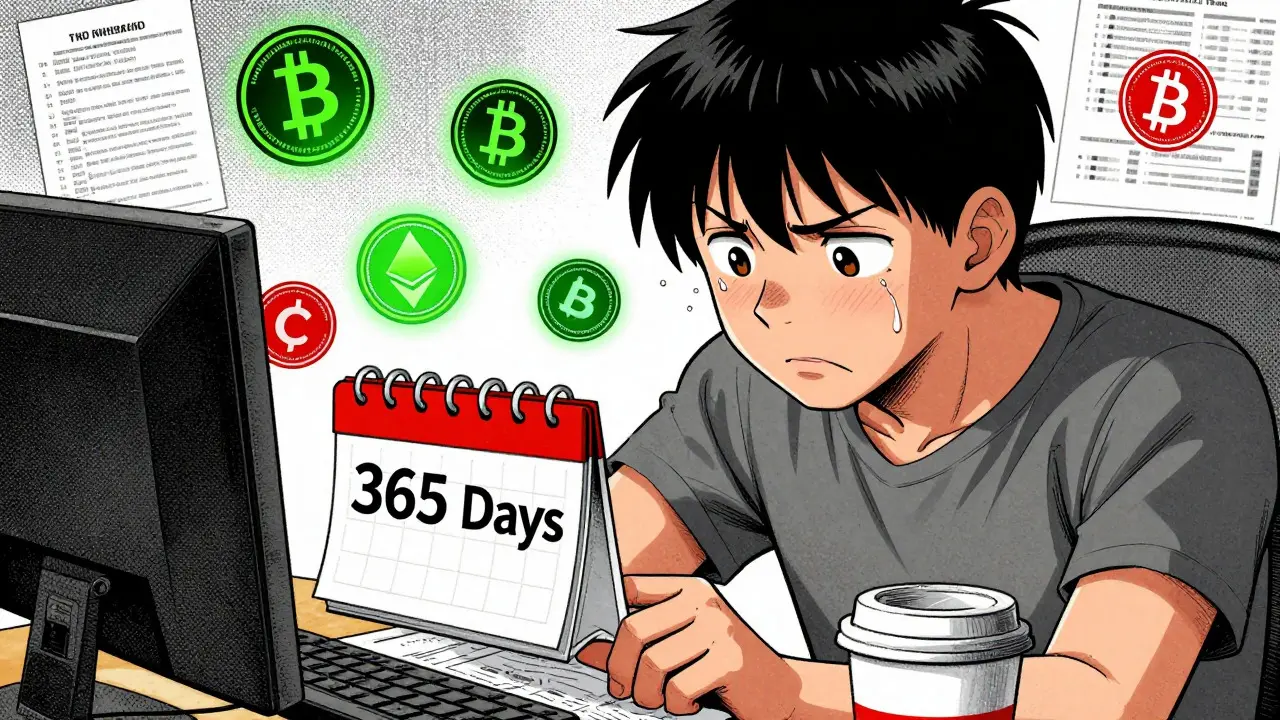
If you hold your Bitcoin, Ethereum, or altcoins for more than 365 days, any capital gain when you sell them for fiat currency is generally tax-free. This is known as the long-term holding exemption. However, if you sell within 365 days, the profit is taxed at 28% under Category G of the IRS (personal income tax).
What about active income? If you earn crypto through staking, lending, or airdrops, that is considered passive income. The current rule taxes this at a flat 28%. There is no distinction between short-term and long-term for this type of income-it’s taxed immediately upon receipt or conversion.
A crucial detail for traders: crypto-to-crypto trades are not immediate taxable events. If you swap ETH for SOL, you haven’t triggered a tax liability yet. The clock resets, and the cost basis carries over. You only pay tax when you convert to fiat (like Euros) or spend the crypto on goods and services. This allows you to rebalance your portfolio without hitting the taxman every week.
Strategies for New Residents Under IFICI
So, you want to move to Portugal in 2026, but you aren’t a scientist. Can you still benefit? Yes, but you have to play the game differently. Here are practical approaches:
- The Developer Route: If you work in blockchain development, smart contract auditing, or DeFi protocol design, you likely qualify for IFICI. Frame your job description around "technological innovation." This grants you the 20% flat tax on your salary and potentially favorable treatment on related income.
- The Long-Term Hold Strategy: If you are a trader, stop day trading. Adopt a buy-and-hold strategy. Keep assets for over one year before selling. This avoids the 28% capital gains tax entirely. Many expats use stablecoins like USDC or USDT as a parking spot. They hold volatile crypto for a year, swap to stablecoin (non-taxable event), then cash out. Note: The AT is watching this closely, so keep impeccable records.
- The Digital Nomad Visa Path: Portugal offers a D8 Digital Nomad Visa. While this doesn’t give you IFICI tax benefits automatically, it grants residency. Once resident, you fall under standard tax rules. If you can structure your income to be sourced outside Portugal and utilize double taxation treaties, you might minimize exposure, though the blanket NHR exemption is gone.

Documentation and Compliance: Don’t Guess
The biggest mistake people make is assuming "no news is good news." The Portuguese tax system is becoming more automated and connected with EU databases. To stay safe, you need rigorous documentation.
You must file an annual tax return in Portugal declaring your worldwide income. For crypto, this means listing every transaction. Use specialized software like Koinly or CoinLedger to track your cost basis, holding periods, and wallet addresses. The AT expects timestamps and fiat valuations at the exact moment of each trade.
Common pitfalls include:
- Misclassifying staking rewards as capital gains instead of passive income (taxed at 28%).
- Forgetting to report crypto-to-crypto swaps, which affects your cost basis calculation.
- Assuming offshore exchanges hide your data. With CRS (Common Reporting Standard), banks share data across borders.
Hiring a local fiscal representative or a tax advisor familiar with crypto is worth the €1,200-€2,500 fee. It prevents costly audits later.
Is Portugal Still Worth It?
Despite the end of the original NHR, Portugal remains attractive. Why? Because the alternative-paying higher rates elsewhere-is worse for many. Countries like France have complex and often higher crypto taxes. Germany also offers tax-free gains after one year but lacks the same lifestyle appeal or visa ease for some nationalities.
Portugal ranks 12th globally for crypto adoption (down from 8th in 2023), according to Chainalysis. The drop reflects the regulatory tightening, not a lack of interest. The community is still vibrant, the climate is mild, and English proficiency is high. If you are a tech professional, IFICI keeps the door open. If you are a pure investor, the 365-day rule still makes Portugal competitive, provided you are patient.
Keep an eye on Q1 2026 reviews by the Ministry of Finance. Rumors suggest they might extend the holding period requirement to two years to align with broader EU directives. Flexibility is key.
Can I still apply for the original NHR in 2026?
No. The deadline for new applications to the original Non-Habitual Resident program was March 31, 2025. As of 2026, all new applicants must apply for the IFICI regime, which has stricter eligibility criteria focused on scientific and technological professions.
Is crypto trading tax-free in Portugal now?
Not entirely. Capital gains from crypto held for more than 365 days are tax-free. Short-term gains (held less than 365 days) are taxed at 28%. Passive income from staking or lending is always taxed at 28%.
What is the difference between NHR and IFICI?
NHR was a broad tax incentive for various professionals and retirees. IFICI (NHR 2.0) is narrower, targeting only those in scientific research, technology, and high-skilled innovation roles. IFICI maintains the 20% flat tax for qualifying income but excludes many general investors and non-tech professionals.
Do I need to declare my crypto holdings if I don't sell?
Yes. As a tax resident in Portugal, you must declare your worldwide assets and income annually. Even if you haven't sold your crypto, you need to report your holdings and any transactions (including crypto-to-crypto swaps) to calculate your correct cost basis and potential future liabilities.
How does the 365-day rule work for multiple coins?
The 365-day rule applies to each specific asset individually. If you bought Bitcoin in January and sold it in December, it's short-term. If you bought Ethereum six months ago and sold it yesterday, it's short-term. You must track the acquisition date for every single token separately.
Are there penalties for failing to report crypto income?
Yes. Penalties can range from 10% to 50% of the unpaid tax, plus interest. Given increased international data sharing via CRS, undeclared income is increasingly likely to be detected by the Portuguese Tax Authority (AT).