Pact Crypto Exchange Review: Is This Algorand DEX Worth Your Liquidity?
Most people are tired of the "centralized exchange nightmare"-where your funds are held hostage by a company and you're forced to trust a CEO with your life savings. If you've moved your assets to the Algorand is a high-performance blockchain designed for scalability and efficiency, utilizing a Pure Proof of Stake consensus mechanism ecosystem, you've likely come across Pact. But is it actually a safe place to park your tokens, or is it just another flash-in-the-pan project?
Launched in 2021, Pact (found at pact.fi) isn't your typical exchange. It's a Decentralized Exchange (DEX) that acts as an Automated Market Maker (AMM). In plain English: there's no middleman. You trade directly from your wallet against a pool of assets provided by other users. Because it's built on Algorand, it's incredibly fast and cheap, but it does come with a few trade-offs you need to know before you hit that "Swap" button.
| Feature | Details |
|---|---|
| Blockchain | Algorand |
| Custody | Non-custodial (You own your keys) |
| Average Fee | ~$0.001 per transaction |
| Supported Assets | ALGO, ASAs, Stablecoins (USDC, USDT) |
| Security Audits | Kudelski Security |
The "Non-Custodial" Peace of Mind
The biggest selling point here is that Pact is non-custodial. This means the team at Pact-and their tech partners, Ulam Labs-never touch your money. Your assets stay in your wallet (like Pera Wallet or Defly) and are only moved via smart contracts during a trade. After the 2022 collapse of several giant centralized platforms, this is exactly what traders are looking for: full control.
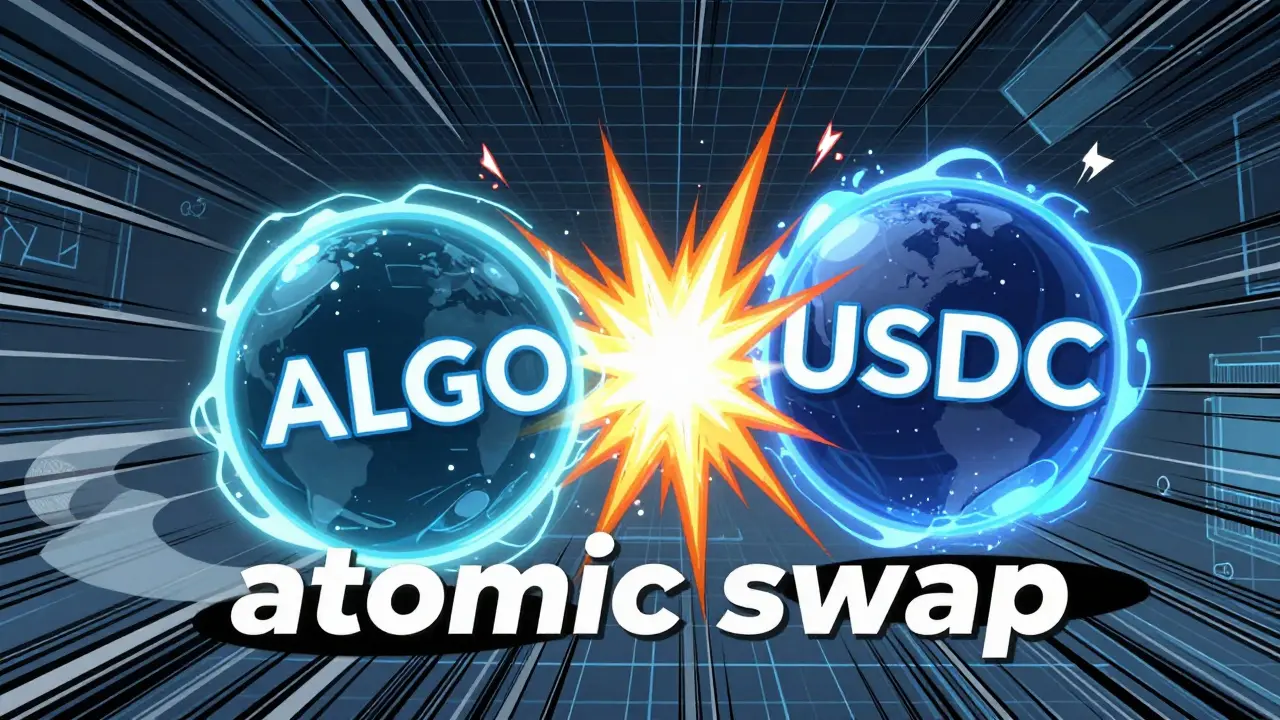
Technically, Pact uses "atomic swaps." If you're not a dev, just know that an atomic swap ensures that either both sides of a trade happen simultaneously, or neither happens at all. There's no risk of you sending your ALGO and the other side not sending the USDC. It's a clean, instant settlement that removes the need for a clearinghouse.
Trading Experience: Mobile-First and Lightning Fast
If you've ever used a DEX on a phone and felt like you were fighting the interface, Pact will be a breath of fresh air. They've gone with a mobile-first design. It doesn't feel like a clunky desktop site shrunk down; it feels like a native app. Whether you're swapping on a bus or during a coffee break, the UI is intuitive enough that most new users can make their first trade in under 30 minutes.
They've also implemented a few smart features to help with price volatility:
- StableSwap: This is optimized for stablecoin pairs. It minimizes "slippage" (the difference between the expected price and the actual price), which is crucial when you're moving large amounts of USDC or USDT.
- Multiple Fee Tiers: Not all pools are the same. Pact allows for different fee structures depending on how volatile the pool is, which helps liquidity providers manage their risk.
Making Money with Liquidity: The Aeneas Program
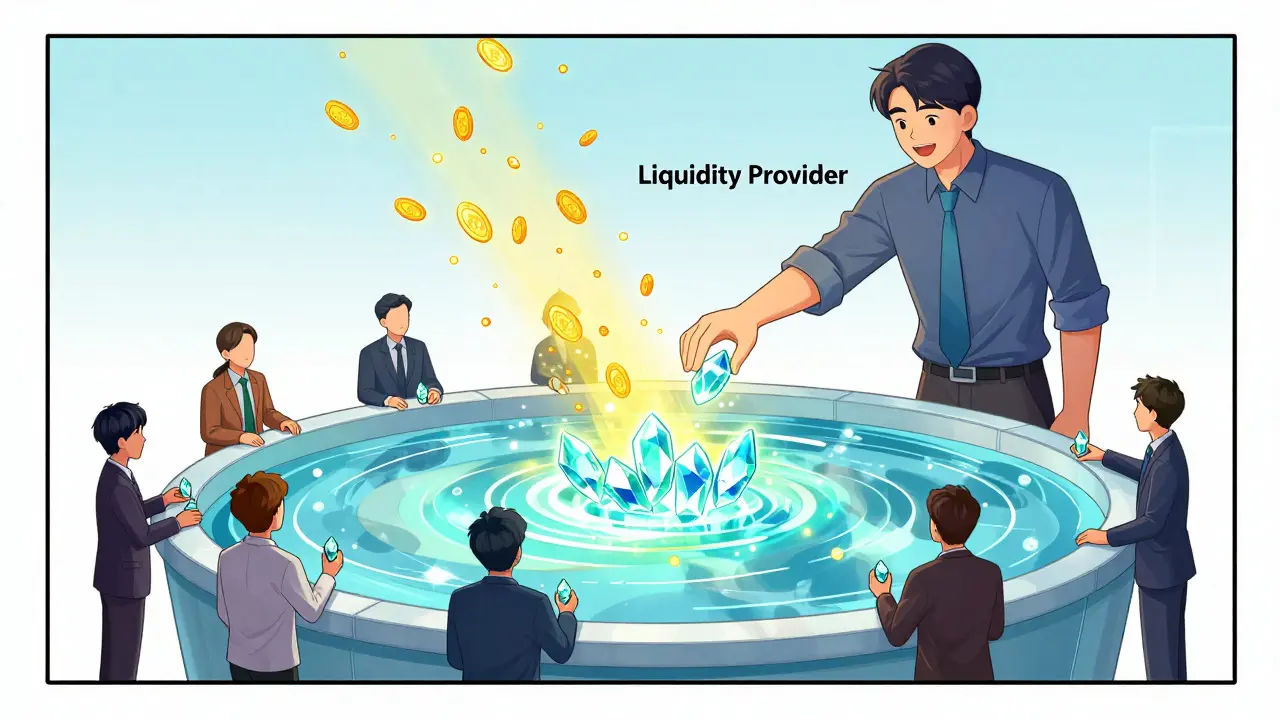
You aren't just limited to trading. You can actually earn a yield by becoming a liquidity provider (LP). By depositing a pair of tokens into a pool, you help other traders get a fair price, and in return, you earn a slice of the trading fees. To boost this, Pact launched the Aeneas Liquidity Program in late 2023 to incentivize people to keep their assets on the platform.
However, if you're new to this, watch out for impermanent loss. This happens when the price of your deposited assets changes compared to when you put them in. If one token moons and the other stays flat, you might have been better off just holding the tokens in your wallet. Pact's documentation covers the basics, but it's not a masterclass in DeFi strategy. If you're a beginner, spend an hour reading about impermanent loss before you commit significant capital.
How Pact Stacks Up Against the Competition
Pact isn't the only game in town on Algorand. For a long time, Tinyman has been the heavyweight champion, holding a massive chunk of the market share. If you need the absolute deepest liquidity for a rare token, Tinyman might be the first stop. But Pact competes by being more user-friendly and having strategic backing from partners like Borderless Capital and Meld Ventures.
When compared to a giant like Uniswap on Ethereum, the difference is mainly in the cost and scale. On Uniswap, a single trade during a network spike could cost you $50 in gas fees. On Pact, it's practically pennies. The trade-off? You won't find the same variety of global tokens because Pact is an Algorand-exclusive ecosystem. Also, don't confuse this with "PactSwap," which is a completely different project on a different chain. The names are similar, but the platforms are strangers.
The Risks and Red Flags
No review is honest without the bad stuff. First, liquidity depth for "long-tail" or less popular tokens can be thin. This means if you try to swap a huge amount of a niche token, you might get a worse price than you'd like. Second, there's a steep dependency on the Algorand ecosystem. If Algorand fails to attract more users, Pact's growth hits a ceiling.
Security-wise, they've checked the right boxes. They've been audited by Kudelski Security and they partner with Immunefi for bug bounties. There haven't been any major reported hacks, which is a strong signal of a healthy codebase. But remember: in DeFi, a "clean audit" is a safety net, not a guarantee.
Final Verdict: Should You Use It?
If you are already holding ALGO or other Algorand Standard Assets (ASAs), Pact is a no-brainer for your toolkit. It's fast, the fees are negligible, and the mobile experience is miles ahead of most DEXs. It's perfect for the casual trader who wants a clean interface and the security of a non-custodial setup.
If you're a professional "whale" looking for the absolute highest volume for exotic pairs, you'll likely use Pact alongside Tinyman. For the total beginner, just remember to start small, double-check your wallet connection, and keep an eye on those liquidity provider risks.
Is Pact crypto exchange safe to use?
Pact is a non-custodial exchange, meaning you keep control of your private keys. The smart contracts have been audited by Kudelski Security, and they use Immunefi for ongoing security monitoring. While no DeFi platform is zero-risk, the lack of a central point of failure makes it significantly safer than many centralized exchanges.
What are the fees on Pact.fi?
Fees are extremely low because they leverage the Algorand blockchain. Most transactions cost around $0.001. There are also variable fee tiers depending on the specific liquidity pool you are trading in.
Which wallets work with Pact?
Pact is compatible with all major Algorand wallets, including Pera, My Algo, Fireblocks, AlgoSigner, and Defly. You just need to connect your wallet to the web app to start trading.
What is the difference between Pact and PactSwap?
They are completely different and unrelated entities. Pact (pact.fi) is a DEX built exclusively for the Algorand blockchain. PactSwap is a separate platform that operates on different chains. Always check the URL to ensure you are using the correct service.
How do I earn rewards on Pact?
You can earn rewards by providing liquidity to trading pairs through the Aeneas Liquidity Program. By depositing tokens into a pool, you earn a portion of the trading fees generated by other users.
Next Steps and Troubleshooting
For the Newcomer: Start by downloading the Pera Wallet. Deposit a small amount of ALGO to cover your gas fees, then connect to pact.fi. Try a small swap (e.g., ALGO to USDC) to get a feel for the interface before moving larger sums.
For the Liquidity Hunter: Look for pairs with high volume but reasonable volatility. Use a tool like DefiLlama to check the current TVL of the Algorand ecosystem to see where the money is moving. If you notice a price drop in your LP position, check if it's a general market dip or specific impermanent loss.
Troubleshooting Connection Issues: If your wallet isn't connecting, first check if you're using the most recent version of your wallet app. If the swap is "pending" for more than a few seconds, refresh the page; Algorand is usually instant, so a hang is typically a browser cache issue rather than a blockchain delay.

Gloris Young
April 26, 2026 AT 04:35Pera wallet is definitely the way to go here. Super smooth transition into the DEX.
Caiaphas Konkol
April 27, 2026 AT 17:24Non-custodial is just a fancy word to make you feel safe while the smart contract developers leave a backdoor for the 'invisible' controllers to drain your assets when the global reset happens. You think a Kudelski audit actually means something in a world where the auditors are likely puppets of the same central banks we're trying to escape? Please, spare me the optimism. Most of these "efficient" blockchains are just honeypots designed to catalog our financial movements before the final switch is flipped. I'll keep my assets in cold storage and far away from any "mobile-first" interface that basically begs for a phishing attack to happen.
Jason M
April 28, 2026 AT 20:54Oh man, the relief of not paying $50 in gas is an absolute game changer! For anyone struggling with the concept of AMMs, just imagine you're providing the fuel for the car so other people can drive; you're the unsung hero of the ecosystem!
Yvette P
April 30, 2026 AT 03:06Imagine actually thinking a basic audit is a security guarantee in the current DeFi landscape, truly adorable. While the author is playing footsie with "mobile-first design," we should be discussing the actual slippage curves and the mathematical inevitability of impermanent loss for the average retail pleb who doesn't understand the constant product formula. Like, seriously, do you people actually grasp how the Aeneas program incentivizes liquidity or are you just chasing a 2% yield while the underlying asset potentially craters? It's a textbook example of risk-mispricing where the liquidity provider is basically gambling on low volatility in a high-volatility market, which is just peak comedy.
Mary Tawfall
May 1, 2026 AT 08:22It's so great to see more options for Algorand users.
Liz Ariza
May 2, 2026 AT 19:42The UI is honestly such a vibe! 🌟 Making trades on the fly is a total breeze and it feels so modern ✨
Matthew Morse
May 4, 2026 AT 01:15too many words for a simple swap site
Candace Sherrard
May 5, 2026 AT 16:37There is something profoundly meditative about the shift toward decentralized custody, as it mirrors the broader human desire to reclaim agency from the monolithic structures that have dominated our financial existence for centuries. When we contemplate the atomic swap, we aren't just looking at a piece of code that ensures trade finality, but rather a digital manifestation of trustless cooperation where the need for a middleman is replaced by the immutable logic of the blockchain. I wonder if the convenience of a mobile-first interface slightly obscures the gravity of what we are doing-essentially rewriting the social contract of value exchange-or if it simply makes the transition more palatable for the masses who aren't yet ready to dive into the depths of cryptography.
Miranda Jamieson
May 7, 2026 AT 08:19Stop pretending that
Ali Tate
May 7, 2026 AT 12:33this ecosystem is just a playground for the bold man while the weak hide in their savings accounts total joke
Findlay Duncan Lyon
May 7, 2026 AT 19:32Cheers for the breakdown, very helpful for a UK resident.
Sarah Ingrams
May 9, 2026 AT 00:14hope this helps everyone stay safe with their funds
praveen subbiah
May 9, 2026 AT 06:24The speed of Algorand is truly magnificent and brings a level of pride to those of us who appreciate high-performance tech!