Petro Cryptocurrency in Venezuela: Government Program, Sanctions, and Reality
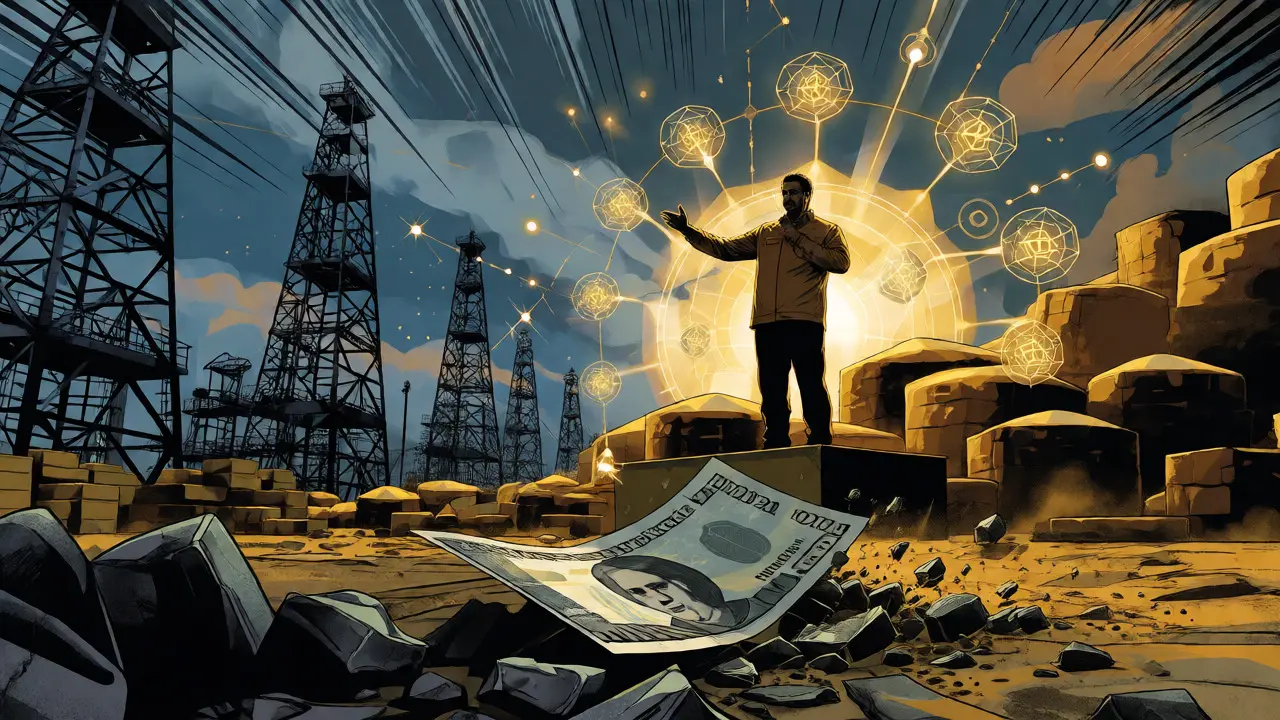
Imagine trying to buy a cup of coffee with a currency that the government forces you to use, but your neighbors are trading in dollars or Bitcoin. That is the daily reality for many Venezuelans dealing with the Petro, a sovereign cryptocurrency launched by President Nicolás Maduro in late 2017. The idea was bold: bypass international sanctions by creating a digital asset backed by the country's massive oil, gold, and diamond reserves. But did it work? Or has it become just another layer of bureaucratic complexity in an already chaotic economy?
If you are looking into why this experiment exists, how it functions under heavy restrictions, and whether it actually holds value today, you need to look past the political headlines. This article breaks down the mechanics of the Petro, the legal battles surrounding it, and the practical limitations imposed by both domestic policy and foreign sanctions.
The Genesis of a State-Backed Coin
Venezuela’s economic situation in 2017 was dire. Hyperinflation was eating away at savings, and the bolívar was losing value by the day. With $140 billion in foreign debt and tightening U.S. financial sanctions, the government needed a way to access global capital markets without relying on traditional banking channels. Enter the Petro. Announced via televised address on December 3, 2017, and formalized through Presidential Decree 3196, the Petro was designed as a hybrid instrument-part cryptocurrency, part commodity-backed bond.
The official narrative claimed that each Petro token would be pegged to the price of a barrel of crude oil. Initially, the government planned to issue 100 million tokens, valuing the total supply at roughly $6 billion. This meant a single Petro was theoretically worth around $60. However, unlike Bitcoin or Ethereum, which rely on decentralized consensus, the Petro operates on a federated blockchain. This architecture means transaction verification is controlled by a specific group-in this case, the Venezuelan state-rather than a global network of miners. It prioritizes control over decentralization, a design choice that immediately raised red flags for crypto enthusiasts who value transparency and neutrality.
Sanctions and International Isolation
You cannot talk about the Petro without talking about restrictions. The primary driver behind its creation was to circumvent U.S. sanctions that blocked Venezuela from issuing new debt. By selling Petros, the government hoped to attract investors who were willing to take on risk for high yields. However, the United States responded swiftly. Executive Order 13827, issued in April 2018, explicitly prohibited U.S. persons from engaging in transactions involving any digital currency issued by the Venezuelan government after January 9, 2018.
This restriction effectively locked the Petro out of the world’s largest financial market. Major exchanges like Coinbase and Binance initially listed it but later delisted it due to compliance risks. Without liquidity on major platforms, the Petro became an illiquid asset. Investors couldn't easily sell their holdings, and buyers were scarce. Congressional measures, such as S.37, further codified these financial sanctions, targeting not just the debt itself but also the technologies facilitating crypto-related transactions. For a regular investor, this meant holding a Petro was less like owning a tradable asset and more like holding a IOU that might never be cashed.
Domestic Adoption: Mandatory vs. Organic
Inside Venezuela, the story shifts from international finance to local survival. The government didn’t just invite people to use the Petro; they mandated it. In January 2020, President Maduro decreed that payments for certain government services, including passport renewals and airplane fuel, had to be made in Petros. This forced adoption strategy aimed to create immediate demand for the token.
To boost usage, the government established four "Petro Zones" in March 2018. These areas-Margarita Island, Los Roques Archipelago, Paraguaná Peninsula, and the Ureña-San Antonio border area-offered tax incentives for businesses accepting the cryptocurrency. Companies operating in these zones received exemptions on import duties for mining equipment and software for two years. The logic was sound on paper: create hubs where the Petro could circulate freely, encouraging merchants to accept it and citizens to hold it.
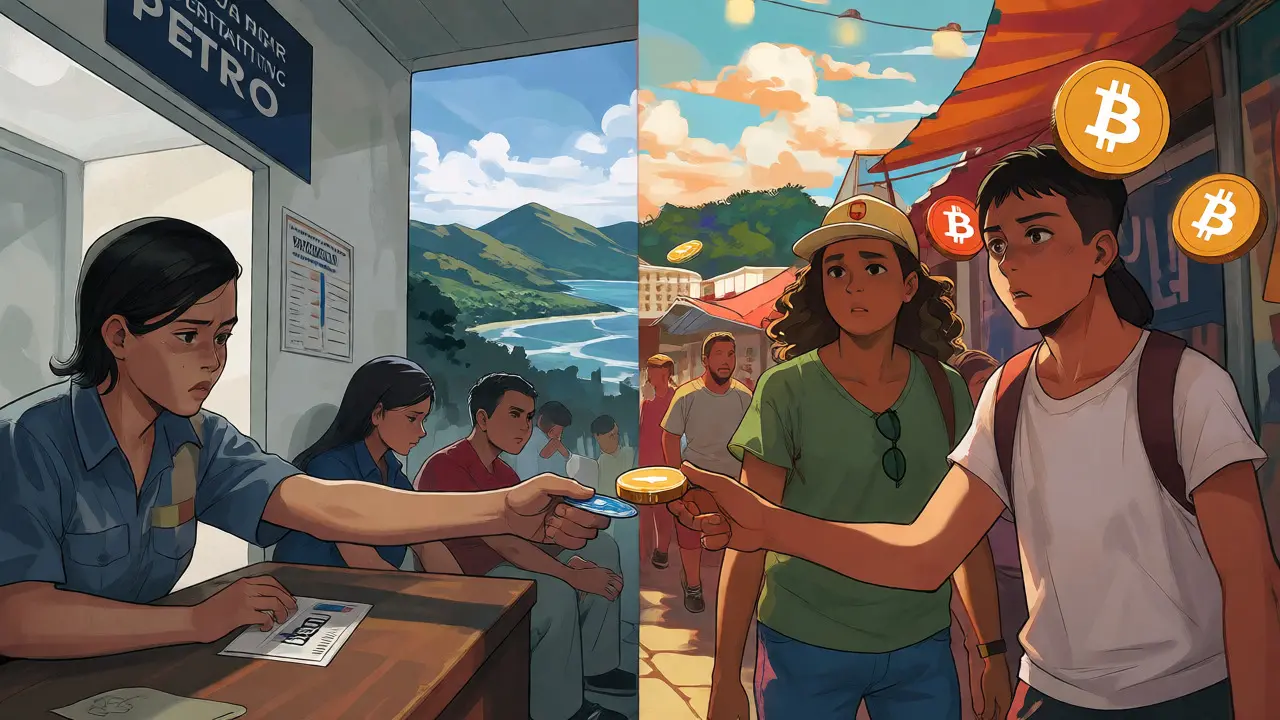
But here is the catch: organic adoption remained minimal. Most Venezuelans, having watched the bolívar collapse, turned to established cryptocurrencies like Bitcoin and stablecoins (USDT) for protection against inflation. They trusted the decentralized nature of Bitcoin more than a state-controlled token whose value depended on the fluctuating price of oil and the credibility of the administration managing it. The Petro became a tool for paying taxes and fees, rather than a medium of exchange for buying groceries.
The Regulatory Framework and Legal Uncertainty
Governing the Petro required a new regulatory body. The Superintendence of Crypto Assets and Related Activities (SUPCACVEN) was created to oversee the ecosystem. Its responsibilities included registering miners, maintaining exchange registries, and ensuring the normal functioning of Petro markets. Alongside SUPCACVEN, the Treasury of Cryptoassets was established as a state-owned company to handle issuance and custody.
However, a significant legal contradiction plagues the Petro. The National Assembly, controlled by the opposition, declared the Petro illegal in March 2018, labeling it an unauthorized debt issuance. While the executive branch continued to enforce its use, this lack of legislative consensus created long-term uncertainty. If a future government decides to reverse course, what happens to the billions in obligations tied to the Petro? This political fragility makes institutional investors hesitant to engage, regardless of the theoretical backing by natural resources.
Market Performance and Skepticism
Let’s look at the numbers. The initial valuation of $60 per token was widely criticized as inflated. Leaked documents from the government’s advisory group, VIBE, suggested that the private offering should have been sold at discounts of up to 60%. This indicates that even the government’s own advisors knew the market wouldn’t pay full price. Instead of attracting foreign capital, the Petro struggled to find buyers outside of politically connected entities or those compelled to participate.
| Feature | Petro (PTR) | Bitcoin (BTC) | Stablecoins (e.g., USDT) |
|---|---|---|---|
| Backing | Oil, Gold, Diamonds (State Claim) | None (Scarcity/Network Effect) | Fiat Currency Reserves |
| Control | Centralized (Venezuelan Govt) | Decentralized | Centralized Issuer |
| Liquidity | Low (Restricted Markets) | High (Global Exchanges) | Very High (Global Exchanges) |
| Adoption Driver | Government Mandate | Speculation/Store of Value | Inflation Hedge/Payments |
| Regulatory Status | Sanctioned by US | Varies by Country | Generally Accepted |
The table above highlights why the Petro failed to compete. While Bitcoin offers censorship resistance and stablecoins offer stability, the Petro offered neither fully. It was centralized enough to be subject to political whims but volatile enough to be risky for everyday commerce. Furthermore, the lack of transparent audits regarding the actual oil reserves backing the tokens eroded trust. Experts frequently questioned whether the reserves were truly liquid or if they were already pledged elsewhere.
Current Status and Future Outlook
As of 2025 and into 2026, the Petro remains a niche instrument. It hasn't disappeared, but it hasn't taken off either. The mandatory payment requirements for specific government services keep a baseline level of circulation alive. However, the broader Venezuelan economy continues to dollarize informally. People use USD cash or digital dollars for most transactions because they know exactly what they are getting.
The future viability of the Petro hinges on two factors: political stability and sanctions relief. If the U.S. eases restrictions and allows broader participation in Venezuelan debt markets, the Petro could regain some relevance as a bridge asset. Conversely, if political tensions escalate, the token risks becoming a historical footnote-a symbol of a government’s attempt to innovate under pressure without addressing underlying structural issues.
For now, the Petro serves as a case study in the limits of state-sponsored cryptocurrency. It demonstrates that technology alone cannot solve economic crises if it lacks trust, liquidity, and genuine market demand. While the blockchain infrastructure exists, the human element-trust in the issuer-remains the biggest hurdle.
Is the Petro cryptocurrency still active in 2026?
Yes, the Petro is technically active. It is still used for specific government payments, such as passport fees and aviation fuel. However, its use in general commerce is limited, and it does not trade significantly on major international exchanges due to ongoing sanctions and low liquidity.
Why did the United States sanction the Petro?
The U.S. sanctioned the Petro primarily because it viewed the cryptocurrency as a mechanism for the Maduro government to circumvent existing financial sanctions and raise debt without proper oversight. Executive Order 13827 prohibits U.S. persons from transacting in any digital currency issued by the Venezuelan government after January 2018.
What backs the value of the Petro?
Officially, the Petro is backed by Venezuela's reserves of oil, gasoline, gold, and diamonds. Each token was initially pegged to the price of a barrel of crude oil. However, critics argue that there is no independent verification of these reserves being exclusively allocated to back the cryptocurrency, leading to skepticism about its true intrinsic value.
Can I buy Petro on major exchanges like Coinbase?
Generally, no. Due to U.S. sanctions and compliance concerns, major global exchanges like Coinbase and Binance have restricted or delisted the Petro. Trading is mostly confined to smaller, regional exchanges or direct peer-to-peer transactions within Venezuela, resulting in very low liquidity.
What are the Petro Zones?
Petro Zones are special economic areas designated by the Venezuelan government in 2018, including Margarita Island and the Paraguaná Peninsula. Businesses operating in these zones receive tax incentives, such as duty-free imports for mining equipment, in exchange for promoting the use of the Petro in commercial transactions.
Sayantan Bhadury
October 3, 2026 AT 11:14lazy effort, still better than the bolivar though.