PFP NFTs: Profile Picture Collections Explained

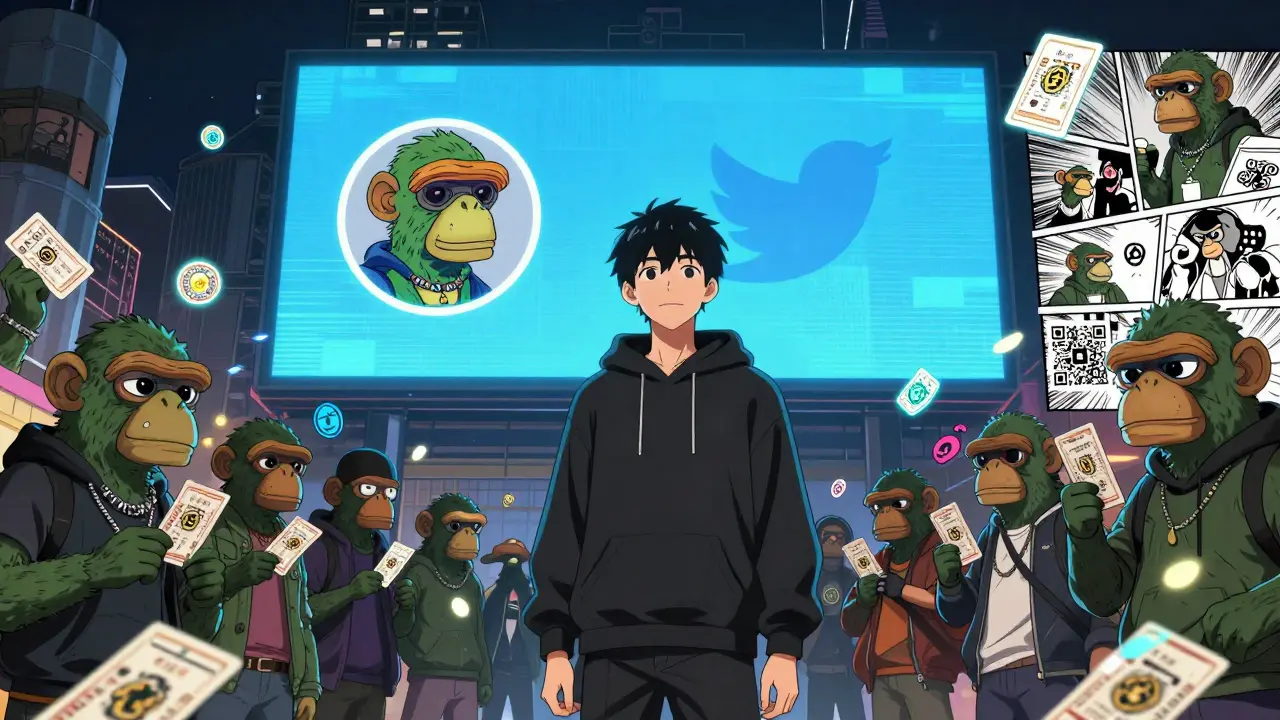
Ever scrolled through Twitter and noticed someone’s profile picture looks like a weird pixelated ape or a punk with a beanie? That’s not just art. It’s a PFP NFT - and owning one means you hold a verified piece of digital identity that’s worth thousands, sometimes millions. These aren’t memes you screenshot. They’re blockchain-verified assets that act as your digital badge, your club membership card, and your investment all in one.
What Exactly Is a PFP NFT?
PFP stands for "Profile Picture." A PFP NFT is a unique digital image - usually a cartoon character, pixel art, or stylized avatar - that you own as a non-fungible token on a blockchain. Unlike regular images you download, you can’t copy or replace this one. The blockchain keeps a permanent, unchangeable record of who owns it. That’s what makes it valuable. The first major PFP NFT project was CryptoPunks, a collection of 10,000 unique 24×24 pixel characters launched in June 2017 by Larva Labs. Back then, no one paid much attention. You could claim one for free - just pay the tiny Ethereum gas fee. Fast forward to 2025, and the cheapest CryptoPunk sells for over $350,000. That’s not inflation. That’s demand driven by scarcity and status. Most PFP NFTs are built on Ethereum, though some newer ones use Solana or Polygon to cut costs. They’re created using generative algorithms. Think of it like a digital slot machine: you combine traits - hats, glasses, skin tone, background - and the system spits out a unique combination. Out of 10,000, maybe only 12 have a golden crown and laser eyes. Those are rare. And rare = expensive.Why Do People Pay So Much for a Picture?
It’s not about the image. It’s about what it unlocks. Owning a PFP NFT like a Bored Ape Yacht Club, a collection of 10,000 cartoon apes with different traits and a strong community-driven ecosystem gives you access to an exclusive club. Holders get entry to private Discord servers, early access to new drops, real-world events, and even merchandise. Some Bored Ape owners have gotten free whiskey, concert tickets, or even a seat at a private dinner with the founders. It’s social proof. When you set a PFP as your Twitter avatar, you’re saying: "I’m part of this movement." It signals you’re in the know, you’ve got skin in the game, and you’re connected. That’s why you’ll see celebrities like Snoop Dogg, Eminem, and Stephen Curry using Bored Apes - not because they like the art, but because it’s a status symbol in the crypto world. The psychological hook is real. Humans have always used symbols to show belonging - from tribal tattoos to luxury logos. PFP NFTs are just the next evolution. They’re digital heirlooms.How Do You Get One?
You can’t just buy one from Amazon. Here’s the real process:- Set up a crypto wallet - MetaMask is the most common. This is your digital wallet for holding Ethereum and NFTs.
- Buy Ethereum (ETH) from an exchange like Coinbase or Kraken, then send it to your wallet.
- Go to a marketplace like OpenSea, the largest NFT marketplace where most PFP collections are traded or the project’s official site.
- Search for the collection - CryptoPunks, Bored Apes, Doodles, etc.
- Place a bid or buy outright. Watch out for gas fees - they spike during busy times.
What Makes a PFP NFT Worth Holding?
Not all PFPs are created equal. Here’s what separates the winners from the trash:- Community: Is there an active Discord with 50,000 members? Or just a ghost town? Real communities host AMAs, art contests, and live events.
- Utility: Does owning it give you something? Access to games? Royalties? Real-world perks? Bored Apes gave holders free NFTs for their "Mutant Serum" and "ApeCoin" token. That’s utility.
- Rarity: Look at the traits. How many apes have a laser eye? Only 1.2%? That’s gold.
- Team: Who made it? Are they transparent? Have they done other projects? Anonymous teams are risky.
- Longevity: Did the project survive the 2022 crash? If yes, that’s a good sign.
The Risks: It’s Not All Glitz
Let’s be real. This isn’t a savings account. - **Volatility**: A PFP you bought for $10,000 might be worth $2,000 six months later. Markets crash hard.
Where Is This All Headed?
PFP NFTs aren’t just profile pictures anymore. They’re becoming your digital identity. Imagine walking into a virtual concert in the metaverse - your PFP is your avatar. Or playing a game where your Bored Ape unlocks special powers. Some projects are already doing this. Others are tying PFP ownership to DAO voting rights - meaning you get a say in how the project evolves. AI is also changing the game. Some new collections use generative AI to create unique avatars based on your personality traits. Others let you animate your PFP using AI tools. The line between static image and interactive identity is blurring. The future isn’t about owning a picture. It’s about owning a piece of a digital ecosystem - one that grows with you.Final Thoughts: Is It Worth It?
If you’re curious, start small. Buy one under $500. Learn how wallets work. Join the Discord. Talk to people. See what it feels like to be part of a community. Don’t chase hype. Don’t FOMO into the next big thing. If a project feels too loud, too rushed, or too good to be true - it probably is. PFP NFTs are a cultural phenomenon. They reflect how we’re redefining ownership, identity, and status in the digital age. Whether they’re a passing trend or the foundation of a new internet remains to be seen. But right now, they’re the most visible way people are claiming space in the blockchain world.What’s the difference between a PFP NFT and regular NFT art?
Regular NFT art is meant to be displayed as a standalone piece - like a digital painting. PFP NFTs are designed specifically to be used as profile pictures on social media. Their design is cropped for avatars, and their value often comes from community access, not just aesthetics. A CryptoPunk isn’t just art - it’s a membership card.
Can I screenshot a PFP NFT and use it as my profile picture?
Yes, you can screenshot it. But that doesn’t make you the owner. Anyone can screenshot a Bored Ape. Only the person with the verified token on the blockchain owns it. The value isn’t in the image - it’s in the proof of ownership. That’s what gives it status.
Are PFP NFTs a good investment?
Some are. CryptoPunks and Bored Apes have held value over time. But most PFP projects lose value within a year. Treat it like collecting rare sneakers or vintage toys - buy what you like, not just what’s trending. Never invest more than you can afford to lose.
Do I need Ethereum to buy PFP NFTs?
Most major PFP collections are on Ethereum, so yes - you’ll need ETH. But some newer collections use Solana, Polygon, or Base, which have lower fees. Always check the project’s official site before buying.
How do I know if a PFP NFT project is legitimate?
Check the official website and Twitter. Look for a verified badge. Join their Discord - real teams answer questions. Avoid projects with no team info, no roadmap, or copy-pasted whitepapers. If the founder is anonymous and the community is quiet, walk away.
Can I sell my PFP NFT later?
Yes. You can list it on OpenSea or other marketplaces anytime. But selling doesn’t guarantee profit. Prices drop fast if the community loses interest. Timing matters - and so does patience.
What’s the cheapest way to get into PFP NFTs?
Look for new collections on Polygon or Solana with under 1,000 holders. Projects like "Cool Cats" or "Mfers" had early entries under $100. Follow NFT Twitter accounts like @NFTCalendar or @NFTsNow for upcoming drops. Always do your own research before buying.
Daniel Verreault
December 28, 2025 AT 13:16Jacky Baltes
December 30, 2025 AT 04:46nayan keshari
December 30, 2025 AT 10:18Johnny Delirious
December 31, 2025 AT 23:28alvin mislang
January 1, 2026 AT 13:23Monty Burn
January 3, 2026 AT 04:06Prateek Chitransh
January 3, 2026 AT 11:29christopher charles
January 3, 2026 AT 19:51Vernon Hughes
January 4, 2026 AT 18:55Alison Hall
January 5, 2026 AT 14:40