Solar (SXP) CoinMarketCap Airdrop: Guide to the Learn & Earn Event
Ever wondered if you could get paid just for learning how a blockchain works? That was exactly the deal with the Solar SXP airdrop is a targeted 'Learn & Earn' campaign launched by the Solar Network in partnership with CoinMarketCap. Unlike the massive, life-changing windfalls some people dream of, this event was a strategic move to get people actually using the Solar mainnet rather than just holding tokens on an exchange. It offered a modest reward to 5,000 lucky winners, but the real goal was a massive shift in how users interact with the ecosystem.
What exactly was the Solar Learn & Earn event?
At its core, this wasn't just a "free money" giveaway. It was an educational hurdle. Solar Network, which used to be known as Swipe, transitioned into a community-controlled DAO. To mark this evolution, they teamed up with CoinMarketCap to distribute 50,000 SXP tokens. The math was simple: 5,000 participants each received 10 SXP tokens. At the time of launch, with SXP trading around $0.10, that meant each winner got about $1.00 USD.
You might ask, why give away such a small amount? The strategy here was user acquisition. Solar wanted to move people away from legacy ERC-20 and BEP-20 formats-which are basically tokens riding on other people's blockchains-and move them onto their own native Layer-1 infrastructure. By forcing a specific wallet requirement, they ensured that every winner became a legitimate user of their new network.
The checklist for eligibility
Getting those 10 tokens wasn't as simple as clicking a button. The campaign had some strict filters to keep bots away and ensure only real humans participated. If you missed it back then, here is what the requirements looked like:
- Account Age: Your CoinMarketCap account had to be at least 30 days old. This was a major stumbling block, disqualifying over 12,000 people who tried to create accounts just for the airdrop.
- Educational Quiz: You had to actually pass a quiz about the Solar Network's technology. Most users took about 2.3 attempts to get it right, proving that the "Learn" part of "Learn & Earn" was actually functioning.
- Social Engagement: Joining the official Telegram and Discord channels was a must. Community managers were reportedly filtering out accounts created within 24 hours of the announcement to stop Sybil attacks.
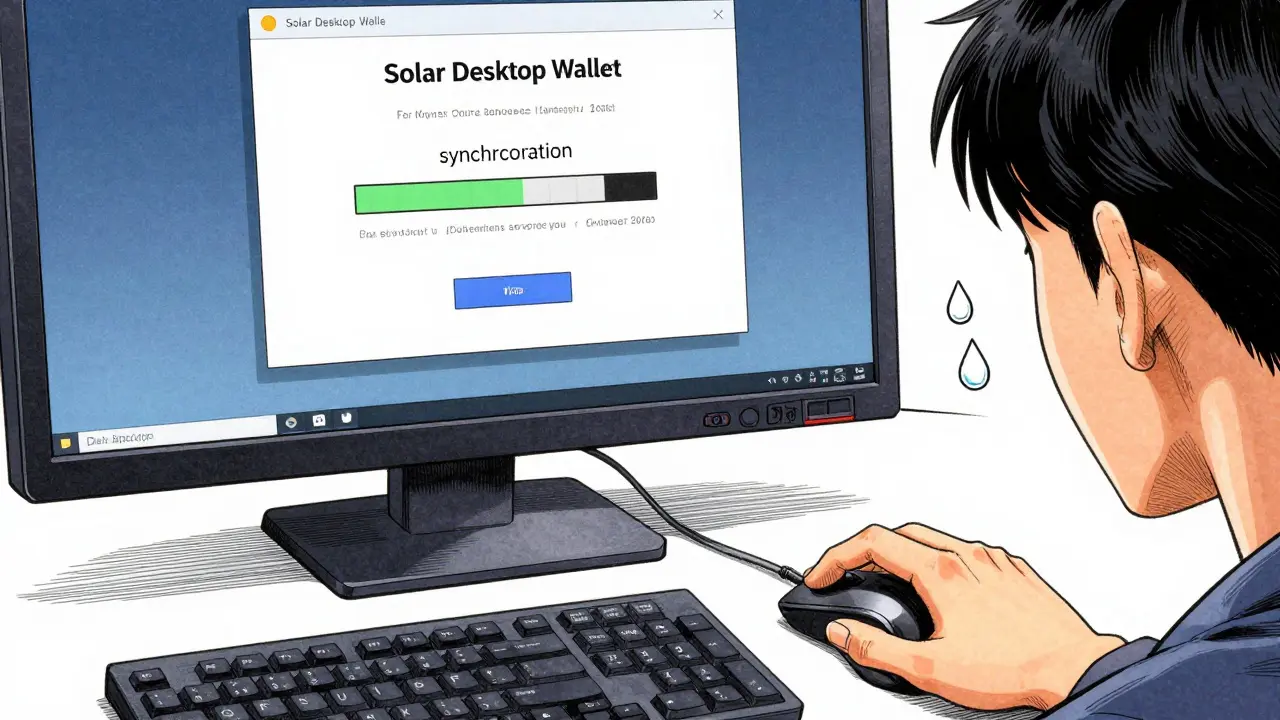
- Specific Wallet: You couldn't use a Binance or MetaMask address. You had to download the official Solar desktop wallet (version 2.0.1) and generate a native mainnet address.
How the Solar mainnet differs from legacy tokens
To understand why Solar insisted on new wallets, you have to understand the tech shift. Solar is no longer just a payment tool; it's a Layer-1 Blockchain. It uses a Delegated Proof of Stake (DPoS) consensus mechanism, secured by 53 Block Producers. This allows them to do things that the old Swipe setup couldn't, like creating their own token protocols and NFT marketplaces.
| Feature | Legacy SXP (ERC-20/BEP-20) | Solar Mainnet SXP |
|---|---|---|
| Network | Ethereum / Binance Smart Chain | Native Solar Blockchain |
| Control | Dependent on Parent Network | Community-controlled DAO |
| Utility | Primarily Transactional | Staking, NFTs, Metaverse apps |
| Wallet Required | MetaMask / Trust Wallet | Solar Desktop Wallet |
The user experience: The good and the glitchy
If you check the forums on Reddit or Telegram, the feedback was a mixed bag. For the technically savvy, the process took about 30 minutes. Some users reported receiving their tokens almost instantly, well before the 14-day window promised by the team. However, it wasn't all smooth sailing.
The biggest complaint centered on the Solar Desktop Wallet. While the interface for staking was praised, the initial synchronization was a pain, often taking around 22 minutes just to get the wallet ready for use. Additionally, about 17% of users struggled to generate the correct address, often getting confused between the testnet and the actual mainnet environments.
Strategic value and future outlook
From a big-picture perspective, this airdrop was a success not because of the money distributed, but because of the data it generated. Industry experts noted that forcing users to create mainnet wallets is a "bold move" that drives the adoption metrics investors care about. By onboarding over 15,000 new wallets, Solar accelerated its DeFi ecosystem development.
Looking forward, SXP is trying to position itself between consumer apps and enterprise infrastructure. They've already integrated with platforms like Travala.com for travel bookings and Bitrefill for digital gift cards. While they face stiff competition from giants like Solana and Avalanche, their unique focus on real-world utility could pay off. Some analysts predict a bullish climb toward $0.61 by the end of 2025, though others suggest a more conservative ceiling of $0.32.
How many SXP tokens did each winner receive?
Each of the 5,000 verified winners received exactly 10 SXP tokens, totaling a distribution of 50,000 SXP.
Could I use my MetaMask address for this airdrop?
No. Solar explicitly excluded ERC-20 and BEP-20 addresses. You were required to use a native Solar mainnet address generated via the official Solar desktop wallet.
Why was I disqualified despite completing the quiz?
The most common reason for disqualification was the CoinMarketCap account age requirement. Your account had to be at least 30 days old to be eligible.
What is the difference between Solar and Swipe?
Solar is the evolved version of Swipe. While Swipe focused on card processing, Solar is a full Layer-1 blockchain and a decentralized autonomous organization (DAO) with its own infrastructure.
Is there a way to still get SXP tokens now?
This specific Learn & Earn event has concluded. However, SXP is available on various cryptocurrency exchanges, and users can participate in the network's staking rewards program.
What to do next
If you're interested in Solar but missed the airdrop, the best path forward is to explore their current ecosystem. Download the latest version of the Solar wallet to start interacting with the mainnet. If you're a long-term holder, keep an eye on the staking rewards program, which is designed to incentivize those who secure the network. If you're new to Layer-1 blockchains, comparing Solar's transaction speeds and fees against other networks will give you a good sense of where the project stands in the current market.
Rob Mitchell
April 10, 2026 AT 23:46The transition to a native L1 is the right move for them. It cuts out the dependency on ETH and BSC gas fees.
Samson Selleck
April 11, 2026 AT 21:23The marginal utility of a ten-token distribution is practically nonexistent for any serious liquidity provider. This is basic user acquisition masquerading as an educational initiative. The synchronization latency of the desktop client is a glaring bottleneck in their UX architecture, effectively creating a high barrier to entry that contradicts the purported goal of mass adoption. From a macroeconomic perspective, predicting a climb to $0.61 without a substantial increase in TVL or a breakthrough in their DPoS efficiency is nothing more than speculative fiction. The asymmetry between the token's current utility and its projected valuation suggests a significant risk of a correction if the DAO fails to implement a more robust governance framework. Most of these 'learn and earn' events are just vanity metrics for VCs. The actual delta in network security provided by 5,000 new retail wallets is negligible. I find the focus on 'real-world utility' to be a buzzword-laden distraction from the lack of an innovative consensus mechanism. In reality, the Solar ecosystem is just playing catch-up with the likes of Solana, and the technical debt associated with their legacy Swipe transition is still weighing them down. This isn't a strategic move; it's a desperate attempt to inflate active address counts before the next funding round. The lack of a mobile-first experience in their native wallet is a critical failure in 2024. If they cannot solve the sync time issue, the churn rate for these new users will be astronomical. It's typical for these projects to prioritize marketing milestones over core infrastructure stability.
Akshay Gorad
April 12, 2026 AT 18:03It is quite interesting that they prioritized account age to filter bots. It shows a careful approach to security.
Alan Seiden
April 13, 2026 AT 05:49Absolute rubbish. Why should anyone care about a coin that gives you a measly dollar for a quiz? This is a joke of a project and a waste of my time to even read about.
jennelle williams
April 13, 2026 AT 13:26just seems like a way to help people grow
learning is the real prize here
Chidinma Sandra okafor
April 14, 2026 AT 09:15Oh sure, a whole dollar! I'm practically a millionaire now. Solar is definitely the future of the world, clearly
william manes
April 14, 2026 AT 12:45GET ON THE MAINNET NOW 🚀 Only losers stay on ERC-20! 🇺🇸
Lauren Abrams
April 16, 2026 AT 10:33The sync time for the wallet sounds like a bit of a hassle