Staking vs Mining: Which Blockchain Validation Method Wins in 2026?

Imagine two ways to secure a bank vault. One requires building a massive fortress with steel walls and armed guards. The other involves getting every customer to put their own money inside as collateral, promising they’ll lose it if the vault is robbed. Both keep the money safe, but they look nothing alike.
In the world of blockchain, this is exactly the choice between mining and staking. For years, mining was the only game in town. Then, Ethereum switched gears in 2022, dragging much of the industry toward staking. Now, in 2026, you have to decide which path fits your goals, your wallet, and your conscience.
This isn’t just technical jargon. It’s about how you earn passive income from crypto, how much energy you’re willing to burn, and how much control you want over your assets. Let’s break down the real differences so you can stop guessing and start acting.
The Core Difference: Work vs. Wealth
To understand why these two methods exist, you have to look at what they’re trying to solve. Blockchains need a way to agree on who gets to add the next block of transactions without trusting a central authority. This is called "consensus."
Proof-of-Work (PoW), or mining, solves this by making validation expensive in terms of electricity and hardware. If you want to cheat the network, you’d need to buy more computing power than everyone else combined. That’s prohibitively expensive, so the network stays secure. Bitcoin relies entirely on this model.
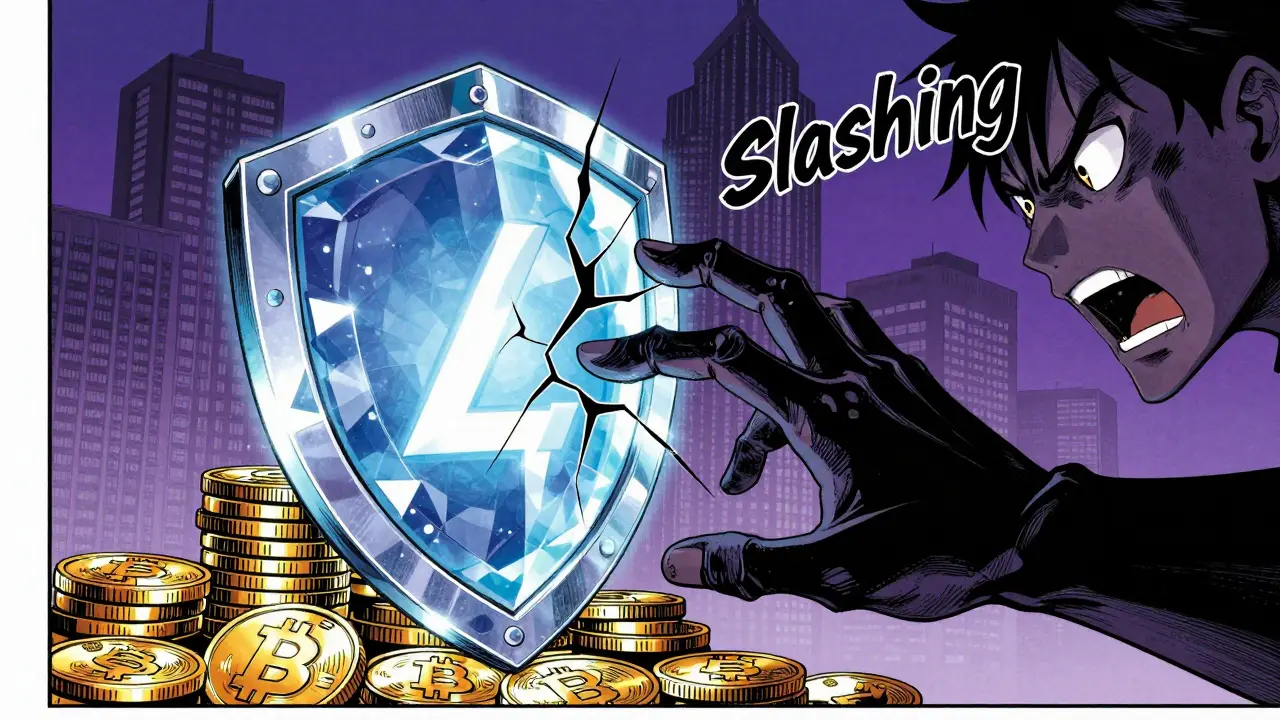
Proof-of-Stake (PoS), or staking, solves the same problem by making validation expensive in terms of capital. Validators lock up their own cryptocurrency as a "stake." If they try to cheat, the protocol automatically destroys part of that stake-a penalty known as "slashing." Networks like Ethereum, Cardano, and Solana use this approach.
The result? Mining secures the chain through physical effort (computation). Staking secures it through financial skin-in-the-game.
Mining: The High-Cost, High-Control Path
Mining hasn’t changed much since Bitcoin launched in 2009, but it has become an industrial-scale operation. You can’t mine Bitcoin profitably on your laptop anymore. You need specialized hardware called ASICs (Application-Specific Integrated Circuits).
| Factor | Detail |
|---|---|
| Hardware | ASIC miners for Bitcoin; GPUs for some altcoins |
| Energy Use | High (Bitcoin network uses ~120 TWh/year) |
| Upfront Cost | $1,000-$5,000+ per miner unit |
| Noise/Heat | Loud fans, significant heat output |
| Liquidity | Instant (you hold the coins you mine) |
Here’s the reality check: mining is a business, not a hobby. You’re competing against warehouses full of machines running 24/7. Your profitability depends on three things:
- Electricity costs: If you pay residential rates, you’re likely losing money. Profitable miners often find industrial rates below $0.05/kWh.
- Hardware efficiency: Newer ASICs are faster and use less power per terahash. Old rigs become e-waste quickly.
- Crypto prices: If Bitcoin drops 30%, your revenue drops 30%, but your electricity bill stays the same.
However, mining offers one huge advantage: true decentralization. When you run your own node and validate blocks, you’re not relying on a third party. You control your infrastructure, your software, and your keys. For many purists, this independence is worth the hassle.
Staking: The Low-Effort, Passive Income Route
Staking flips the script. Instead of buying a noisy machine, you buy the native coin of a PoS network. To become a validator on Ethereum, for example, you need to lock up 32 ETH. That’s roughly $80,000-$100,000 depending on market conditions in 2026. Most people don’t have that cash sitting around.
So, what do they do? They join a staking pool or use a service offered by exchanges like Coinbase, Kraken, or Binance. These platforms let you stake small amounts-sometimes as little as $10-and share the rewards with others in the pool.
The benefits are clear:
- Minimal energy use: Staking reduces Ethereum’s energy consumption by over 99% compared to its mining days.
- Low barrier to entry: No hardware setup, no cooling systems, no noise.
- Predictable returns: Annual Percentage Yields (APY) typically range from 3% to 8%, depending on the network and total staked amount.
But there’s a catch. Your money is locked. In Ethereum’s case, while you can technically withdraw now after the Shanghai upgrade, the process isn’t instant. More importantly, if you delegate to a pool, you’re trusting them to run the validator correctly. If they get slashed for misconduct, your funds could be at risk too.
Head-to-Head: What Matters to You?
Let’s cut through the hype and compare these methods across the factors that actually impact your wallet and lifestyle.
| Feature | Mining (PoW) | Staking (PoS) |
|---|---|---|
| Initial Investment | High ($1k-$10k+ for hardware) | Variable ($10-$100k+ depending on solo/pool) |
| Ongoing Costs | Electricity, maintenance, cooling | None (except potential pool fees) |
| Technical Skill | High (hardware/software config) | Low (click-to-stake on exchanges) |
| Environmental Impact | High carbon footprint | Negligible |
| Liquidity | Immediate (sell mined coins anytime) | Restricted (lock-up periods/unbonding time) |
| Risk Profile | Hardware failure, price volatility | Slashing penalties, smart contract risk |
If you love tinkering with tech, have cheap electricity, and believe in Bitcoin’s long-term dominance, mining might still make sense. But if you want hands-off income and care about sustainability, staking is the obvious winner.

The Hidden Risks: Slashing vs. Obsolescence
Every investment carries risk, and both methods have unique dangers you need to understand before committing funds.
Mining Risk: Hardware Obsolescence
Miners face a race against time. Every few years, new ASIC models come out that are twice as efficient. Your old rig doesn’t just get slower; it becomes unprofitable overnight. You’re stuck with expensive metal that eats electricity but earns pennies. Plus, if the crypto market crashes, you’re still paying the electric bill.
Staking Risk: Slashing and Centralization
In PoS networks, validators must follow strict rules. If your validator goes offline for too long or tries to sign conflicting blocks, the protocol "slashes" your stake-burning a portion of your locked coins. While rare for honest operators, it’s a real threat. Additionally, because large pools dominate staking, critics argue this leads to centralization. A few big players control most of the validation power, which undermines the decentralized ethos.
Which Should You Choose in 2026?
Your decision should depend on your resources and goals. Here’s a quick guide:
- Choose Mining if: You have access to very cheap electricity (<$0.05/kWh), enjoy technical challenges, want immediate liquidity on rewards, and are focused on Bitcoin or specific PoW altcoins.
- Choose Staking if: You want passive income with minimal effort, prefer eco-friendly options, hold large amounts of ETH, SOL, or ADA, and are okay with locking up funds for short periods.
For most retail investors today, staking is the practical choice. The barriers to entry are lower, the risks are more manageable, and the environmental guilt is gone. Mining remains a niche activity dominated by corporations and serious enthusiasts.
Can I mine Bitcoin on my home computer?
No. Bitcoin mining requires ASIC hardware. Home computers lack the necessary processing power and would consume more electricity than the value of Bitcoin you’d earn. You might mine smaller altcoins with a GPU, but profits are negligible for most users.
Is staking safe? Can I lose my money?
Staking is generally safe, but not risk-free. You can lose money through "slashing" if your validator misbehaves, or if the price of the underlying cryptocurrency drops significantly. Always research the platform or pool you use to avoid scams.
Why did Ethereum switch from mining to staking?
Ethereum switched to Proof-of-Stake in 2022 (The Merge) to reduce energy consumption by over 99% and improve scalability. This made the network more sustainable and allowed for future upgrades that increase transaction speed and lower fees.
What is the minimum amount needed to stake Ethereum?
To run a solo validator node, you need 32 ETH. However, you can stake any amount through pooled services or liquid staking derivatives (like stETH) offered by exchanges or DeFi protocols, sometimes starting with just $10.
Does mining help decentralize the network more than staking?
Many argue yes. Mining allows anyone with hardware and electricity to participate, regardless of wealth. Staking favors those with more capital, potentially leading to larger entities controlling more voting power. However, staking pools aim to democratize access for smaller holders.