State Bank of Vietnam Crypto Policy and Stance in 2025: What’s Legal and What’s Not
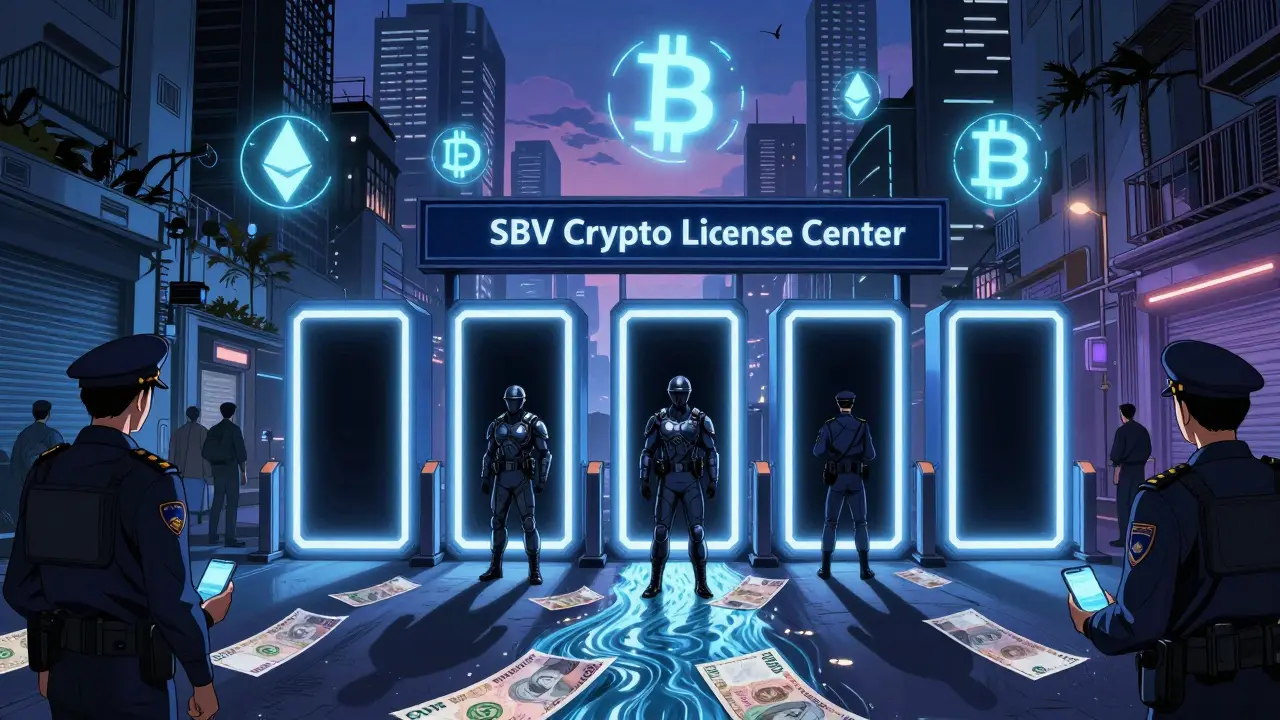
For years, the State Bank of Vietnam (SBV) made it clear: cryptocurrency was off-limits. Banks couldn’t process crypto payments. People couldn’t use Bitcoin to buy coffee. Even holding digital assets felt like walking a legal tightrope. But in 2025, everything changed. Vietnam didn’t ban crypto - it regulated it. And the rules are stricter than almost anywhere else in Southeast Asia.
From Ban to Bureaucracy: The 2025 Shift
In June 2025, Vietnam passed the Law on Digital Technology Industry. For the first time, Bitcoin and Ethereum were officially recognized as virtual assets. That doesn’t mean you can use them to pay your rent. It means you can legally own them, inherit them, and trade them - but only under tight government control.
The real turning point came in September 2025 with Resolution No. 05/2025/NQ-CP. This wasn’t just a guideline. It was a full legal framework. The SBV didn’t just open the door - it built a security checkpoint with armed guards.
Who Can Run a Crypto Exchange in Vietnam?
Only Vietnamese companies. And they need a lot of money.
To get a license, a company must have at least 10 trillion Vietnamese dong - about $379 million - in capital. That’s more than most regional exchanges make in a year. And it’s not enough to just have cash. The money must come from at least two approved sources: commercial banks, securities firms, insurance companies, fund managers, or tech enterprises. Each of those investors must have shown two straight years of profits.
And here’s the kicker: starting in 2026, every trade on a licensed exchange must be in Vietnamese dong. No USDT. No BTC/USD pairs. Only VND. That’s a huge barrier for international traders and investors who want to move in and out of crypto quickly.
Only Five Exchanges Allowed - And None Have Applied Yet
The SBV plans to license only five exchanges during its five-year pilot program. That’s it. No more. No less.
But as of October 2025, not a single company had submitted an application. Why? The capital requirement is too high. The compliance burden is overwhelming. And the timeline is unclear.
Big Vietnamese banks and fintech firms are watching. They’re talking. But no one’s stepping up. That’s not because they don’t want to - it’s because the rules feel designed to keep outsiders out and insiders in. The SBV isn’t trying to attract Binance or Coinbase. It’s trying to build its own version of a crypto market - one it can fully control.
What About Foreign Investors?
If you’re not Vietnamese, you can’t trade on a licensed exchange directly. But there’s a loophole: Crypto Asset Service Providers (CASPs). These are approved by the Ministry of Finance, not the SBV. They act as gatekeepers - allowing foreign investors to access the market through limited, monitored channels.
It’s a two-tier system: Vietnamese citizens trade on licensed exchanges using VND. Foreigners get in through CASPs, with more reporting, more oversight, and fewer options. It’s not open access. It’s curated access.

NDAChain: Vietnam’s Own Blockchain
In July 2025, the government launched NDAChain - a state-run, permissioned blockchain. This isn’t Ethereum. It’s not public. It’s a closed system where the government holds the keys.
NDAChain is being used to tokenize bonds, carbon credits, and other assets. It’s meant to make government transactions faster and more secure. But it also means every token movement can be tracked. Every transfer. Every holder. Every change.
This isn’t about decentralization. It’s about control. Vietnam is building a blockchain that serves the state - not the people.
People Are Still Buying Crypto - Even Without Banks
Here’s the irony: Vietnam ranks fourth in the world for crypto adoption, according to Chainalysis 2025. Over 20% of the tech-savvy population owns digital assets.
How? Peer-to-peer trading. Platforms like Binance P2P are flooded with Vietnamese users. People trade USD for BTC directly with each other. They use cash deposits, bank transfers, and mobile wallets. It’s all happening outside the official system.
The SBV can ban banks from handling crypto. But it can’t stop people from texting each other: “Send me 0.5 BTC, I’ll send you 15 million VND.” That’s the real market. And it’s growing faster than the licensed one.
Why the Strict Rules?
The SBV isn’t anti-innovation. It’s anti-risk.
Remember, Vietnam’s economy still relies heavily on cash. The central bank fears crypto could undermine the Vietnamese dong, trigger capital flight, or become a tool for money laundering. They also want to tax crypto gains - and they can’t do that if people trade anonymously.
So they created a system where:
- Only locals can run exchanges
- All trades are in VND
- Foreigners need special approval
- Every transaction is traceable
- Violations bring heavy fines
This isn’t about stopping crypto. It’s about making sure crypto serves Vietnam’s economy - not the other way around.

What’s Still Banned?
Even with the new rules, some things are still illegal:
- Using Bitcoin or Ethereum as payment for goods or services
- Financial institutions processing crypto transactions
- Issuing stablecoins backed by US dollars or other fiat currencies
- Trading crypto as a security (like tokens that promise dividends)
So if you’re running a shop in Hanoi and someone tries to pay you in BTC? You can’t legally accept it. If your bank account gets flagged for crypto transfers? You’ll get a call from regulators.
Is This Working?
So far, not really.
There’s no active exchange. No trading volume. No tax revenue from crypto. And yet, demand is sky-high. The gap between what’s legal and what people are doing is widening.
Experts say Vietnam’s approach is too slow. Too rigid. Too focused on control. Countries like Singapore and the Philippines are moving faster - letting stablecoins in, lowering barriers, and attracting global firms. Vietnam is building a museum of crypto - with everything locked behind glass.
But there’s one thing Vietnam has that others don’t: political will. The SBV isn’t just talking about regulation. They’re enforcing it. And they’re not backing down.
What Comes Next?
The five-year pilot program ends in 2030. That’s when the real test begins.
If no exchanges are operating by then, the whole system might be scrapped. If a few survive, Vietnam could become a model for other developing nations - showing how to bring crypto under control without killing it.
Right now, the SBV is betting that control beats chaos. Whether that bet pays off depends on one thing: can they make the system work for businesses - not just bureaucrats?
For now, the message is clear: You can own crypto in Vietnam. But you can’t trade it easily. You can’t use it freely. And you definitely can’t ignore the rules.
Aaron Heaps
December 25, 2025 AT 00:49Mmathapelo Ndlovu
December 26, 2025 AT 02:02Collin Crawford
December 28, 2025 AT 00:02Steve B
December 28, 2025 AT 04:16Brian Martitsch
December 28, 2025 AT 09:40Dan Dellechiaie
December 30, 2025 AT 07:18Radha Reddy
December 31, 2025 AT 08:32Shubham Singh
January 1, 2026 AT 15:30