Supply Chain NFT Implementation Challenges: Why Adoption Is Slowing Down
Supply Chain NFT Cost Estimator
Estimate Your NFT Implementation Costs
Based on industry data from the article: Most companies underestimate costs by 30-50% due to hidden expenses like training, data errors, and integration challenges.
Includes blockchain setup, API integration, and custom development
Platform fees, maintenance, and staff training
Suppliers, freight forwarders, and customs brokers
Based on 2024 audit data: typical error rate for NFT tracking systems
Estimated Implementation Costs
1-year cost estimate:
$0
Comparison to traditional methods:
Based on industry data from the article:
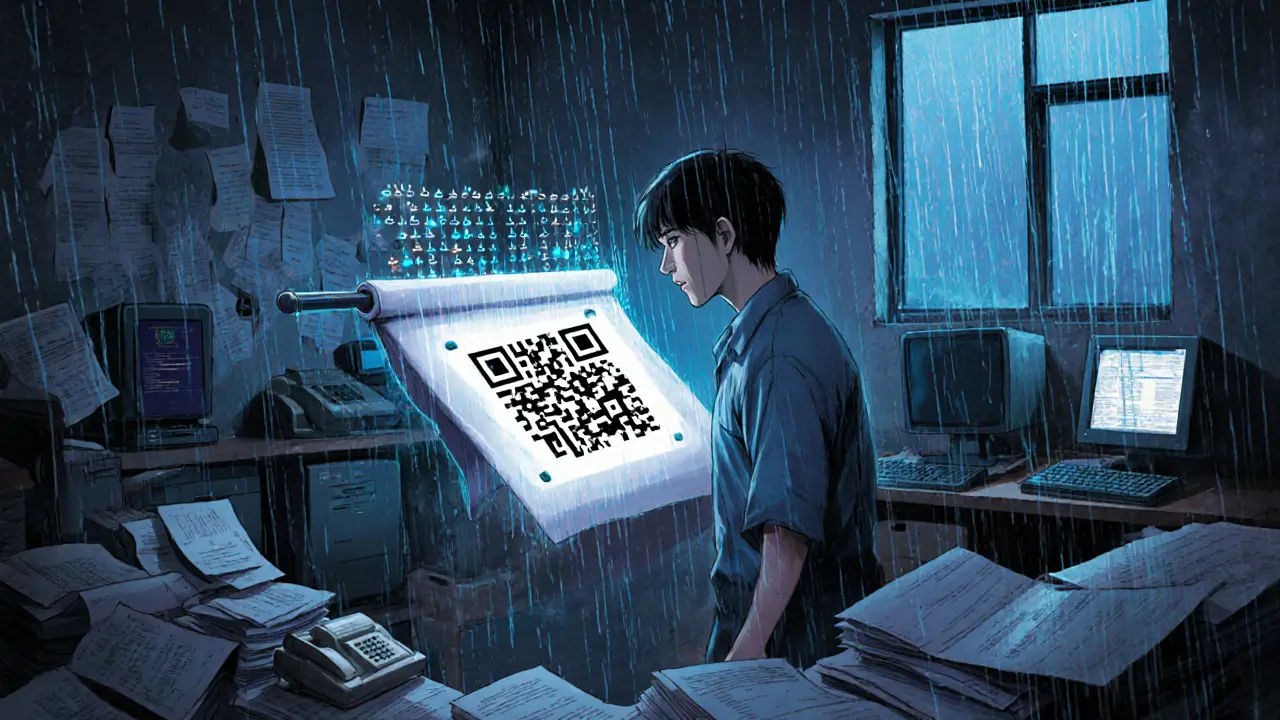
Imagine tracking a pair of sneakers from the rubber plantation in Malaysia to the warehouse in Chicago - and knowing every stop, every worker, every batch of material along the way. That’s what NFTs promise for supply chains. But here’s the truth: while the idea sounds clean and powerful, actually making it work across real-world logistics is a mess. Most companies trying to use NFTs for supply chain tracking are hitting walls - not because the tech is broken, but because the world around it isn’t ready.
It’s Not About the Tech - It’s About the People
NFTs aren’t magic. They’re digital certificates that lock in data: where a product was made, who handled it, what materials were used. That data can’t be changed once recorded on the blockchain. Sounds perfect, right? But here’s the catch: if your supplier still uses paper forms, your freight forwarder still emails shipping manifests, and your customs broker still relies on fax machines, adding NFTs won’t fix that. It just adds another layer of complexity.Companies that have tried this know the pain. One New Zealand-based textile exporter tried to tag every bolt of fabric with an NFT. Their factory in Vietnam could scan and upload data. Their shipping partner in Singapore couldn’t. The port authority in Los Angeles didn’t have the software to read the QR codes linked to the tokens. So after six months and $200,000 spent, they scrapped it. The tech worked. The people didn’t.
Getting every player in the chain - from farmers to retailers - to agree on one system is like herding cats. Each one has its own software, its own priorities, and zero incentive to pay for something that benefits someone else. Who pays for the blockchain nodes? Who trains the staff? Who owns the data? These aren’t technical questions. They’re political ones.
Costs Are Staggering - And Not Just Upfront
A lot of articles make it sound like blockchain is cheap. It’s not. Setting up a private blockchain for supply chain tracking costs between $150,000 and $500,000 just to get off the ground. That’s before you factor in ongoing maintenance, staff training, API integrations with legacy ERP systems, or hiring blockchain developers who can actually build this stuff.And it gets worse. Most companies don’t realize the hidden costs: data entry errors, duplicate records, system downtime. One 2024 audit of a food supply chain using NFTs found that 22% of scanned tokens had mismatched or incomplete data because warehouse workers were rushing and didn’t know how to use the app properly. The system was supposed to cut errors by 40%. Instead, it added a new layer of confusion.
Small and medium businesses are especially squeezed. A mid-sized coffee roaster in Colombia tried to use NFTs to prove their beans were ethically sourced. The platform they chose charged $5,000 per month just to host the tokens. After three months, they realized they were spending more on blockchain than on shipping. They switched back to paper certificates with notarized stamps.
Regulations Are a Wild West
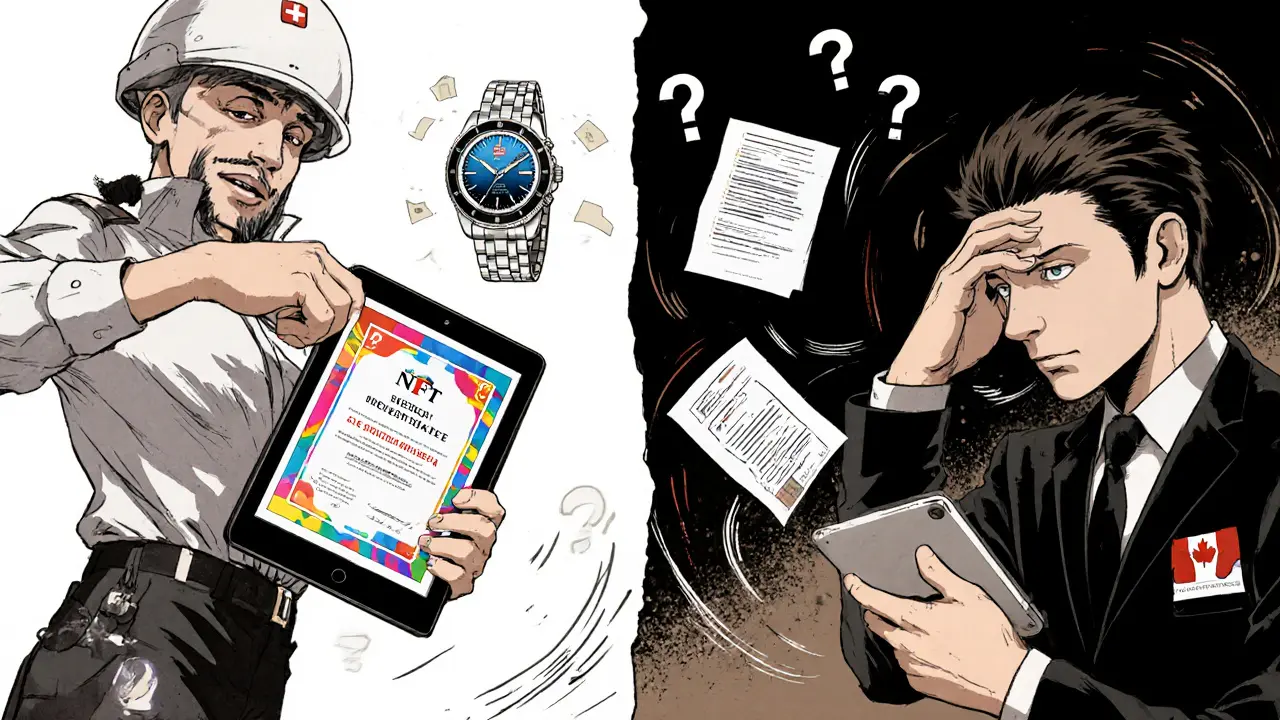
There’s no global rulebook for NFTs in supply chains. In the EU, data privacy laws under GDPR mean you can’t store personal details on a public blockchain - but most NFT systems are built on public chains like Ethereum. In the U.S., customs agencies don’t recognize blockchain records as legal proof of origin. In China, blockchain is encouraged - but only if it’s government-approved. In Brazil, there’s no legal clarity at all.This mess makes cross-border trade nearly impossible. A luxury watch maker in Switzerland uses NFTs to prove authenticity. But when the watch hits customs in Canada, the officer doesn’t know what to do with the QR code. Is it a receipt? A license? A digital signature? There’s no standard. No training. No guidance. So the shipment gets held for days while someone calls a lawyer.
Even the financial side is tangled. Banks that used to issue letters of credit now have to figure out if an NFT can replace them. Some say yes. Others say no. The result? Delays. Confusion. Risk. Companies that thought blockchain would speed up payments are now stuck in legal gray zones.
Interoperability? There Isn’t Any
You can’t just plug an NFT system into any supply chain. There are dozens of blockchain platforms out there - Hyperledger, Corda, VeChain, Polygon, Algorand - and they don’t talk to each other. One company uses VeChain to track pharmaceuticals. Another uses Hyperledger for automotive parts. When they try to exchange data, it’s like trying to send an email from Outlook to a fax machine.Even within the same company, it’s a nightmare. A car manufacturer might use one blockchain for parts from Germany, another for batteries from South Korea, and a third for software updates from California. Each system has its own format, its own rules, its own security protocols. Integrating them isn’t a software update - it’s a full rebuild.
And forget about legacy systems. Most warehouses still run on 20-year-old software that can’t even handle JSON files, let alone blockchain APIs. Connecting an NFT system to that? It’s like trying to stream 4K video over a dial-up connection.
Who Even Owns the Data?
Here’s a question no one wants to answer: if you scan an NFT on a bottle of wine and see it came from a vineyard in France, who owns that data? The vineyard? The importer? The retailer who sold it? The consumer who scanned it?Right now, whoever builds the system owns the data. That’s a problem. If a big tech company controls the NFT platform, they control the records - and can change the rules anytime. A 2025 survey found that 68% of supply chain managers are afraid of vendor lock-in. They don’t want to invest millions only to find out their NFT provider raises prices, shuts down, or sells their data to advertisers.
And what happens if a product is recalled? If the NFT is on a public blockchain, the record can’t be deleted - even if it’s wrong. One electronics company accidentally tagged 12,000 defective batteries as “safe.” They couldn’t overwrite the NFT. They had to issue a public apology, create a new tracking system, and manually notify every customer. The NFT didn’t help - it made the crisis worse.

Real Success? It’s Rare - And Local
There are a few wins. In Australia, a recycling company started tagging plastic bottles with NFTs to prove they were actually recycled - not just dumped overseas. They partnered with local councils, used simple QR codes, and gave consumers a $0.10 refund when they scanned the bottle. Within a year, recycling rates jumped 37%. Why? Because it was small. Local. Simple. And the incentives lined up.Another example: a New Zealand dairy exporter started using NFTs to track milk from farm to export port. They only worked with five trusted suppliers. They used a private blockchain. They trained everyone in person. And they didn’t try to impress anyone with fancy tech - just gave buyers a simple code to verify freshness and origin. Sales to Japan went up 22% because customers trusted the proof.
These aren’t flashy blockchain demos. They’re quiet, practical fixes. And they work because they’re focused. No grand vision. No global rollout. Just solving one real problem with one clear audience.
The Future? It’s Not About NFTs - It’s About Trust
NFTs aren’t going away. But they’re not the silver bullet either. The real breakthrough won’t come from more tokens - it’ll come from better collaboration. Standardized data formats. Government-backed digital IDs for shipments. Shared infrastructure that everyone can use without paying for it.Right now, we’re treating blockchain like a new smartphone. But it’s more like electricity in the 1890s - everyone’s trying to invent their own plug. Until we agree on a standard, nothing will scale.
For now, if you’re thinking about NFTs in your supply chain, ask yourself: Is this solving a real pain point? Are my partners ready? Can I afford the cost? Do I have a way to fix it when it breaks? If the answer to any of those is no - wait. Don’t rush. The technology will still be here next year. The trust won’t.
What’s Next?
The next five years will show who survives the NFT supply chain experiment. The winners won’t be the ones with the fanciest tech. They’ll be the ones who built partnerships, kept it simple, and focused on trust - not tokens.Until then, most companies should stick to proven tools: barcodes, audits, third-party certifications. They’re old. They’re boring. But they work. And right now, that’s more valuable than a blockchain that no one understands.
Casey Meehan
November 28, 2025 AT 01:11Tom MacDermott
November 29, 2025 AT 23:01Martin Doyle
November 30, 2025 AT 14:42Susan Dugan
December 2, 2025 AT 13:02SARE Homes
December 3, 2025 AT 05:42Sam Daily
December 3, 2025 AT 17:07Kristi Malicsi
December 5, 2025 AT 11:07Rachel Thomas
December 5, 2025 AT 18:49SHIVA SHANKAR PAMUNDALAR
December 6, 2025 AT 07:20