US Sanctions on Myanmar Crypto Entities Targeting $10 Billion Cyber Scam Network
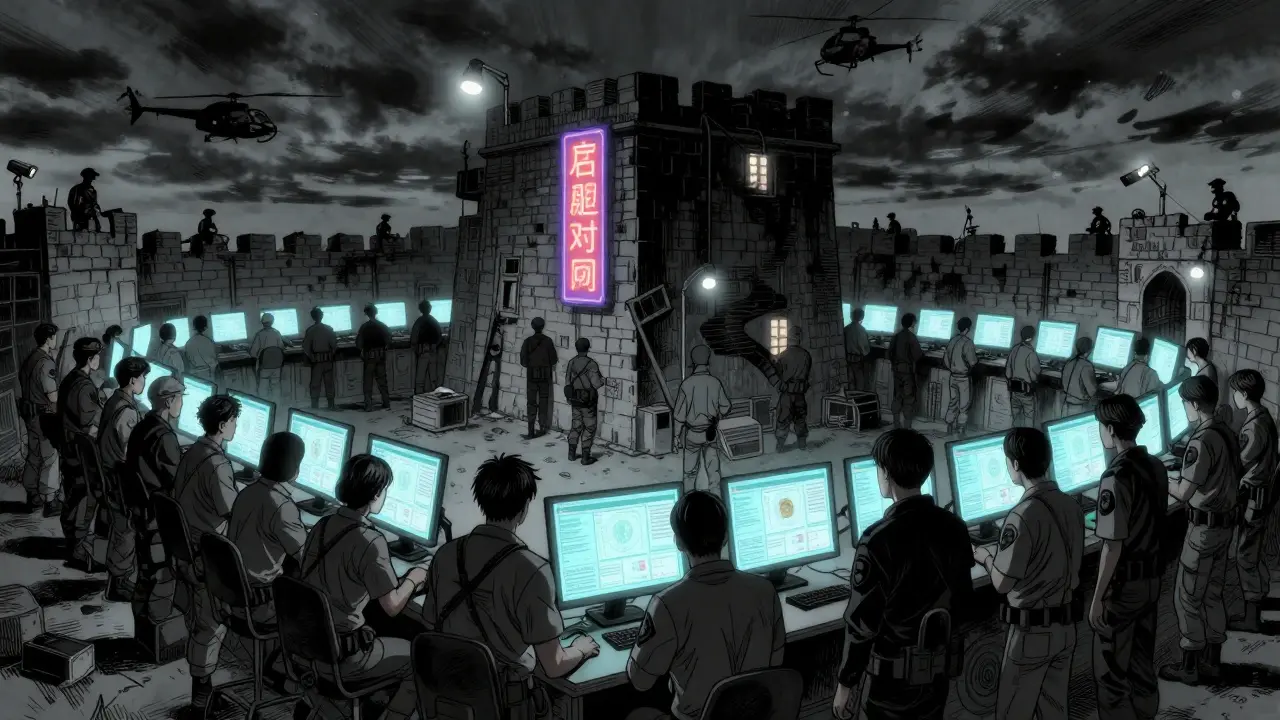
On September 8, 2025, the U.S. Treasury’s Office of Foreign Assets Control (OFAC) dropped one of the most aggressive financial sanctions in recent memory-targeting nine crypto-linked scam entities operating in Shwe Kokko, Myanmar. These weren’t just rogue traders or shady exchanges. These were organized criminal networks running forced-labor compounds where victims were held at gunpoint to scam Americans out of billions through fake cryptocurrency investments. And for the first time, the U.S. didn’t just freeze assets-it labeled the entire operation as modern slavery.
How Shwe Kokko Became the Crypto Scam Capital
Shwe Kokko, a small town on the Thai-Burmese border, used to be known for fishing and rice farming. Today, it’s a fortified zone of high-walled compounds, guarded by armed militias, where hundreds of people are trapped in digital torture chambers. These aren’t hackers in hoodies working from home. They’re people-many lured with fake job offers from Malaysia or China-who are then forced to run crypto scams 18 hours a day. If they fail to hit their targets, they’re beaten. If they try to escape, they’re sold to other gangs. The Karen National Army (KNA), a non-state armed group operating under the protection of Myanmar’s military junta, controls this area. In exchange for a cut of the profits, the KNA provides security, electricity, and immunity from local police. The U.S. Treasury explicitly named the KNA as a transnational criminal organization, along with its leader Saw Chit Thu and his two sons. That’s rare. The U.S. doesn’t sanction militias unless they’re directly tied to massive, systemic crime-and this is one of the biggest cases in history.The $10 Billion Losses No One Was Talking About
In 2024, Americans lost at least $10 billion to Southeast Asian crypto scams, according to the U.S. Treasury. That’s not a typo. Ten billion dollars. For context, that’s more than the entire annual budget of some small countries. Most of it came from elderly Americans, small business owners, and people trying to get into crypto for the first time. The scams were slick: fake Telegram groups, AI-generated influencers, and “guaranteed returns” on tokens that didn’t even exist. Victims were told they were investing in “Myanmar Blockchain” or “Golden Coin,” a digital asset promoted by smiling people in suits holding golden bars. The websites looked professional. The testimonials were real-because they were from other victims, forced to record them under threat. Once money was sent, it flowed through dozens of crypto wallets, mixed with legitimate transactions, and vanished into private exchanges outside U.S. jurisdiction. The Treasury didn’t just release numbers-they called it “modern slavery.” That’s not just rhetoric. It’s a legal trigger. Under Executive Order 13818, sanctions can now be applied for human rights abuses. That means the U.S. isn’t just going after money-it’s going after the people who profit from torture.How the Sanctions Work
OFAC didn’t just blacklist a few companies. They went after the entire structure:- Nine entities based in Shwe Kokko-each one a scam compound with its own servers, staff, and crypto wallets.
- Ten supporting entities in Cambodia that handled money laundering and crypto conversion.
- The KNA leadership: Saw Chit Thu, Saw Htoo Eh Moo, and Saw Chit Chit-all personally sanctioned.
- Any U.S. person or company that did business with them-even indirectly-is now breaking the law.

Why This Is Different From Past Sanctions
In the past, the U.S. sanctioned crypto exchanges like BitMEX or Tornado Cash because they were used for laundering. But those were platforms. This is different. These are not platforms. These are prisons with servers. The U.S. used four separate executive orders to make sure nothing could slip through:- E.O. 13851-Targets transnational criminal organizations.
- E.O. 13694-Covers cyber-enabled financial crimes.
- E.O. 13818-Sanctions human rights abusers.
- E.O. 14014-Allows action against those threatening Myanmar’s stability.
What This Means for Crypto Users
If you’re a regular crypto user, you might wonder: “Does this affect me?” The answer is yes-if you’re using wallets or exchanges that have ever interacted with these sanctioned entities. OFAC doesn’t care if you didn’t know. If your wallet received funds from a flagged address-even one hop away-you could be flagged. Many U.S. exchanges have already started blocking transactions linked to Shwe Kokko and Cambodia-based addresses. Some have even frozen accounts with no explanation. It’s not about guilt. It’s about risk. The Treasury’s message is clear: if you’re holding crypto that passed through a scam compound, you’re holding tainted assets. And if you’re in the U.S., you’re now legally responsible for not using them. This has already changed how people move crypto. More users are turning to privacy coins, decentralized exchanges, and non-KYC platforms. But that’s dangerous too. The U.S. is watching those too. In fact, the Treasury’s next move may be to sanction privacy-focused protocols that make tracing these flows harder.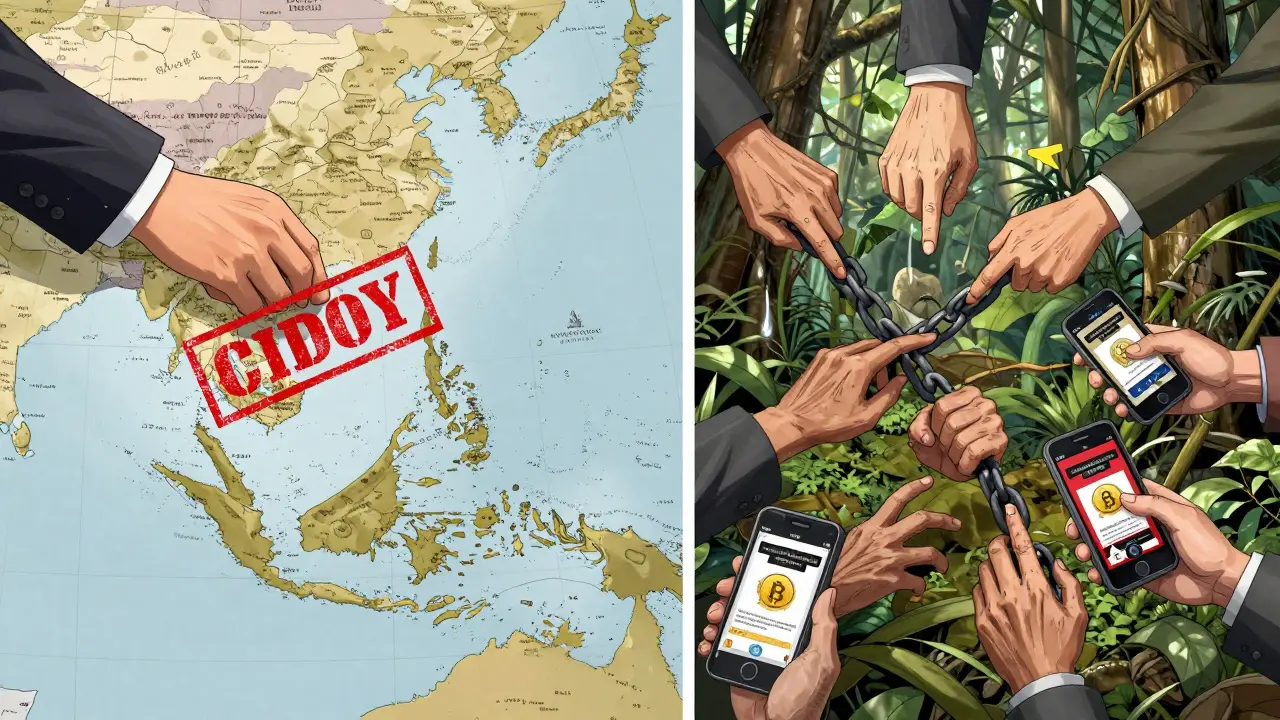
What’s Next?
The U.S. didn’t say this was the end. They said it was “the beginning of a broader campaign.” Experts believe the next targets will be:- Myanmar military officials who receive payments from the KNA.
- Chinese and Thai companies that supply the scam compounds with servers, SIM cards, and internet bandwidth.
- Exchanges in the Philippines and Laos that still process crypto from these regions.
How to Protect Yourself
If you’re trading crypto, here’s what you need to do now:- Check your wallet history-Use blockchain explorers like Etherscan or Solana Explorer. Look for transactions to or from addresses flagged by OFAC. If you see one, stop using that wallet.
- Avoid exchanges with ties to Southeast Asia-Many platforms still operate out of Cambodia, Laos, or the Philippines. Even if they’re “legal,” they might be processing tainted funds.
- Never respond to unsolicited crypto offers-If someone on Telegram, Instagram, or TikTok promises 10x returns, it’s a scam. Period.
- Use verified platforms-Stick to U.S.-regulated exchanges like Coinbase or Kraken. They have compliance teams actively blocking these addresses.
- Report suspicious activity-If you see a crypto scam, report it to the FBI’s IC3 portal. Even a screenshot helps.
Are U.S. citizens at risk of being sanctioned for using crypto linked to Myanmar scams?
Yes, if they knowingly or unknowingly transact with sanctioned entities. OFAC holds U.S. persons responsible for avoiding transactions with blocked addresses-even if they didn’t realize the connection. This includes using exchanges, wallets, or services that route funds through sanctioned networks. The safest approach is to avoid any crypto activity tied to Southeast Asia unless you can verify the full transaction history.
How do I check if my crypto wallet is linked to a sanctioned entity?
Use public blockchain explorers like Etherscan, Solana Explorer, or Blockchain.com. Search your wallet address for incoming or outgoing transactions. If any address matches the ones listed in OFAC’s SDN list (available on treasury.gov), your wallet may be flagged. Many U.S. exchanges now auto-flag these addresses, but if you use a non-KYC wallet, you’re on your own. Consider using tools like Chainalysis Reactor or TRM Labs for enterprise-grade screening.
Why did the U.S. target the Karen National Army (KNA) specifically?
The KNA controls Shwe Kokko, the main hub for these cyber scam compounds. The U.S. Treasury found direct evidence that the KNA receives millions in crypto payments from the scam networks in exchange for protection, infrastructure, and immunity from local authorities. By sanctioning the KNA and its leaders, the U.S. is attacking the root of the operation-not just the scammers, but the armed group enabling them.
Can I still trade crypto with people in Myanmar or Cambodia?
No. Under U.S. law, it’s illegal for any U.S. person to engage in any transaction with sanctioned entities or individuals-even if they’re not directly named. Since the KNA and its network are sanctioned, any crypto activity involving Myanmar or Cambodia carries extreme risk. Even if the person you’re dealing with claims they’re not involved, the transaction path might still connect to a blocked address. The safest rule: avoid all crypto dealings with individuals or platforms based in those regions.
What happens if I accidentally send crypto to a sanctioned address?
The funds will likely be frozen permanently. OFAC does not return assets once they’re tied to a sanctioned entity. You won’t be criminally charged if it was truly accidental, but you’ll lose the money. The Treasury encourages users to report such incidents immediately to the OFAC Compliance Hotline. Prevention is the only real defense.
Akhil Mathew
February 2, 2026 AT 06:11This is insane. I knew crypto scams were bad but forced labor compounds? The U.S. finally went full throttle and it’s about time. These aren’t just criminals-they’re slavers with Wi-Fi. I’ve seen people in India get lured by fake job offers to Malaysia and disappear. This hits close to home.
Tom Sheppard
February 4, 2026 AT 03:38broooooo 😭 this is straight out of a dystopian movie. 10 BILLION?? and people think crypto is just about mooning or degens?? these poor souls are stuck in hell with a keyboard and a gun to their head. someone needs to film a documentary on this. like NOW.
Ramona Langthaler
February 5, 2026 AT 13:10Typical liberal overreach. You sanction a few guys in Myanmar but let China run the whole supply chain. The real villains are the Chinese tech firms selling servers and SIM cards to these compounds. U.S. is just posturing while the real money flows through Hong Kong and Shenzhen. Wake up.
Robert Mills
February 6, 2026 AT 05:15THIS IS THE MOVE. 🔥 Time to shut down the whole ecosystem. No more excuses. No more ‘I didn’t know.’ If your wallet touched this mess, you’re part of the problem. Time to clean house.
Joseph Pietrasik
February 7, 2026 AT 18:23So now if I sent 0.001 ETH to a friend in Thailand 2 years ago I’m a criminal? This is just a power grab. OFAC is becoming the IRS with blockchain. Next they’ll sanction people for using a VPN. Get real.
Raju Bhagat
February 8, 2026 AT 22:02OMG I JUST CHECKED MY WALLET AND ONE TRANSACTION FROM 2023 IS FLAGGED 😱 I THOUGHT IT WAS JUST A RANDOM GUY FROM PHILIPPINES BUT NOW IM SCARED AF. I DIDNT KNOW I WAS HELPING SLAVERS. WHAT DO I DO??
laurence watson
February 10, 2026 AT 08:53I’ve been working with survivors of these scams through a nonprofit. The trauma is unimaginable. Many were promised modeling jobs or IT roles. Some were teens. The fact that the U.S. is finally calling it slavery? That’s huge. It’s not just about money-it’s about dignity. I hope this leads to real rescue operations.
Elizabeth Jones
February 12, 2026 AT 00:30There’s a moral hierarchy here. The scammers are evil, yes-but the KNA, the enablers, the border guards who profit from human suffering-they’re the true architects of this horror. Sanctioning them is the first step toward justice, not just financial deterrence. This isn’t policy. It’s retribution with a conscience.
Pamela Mainama
February 12, 2026 AT 05:01Be careful out there. If you’re trading crypto, verify everything. Even small transactions can tie you to something dark. It’s not paranoia-it’s responsibility.
Rachel Stone
February 13, 2026 AT 14:18So the U.S. sanctions a bunch of people in Myanmar… and now everyone’s scared to send crypto to anyone in Asia. Classic. Next they’ll ban Thai food because the pad thai place uses a Thai-owned payment processor.
Nickole Fennell
February 14, 2026 AT 08:24I have a cousin who vanished in Cambodia two years ago. He was looking for a ‘remote job.’ No one ever heard from him again. I’ve been screaming into the void since then. Now the U.S. finally does something? I’m crying. This isn’t just about crypto. It’s about people. Please find him.
Gurpreet Singh
February 14, 2026 AT 08:36As someone from India, I’ve seen how these scams target our elders. My aunt lost ₹8 lakhs to a ‘Golden Coin’ scheme. She thought she was investing in the future. Now she doesn’t leave the house. These sanctions won’t bring back her money, but at least someone finally admitted these aren’t just scams-they’re crimes against humanity.
Will Pimblett
February 14, 2026 AT 23:15They’re going after the KNA? Good. But what about the Thai border police who get paid in cash and crypto to look the other way? And the Chinese companies supplying the servers? Sanction them too. Otherwise this is just a PR stunt with a fancy executive order.