USDT Ban in European Union Under MiCA: What You Need to Know
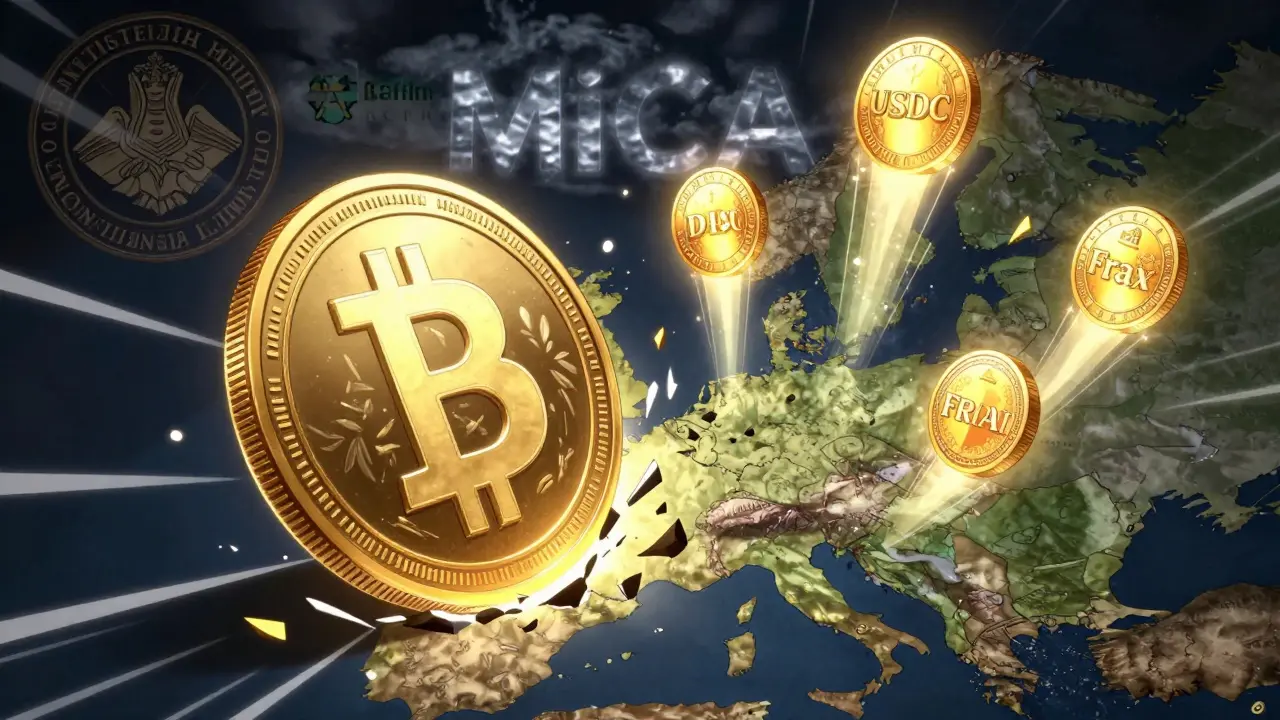
On July 1, 2025, USDT stopped trading on all major cryptocurrency exchanges in the European Union. Not because it crashed. Not because it lost trust. But because it broke the rules.
Why USDT Got Banned in the EU
The EU didn’t wake up one day and decide to ban the world’s biggest stablecoin out of nowhere. It was a slow, deliberate move under a new law called MiCA - Markets in Crypto-Assets Regulation. MiCA became fully active on December 30, 2024, and by June 30, 2024, all stablecoins had to meet strict new standards to keep operating in Europe. USDT, issued by Tether Limited, failed every single one. MiCA doesn’t just want stablecoins to be backed by cash. It wants proof. Real-time proof. Every euro, dollar, or bond backing USDT must be clearly listed, held separately from Tether’s other money, and audited by an independent firm - with those reports published monthly. Tether never provided that. Even today, their reserve disclosures are vague. They say they’re backed 1:1. But they won’t show you the bank statements, the bond holdings, or the audit logs in real time. That’s not transparency. That’s guesswork. European regulators also require automated KYC and AML systems. Every transaction must be traceable. Tether’s system doesn’t meet that bar either. If a criminal sends USDT through their network, there’s no way for exchanges to automatically block it. That’s a red flag for the EU, which has some of the strictest anti-money laundering laws in the world.What MiCA Actually Demands
MiCA splits stablecoins into two types: Electronic Money Tokens (EMTs) and Asset-Referenced Tokens (ARTs). USDT is an EMT - meaning it should be pegged to a single currency, like the US dollar. Simple, right? But simple doesn’t mean easy under MiCA. Here’s what every stablecoin must do to stay legal in Europe:- Get official authorization from an EU financial regulator (like France’s ACPR or Germany’s BaFin)
- Hold reserves equal to 100% of circulating supply, in liquid assets (cash, short-term government bonds)
- Keep those reserves completely separate from the issuer’s own funds
- Release a public white paper explaining how the stablecoin works
- Submit monthly reports on reserves and transactions
- Undergo quarterly audits by independent firms
- Automate KYC and AML checks for every user and transaction
- Cap daily transaction volume at €200 million unless they hold extra capital reserves
How Exchanges Reacted
Exchanges didn’t wait for regulators to come knocking. They moved fast - because they didn’t want to lose their licenses. OKX was first. In early 2025, they removed all USDT trading pairs for EU users. No more buying. No more selling. Just gone. Coinbase followed in February 2025. They sent emails to every EU customer: “Convert your USDT to USDC or EURT before April 15.” They didn’t hide their reasoning: “We can’t risk serving a non-compliant asset.” Binance took a different path. At first, they only let users sell USDT - no buying. Then, in March 2025, they shut down all spot trading for USDT in the EEA. By March 31, 2025, EU users couldn’t even hold USDT in their wallets on Binance. It was completely delisted. Other platforms like Kraken and Bitstamp did the same. The message was clear: If you want to keep operating in Europe, you play by MiCA rules. USDT doesn’t. So it’s out.
Who’s Replacing USDT in Europe
The EU didn’t ban USDT to kill stablecoins. They banned it to make room for better ones. Five stablecoins have already received MiCA authorization and are now the new standard in Europe:- EURT (Tether’s own MiCA-compliant euro-backed stablecoin)
- USDC (Circle’s version, fully audited, transparent reserves)
- Euro Coin (EUROC) (Circle’s euro-pegged stablecoin, regulated in the EU)
- DAI (MakerDAO’s decentralized stablecoin, now compliant with MiCA’s reserve rules)
- Frax (algorithmic stablecoin that met MiCA’s capital and transparency requirements)
What Happens to Your USDT Now
If you’re in the EU and still hold USDT, here’s the reality: You can’t trade it on any major exchange. You can’t convert it to euros or dollars through regulated platforms. You can’t use it to pay for goods or services on compliant platforms. Your only options are:- Transfer it to a non-EU exchange (like Binance Global or Bybit), but you lose all consumer protections
- Hold it in a private wallet - but you can’t spend it, trade it, or withdraw it easily
- Use a peer-to-peer platform (like LocalBitcoins or Paxful), but you’re exposed to scams and no recourse if things go wrong


Jay Weldy
December 5, 2025 AT 10:32Also, props to MiCA. Finally, someone’s holding the line.
Melinda Kiss
December 6, 2025 AT 12:30Christy Whitaker
December 8, 2025 AT 11:31Nancy Sunshine
December 10, 2025 AT 07:56Alan Brandon Rivera León
December 10, 2025 AT 08:54Ann Ellsworth
December 11, 2025 AT 10:46Ankit Varshney
December 11, 2025 AT 13:57Ziv Kruger
December 12, 2025 AT 09:26Heather Hartman
December 14, 2025 AT 03:05Catherine Williams
December 15, 2025 AT 09:21