Venezuela Crypto Mining Licenses: Requirements and Risks for 2026

If you're looking to set up a mining rig in Venezuela, you aren't just dealing with electricity and hardware. You're stepping into one of the most tightly controlled state-managed systems on the planet. While the country's cheap power is a huge draw, the government doesn't let you just "plug and play." To operate legally, you have to navigate a complex web of licenses, mandatory pools, and a regulatory body that has a history of suddenly disappearing and reappearing.
The Core Licensing Framework
To mine legally in Venezuela, you can't operate as a ghost. Every operation must be formalized. SUNACRIP is the National Superintendency of Crypto Assets and Related Activities, the primary government body that grants licenses and oversees all digital asset operations. Originally established in 2018, it is the gatekeeper for anyone wanting to avoid equipment confiscation.
The process starts with the Integral Miners Registry, also known as RIM. If you aren't in this registry, you aren't legal. Whether you are a small-scale miner, a massive data center, or even a company that manufactures mining hardware, you need a specific license from SUNACRIP. The paperwork is heavy: you'll need a detailed business plan, full technical specs of your hardware, and financial projections. Expect this process to take anywhere from 3 to 6 months before you get the green light.
Once you're in, the oversight doesn't stop. You are required to maintain a paper trail of every single activity for 10 years. Yes, a decade. This means your accounting needs to be airtight, tracking every kilowatt and every satoshi earned, as the government can audit these records at any time.
The Mandatory National Digital Mining Pool
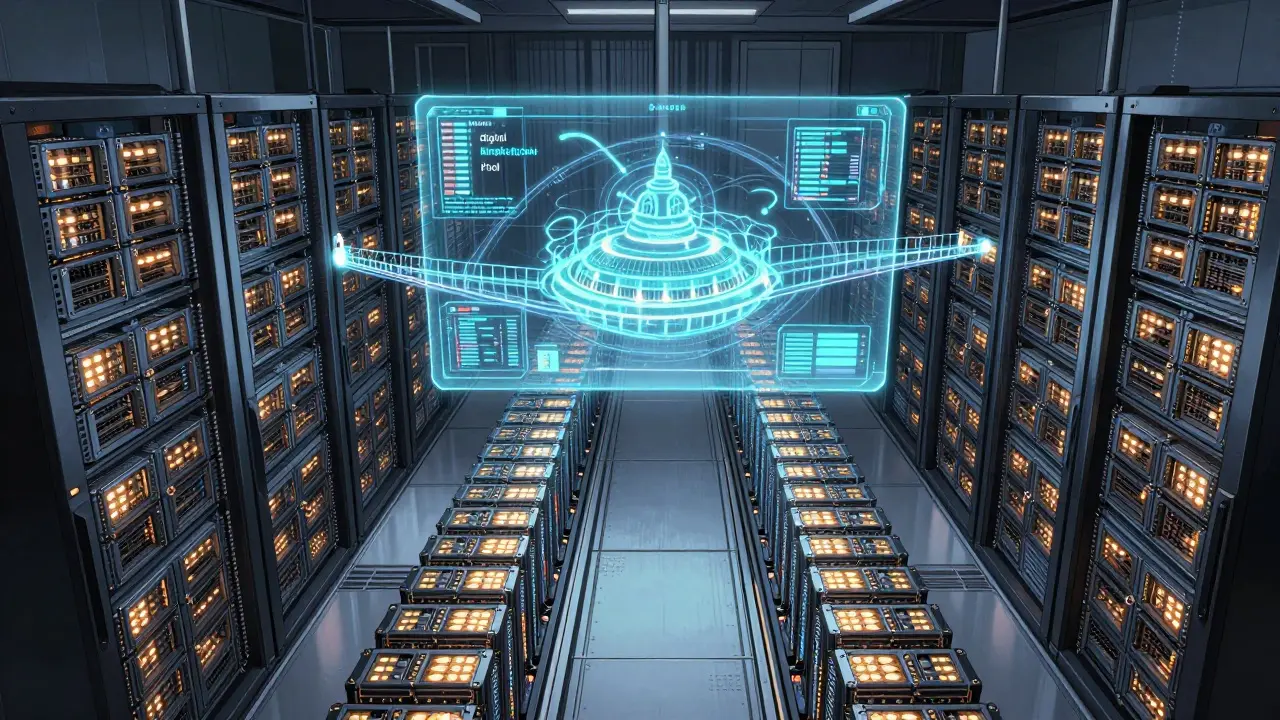
Here is where Venezuela differs from almost every other country. In most places, you choose your mining pool based on fees and uptime. In Venezuela, the government chooses for you. All licensed miners must join the National Digital Mining Pool, which is a state-controlled entity that centralizes all mining rewards.
Think of it as a mandatory middleman. You contribute your hash power to the state's pool, and the government distributes the rewards. This gives the state an unprecedented level of control. They can track exactly how much you're making, they can delay payments, or they can freeze your rewards entirely without giving you a detailed reason. If you're caught mining outside this pool, the penalties are severe-we're talking about the immediate confiscation of your expensive ASIC miners and potential legal prosecution.
| Feature | State-Licensed Mining | Unlicensed / "Grey" Mining |
|---|---|---|
| Pool Choice | Mandatory National Pool | Private/Global Pools |
| Risk Level | Administrative Burden | Equipment Confiscation |
| Tax Visibility | High (Directly Tracked) | Hidden (until audited) |
| Legal Status | Compliant | Prohibited |
Taxes and Financial Obligations
Mining in Venezuela isn't just about the electricity bill; it's about the SENIAT, the national tax authority. Because there isn't one single "crypto law," SENIAT treats cryptocurrency as an asset rather than a currency, applying the general Income Tax Law to your profits.
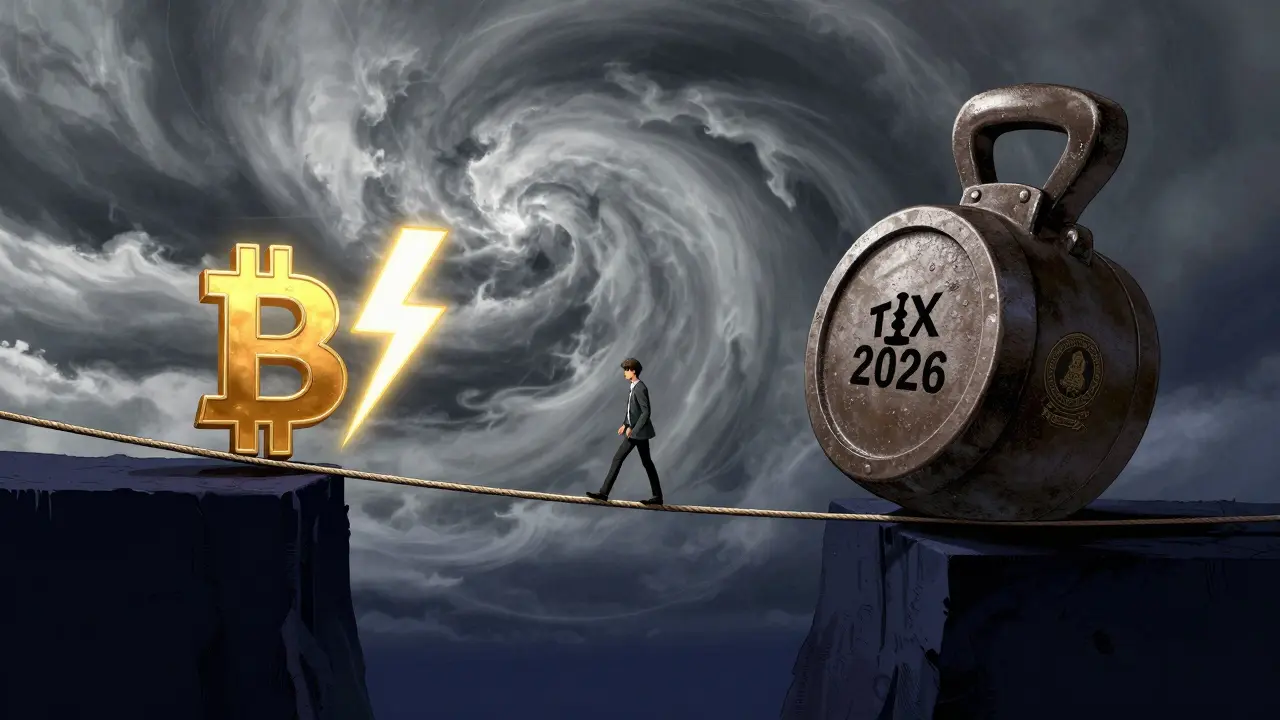
The most aggressive tax you'll encounter is the Large Financial Transactions Tax, or IGTF. If you're making transactions in any currency other than bolivars or the state-backed Petro, you could be hit with a tax of up to 20%. On top of that, you have to deal with the standard Income Tax (ISLR) on your mining earnings and potentially a 16% Value-Added Tax (VAT) on exchange fees.
By 2026, tax enforcement has become much more digital. The government is increasingly using blockchain tracking and KYC data from exchanges to find miners who aren't reporting their income. If you think you can hide your rewards in a cold wallet, be careful-the state is getting better at connecting on-chain data to real-world identities.
Regulatory Volatility: The Great Uncertainty
The biggest risk in Venezuela isn't the tax rate-it's the instability. The history of SUNACRIP is a rollercoaster. In 2020, mining was legalized. By March 2023, the entire agency was suspended. Why? Because of a massive corruption probe involving the misappropriation of over $3 million and ties to the oil industry. For a full year, the regulatory landscape was a void.
While there was a reorganization in 2024 and the introduction of CAVEMCRIP (a private sector representative body) to help stabilize things, the trauma remains. Imagine investing $100k in hardware only for the agency that grants your license to be shut down overnight due to a government scandal. That is a very real scenario in the Venezuelan market.
Furthermore, the political environment remains tense. Between international sanctions and domestic unrest, the rules can change based on the political wind. What is legal today might be a crime tomorrow, or your assets might be frozen as part of a broader political crackdown.
Practical Steps for Setup and Compliance
If you still decide that the risk is worth the reward, you need a strategic approach to setup. You can't just be a "guy with a computer"; you need to be a legal entity. Here is the general path to compliance:
- Form a Legal Entity: You must register a formal business with Venezuelan commercial authorities. You cannot apply for a mining license as an individual without a business structure.
- Apply to SUNACRIP: Submit your technical documentation, including the specific models of your miners and your projected energy consumption.
- Register in RIM: Once approved, ensure you are listed in the Integral Miners Registry to avoid being flagged during raids.
- Integrate with the National Pool: Configure your hardware to point to the government's mining pool. This is the only way to receive legal payouts.
- Implement 10-Year Archiving: Set up a robust digital and physical accounting system. You need to track hardware depreciation, energy costs, and every reward payout.
Pro tip: Don't do this alone. Given the overlap between crypto laws and general commercial law, hiring a local legal consultant who specializes in administrative law is non-negotiable. You need someone who knows the current mood at SUNACRIP before you submit your application.
The Bottom Line on Profitability
The math of mining in Venezuela is a paradox. On one hand, you have some of the cheapest electricity in the world, which usually means higher margins. On the other hand, the 20% IGTF tax, the administrative cost of a 10-year record-keeping mandate, and the risk of reward freezes eat into those margins quickly.
Many miners report significant delays in receiving payments from the National Pool, sometimes lasting months. When you combine these delays with hyperinflation in the local economy, the "cheap power" advantage can vanish. The system is designed for state control first and miner profitability second.
Can I mine Bitcoin in Venezuela without a license?
Technically, yes, but it is illegal. The government actively hunts for unlicensed mining operations. If caught, your hardware will be confiscated and you may face criminal charges. Legal mining requires registration with SUNACRIP and membership in the National Digital Mining Pool.
What is the National Digital Mining Pool?
It is a government-operated mining pool that all licensed miners must join. Instead of choosing your own pool, you must point your hash power to the state's pool. The government then manages the rewards and distributes payouts, allowing them to monitor and tax all income directly.
How long do I have to keep my mining records?
Venezuela requires all licensed mining entities to maintain complete and detailed records of their activities for 10 years. This includes technical logs, financial transactions, and equipment lists.
What taxes apply to crypto mining in Venezuela?
The primary taxes are the Income Tax (ISLR) on profits and the Large Financial Transactions Tax (IGTF), which can reach up to 20% for non-bolivar transactions. VAT may also apply to exchange fees at a rate of 16%.
Is SUNACRIP currently active?
SUNACRIP underwent a suspension in 2023 due to corruption scandals but began a reorganization process in 2024. While it is functioning, the regulatory environment remains volatile, and you should verify the current operational status with a local legal expert before investing.
Joshua Salwen
April 19, 2026 AT 00:02This is lauterly insane! Imagine spending your life savings on ASICs just for some government bureaucrat to wake up and decide your business is now a crime. The sheer audacity of a ten year record keeping rule is just a joke. It is practically a death sentence for any real startup trying to be agile. I can't even process the level of risk here without wanting to scream. Absolute madness!
Mark Pfeifer
April 20, 2026 AT 23:59The energy arbitrage here is fascinating, but the state-mandated pool is a massive red flag. Most people don't realize that centralizing hash power under a government creates a single point of failure and total surveillance. It's basically the opposite of why Bitcoin was created in the first place.
Abhinav Chaubey
April 22, 2026 AT 05:48Typical state-run inefficiency. In India, we handle scale far better than these chaotic regimes. The idea that you need a 10-year paper trail for a digital asset is a primitive attempt to control a technology they clearly do not understand. It is an embarrassing display of administrative incompetence.
Saurav Bhattarai
April 22, 2026 AT 10:41Oh wow, a government that's corrupt and inefficient. What a shocking twist for Venezuela. I'm sure the "National Pool" is just a fancy way of saying "we take your money and maybe give some back if we feel like it." Truly a masterclass in economic suicide.
Sandeep Bhoir
April 22, 2026 AT 14:21Actually, the 20% IGTF is the real killer here. You can have the cheapest power on earth, but if the state takes a fifth of your liquid movement just for using a non-local currency, your ROI evaporates faster than a puddle in July. But hey, I'm sure the paperwork will keep you entertained.
Yuhan Mo
April 23, 2026 AT 23:15The L1 infrastructure risks are substantial. We are talking about extreme counterparty risk with the state-managed pool. From a technical standpoint, the latency and uptime of a government-run node cluster are usually suboptimal compared to global industry standards. It is an interesting case of regulatory capture.
Gillian Kent
April 25, 2026 AT 14:57it sounds so scary but maybe there is a way to work with them for peace. we shoud try to see the other side too.
Thomas Jewett
April 26, 2026 AT 03:37This is exactly why we need to protect our own borders and laws from this kind of digital contagion. It is a travesty that anyone would even consider putting money into a system where a state can just seize your hardware on a whim because they had a bad day at the office. America should never even look at this as a model because it's a total failure of the free market and it's honestly insulting to the concept of private propoerty.
Keri Pommerenk
April 26, 2026 AT 06:14totally agree with the risk assessment here. definitely not worth the headache for most people
Sean Douglas
April 27, 2026 AT 22:01The sheer theatricality of SUNACRIP vanishing into a black hole of corruption for a year is the most poetic thing I've read all week. It's like a Kafkaesque nightmare where the only thing more volatile than the crypto is the government that's supposedly regulating it. Pure, unadulterated chaos!
Vicky Duffala
April 28, 2026 AT 23:36Think of this as a wild experiment in the evolution of state-crypto relations! 🚀 Even if the risks are high, it shows how governments are desperately trying to wrap their heads around decentralization. We are seeing the birth pains of a new era where the old rules of bureaucracy clash with the new world of hash power. It's all about the journey and the lessons we learn from these extreme cases. Let's keep observing how this unfolds because it's a fascinating piece of the global puzzle!
Adam Mann
April 30, 2026 AT 17:19It's definitely a tough spot, but I believe that with the right guidance and a bit of patience, some people could find a way to make this work safely. We just need to be inclusive and help those who are trying to bring innovation to their home countries, even when the laws are a bit confusing. It takes a lot of courage to start a business in that environment and we should support that spirit of entrepreneurship while still being careful about the rules. Just take it one step at a time and keep a positive outlook on the long term potential of the region!
Sean Mitchell
May 1, 2026 AT 17:02What a tedious read. The conclusion is obvious: don't do it. Why spend five thousand words telling us that a failing state is a bad place to put expensive hardware? This whole setup is a disaster waiting to happen and it's almost boring how predictable the outcome will be.
nathan jones
May 2, 2026 AT 16:31Been through similar stuff in other emerging markets. The key is always local connections over official paperwork.