Wealth Tax Treatment of Crypto in Switzerland: What You Need to Know in 2025

Switzerland doesn’t tax your crypto profits - but it does tax your crypto holdings. That’s the quiet secret behind why so many crypto investors live here. If you own Bitcoin, Ethereum, or any other digital asset, Switzerland treats it like real estate or stocks: not as income, but as wealth. And that makes all the difference.
How Switzerland Classifies Crypto
Switzerland doesn’t treat crypto like money. The Federal Tax Administration (FTA) calls it kryptobasierte vermögenswerte - crypto-based assets. That means it’s not currency. It’s property. And like your house, your car, or your shares in Apple, it’s part of your net worth. The FTA breaks crypto into three types:- Payment tokens - like Bitcoin and Litecoin. Used to buy things. These are the most common and get the simplest treatment.
- Utility tokens - like Filecoin or Chainlink. Give access to a service or platform. Their tax status depends on how they’re used.
- Security tokens - like tokenized stocks or bonds. Treated just like traditional securities.
No Capital Gains Tax - But You Still Pay Wealth Tax
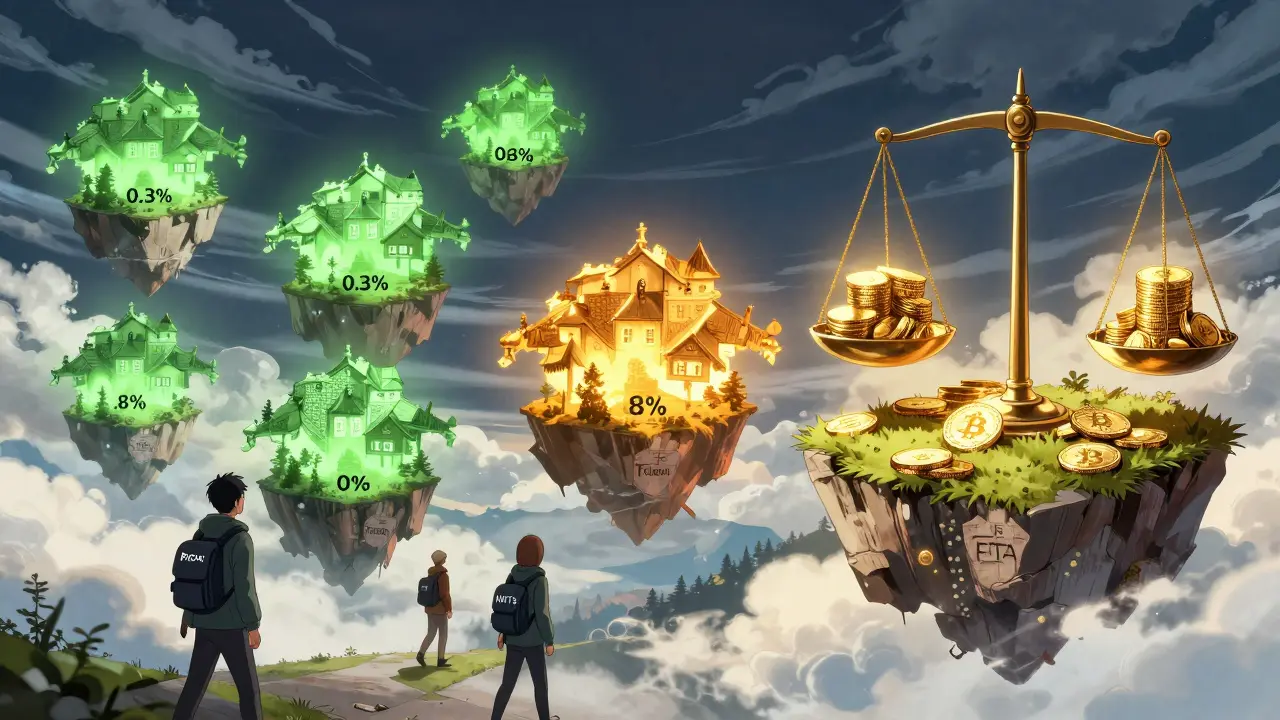
Here’s the big one: if you’re a private investor, you never pay tax on the profit when you sell your Bitcoin, even if you turned $1,000 into $1 million. That’s right - zero capital gains tax. Switzerland is one of the only countries in the world that offers this. But here’s the catch: you still have to declare your crypto as part of your total wealth. Every year, on December 31st, you must list every coin and token you own. The value is converted to Swiss francs (CHF) using official rates published by the FTA. For Bitcoin, Ethereum, Ripple, Bitcoin Cash, and Litecoin, the FTA releases a year-end price. You must use that number. For lesser-known tokens? You use the price on the exchange where you traded them. If you can’t find a price? Use what you originally paid for it in CHF. No guessing. No estimates. Just facts. Then, you pay wealth tax. That’s not on your profit. It’s on your total holdings. Rates vary by canton - from 0.3% to 1% per year. In Zurich, you might pay 0.6%. In Geneva, maybe 0.8%. In rural cantons, it could be as low as 0.3%. So where you live matters more than how much crypto you own.Who Pays Capital Gains Tax on Crypto?
The exemption only applies to private investors. If you’re trading crypto like a job - buying and selling daily, using leverage, running a bot, or treating it like a business - you’re a professional trader. And that changes everything. The FTA uses Circular No. 36 to decide who’s a professional. Signs include:- Trading frequency - more than 10-15 transactions per month
- Using borrowed money or leverage
- Trading as your main source of income
- Operating under a company structure

Staking, DeFi, and NFTs - What’s Taxed?
What about staking rewards? DeFi yields? NFT sales? Switzerland doesn’t have special rules for these. It uses existing frameworks.- Staking rewards - if you’re an individual, they’re treated as income. You pay income tax on the CHF value when you receive them. But if you hold the staked asset, you still pay wealth tax on its total value.
- DeFi lending - interest earned is income. Taxed like salary.
- NFTs - if you sell an NFT you bought as an investment, no capital gains tax. But if you’re an artist selling NFTs regularly, you’re a business. Pay income tax.
Cantonal Differences Matter - A Lot
Switzerland isn’t one country when it comes to taxes. It’s 26 mini-countries. Each canton sets its own wealth tax rate. Some have no wealth tax at all for low balances. Others tax aggressively. Here’s what investors do:- Move to low-tax cantons like Zug, Schwyz, or Nidwalden - where rates hover around 0.3-0.4%
- Use family trusts or holding structures to split ownership
- Time sales to avoid triggering professional trader status
Record-Keeping Is Non-Negotiable
The Swiss tax system is transparent - but it’s not forgiving. If you can’t prove what you bought, when, and for how much, the tax office will assume the worst. That means:- Keep every transaction history from every exchange
- Save wallet addresses and private keys (yes, really)
- Track all purchases in CHF - not USD or EUR
- Use a crypto tax tool like Koinly or CoinTracker that supports Swiss FTA rates
Why Switzerland Stays Ahead
Other countries are scrambling to tax crypto. The U.S. taxes gains. Germany taxes after one year. France has a flat 30% rate. Switzerland? It says: “Hold it. We’ll tax your balance, not your gains.” The DLT Act (Digital Ledger Technology Act) of 2021 made this official. It didn’t create new taxes. It clarified old ones. That’s the Swiss way - stable, predictable, technology-neutral. No blockchain-specific tax. No crypto-specific loophole. Just clear rules that apply equally to Bitcoin and bonds. As of 2025, there are no plans to change this. The Swiss Blockchain Federation reports record growth in crypto firms relocating here. The FTA’s latest update in December 2024 reaffirmed everything: no new taxes, no surprises.What You Should Do in 2025
If you’re a private investor:- Know your canton’s wealth tax rate
- Use FTA’s official year-end prices for major coins
- For others, use your exchange’s December 31 price or your original cost
- Don’t trade too often - keep it under 10-15 transactions/month to avoid professional status
- Keep records for at least 10 years
- Register your activity with the commercial registry
- Pay income tax on all gains and rewards
- Keep separate books for crypto and fiat
- Consult a Swiss tax advisor - don’t guess
Final Thought: It’s Not About Avoiding Tax - It’s About Knowing the Rules
Switzerland doesn’t let you escape tax. It just makes it fair. You pay for what you own. Not for what you earn. That’s why it’s the most trusted place in Europe for crypto. You don’t need a loophole. You just need to understand the system.Do I pay capital gains tax on crypto in Switzerland?
No, private individuals do not pay capital gains tax on cryptocurrency profits in Switzerland, regardless of the amount or holding period. This applies to Bitcoin, Ethereum, and all other crypto assets. The exemption is part of Switzerland’s broader policy that treats private investments in stocks, bonds, and crypto the same way - no tax on gains, only on wealth.
How is crypto valued for Swiss wealth tax?
Crypto must be valued in Swiss francs (CHF) as of December 31 each year. The Swiss Federal Tax Administration (FTA) publishes official year-end prices for major coins like Bitcoin and Ethereum. For other tokens, use the price on the exchange where you traded them. If no price is available, use your original purchase cost in CHF. You must use one of these three methods - no estimates allowed.
What if I trade crypto frequently? Do I still avoid capital gains tax?
If you trade crypto frequently - more than 10-15 times per month, use leverage, or rely on it as your main income - the Swiss tax office may classify you as a professional trader. In that case, your profits are taxed as income, not exempted. The FTA uses Circular No. 36 to determine professional status. Keep your trading activity low and avoid business-like behavior to stay under the radar.
Do I pay tax on staking rewards or DeFi earnings?
Yes. Staking rewards, DeFi interest, and similar earnings are treated as income, not capital gains. You pay income tax on the Swiss franc value when you receive them. However, the underlying asset you’re staking (like ETH) is still subject to annual wealth tax. So you pay twice: once on the reward (as income), and once on the total value of your holdings (as wealth).
Which Swiss canton has the lowest crypto wealth tax?
Cantons like Zug, Schwyz, and Nidwalden have the lowest wealth tax rates, typically between 0.3% and 0.4%. Zurich and Geneva are higher, around 0.7%-0.9%. Many crypto investors move their official residence to these low-tax cantons to reduce their annual wealth tax burden - even if they don’t live there full-time. The key is registering your primary residence with the local authorities.
Are NFTs taxed differently in Switzerland?
No. NFTs are treated like any other crypto asset. If you’re a private investor selling an NFT for profit, you pay no capital gains tax. But if you’re an artist or business selling NFTs regularly, it’s considered business income and taxed accordingly. The same wealth tax applies to the NFT’s value on December 31st, regardless of whether it’s a digital art piece or a tokenized real estate deed.
Do I need to report crypto if I didn’t sell any?
Yes. Even if you bought crypto and never sold it, you must declare its value on December 31st as part of your personal wealth. Switzerland taxes what you own - not what you sell. If you hold $50,000 in Bitcoin and didn’t trade it all year, you still pay wealth tax on that amount. No sale = no capital gain. But still = wealth tax due.
What happens if I don’t declare my crypto?
Failure to declare crypto can lead to penalties, interest charges, or even criminal investigation for tax evasion. Swiss tax authorities have access to blockchain data and can cross-reference exchange records. Many banks also report client crypto holdings. The risk is not worth it - even if you think you’re hidden. Switzerland’s tax system is designed for transparency, not evasion.
Abhisekh Chakraborty
December 31, 2025 AT 17:42rachael deal
January 2, 2026 AT 16:07Adam Hull
January 4, 2026 AT 13:39Bruce Morrison
January 4, 2026 AT 17:35Andrew Prince
January 4, 2026 AT 21:12Jordan Fowles
January 5, 2026 AT 19:46Bianca Martins
January 5, 2026 AT 22:58Phil McGinnis
January 6, 2026 AT 19:50Ryan Husain
January 7, 2026 AT 03:00Rajappa Manohar
January 8, 2026 AT 06:46Daniel Verreault
January 10, 2026 AT 04:59Jacky Baltes
January 11, 2026 AT 10:23Josh Seeto
January 12, 2026 AT 12:36Steve Williams
January 13, 2026 AT 01:28