What Are Blockchain Forks and Why They Happen
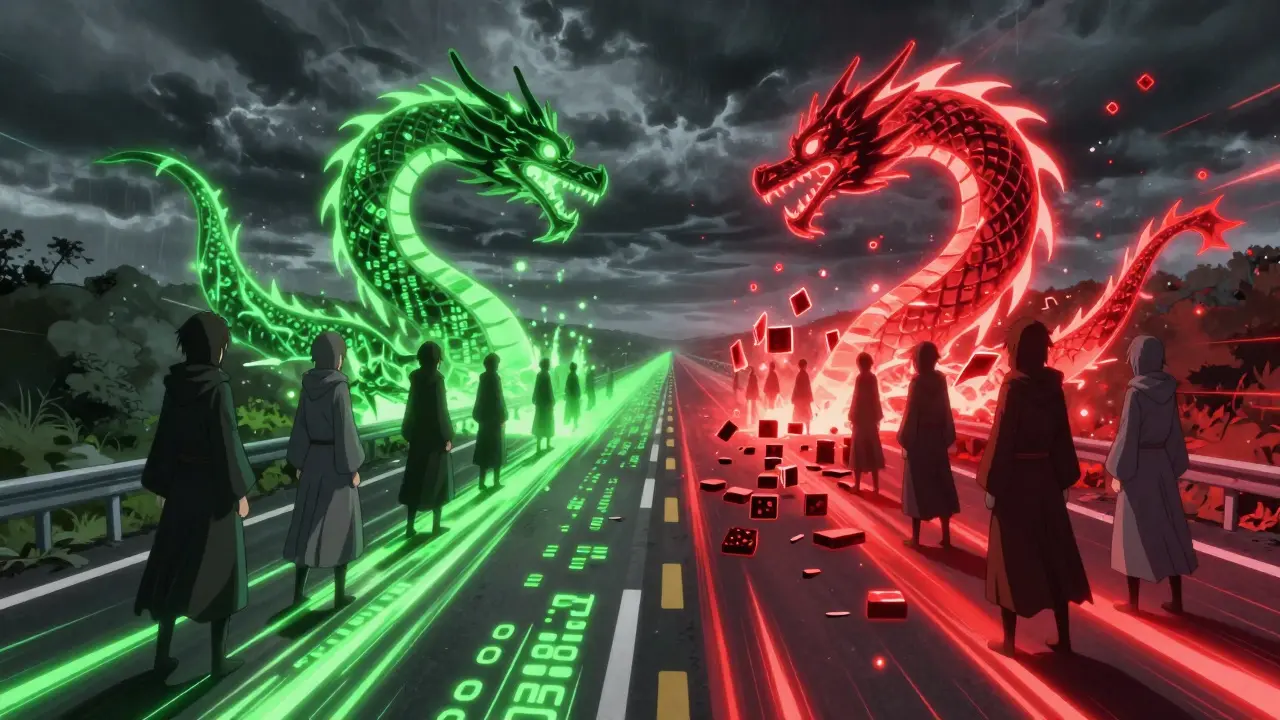
Imagine you're driving down a highway and suddenly, the road splits into two. One lane keeps going the same way, the other takes a new route with different rules-faster speed limits, no tolls, maybe even different gas stations. That’s what a blockchain fork is. It’s not a glitch. It’s not a crash. It’s a planned split in the blockchain’s history, and it happens more often than you think.
What Exactly Is a Blockchain Fork?
A blockchain fork happens when the code running a blockchain changes, and not everyone agrees on which version to follow. The blockchain’s ledger-its record of every transaction-splits into two versions. One group of users keeps using the old version. Another group starts using the new one. Suddenly, you have two blockchains instead of one.This isn’t like updating your phone app. Blockchains are decentralized. No single company controls them. No CEO hits a "Update Now" button. Instead, changes need approval from the network’s users, miners, and developers. When consensus breaks down-or when someone wants something radically different-a fork occurs.
There are two main types: soft forks and hard forks. They’re not just technical jargon-they determine whether your coins stay safe or get split in two.
Soft Forks: Backward-Compatible Upgrades
A soft fork is like tightening the rules without breaking the old ones. Think of it as adding a new traffic signal that older cars can still drive through, but newer cars must obey. The old rules still work, but the new rules make the system stronger or more efficient.Soft forks are backward-compatible. That means nodes running the old software can still validate transactions on the new chain. No split happens. Everyone stays on the same blockchain. The network doesn’t fracture. This is the preferred way to upgrade because it’s smooth and safe.
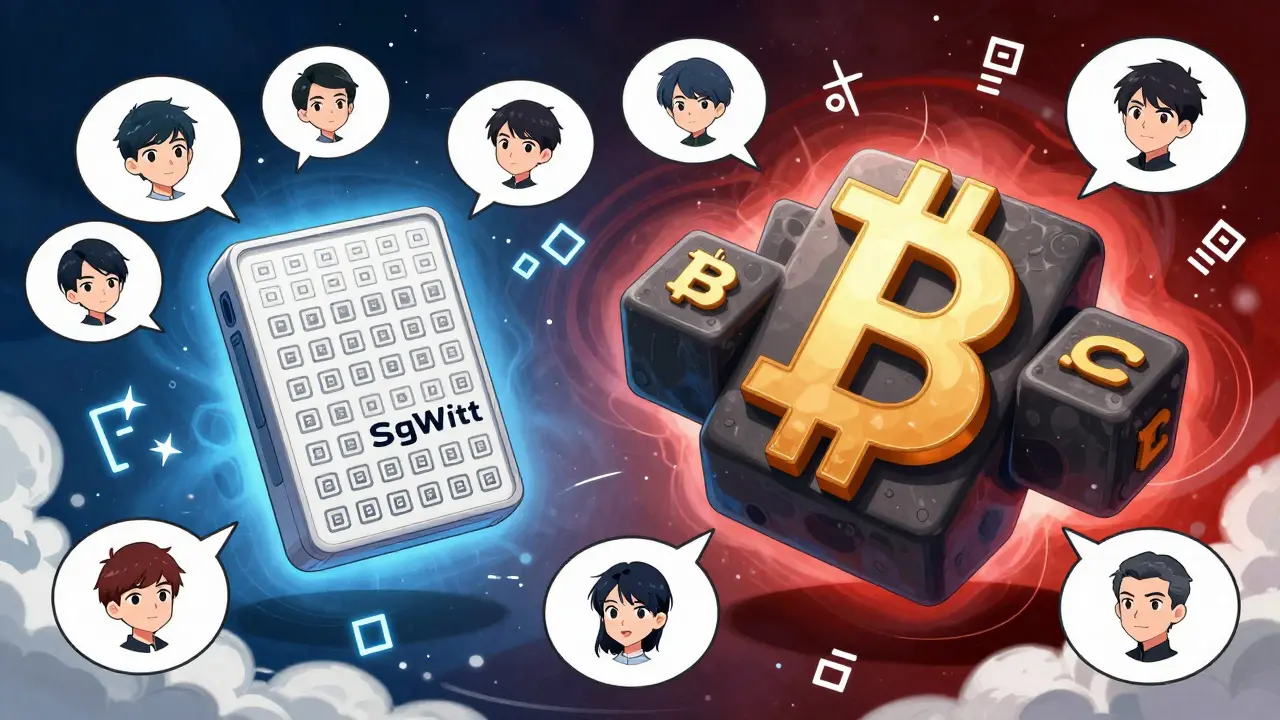
One example is the Bitcoin SegWit upgrade in 2017. It changed how transaction data was stored, making more room on each block. Miners who upgraded got faster transactions. Those who didn’t? They were still fine. Their blocks were still accepted. No new cryptocurrency was created. Just a quieter, more efficient system.
Hard Forks: The Big Split
Hard forks are the dramatic ones. They change the rules in a way that old software can’t understand. It’s like changing from driving on the right to driving on the left. Cars built for the old system can’t follow the new rules. So the network splits.After a hard fork, you end up with two blockchains: the original and the new one. Both have the same transaction history up to the fork point. After that? They go their own ways. That’s when new cryptocurrencies are born.
The most famous example is Bitcoin Cash. In August 2017, a group of Bitcoin miners and developers wanted bigger blocks to handle more transactions. The Bitcoin core team disagreed. So they forked. Bitcoin Cash (BCH) was born with 8MB blocks instead of 1MB. Suddenly, there were two versions of Bitcoin. People who held Bitcoin before the fork got an equal amount of Bitcoin Cash. That’s how new coins are distributed.
Another big one was Ethereum in 2016. A hacker stole $50 million from a smart contract called The DAO. The Ethereum community was divided. Should they reverse the theft? Or let the code run, no matter what? They chose to reverse it. That created Ethereum (ETH). The group that believed in immutability stayed with the original chain-Ethereum Classic (ETC).
Why Do Forks Happen?
Forks don’t happen by accident. They’re the result of deep disagreements or urgent needs. Here are the top four reasons:- Scaling problems - Bitcoin’s 1MB block limit meant slow transactions and high fees. That led to Bitcoin Cash. Ethereum faced the same issue before its upgrades.
- Security fixes - If a critical bug is found, a fork might be needed to patch it. The Ethereum DAO fork was a security response.
- Philosophical differences - Some believe blockchain should be immutable. Others believe it should adapt. These clashes cause splits.
- Feature upgrades - Want faster blocks? Lower fees? Better privacy? A hard fork lets you build it in.
It’s not always about money. Sometimes it’s about control. Who gets to decide what changes? Developers? Miners? Token holders? That’s where governance fights come in.
What Happens After a Fork?
After a fork, things get messy. And interesting.First, there’s a race for adoption. Which chain gets more users? More miners? More exchanges? The chain with the most support becomes the "main" one. The other might fade away-or become a niche project.
Take Bitcoin Gold, a 2017 fork meant to make mining more accessible. It never gained traction. Today, it’s worth less than 1% of Bitcoin Cash. Meanwhile, Bitcoin Cash still trades at billions of dollars.
Exchanges play a huge role. If Coinbase or Binance supports a forked coin, it gets liquidity. If they don’t? It might as well be digital dust.
And then there’s the wallet issue. If you held Bitcoin before the Bitcoin Cash fork, you automatically owned both. But you had to claim the new coins. If you didn’t move them to a wallet that supported BCH, you lost access. That’s why people lost millions in forgotten fork coins.

Forks Are Getting Smarter
Early forks were chaotic. Now, the process is more organized.Ethereum’s Merge in 2022 was the biggest fork in history. It switched the entire network from energy-hungry Proof-of-Work to Proof-of-Stake. That’s like rebuilding a jet engine while the plane is flying. Millions of users stayed connected. No chain split. No new coin. Just a better system.
How? Because they used formal proposals called EIPs (Ethereum Improvement Proposals). Anyone could suggest a change. Developers debated. The community voted. It was slow. But it worked.
Today, many blockchains use similar systems. Bitcoin has BIPs (Bitcoin Improvement Proposals). Litecoin, Dogecoin, and others follow suit. This reduces the need for messy hard forks. Instead of splitting the chain, they test upgrades on sidechains or layer-2 networks first.
What’s Next for Forks?
Forks aren’t going away. But they’re changing.Modular blockchains are coming. Instead of upgrading the whole chain, you upgrade just one part-like swapping out the brakes without touching the engine. That means fewer big splits.
Cross-chain bridges are also helping. If two chains diverge, users can move assets between them. No need to choose one over the other.
And regulators? They’re starting to pay attention. In some countries, forked coins are treated as taxable income. In others, they’re ignored. That uncertainty is a risk for users.
One thing’s clear: forks are how blockchains grow. They’re the pressure valves for decentralized systems. Without them, blockchains would be frozen in time-unable to fix bugs, scale, or adapt. Forks are messy. They’re controversial. But they’re necessary.
Frequently Asked Questions
Are blockchain forks safe?
Soft forks are generally safe because they’re backward-compatible and don’t split the chain. Hard forks carry more risk-they can lead to confusion, lost funds, or worthless coins if you don’t claim your new assets. Always research a fork before it happens and use a wallet that supports both chains.
Do I get free crypto when a fork happens?
If you held the original cryptocurrency before the fork, you usually get an equal amount of the new coin. But you have to claim it. If your exchange doesn’t support the fork, you need to move your coins to a wallet that does-like Exodus or Ledger-before the fork block height. Otherwise, you lose access.
Can a fork be reversed?
No. Once a hard fork happens and blocks are added to the new chain, it’s permanent. The old chain continues as a separate blockchain. You can’t undo it. That’s why forks are so serious-they’re irreversible decisions made by the community.
Why do some forks fail?
Most forks fail because they lack support. If miners, developers, and users don’t back the new chain, it dies. Bitcoin Gold and many others have low trading volume and no real use case. The market decides-not the developers. Only forks with clear value, strong community backing, and real adoption survive.
Is Ethereum still using forks?
Yes, but differently. After The Merge, Ethereum moved to Proof-of-Stake and now uses soft forks for upgrades like EIP-4844 (proto-danksharding). Hard forks are rare now because most changes are tested on layer-2 networks first. The goal is to avoid splitting the main chain unless absolutely necessary.
christal Rodriguez
January 28, 2026 AT 01:16Forks are just capitalism with extra steps.
Tressie Trezza
January 28, 2026 AT 17:03I love how this explains it like a highway split-so intuitive. I always thought forks were glitches, but now I get why they’re necessary. Kinda beautiful, actually. Like evolution but with code.
Calvin Tucker
January 29, 2026 AT 13:26Technically, a soft fork is not an upgrade-it’s a reduction in the set of valid transactions under the new consensus rules. The term ‘backward-compatible’ is misleading; it’s not compatibility-it’s subset inclusion. Also, SegWit was not a soft fork in the strictest sense-it was a segregated witness implementation with a novel script versioning mechanism.
Rob Duber
January 31, 2026 AT 04:06OH MY GOD. A HARD FORK IS LIKE A BREAKUP WHERE BOTH SIDES KEEP THE SAME MEMORIES BUT NOW THEY’RE ON DIFFERENT INSTAGRAMS. ETH VS ETC? THAT’S NOT A TECHNICAL DEBATE-THAT’S A SOUL CRUSHING TRAGEDY. I CRIED WHEN I LOST MY DAO COINS. I STILL HAVE THE SCREENSHOT.
Gary Gately
February 1, 2026 AT 05:00so like if u had btc before the cash fork u got free cash right? but u had to move it or u lost it? kinda wild that u can just lose money by not doing something. i didnt even know bout this till now lol
Jack Petty
February 2, 2026 AT 11:10Who really controls these ‘community votes’? Hint: it’s not you. It’s the whales with mining rigs and exchange wallets. Forks are PR stunts designed to pump coins for insiders. The DAO? A honeypot. The Merge? A distraction. They’re all rigged.
Brianne Hurley
February 3, 2026 AT 12:21Ugh. Another ‘philosophical difference’ excuse for chaos. You people treat blockchain like a therapy group. ‘I feel immutable’-oh honey, the code doesn’t care. The only thing that matters is liquidity. And if your fork isn’t on Binance, it’s a digital ghost.
Gustavo Gonzalez
February 3, 2026 AT 16:11Wait, so if you held Bitcoin before the fork, you got Bitcoin Cash automatically? Then why do people say you have to ‘claim’ it? That’s a scam. Exchanges and wallets are just hoarding your free money. This is theft by omission. Someone should sue.
Mark Ganim
February 5, 2026 AT 15:07Think about it… every fork… is a scream into the void. A desperate cry from a group of people who believe their vision is the *true* vision. And yet… the chain doesn’t care. The nodes don’t care. Only the market decides. And the market? It’s a fickle god. It laughs. It eats. It forgets. Bitcoin Gold? Forgotten. Bitcoin Cash? Still breathing. What does that say about us? About belief? About power?
mary irons
February 7, 2026 AT 01:02They say forks are ‘necessary’… but what if the real problem is that we’re trying to force a decentralized system to behave like a corporation? You can’t have consensus without hierarchy. This whole thing is a house of cards built on faith and bad math.
Wayne mutunga
February 7, 2026 AT 01:20I think the real win here is that people are even trying to solve this. It’s messy, sure. But at least we’re not waiting for a CEO to decide. Even if it’s chaotic, it’s ours. That’s worth something.
Gavin Francis
February 8, 2026 AT 08:04Love this breakdown! 🙌 Forks are like growth spurts for crypto-painful but necessary. Keep learning, keep holding, keep doubting-it’s all part of the ride! 💪🔥