What is Astrafer (ASTRAFER)? Tokenomics, Risks, and Game Utility
Imagine buying a ticket to a high-stakes space opera, only to find out the theater might be empty. That’s the current reality for Astrafer, the native cryptocurrency of Phantom Galaxies. Launched in 2022, this token promises AAA-quality gameplay, player governance, and mech upgrades. But here’s the catch: market data is all over the place. Prices swing from $0.001 to $0.029 depending on who you ask, and some trackers report zero trading volume. Is it a hidden gem in the blockchain gaming sector, or a ghost town with bad liquidity? Let’s break down what Astrafer actually does, where it fits in the crypto landscape, and why the numbers don’t always add up.
The Core Concept: More Than Just a Coin
Astrafer is a utility and governance token built for the Phantom Galaxies universe, an open-world space simulation game featuring fast-paced mech combat. Think of it as the fuel for the game’s economy. You don’t just hold it; you use it. Players earn ASTRAFER by completing missions, trading in-game items, and owning virtual planets. It’s not just about speculation-it’s about participation. If you own a planet, you get emissions. If you upgrade your Starfighter mech, you spend tokens. If you want to vote on how the game evolves, you need ASTRAFER in your wallet.
This dual role makes it distinct from pure meme coins. It’s tied to actual digital assets within a game developed by Blowfish Studios, registered in Australia. The idea is to create a self-sustaining ecosystem where players have real skin in the game, both financially and creatively. However, the success of this model hinges entirely on whether people are actually playing Phantom Galaxies at scale.
Tokenomics: The 888 Million Cap
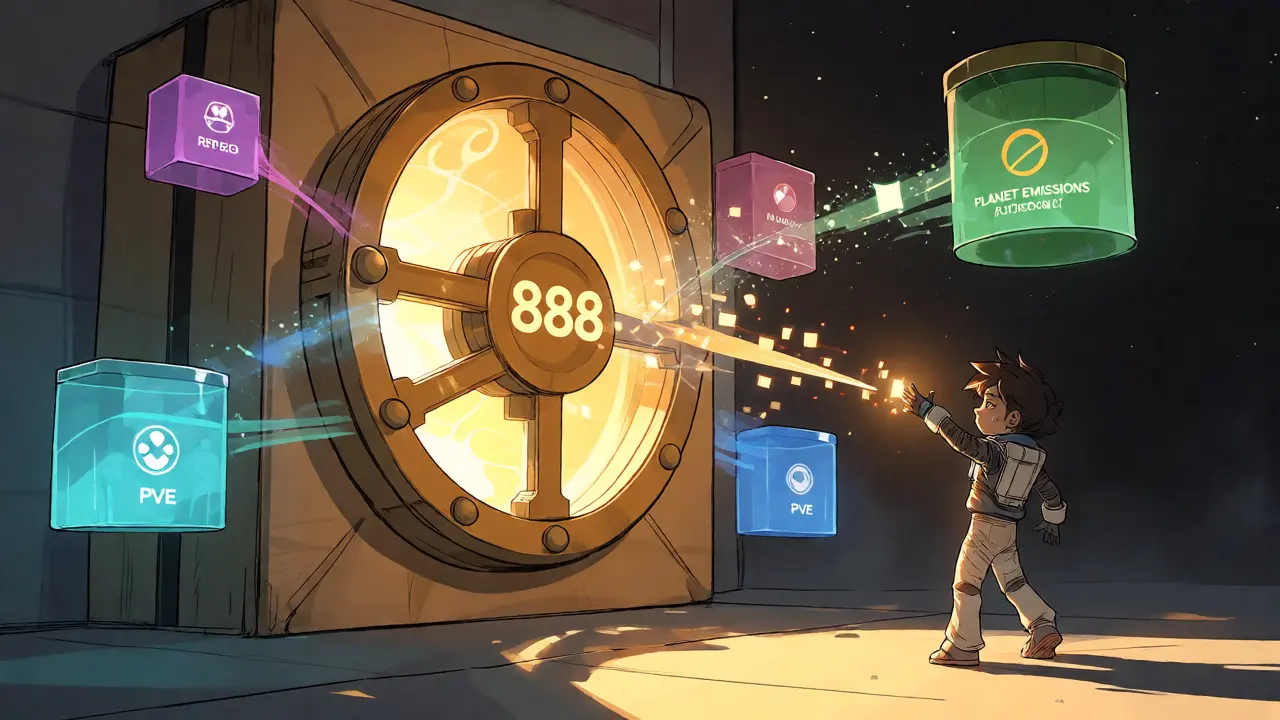
One thing most sources agree on is the supply. There will never be more than 888,077,888 ASTRAFER tokens. This hard cap is designed to prevent inflation, a common issue in play-to-earn games where infinite printing devalues rewards. But how are these tokens distributed? It’s not evenly spread. The project allocates specific percentages to different parts of the ecosystem to keep things balanced.
- Planet Emissions (29.1%): The largest chunk goes to rewarding owners of in-game planets and asteroids over time.
- PvE Activities (13.5%): Rewards for completing player-versus-environment missions.
- Reserve (17%): Held back for future development needs.
- Blowfish Team (10%): Allocated to the developers and staff.
- Listings & Liquidity (10%): Used to ensure the token can be traded easily on exchanges.
- Marketing (7%): For promoting the game and token.
- Ecosystem Fund (6%): To support partnerships and community initiatives.
- Launch Contributions (5%): For early backers.
- PvP & Rogue Planets (2.4%): Smaller allocations for competitive play modes.
This structure suggests a long-term view. Instead of dumping tokens on the market immediately, the team plans to drip-feed them into the economy through gameplay. In theory, this creates demand because players need tokens to progress. In practice, if player activity drops, that emission schedule could flood the market with supply that has nowhere to go.
Technical Backbone: Polygon and Ethereum
Where does Astrafer live? It’s primarily associated with the Polygon network, which is known for low fees and fast transactions. This makes sense for a game where you might make dozens of small trades or upgrades daily. Paying $5 in gas fees on Ethereum mainnet every time you fix your mech would kill the experience.
However, technical details get fuzzy here. Some platforms list it as an ERC-20 token on Ethereum, while others emphasize its Polygon deployment. Likely, it exists as an ERC-20 standard asset that is bridged to Polygon for in-game use. The contract address 0xdfce1e99a31c4597a3f8a8945cbfa9037655e335 confirms its presence on EVM-compatible chains. For users, this means you need a wallet like MetaMask and familiarity with adding custom tokens. If you’re new to crypto, the learning curve isn’t steep, but it’s not plug-and-play either.
The Data Discrepancy Problem
Here is where things get tricky. If you look up Astrafer on five different sites, you’ll likely get five different prices. Why? Low liquidity and fragmented data feeds. When trading volume is near zero, price ticks become meaningless noise. One exchange might show a trade of $1.38 total volume for the day, while another shows nothing. This leads to wild swings in reported market caps.
| Source | Reported Price (USD) | Circulating Supply | Market Cap (USD) | Data Notes |
|---|---|---|---|---|
| DropsTab | ~0.0013 | N/A | ~206,783 | Very low volume ($1.38/24h) |
| LiveCoinWatch | ~0.0022 | N/A | ~719,000 | Ranked ~#619 globally |
| Crypto.com | ~0.0091 | 156.4M | N/A | Mid-2025 snapshot |
| Investing.com | ~0.0290 | N/A | N/A | August 2026 spike? |
| CoinMarketCap | N/A | 156.4M | ~57.6M | Significantly higher valuation |
| Binance/CoinPaprika | 0.00 | 323.4M | 0 | No active pricing data |
Notice the circulating supply discrepancy too. Some say 156 million, others claim 323 million. Since the max supply is fixed at 888 million, this difference matters. It affects how much of the pie is actually floating around in the market. Until the project releases a definitive, real-time supply tracker, treat any single number with skepticism.
Governance and Community Sentiment
Astrafer holders aren’t just investors; they’re voters. The token grants rights to influence decisions about Phantom Galaxies’ future. Do we add new mechs? Change the loot drop rates? Adjust the map? These questions fall to the community. Platforms like BitDegree praise this setup as a shining example of true Web3 gaming, where players co-own the world.
But not everyone is convinced. WikiBit marked Astrafer as an "air coin" and flagged it as a potential Ponzi scheme after receiving complaints. What does that mean for you? It means there’s a vocal group of users who feel misled or burned. They might have bought during a hype cycle and watched their value evaporate due to lack of exit liquidity. While CryptoTotem highlights the AAA ambitions, the gap between aspiration and user experience is wide. If the game doesn’t deliver engaging content, governance votes won’t matter because no one will care enough to vote.

Risks and Red Flags
If you’re considering diving into Astrafer, you need to weigh the risks carefully. First, liquidity risk is massive. With daily volumes sometimes under $2, selling a large position could crash the price instantly. Second, data opacity makes it hard to know the true state of the market. Third, reputational risk looms large due to negative reviews on some aggregators. Finally, dependency risk: Astrafer is useless without Phantom Galaxies. If the game fails to attract a sustainable player base, the token loses its primary utility driver.
On the flip side, the capped supply and detailed tokenomics offer a structured framework. If Blowfish Studios executes well and brings in millions of players, the scarcity of 888 million tokens could drive significant value. It’s a high-risk, high-reward bet on the future of blockchain gaming.
How to Buy and Store Astrafer
You can buy ASTRAFER on several exchanges, including Binance, KuCoin, Gate.io, MEXC, and decentralized options like Uniswap and QuickSwap. For DEXs, you’ll need an EVM wallet like MetaMask. Always verify the contract address before swapping to avoid scams. Storage is straightforward-any ERC-20 compatible wallet works. Hardware wallets provide extra security for larger holdings.
Before you buy, check the live order book on the exchange you plan to use. Don’t rely on the last recorded price from a news article. Look for active buy/sell walls. If the spread is huge (the difference between the highest bid and lowest ask), you’re losing money just entering the trade.
Is Astrafer a good investment?
It depends on your risk tolerance. Astrafer is a micro-cap token with extremely low liquidity. While it has strong utility ties to Phantom Galaxies, inconsistent market data and negative sentiment on some platforms suggest high volatility and potential downside. It is suitable only for speculative portfolios.
What is the maximum supply of ASTRAFER?
The total and maximum supply of Astrafer is fixed at 888,077,888 tokens. No new tokens will be minted beyond this cap, which helps control inflation within the game economy.
Which blockchain does Astrafer run on?
Astrafer operates primarily on the Polygon network, offering low transaction fees and fast speeds. It is also compatible with Ethereum as an ERC-20 token, allowing for bridging between networks.
Why do price reports for Astrafer vary so much?
Price discrepancies arise from thin trading volumes and fragmented data feeds across exchanges. Some platforms may not update prices frequently, or may reflect isolated trades rather than a robust market average, leading to significant variations in reported values.
Can I use Astrafer for governance?
Yes, holding Astrafer grants voting rights within the Phantom Galaxies ecosystem. Holders can participate in decisions regarding game development, feature updates, and economic adjustments, fostering a community-driven approach.