What is GoPlus Security (GPS) Token? A Complete Guide to Web3 Defense

Imagine sending money over the internet without ever having to check if the recipient is a scammer. In the world of Web3, a decentralized internet built on blockchain technology where users own their data and assets, that kind of trust doesn't exist yet. Every transaction carries risk. Every smart contract could have a hidden trap. This is exactly why projects like GoPlus Security, a Singapore-based Web3 security infrastructure project founded in 2020 matter so much.
If you’ve seen the ticker symbol GPS, the native utility and governance token of the GoPlus Security ecosystem popping up on exchanges or heard it mentioned in crypto forums, you might be wondering what it actually does. Is it just another speculative coin, or is there real tech behind it? The short answer: it’s an attempt to build a decentralized "security layer" for the entire blockchain industry. Let’s break down how it works, who uses it, and what the GPS token is really worth.
The Problem: Web3 Is Still Wild West Territory
To understand GoPlus, you first need to understand the mess it’s trying to clean up. In traditional finance, banks act as gatekeepers. They verify identities, freeze suspicious accounts, and reverse fraudulent transactions. In crypto, none of that exists. Once you sign a transaction, it’s gone forever.
This lack of protection has cost the industry billions. Reports from firms like Immunefi show that over $1.8 billion was lost to hacks in 2023 alone. Most of these losses weren’t due to complex code-breaking by state-sponsored hackers. They were simple user errors: clicking a phishing link, approving a malicious contract, or swapping tokens with a hidden rug-pull mechanism.
Yufeng Xu, the founder of GoPlus Security based in Singapore saw this gap early on. He realized that while audit firms existed, they were expensive, slow, and reactive. What the industry needed was proactive, real-time, automated protection embedded directly into the tools people use every day.
How GoPlus Security Works: The Three-Layer Architecture
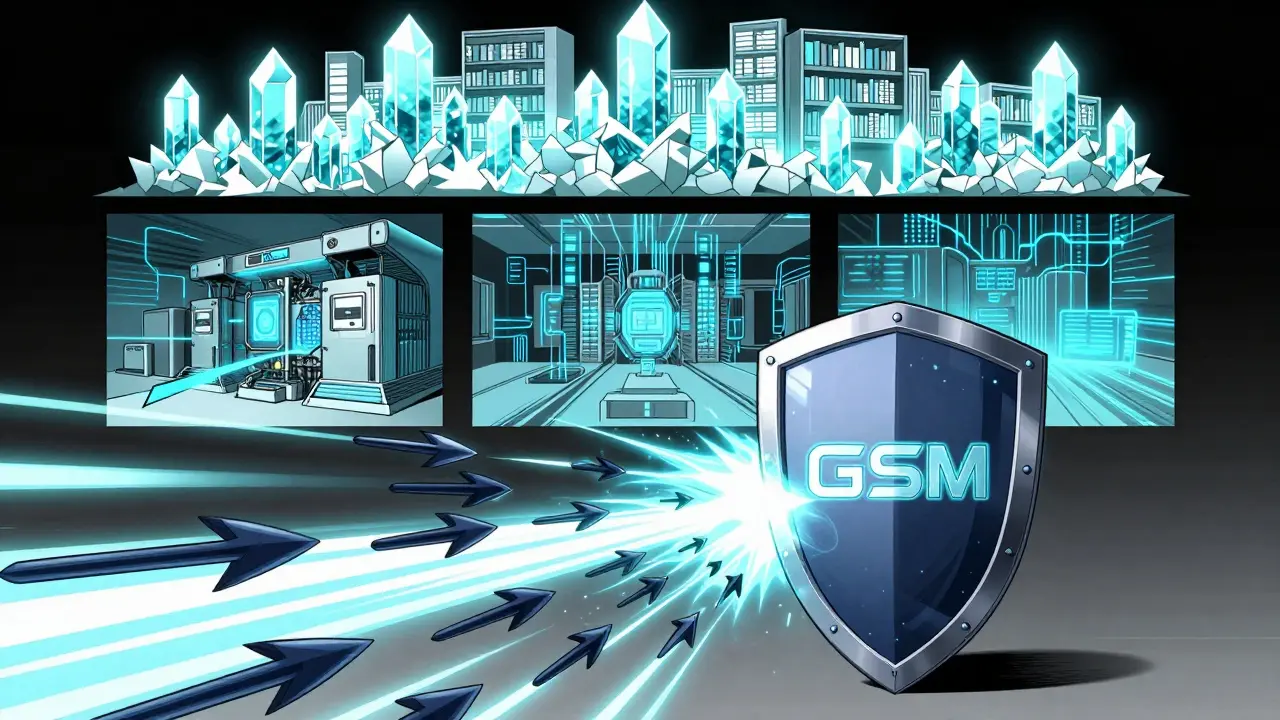
GoPlus isn’t just a single tool; it’s a multi-layered system designed to catch threats before they hit your wallet. According to its official documentation and exchange listings, the architecture consists of three main parts:
- Security Data Layer: Think of this as the library. It collects and authenticates information about known threats. This includes lists of phishing websites, addresses linked to previous exploits, and metadata about tokens (like whether a developer can mint unlimited supply or pause trading). This data is structured and available via APIs for anyone to query.
- Security Compute Layer: This is the engine room. It employs Actively Validated Services (AVS), a decentralized network model popularized by Ethereum restaking ecosystems like EigenLayer, where operators stake capital to run services. These AVS operators run off-chain computations to scan transactions in real time. When you initiate a swap, this layer checks the payload against multiple risk models to detect phishing, approval abuse, or sandwich attacks.
- GoPlus Security Module (GSM): This is the on-chain firewall. Unlike the other layers which provide warnings, GSM can actively filter transactions. Integrated by wallets or protocols, GSM checks a transaction against policy rules before it is finalized. If a transaction interacts with a known malicious contract, GSM blocks it entirely.
The key differentiator here is speed and integration. Instead of you manually checking a contract address on a separate site, GoPlus integrates these checks directly into the user flow of wallets and dApps.
What Does the GPS Token Actually Do?
You might be thinking, "Okay, the tech sounds useful, but why do I care about the token?" In most crypto projects, the token is either useless speculation or purely for governance. With GPS, the token is central to the economic model of the security network. Here are the four primary utilities:
- Paying for Security Fees: Protocols, wallets, or developers who want to use GoPlus’s advanced security APIs can pay fees in GPS. This creates demand for the token from businesses rather than just speculators.
- Incentivizing Contributors: Security requires constant vigilance. GoPlus rewards individuals who label malicious addresses, identify new phishing sites, or provide verified security reports. You get paid in GPS for keeping the network safe.
- Governance: Holders can vote on critical protocol parameters. This includes deciding fee levels, choosing which blockchains to support next, and updating the rules that the GSM firewall enforces.
- Staking for Network Security: To become an AVS operator, you must stake GPS tokens as collateral. This ensures that operators have skin in the game. If they misclassify a malicious contract or accept bribes to ignore threats, their staked tokens can be slashed (confiscated).
Tokenomics: Supply and Distribution Realities
Before buying any crypto, you need to know the supply dynamics. For GoPlus Security, the numbers are straightforward but require careful interpretation due to how different exchanges report them.
The maximum total supply of GPS is fixed at 10 billion tokens. However, not all of these are in circulation. As of mid-2025, data varies significantly between platforms:
| Metric | CoinMarketCap | Kraken | Coinbase (Reference) |
|---|---|---|---|
| Total Supply | 10 Billion | 10 Billion | 10 Billion |
| Circulating Supply | ~4.61 Billion | ~4.41 Billion | ~1.81 Billion* |
| Market Cap Range | $34M - $38M | ~$32.5M | ~$58M* |
The discrepancy in circulating supply (ranging from 1.8B to 4.6B) usually comes down to how each platform defines "circulating." Some count only freely tradable tokens, while others include tokens that are technically minted but still subject to vesting schedules for team members or investors. Always check the latest token unlock schedule on a tracker like TokenUnlocks before making large decisions.
Price History: Volatility and Market Reality
Let’s talk about the elephant in the room: the price action. GPS has been extremely volatile since its launch on January 16, 2025.
It started strong, hitting an All-Time High (ATH) of $0.2201 just two weeks later on January 31, 2025. This was likely driven by hype surrounding its listing on major exchanges like Binance. However, crypto bull runs often cool down quickly. By April 2025, the price had crashed roughly 90%, dropping from around $0.137 to $0.015.
After a period of stabilization around the $0.025 mark in mid-2025, the token faced further pressure, reaching an All-Time Low (ATL) of $0.004404 in December 2025. From there, it began to recover, trading in the $0.007-$0.008 range in early 2026. This pattern-a sharp pump followed by a long, painful bleed-is common for newly launched utility tokens in a bearish or sideways market.
Does this mean the project is dead? Not necessarily. Utility tokens often decouple from pure speculation once adoption grows. If more wallets integrate the GSM firewall, the demand for GPS for fees and staking could stabilize the price regardless of broader market sentiment.
GoPlus vs. The Competition
Is GoPlus unique? In the crowded Web3 security space, differentiation is hard. Here is how GPS stacks up against its peers:
- vs. Forta (FORT): Forta is also a decentralized monitoring network. However, Forta focuses heavily on protocol-level anomaly detection (like large whale movements). GoPlus focuses more on end-user transaction safety (phishing, rug pulls) via its GSM firewall. They are complementary, but GoPlus is more consumer-facing.
- vs. Traditional Auditors (CertiK, OpenZeppelin): Firms like CertiK perform manual code audits. These are essential but expensive and static-they tell you if code was safe *at the time of audit*. GoPlus provides dynamic, real-time checks. A contract can pass an audit but still be exploited later if the owner changes permissions; GoPlus catches that change instantly.
- vs. Wallet Plugins (Blockaid): Blockaid offers similar phishing protection inside wallets but operates as a centralized company without a native token. GoPlus’s advantage is decentralization and community incentives via the GPS token, though this introduces regulatory complexity.
Risks and Challenges to Watch
No investment is risk-free, and GPS has specific hurdles:
Regulatory Uncertainty: Because GPS is used for governance, staking, and paying fees, regulators in jurisdictions like the US could classify it as a security. This could limit its availability on certain exchanges or restrict who can hold it.
False Positives: Any automated security system risks blocking legitimate transactions. If GoPlus’s AI or rule-based systems incorrectly flag a valid DeFi interaction as malicious, users will lose trust. Balancing security with usability is the hardest part of this business.
Adoption Dependency: The value of GPS relies entirely on adoption. If major wallets (like MetaMask or Trust Wallet) choose competitors or build their own internal security teams, GoPlus loses its distribution channel. Currently, GoPlus partners with various smaller wallets and dApps, but breaking into the top-tier mainstream wallets remains a key goal.
Who Should Care About GoPlus Security?
You don’t need to buy GPS to benefit from the project. If you are a regular crypto user, look for wallets and dApps that integrate GoPlus APIs. Seeing a "GoPlus Verified" badge on a token page means someone has already checked for basic red flags like hidden mint functions.
If you are a developer, integrating GoPlus’s API is one of the cheapest ways to add enterprise-grade security to your application. It costs a fraction of hiring a full-time security team.
If you are an investor, GPS represents a bet on the maturation of Web3 infrastructure. As the industry moves from "wild west" experimentation to institutional adoption, security becomes non-negotiable. GoPlus is positioning itself as the default plumbing for that transition.
Is GoPlus Security (GPS) a good investment in 2026?
Only you can decide if GPS fits your portfolio. It is a high-risk, high-reward asset. The token has experienced extreme volatility, dropping over 95% from its all-time high. Its value depends on successful adoption by major wallets and protocols. If Web3 security becomes a standard requirement, GPS could benefit. However, regulatory risks and competition remain significant hurdles. Never invest more than you can afford to lose.
Where can I buy GPS tokens?
As of mid-2026, GPS is listed on major centralized exchanges including Binance and Kraken. It is not currently tradable on Coinbase. You can also find it on decentralized exchanges (DEXs) on supported networks like Ethereum and BNB Chain. Always verify the contract address on official channels to avoid fake tokens.
What is the difference between GoPlus Security and a traditional audit firm?
Traditional audit firms like CertiK or OpenZeppelin perform one-time manual reviews of code before launch. GoPlus provides continuous, real-time monitoring. While an audit tells you if code was safe yesterday, GoPlus checks every transaction today for live threats like phishing links, malicious approvals, and changing contract permissions.
How does the GoPlus Security Module (GSM) work?
The GSM is an on-chain firewall integrated into wallets or protocols. Before a transaction is broadcast to the blockchain, GSM scans it against GoPlus's threat database. If the transaction involves a known malicious address or exhibits risky patterns (like infinite token approvals), GSM can block the transaction entirely, preventing loss of funds.
Can I earn GPS tokens?
Yes. GoPlus incentivizes contributors who help secure the network. This includes AVS operators who stake GPS to run security nodes, data providers who label malicious addresses or phishing sites, and auditors who submit verified reports. Rewards are paid in GPS tokens.
What is the total supply of GPS?
The maximum total supply of GoPlus Security (GPS) is 10 billion tokens. The circulating supply varies depending on the source and token unlock schedules, ranging approximately between 1.8 billion and 4.6 billion tokens as reported by different exchanges in mid-2025.