What is Rivalz Network (RIZ)? A Beginner’s Guide to AI Agents and Real-World Resources
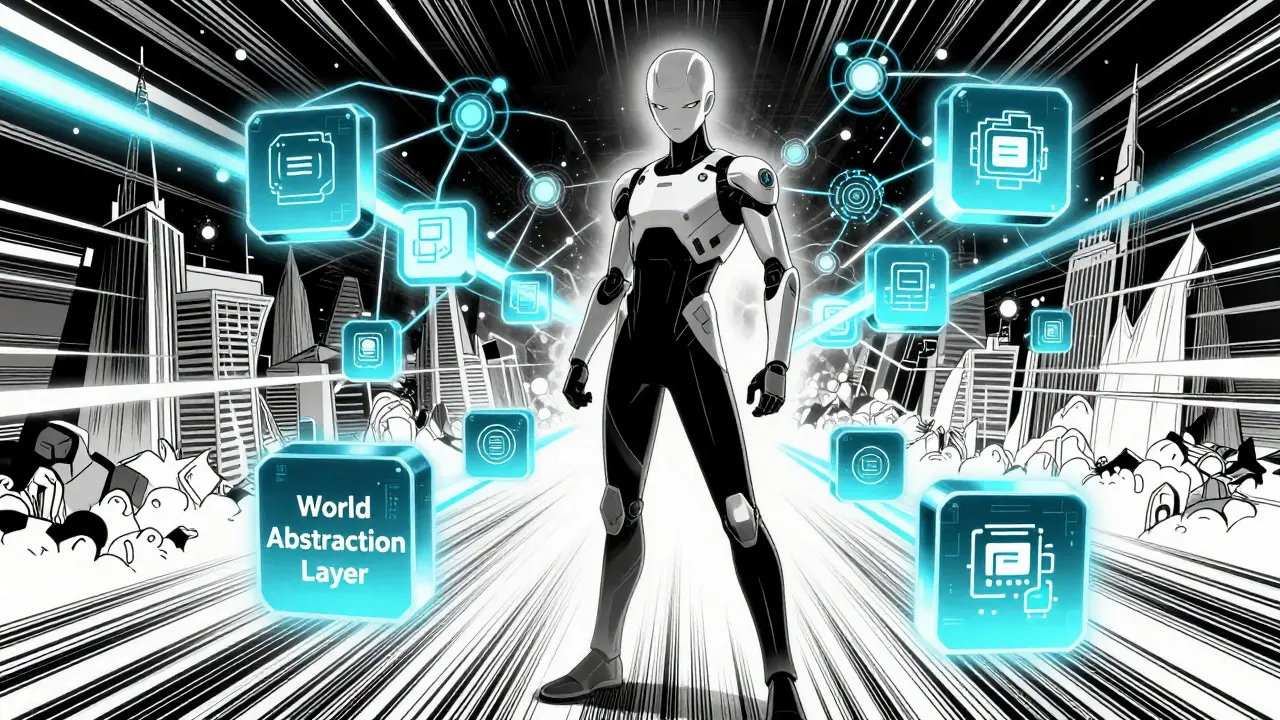
Imagine an artificial intelligence agent that doesn’t just sit on a server processing data but can actually rent out computing power, store files securely, or coordinate with other bots to complete a real-world task. That is the core promise of Rivalz Network, which aims to bridge the gap between digital AI systems and tangible resources. If you have been hearing about the intersection of blockchain and artificial intelligence, Rivalz Network (often referred to by its ticker symbol, RIZ) is a project trying to solve a specific problem: how do autonomous AI agents interact with the physical and digital world in a decentralized way?
This isn't just another generic utility token. Rivalz positions itself as a "World Abstraction Layer." In plain English, this means it creates a standardized layer that allows AI programs to access data, compute power, and identity without needing to understand the complex underlying technology of every different blockchain or hardware device. For developers and investors alike, understanding what Rivalz actually does-and whether it delivers on its ambitious roadmap-is crucial before making any decisions.
The Core Concept: The World Abstraction Layer
To understand Rivalz, you first need to understand the problem it solves. Currently, most AI models are siloed. They live in closed ecosystems controlled by big tech companies. Even when AI moves to decentralized platforms, these "agents" often lack the ability to manage resources independently. They can’t easily pay for storage, they can’t verify their own identity across different networks, and they struggle to coordinate with other agents.
The World Abstraction Layer (WAL) is Rivalz’s solution. It acts like a universal translator and resource manager. Think of it like a plug-and-play system for AI. Instead of an AI developer having to write custom code to connect to a specific cloud provider or a specific blockchain for storage, they use Rivalz’s WAL. This layer abstracts away the complexity, allowing the AI to simply request "compute" or "storage" and get it from the network.
This approach is significant because it enables true autonomy. An AI agent could theoretically earn tokens by providing services, then spend those tokens to rent more computing power from another node on the network, all without human intervention. This creates a self-sustaining economic loop for AI operations.
How the Technology Works: Five Key Modules
Rivalz Network isn’t a single piece of software; it’s a modular architecture consisting of five interconnected components. Each module handles a specific part of the AI-resource interaction process. Understanding these modules helps explain why the project requires a dedicated native token, $RIZ.
- ROME (Swarm Protocol): This is the coordination engine. It allows individual AI agents, called rAgents, to group together into "Swarms." Imagine a swarm of bees working together to build a hive. Similarly, rAgents pool their resources-like compute power or social capital-to execute large-scale tasks that one agent couldn’t handle alone. Users can stake, lend, or trade these rAgents within a DeFi framework.
- OCY DePIN (AI-Native Data Layer): This serves as the memory bank. It is a peer-to-peer network for decentralized vector storage. Unlike traditional databases, OCY stores structured and unstructured data in a way that AI models can directly query and analyze. As of late 2025, over 1 million community-run nodes (rClients) were contributing storage and computational resources here.
- VORD (Knowledge Management): While OCY stores raw data, VORD manages the knowledge derived from it. It helps AI agents learn from historical data and share insights across the network without compromising privacy.
- Validator zNodes: These are the infrastructure backbone. Operators purchase and run these nodes to validate transactions and maintain the integrity of the network. They earn $RIZ rewards for keeping the system secure and decentralized.
- Identity & Access Layer: This ensures that each AI agent has a verifiable, decentralized identity. This prevents spoofing and ensures that when an AI agent pays for a service, it is authenticated and accountable.
These modules work together seamlessly. For example, a healthcare AI might use VORD to access anonymized patient history, OCY to store new diagnostic results, and ROME to coordinate with a logistics bot to deliver test kits-all verified through the Identity Layer.
The Role of the RIZ Token
In any decentralized network, the native token is the fuel. For Rivalz Network, the $RIZ token serves several critical functions beyond just speculation. First, it is used for gas fees. When an AI agent interacts with the platform-whether storing data or executing a smart contract-it pays in $RIZ. The network runs on the Dymension RollApp framework, meaning transactions are fast and scalable, but they still require a fee mechanism.
Second, $RIZ is essential for staking and security. Node operators who run Validator zNodes must stake tokens to participate. This aligns incentives: if the network is attacked or compromised, stakers lose value. Conversely, honest participants earn emission rewards in $RIZ. Third, the token facilitates the economy of rAgents. Developers and users can stake $RIZ to launch or join Swarms, effectively betting on the success of specific AI collectives.
As of November 2025, the circulating supply was capped at exactly 5 billion tokens. This fixed supply model is designed to prevent inflationary pressure, though the actual market price fluctuates based on adoption and broader crypto market trends. At that time, the token traded around $0.001195 USD, reflecting its early-stage status in a highly competitive sector.
Rivalz vs. Competitors: How Does It Stack Up?
The AI-blockchain space is crowded. You have established players like Fetch.ai, SingularityNET, and Ocean Protocol. So, what makes Rivalz different? The key distinction lies in its focus on *resource abstraction* rather than just AI services or data trading.
| Feature | Rivalz Network (RIZ) | Fetch.ai | SingularityNET |
|---|---|---|---|
| Primary Focus | Resource Coordination & Abstraction | Machine Learning Coordination | AI Service Marketplace |
| Architecture | Modular (5 components) | Monolithic Agent Framework | Decentralized Exchange for AI |
| Data Handling | OCY DePIN (Vector Storage) | Standardized APIs | Ocean Protocol Integration |
| Market Cap (Nov 2025) | ~$5.98 Million | ~$1.2 Billion | ~$850 Million |
| Developer Community | Small (186 GitHub contributors) | Large (1,200+ contributors) | Medium-Large |
While Fetch.ai focuses heavily on creating virtual agents for specific tasks like travel booking or energy trading, Rivalz provides the underlying infrastructure that allows *any* AI to manage resources. SingularityNET is more like an App Store for AI algorithms. Rivalz is closer to the operating system or the cloud provider that powers those apps. This positioning gives Rivalz a unique niche, but it also comes with risks. Its smaller developer community and lower market cap mean it has less liquidity and fewer enterprise partnerships compared to giants like Fetch.ai.
Real-World Use Cases and Adoption
Technology is only valuable if it solves real problems. Rivalz has identified several sectors where its World Abstraction Layer shines. One prominent example is healthcare. Hospitals generate massive amounts of data, but sharing it is difficult due to privacy laws like HIPAA. Using Rivalz, anonymized patient data can be stored on the OCY DePIN layer. AI models on VORD can then analyze this data for predictive diagnostics without ever seeing the raw, identifiable information. The AI agents coordinate via ROME to ensure accurate results while maintaining strict privacy controls.
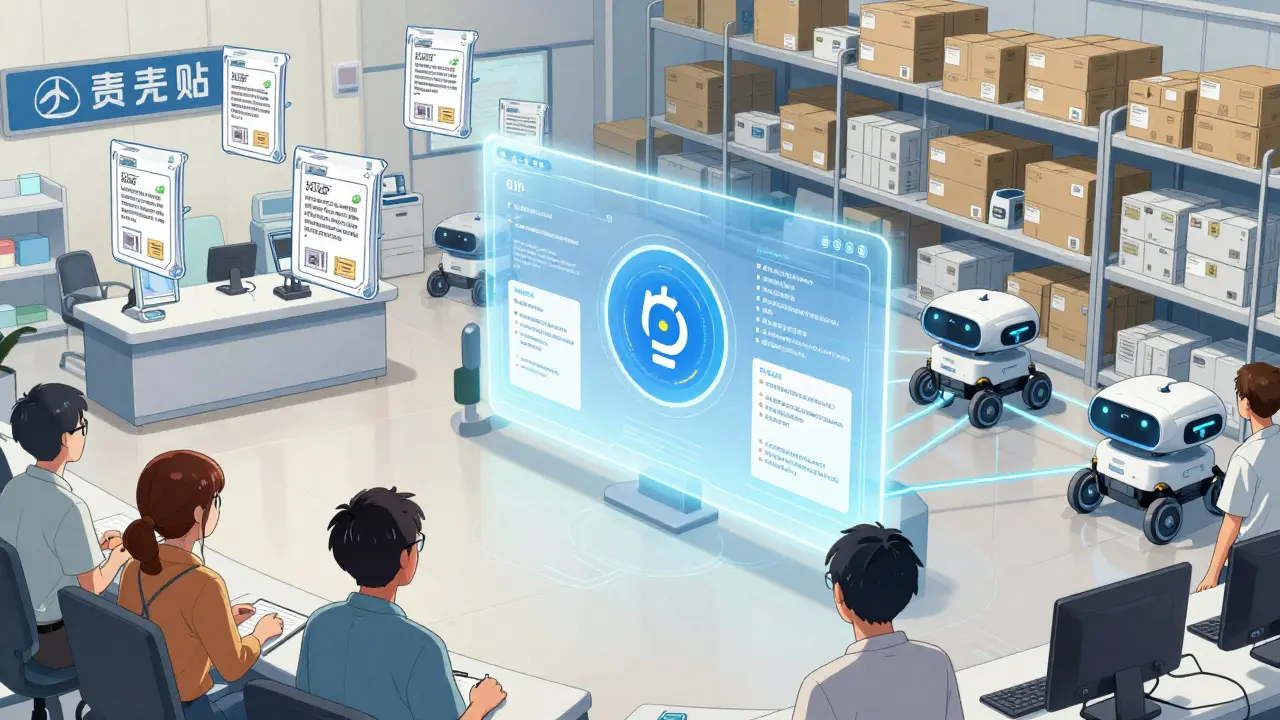
Another strong use case is supply chain management. Logistics involve thousands of moving parts-shipping containers, trucks, warehouses, and customs documents. Rivalz’s Swarms can interface with IoT devices (Internet of Things) to track goods in real-time. If a shipment is delayed, an AI agent can automatically re-route resources or notify stakeholders, paying for these actions using $RIZ tokens. Early case studies suggest this integration reduced setup time from weeks to days for pilot projects.
However, adoption is still in its infancy. As of late 2025, there were only 17 verified production deployments. Most activity is coming from developers experimenting with the platform rather than large enterprises running mission-critical systems. The Rivalz Alliance incubator program aims to change this by supporting 23 early-stage projects focused on AI-blockchain convergence, but scaling from prototypes to widespread enterprise use will take time.
Risks and Challenges
No investment or technology adoption is without risk. Rivalz Network faces significant hurdles. The primary concern is execution. The project’s scope is incredibly ambitious, covering everything from data storage to identity management to AI coordination. Critics, including analyst Michael Chen, have warned that this broad focus could lead to diluted efforts, potentially compromising security in areas that require deep specialization.
Security is paramount in blockchain. Any vulnerability in the smart contracts governing the ROME protocol or the OCY storage layer could result in significant losses. Additionally, the centralization vectors in the current validator node distribution have raised eyebrows among researchers. If too few entities control the zNodes, the network loses its decentralization benefits, becoming vulnerable to censorship or attacks.
Market competition is another major factor. With giants like Google, Microsoft, and Amazon dominating the AI space, and established crypto projects like Fetch.ai holding substantial market share, Rivalz needs to demonstrate clear superiority in efficiency or cost to attract developers. The high volatility of the $RIZ token also poses a risk for users relying on it for stable transaction fees.
Future Roadmap and Outlook
Looking ahead, Rivalz has outlined a aggressive development schedule. By Q1 2026, the team plans to launch mobile client integration, allowing smartphone users to contribute computing power as rClients. This could significantly expand the network’s capacity and accessibility. Later in 2026, advanced reputation systems for Swarms and industrial IoT integrations are scheduled for release.
Industry analysts remain divided on the long-term viability. Messari research suggests that reaching 5 million active rClients by mid-2026 is critical for achieving sustainable network effects. Chainalysis Research projects a 65% probability of relevance through 2030 if growth targets are met. However, CryptoQuant offers a more cautious view, citing intense competition and unproven demand for abstraction layers at scale.
For now, Rivalz Network represents a bold experiment in merging AI autonomy with decentralized infrastructure. Whether it becomes the standard "operating system" for AI agents or remains a niche player depends on its ability to simplify development, ensure security, and drive real-world adoption in the coming years.
Is Rivalz Network (RIZ) a good investment?
Investing in RIZ carries high risk due to its early-stage development, small market cap (~$6 million), and intense competition from larger projects like Fetch.ai. While the technology addresses a real need in AI resource coordination, success is not guaranteed. Always conduct your own research and consider your risk tolerance before investing in volatile crypto assets.
How does Rivalz differ from Fetch.ai?
Fetch.ai focuses primarily on coordinating machine learning tasks and creating virtual agents for specific applications. Rivalz Network, however, provides a broader "World Abstraction Layer" that includes decentralized storage (OCY), identity management, and resource pooling (ROME). Think of Fetch.ai as an app developer and Rivalz as the infrastructure provider.
What is the total supply of RIZ tokens?
The total circulating supply of RIZ tokens is capped at exactly 5,000,000,000 (5 billion) tokens. This fixed supply is designed to create scarcity and align incentives for staking and network participation.
Can I run a node on the Rivalz Network?
Yes, you can run a Validator zNode or an rClient. Running a zNode requires purchasing infrastructure components and meeting minimum hardware specs (8GB RAM, 4-core processor). Node operators earn $RIZ rewards for validating transactions and maintaining network security. Running an rClient allows you to contribute storage and compute power.
What is the "World Abstraction Layer"?
The World Abstraction Layer is Rivalz’s core technology that simplifies how AI agents interact with real-world resources. It abstracts the complexity of different blockchains and hardware, allowing AI to access compute, storage, and identity services through a unified, easy-to-use interface.
Steven Briggs
July 13, 2026 AT 13:57i get it. sounds cool but its a lot to take in
Brad Semp
July 15, 2026 AT 12:51The notion that one can simply 'abstract' the complexities of decentralized identity and vector storage into a single, palatable layer for autonomous agents is, frankly, laughable in its hubris. The author presents this 'World Abstraction Layer' as if it were a trivial engineering feat, ignoring the profound cryptographic and economic challenges inherent in such a system. To suggest that Rivalz Network is merely an 'operating system' for AI is to misunderstand the fundamental nature of both blockchain scalability and artificial intelligence inference costs. The comparison to Fetch.ai is superficial at best; Fetch operates within a defined ecosystem of machine learning coordination, whereas Rivalz attempts to boil the ocean by claiming to manage physical resource allocation through digital tokens. This is not innovation; it is vaporware dressed up in academic jargon to lure unsuspecting retail investors who lack the technical literacy to discern between a whitepaper and a functional protocol. The market cap of six million dollars is not a badge of honor, but a testament to the project's irrelevance in the broader technological landscape.
Korn Arrieta
July 15, 2026 AT 16:49stop pretending this is real tech. its just another pump and dump scheme wrapped in buzzwords like DePIN and abstraction layers. nobody needs a token to rent compute power when aws exists. the whole concept of ai agents paying each other in riz is absurd because there is no actual demand for these services. the developers are likely the same people selling the bags. look at the github contributors count. 186? thats nothing. fetch has over a thousand. singularity net has enterprise partnerships. rivalz has nothing but a roadmap full of promises they will never keep. the security risks are massive because smart contracts for swarm coordination are unproven. one bug and the whole thing collapses. do not fall for this hype train. it is designed to separate you from your money while they exit liquidity. typical crypto scam playbook. read the fine print if you dare but i guarantee you will find red flags everywhere.
Hamza k
July 17, 2026 AT 00:50Oh my goodness, the sheer audacity of this architecture! It’s like watching a symphony of code conduct itself into a beautiful, chaotic harmony. The idea of rAgents pooling resources like bees in a hive is just... magnificent. I can almost feel the digital hum of the OCY DePIN layer vibrating with potential. It’s not just technology; it’s artistry in data management. Why do we always need to be so cynical about progress? Let us dream of a world where AI handles our logistics without a hitch, where privacy is preserved yet knowledge flows freely. It’s a bold vision, truly electrifying!
Kim Kay
July 18, 2026 AT 16:26i think ppl should try running a node if they have the hardware. its a good way to learn how the network works. maybe start small with an rclient first. dont rush into staking big amounts of riz until you see more adoption. its still early days so patience is key. hope everyone stays safe out there in crypto land. let me know if u need help setting up the validator specs. happy to share what i found online.
Jackie D
July 20, 2026 AT 03:37wow this is super interesting stuff. i love how they explain the 5 modules. the part about vord managing knowledge instead of just raw data is really clever. makes me wonder if this could work for personal health records too. i mean hospitals already struggle with sharing info securely. if ai can analyze anonymized data without seeing names that would be huge. also the supply chain example with iot devices tracking shipments automatically is kinda cool. imagine if my packages actually arrived on time because a bot rerouted them lol. seems risky tho with only 17 deployments. but hey why not watch it grow?
Michelle Walker
July 21, 2026 AT 09:25You idiots are missing the point entirely. This isn't about whether it's better than AWS right now. It's about decentralization. Centralized servers are vulnerable. They censor. They fail. Rivalz provides autonomy. You don't understand the paradigm shift. Stop acting like traditional tech is superior just because it's familiar. The tokenomics are sound. Fixed supply. Staking incentives. It's basic economics. If you can't grasp the value of a World Abstraction Layer then you're not smart enough to invest anyway. Get educated or get left behind. Simple as that.
Shay Thomson
July 21, 2026 AT 23:31I hear all sides here and honestly, it feels like a mix of excitement and caution. On one hand, the potential for AI agents to operate independently in healthcare and logistics is genuinely revolutionary-it could save lives and streamline global trade in ways we haven’t imagined. But on the other hand, the skepticism regarding execution and security is completely valid. We’ve seen many projects promise the moon and deliver dust. Perhaps the middle ground is acknowledging that while the technology is nascent and risky, the direction it points toward is inevitable. Maybe we don’t need to bet everything on Rivalz today, but keeping an eye on how the World Abstraction Layer evolves could be wise. After all, every giant tree started as a fragile seedling, didn’t it? Let’s hope this one grows strong roots.