What is The Winkyverse (WNK) Crypto? EdTech Metaverse Guide
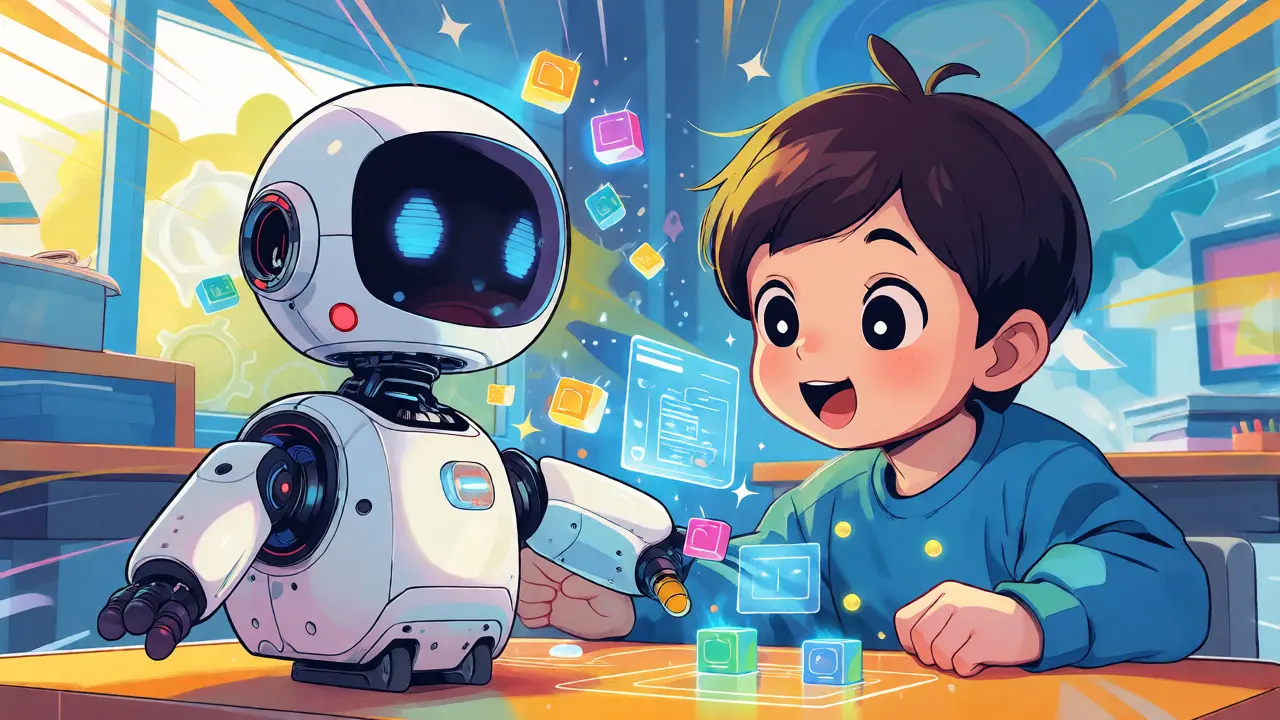
Imagine your child learning to code while playing a game that rewards them with real cryptocurrency. That’s the core promise of The Winkyverse, a blockchain-based educational metaverse powered by the WNK token. Developed by the French company Mainbot, this project attempts to bridge the gap between physical robotics and digital gaming for children aged 5 to 12.
You might be wondering if this is just another hype-driven token or something with actual utility. The answer lies in its unique hybrid model: it combines the Winky robot, an AI-powered educational device already used by thousands of families in Europe, with a virtual world where WNK serves as the native currency for access, purchases, and governance.
Key Takeaways
- Dual Utility: WNK works both as a payment method for the Winky hardware ecosystem and as a governance token within the virtual metaverse.
- Deflationary Mechanics: The token features a 1% burn on decentralized exchange sales and buybacks funded by fiat transactions, aiming to reduce supply over time.
- Micro-Cap Volatility: With market caps fluctuating between $700k and $22M depending on the source and date, WNK is a high-risk, high-volatility asset.
- Multi-Chain Presence: Originally an ERC-20 token on Ethereum, WNK has expanded to Binance Smart Chain and Base, increasing accessibility but complicating wallet management.
The Core Concept: EdTech Meets Blockchain
Most cryptocurrencies exist purely in the digital realm. WNK is different because it is tethered to a physical product. The Winky robot teaches kids robotics, programming, and artificial intelligence through play. When you introduce blockchain into this mix, you create an incentive structure. Children aren't just learning; they are earning tokens that have real-world value.
This approach targets a specific pain point: keeping young learners engaged. By gamifying the learning process, The Winkyverse uses educational technology to make abstract concepts like coding tangible. The platform integrates six key technologies: Robotics, Artificial Intelligence, Programming, Gaming, Augmented Reality, and Blockchain. This combination aims to differentiate it from generic metaverse projects that focus solely on virtual land or social interaction without hardware integration.
How the WNK Token Works
At its heart, WNK is a utility token. It isn't designed to be a store of value like Bitcoin, nor is it primarily a speculative asset, though traders treat it as such. Its primary function is to facilitate interactions within the ecosystem.
Users can spend WNK to unlock premium games, buy avatars, and customize their digital experience. More importantly, holding WNK grants discounts on the physical Winky robot hardware-up to 50% in some documented cases. This creates a feedback loop: buying more hardware increases demand for the token, which theoretically supports its price.
| Feature | Traditional Utility Token | WNK (Winkyverse) |
|---|---|---|
| Primary Value Driver | Network usage / Speculation | Educational engagement + Hardware sales |
| Physical Link | None | Discounts on Winky Robot |
| Target Audience | General Crypto Users | Families / Students / Educators |
| Burn Mechanism | Varies widely | 1% Burn on DEX Sales + Fiat Buybacks |
Tokenomics: Supply, Burns, and Multi-Chain Complexity
If you look at data trackers, you'll notice conflicting numbers for WNK's supply. This isn't necessarily an error; it reflects the project's evolution across different blockchains. Initially launched as an ERC-20 token on Ethereum, WNK later extended to BEP-20 on Binance Smart Chain and recently deployed on Base.
As of late 2025 and early 2026 snapshots, sources report varying figures:
- Circulating Supply: Ranges from approximately 5.1 billion to 6.5 billion WNK.
- Maximum Supply: Reported between 6.5 billion and 7.5 billion WNK.
- Market Cap: Fluctuates wildly, often sitting under $1 million USD, though some aggregators show higher peaks during volatility spikes.
The discrepancy arises because each chain may have different contractual caps or staged unlocks. For instance, Gitbook documentation highlights a deflationary mechanism on the Base chain: 1% of every decentralized exchange sale is burned. Additionally, fiat transactions within the app trigger proportional buybacks of WNK, further reducing circulating supply. These mechanisms aim to counteract inflation from new emissions, but the lack of a single, unified supply figure makes precise valuation difficult for investors.
Market Performance and Risks
Let's be honest about the financial side. WNK is a micro-cap asset. Trading volumes are thin, sometimes dropping below $100 per day on certain exchanges, while spiking to $50,000+ on others like Binance or Coinbase. This low liquidity means large trades can significantly impact the price.
Price history shows extreme volatility. In February 2025, prices hovered around $0.000184 USD. By August 2025, CoinStats recorded prices near $0.000109 USD. Other sources like Coinmooner showed peaks above $0.0029 USD in May 2025. Such swings indicate that WNK behaves more like a speculative penny stock than a stable currency. If you're considering investing, understand that a small shift in sentiment or a single large sell order can erase gains quickly.
Risks include:
- Liquidity Risk: Thin order books make exiting positions difficult without slippage.
- Data Inconsistency: Conflicting supply data across trackers suggests potential communication gaps or complex cross-chain bridging issues.
- Niche Adoption: Success depends entirely on the continued growth of the Winky robot user base. If hardware sales stall, token utility diminishes.
How to Buy and Store WNK
Acquiring WNK requires standard crypto knowledge. You can purchase it on centralized exchanges like Binance, Coinbase, and Bitmart, or via decentralized exchanges like Uniswap. Because it exists on multiple chains, ensure you select the correct network when transferring funds.
For storage, any wallet supporting ERC-20 or BEP-20 tokens will work, such as MetaMask or Trust Wallet. If you interact with the Base chain version, you'll need a wallet compatible with Layer 2 solutions. Always double-check contract addresses before adding tokens to your wallet to avoid scams. The Ethereum contract address, for example, is widely cited as 0xE1BDA0c3Bfa2bE7f740f0119B6a34F057BD58Eba.
Is WNK Right for You?
WNK appeals to two distinct groups: parents looking for innovative educational tools for their children, and speculators hunting for low-cap gems with unique fundamentals. For parents, the token offers tangible benefits through hardware discounts and engaging content. For investors, it represents a bet on the intersection of edtech and blockchain.
However, it is not a passive investment. The project is still in its growth phase, with development focused on expanding the metaverse features and integrating AI agents. Keep an eye on Mainbot's roadmap for updates on NFT support and cross-chain interoperability, as these could drive future adoption.
What is the main use case for the WNK token?
WNK is used to access The Winkyverse metaverse, purchase in-game items and avatars, receive discounts on Winky robot hardware, stake for governance rights, and participate in community airdrops.
Which blockchains does WNK operate on?
WNK was originally deployed as an ERC-20 token on Ethereum. It has since been extended to Binance Smart Chain (as BEP-20) and Base, allowing users to transact on multiple networks.
Why do different websites show different supply numbers for WNK?
Discrepancies arise because WNK exists on multiple chains with potentially different contractual limits, and because deflationary burns and buybacks continuously alter the circulating supply. Different trackers may also update their data at different intervals.
Is WNK a good long-term investment?
WNK is a high-risk, micro-cap asset. Its long-term success depends on the sustained adoption of the Winky robot and the expansion of the educational metaverse. Investors should be prepared for high volatility and low liquidity.
Who developed The Winkyverse?
The project was developed by Mainbot, a French company known for creating the Winky educational robot designed to teach children robotics and programming.