What is ZAYA AI (ZAI) Crypto Coin? The AI-Driven Healthcare Token Explained

When you hear about a cryptocurrency that claims to fight cancer, your first thought might be: is this real? Or is it just another crypto hype? ZAYA AI (ZAI) isn’t just another altcoin. It’s a project built around a very specific, very serious goal: using artificial intelligence and blockchain to improve early cancer detection and treatment. Unlike most crypto projects that focus on trading or DeFi yields, ZAI ties its value directly to real-world medical outcomes.
How ZAYA AI Works: More Than Just a Token
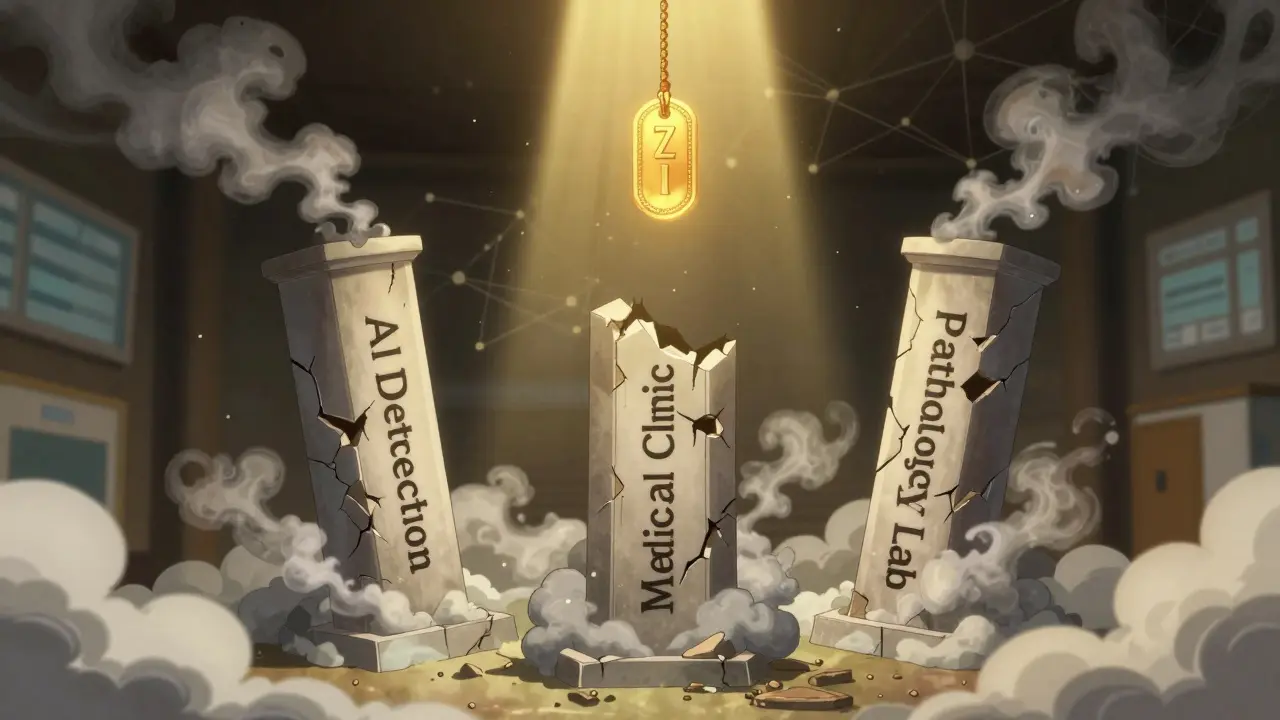
ZAYA AI isn’t a coin you hold just to speculate. It’s a utility token designed to power a healthcare ecosystem. The project operates through three core units: Zaya Artificial Intelligence, Zaya Medical Clinic, and Zaya Pathology Lab. These aren’t just buzzwords-they’re actual services meant to work together.
Here’s how it’s supposed to function: Patients, doctors, hospitals, and labs use the $ZAI token to access AI-powered cancer screening tools. The system analyzes medical data-like imaging scans or blood tests-using machine learning models trained to spot early signs of cancer. When the AI flags something, it triggers a referral to a partnered clinic. If you’re part of the network, you can earn ZAI tokens for contributing data, participating in trials, or even referring others to the platform.
This isn’t science fiction. The team behind ZAYA AI claims to have partnered with real pathology labs and research institutes. The blockchain layer ensures that every test result, referral, and payment is recorded transparently. No middlemen. No hidden fees. Just a direct link between data, diagnosis, and treatment.
Tokenomics: Supply, Distribution, and Value
The ZAI token was launched on the BNB Chain (BSC) as a BEP-20 token. The total supply is capped at 100 million ZAI, but there’s no hard cap on the maximum supply-meaning more tokens can be minted over time. At launch, only about 4.6 million tokens were in circulation. As of February 2026, the circulating supply sits around 27 million ZAI tokens.
Initial sales happened through two IDOs: Spores Network raised $150,000 at $0.20 per ZAI, and Kommunitas aimed for $300,000 at $0.15 USDT. That means early buyers paid significantly more than what ZAI trades for today. The vesting schedule was strict: 20% released at launch, then a one-month cliff, followed by six months of linear unlocking. This was meant to prevent immediate dumps.
But here’s the reality check: ZAI’s price has crashed hard. In February 2025, it was trading around $0.13. By February 2026, it hit $0.00160525-a drop of nearly 99%. That’s not normal volatility. That’s a collapse in market confidence. The current market cap is just $64,140, down from over $400,000 at launch. Trading volume is thin, averaging $27,000 per day. That’s not enough to support serious institutional interest.
Where You Can Trade ZAI
Despite the price drop, ZAI is still actively traded. You can find it on MEXC and Bybit. On MEXC, you can trade ZAI in spot markets or even use futures contracts to go long or short. Bybit lets you place market orders (buy at current price) or limit orders (set your own price). Both platforms support deposits via USDT or BNB.
But here’s the catch: liquidity is low. If you try to sell a large amount of ZAI, you’ll likely drag the price down further. That’s dangerous for anyone holding more than a few hundred tokens. The lack of deep order books means slippage is high, and exit strategies are risky.

Price Predictions: Hope vs. Reality
Some websites like DigitalCoinPrice are still predicting ZAI will hit $0.59 by 2029 and $1.36 by 2032. Those numbers sound exciting. But they’re based on assumptions that ignore the project’s current state. They assume:
- Mass adoption by hospitals and clinics
- Regulatory approval across multiple countries
- Real patient data being uploaded and verified
- AI models proving more accurate than existing systems
None of that has happened yet. And without proof of real-world use, these predictions are just fantasy math. The same sites predicted a 14% drop in March 2025-which happened. But they also predicted a 120% surge after that. It didn’t happen. So why trust their 2032 numbers?
The Bigger Picture: Is This a Healthcare Project or a Crypto Scam?
ZAYA AI walks a dangerous line. On one hand, the idea of using AI to catch cancer earlier is powerful. Early detection saves lives. If this system actually works, it could be revolutionary.
On the other hand, there’s zero public evidence that the medical services are live. No published clinical trial results. No partnerships announced with hospitals. No transparency about how the AI models are trained or validated. The website looks polished, but that doesn’t mean the backend works.
Compare this to other crypto-health projects. Projects like Healthcoin or MedRec have published peer-reviewed studies. ZAYA AI hasn’t. That’s a red flag.
The project’s biggest weakness isn’t the tech-it’s the lack of proof. Without independent verification, ZAI is just a token with a noble pitch. And in crypto, that’s often enough to attract investors… until reality hits.
Who Should Consider ZAI?
If you’re looking for a safe investment, avoid ZAI. The price has lost 99% of its value. Liquidity is thin. The team is quiet. There’s no roadmap update. This isn’t a coin you buy to hold for five years.
If you’re a crypto enthusiast who believes in medical innovation and wants to support early-stage projects, you might consider buying a small amount-say, $10 to $50-as a speculative bet. But treat it like a lottery ticket, not an asset.
Anyone expecting ZAI to return to its $0.13 highs is gambling, not investing. The odds are stacked against it.
What’s Next for ZAYA AI?
For ZAI to survive, it needs three things:
- Proof of medical impact: Publish data showing AI detection rates are better than traditional methods.
- Real partnerships: Announce collaborations with actual hospitals or labs-not just vague "research institutes."
- Transparency: Open-source the AI models. Share audit reports. Let the public see how it works.
Until then, ZAYA AI remains a high-risk, low-visibility project. The idea is good. The execution? Not yet.
Is ZAYA AI (ZAI) a scam?
ZAYA AI isn’t officially labeled a scam, but it has all the warning signs: a 99% price drop, no public medical results, no team transparency, and minimal trading volume. It’s not a Ponzi scheme, but it’s also not a proven project. Treat it as high-risk speculation.
Can I use ZAI to pay for medical services?
As of early 2026, there’s no public evidence that ZAI is accepted as payment in any clinic or lab. The project claims it’s designed for that, but no real-world examples or user testimonials exist. Until you can actually use ZAI to book a screening, treat it as a crypto asset-not a healthcare payment tool.
Why did ZAI’s price crash so hard?
The crash happened because the market lost faith. Early investors who bought at $0.15-$0.20 likely sold as the project failed to deliver real medical results. Without traction in healthcare, the token had no utility beyond speculation. Low trading volume made it easy for large holders to dump, causing a chain reaction.
Is ZAYA AI built on Ethereum?
No. ZAYA AI (ZAI) is built on the BNB Chain (BSC), which is a blockchain compatible with Ethereum but with lower fees and faster transactions. It follows the BEP-20 token standard, not ERC-20. This means you need BNB to pay for gas fees when trading or transferring ZAI.
Can I mine ZAI tokens?
No, ZAI cannot be mined. It’s not a proof-of-work coin. All ZAI tokens were distributed through IDOs and subsequent token releases. The only way to get ZAI is to buy it on exchanges like MEXC or Bybit, or earn it through participation in the ecosystem-if the platform ever fully launches its reward system.
What’s the difference between ZAI and other AI crypto coins?
Most AI crypto coins (like SingularityNET or Fetch.ai) focus on decentralized AI marketplaces or machine learning models for general use. ZAI is unique because it’s focused solely on cancer detection and treatment. That makes it more niche. But it also makes it more vulnerable-if the medical side doesn’t deliver, the token has no reason to exist.
Holly Perkins
February 13, 2026 AT 20:01Sakshi Arora
February 14, 2026 AT 00:01Benjamin Andrew
February 14, 2026 AT 16:16Jeremy Lim
February 15, 2026 AT 14:36Elizabeth Choe
February 16, 2026 AT 16:47bala murali
February 18, 2026 AT 05:19Gaurav Mathur
February 19, 2026 AT 21:43Beth Trittschuh
February 21, 2026 AT 12:21Ben Pintilie
February 23, 2026 AT 00:36kelvin joseph-kanyin
February 23, 2026 AT 21:24Crystal McCoun
February 24, 2026 AT 14:39Elijah Young
February 25, 2026 AT 12:23Joe Osowski
February 25, 2026 AT 20:04