Coinbase Exchange Review: Fees, Security, and Features for 2026

You might have typed "Coin Bank Exchange" into your search bar looking for a new place to trade digital assets. Here is the truth right out of the gate: that specific entity does not exist. What you are likely looking for is Coinbase, the publicly traded cryptocurrency exchange founded in 2012 by Brian Armstrong and Fred Ehrsam. It is easy to mix up names when navigating the crypto world, especially with terms like "bank" and "exchange" often used interchangeably. This review cuts through the confusion to give you a clear, honest look at what Coinbase actually offers in 2026, who it is built for, and where it falls short compared to competitors.
Is Coinbase Safe? The Security Breakdown
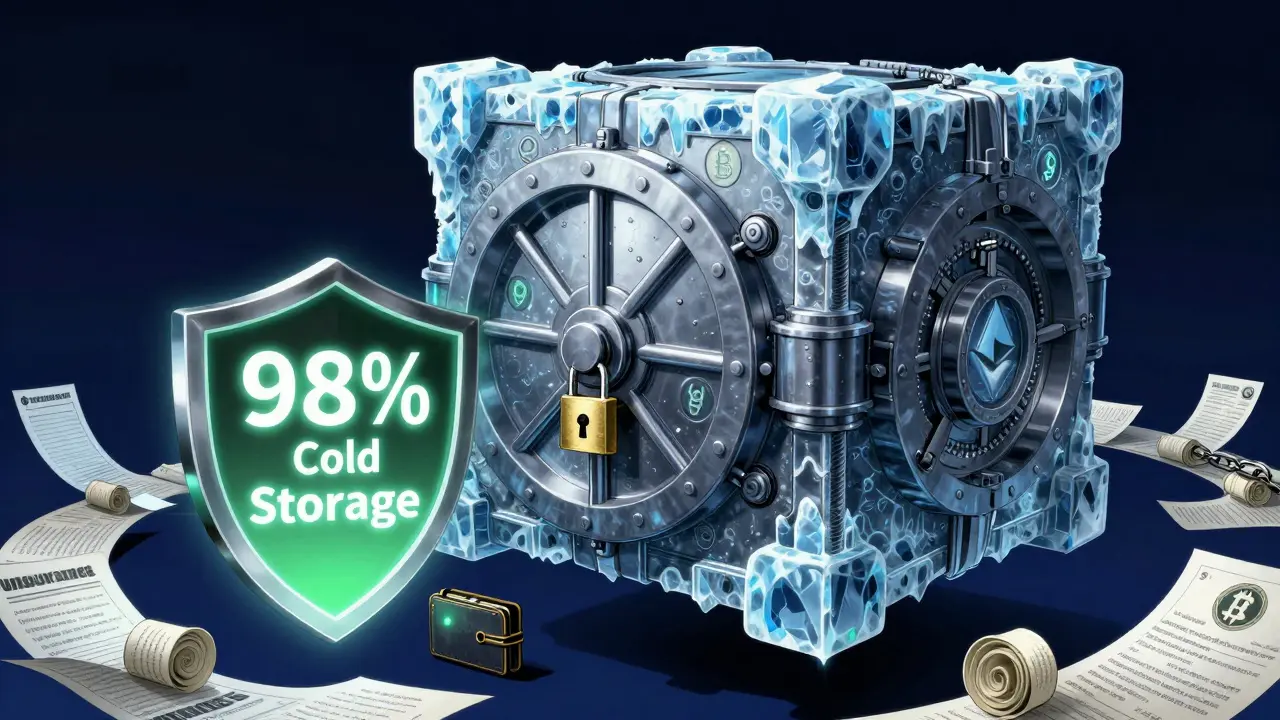
Safety is usually the first thing on your mind when handing over money to an online platform. Coinbase takes this seriously, perhaps more than any other major competitor. As of late 2025, they keep 98% of customer assets in cold storage across 17 geographically dispersed locations. Cold storage means those coins are offline, making them virtually impossible for hackers to steal remotely. The remaining hot wallets-used for immediate trading-are capped at $250 million, a limit disclosed in their Proof of Reserves audit from September 2025.
They also back this up with insurance. Coinbase maintains a $255 million crime insurance policy through Lloyd's of London. While this doesn't cover market losses if Bitcoin crashes, it protects against theft or fraud involving the company's infrastructure. For login security, they support FIDO2 security keys and biometric authentication, adding layers of protection beyond standard passwords. If you are worried about your funds vanishing due to a hack, Coinbase is one of the safest bets in the industry.
The Fee Structure: Where You Lose Money
Let’s talk about costs, because this is where Coinbase gets criticized. If you use the basic interface on your phone, you are paying premium prices for convenience. Instant card purchases under $200 cost 1.49%, but that jumps to 3.99% for amounts over $1,000. To put that in perspective, if you buy $1,000 worth of Ethereum via debit card, you pay nearly $40 in fees alone. That is expensive.
However, there is a workaround. By switching to Coinbase Advanced Trade, a professional-grade trading interface within the Coinbase ecosystem, you can drop your fees significantly. Pro trading fees start at 0.50%. Even better, if you launch the Advanced Trade Pro tier (launched October 2025), you can get 0.00% maker fees if your daily volume exceeds $100,000. For most retail users, ACH bank transfers are free (0%), but they take a few days to settle. If speed matters, expect to pay. If saving money matters, use ACH and wait.
| Feature | Coinbase Basic | Coinbase Advanced | Kraken | Binance US |
|---|---|---|---|---|
| Card Purchase Fee | 1.49% - 3.99% | N/A | 0.90% - 1.50% | 0.50% |
| Trading Fee (Maker/Taker) | High spread | 0.50% | 0.16% - 0.26% | 0.10% |
| ACH Transfer | Free | Free | Free | Free |
| Monthly Subscription | $0 | $0 (Pro: $29.99) | $0 | $0 |
User Experience: Built for Beginners
If you have never bought crypto before, Coinbase is arguably the best starting point. The interface is clean, intuitive, and stripped of the clutter that overwhelms new users on platforms like Binance or Kraken. In NerdWallet's 2025 usability assessment, Coinbase scored 4.5 out of 5 stars for ease of use. You can complete account verification within 24 hours using their AI-powered ID system, which accepts driver's licenses and passports from most regions.
They also offer educational rewards through Coinbase Earn, a learning program that pays users small amounts of crypto for completing short courses. With 127 courses available, you can learn about blockchain basics while earning tokens. However, don't expect deep community support. Unlike Binance, which has a massive multi-language forum, Coinbase relies mostly on official channels and its Community Hub, which sees 18,500 daily active users but lacks the depth of peer-to-peer troubleshooting found elsewhere.
Asset Selection and Staking Opportunities
As of October 2025, Coinbase supports 235 cryptocurrencies. This is decent, but not the largest selection. Crypto.com, for example, lists 313 tokens. If you are hunting for obscure altcoins or new meme coins, you might find yourself frustrated. Coinbase prioritizes regulatory compliance, meaning they list only vetted projects. Following SEC enforcement actions in 2023 and 2025, they delisted several tokens, including XRP and ADA in certain contexts, to maintain their broker-dealer status.
For passive income, staking is a strong feature. You can stake Ethereum for an average APY of 3.8% or Solana for 6.2%. Keep in mind that Coinbase takes a cut of these rewards, ranging from 25% to 35%. While you earn less than if you staked directly on-chain, the convenience of doing it all within one app without managing private keys is a significant trade-off for many users.
Common Complaints and Reliability Issues
No platform is perfect, and Coinbase has its share of headaches. User feedback from Trustpilot and Reddit highlights three main pain points:
- Hidden Fees: Many users report being surprised by the final cost after spreads and processing fees are added. One Reddit user noted that hidden fees inflated costs by 22% on average for casual traders.
- Withdrawal Delays: During periods of high volatility, Ethereum withdrawals can take up to 17 minutes, compared to Kraken's 4.2 minutes. This lag can be costly if you are trying to exit a position quickly.
- 2FA Lockouts: Approximately 15% of users experience issues with two-factor authentication locks monthly, sometimes requiring lengthy support interactions to regain access.
Reliability was also tested during the April 2024 outage, which prevented 1.2 million users from trading during a significant Bitcoin price swing. While rare, these downtime events remind us that centralized exchanges are single points of failure.
Who Should Use Coinbase in 2026?
Coinbase is not for everyone. If you are a high-frequency trader, the API rate limits of 100 TPS (transactions per second) will bottleneck your strategies. Look at Kraken, which offers 2,000 TPS. If you are a beginner or an investor who values safety and simplicity above all else, Coinbase is a top choice. It holds 28.7% of the U.S. spot trading market share and ranks #2 in trustworthiness behind Gemini. It is particularly strong for institutional clients, with over 14,300 business accounts using its services.
For the average person wanting to buy Bitcoin or Ethereum safely, link a bank account, and hold for the long term, Coinbase remains a solid, regulated option. Just remember to switch to Advanced Trade if you plan to trade frequently, and always double-check the fee breakdown before confirming a transaction.
Does Coin Bank Exchange exist?
No, "Coin Bank Exchange" is not a real entity. It is likely a confusion between Coinbase, the major crypto exchange, and crypto-friendly banking partners like Customers Bank or Evolve Bank & Trust that facilitate fiat transactions for exchanges.
Is Coinbase safe for beginners?
Yes, Coinbase is considered very safe for beginners. It keeps 98% of assets in cold storage, has a $255 million insurance policy, and offers an intuitive interface with educational resources like Coinbase Earn.
How much does Coinbase charge in fees?
Fees vary by method. Card purchases range from 1.49% to 3.99%. ACH bank transfers are free. Using Coinbase Advanced Trade reduces trading fees to around 0.50%, and the Pro tier offers 0% maker fees for high-volume traders.
Can I stake crypto on Coinbase?
Yes, Coinbase offers staking for several cryptocurrencies including Ethereum (approx. 3.8% APY) and Solana (approx. 6.2% APY). Note that Coinbase deducts a portion of the rewards as their service fee.
Why did Coinbase delist some tokens?
Coinbase delists tokens to comply with U.S. securities regulations and SEC enforcement actions. This ensures the platform remains legally compliant but may limit the variety of altcoins available compared to less regulated exchanges.