Coingi Crypto Exchange Review: Is It Safe to Use in 2026?

Finding a reliable place to trade digital assets can feel like a gamble. While the big names dominate the headlines, smaller platforms often pop up promising lower fees or simpler interfaces. Coingi is a cryptocurrency exchange platform that allows users to trade digital assets using a simplified fee structure. However, unlike the industry giants, this platform operates in a strange vacuum of information. If you're considering moving your funds here, you need to know exactly what you're getting into-and where the red flags are waving.
The Bottom Line on Costs
When picking an exchange, the first thing most traders look at is the price of doing business. Coingi takes a different approach than the tiered models you see on platforms like Binance or Kraken. Instead of a complex grid of maker and taker fees, they use a flat fee.
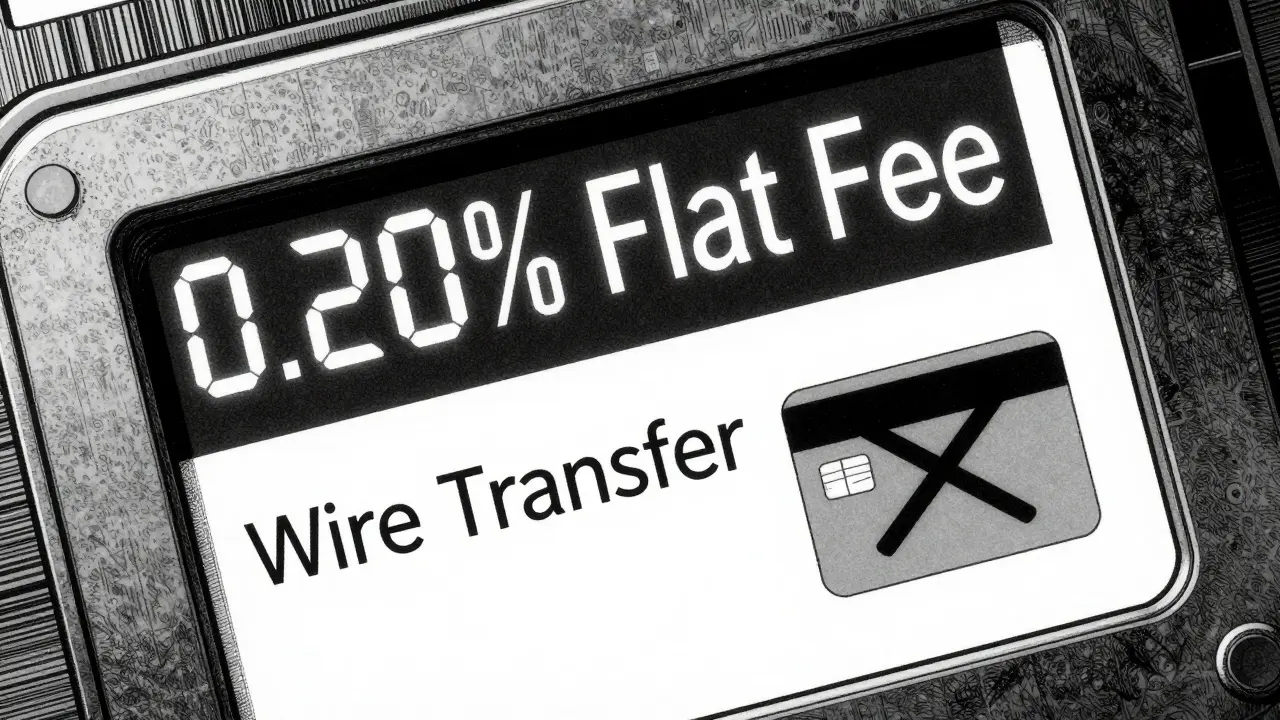
The platform charges a flat trading fee of 0.20% for every trade, regardless of whether you are providing liquidity (maker) or taking it (taker). To put that in perspective, the general industry average sits around 0.25%. While 0.20% sounds like a win, it's only a bargain if you're a taker. If you're a high-volume market maker, you can find fees practically at 0% on other major exchanges.
Withdrawals are another story. For those moving Bitcoin the first and most well-known decentralized digital currency , the cost is 0.001 BTC. This is fairly standard and mirrors what you'd see across most reputable wallets and exchanges. While they claim to support other currencies for withdrawal, the specific costs for those aren't clearly laid out, which is a bit frustrating for anyone trying to budget their exits.
Funding Your Account: The Good and the Bad
Getting money into the platform is a mixed bag. If you prefer traditional banking, you're in luck because Coingi accepts wire transfers. This is actually a huge plus for beginners who don't already own crypto and need a way to bridge the gap between their bank account and the blockchain.
On the flip side, there is no support for credit card deposits. This is a significant limitation. Not only does it kill the convenience of a "one-click" purchase, but it also means you can't earn credit card rewards or cashback on your investments. If you're used to the seamless onboarding of a platform like Coinbase, the wire-transfer-only requirement will feel like a step backward.
| Feature | Coingi | Coinbase / Kraken / Binance |
|---|---|---|
| Trading Fee | 0.20% Flat | 0% to 3.99% (Tiered) |
| BTC Withdrawal | 0.001 BTC | Variable / Competitive |
| Credit Card Deposits | Not Supported | Widely Supported |
| Wire Transfers | Supported | Supported |
| Public User Reviews | Virtually None | Millions (Trustpilot, Reddit) |
The Ghost in the Machine: Where is the Proof?
Here is where things get worrying. In the world of Cryptocurrency Trading the act of speculating on the price movements of digital assets , transparency is everything. You want to know who runs the exchange, where they are based, and if they've been audited by a third party. With Coingi, there is almost zero public data.
If you search for professional reviews from 2025 or 2026, you won't find them. The major industry analysts and YouTube experts who vet platforms like Bybit or Gemini completely ignore Coingi. Even more concerning is the total silence on community hubs. Usually, if a platform is even slightly popular, you'll find a thread on Reddit or a rant on X (formerly Twitter). Coingi has none of that. No testimonials, no complaints, and no success stories.
Why does this matter? Because in crypto, "silent" often means "risky." Without a trail of user experiences, you have no way of knowing if the customer support actually answers emails or if your funds are stored in a secure Cold Wallet an offline storage method for cryptocurrency that prevents hacking or just sitting in a hot wallet waiting to be drained.
Missing Pieces and Red Flags
When you sign up for a reputable exchange, you go through a standard KYC Know Your Customer process used to verify a user's identity to prevent fraud and money laundering process. You upload an ID, verify your address, and then start trading. With Coingi, the onboarding process is a mystery. We don't know what documents they require or which countries they actually serve.
There's also no mention of regulatory licenses. Most legitimate exchanges now scramble for licenses in the US, EU, or Asia to prove they follow the law. Coingi hasn't publicized any such credentials. While they aren't listed on official scam trackers like California's Department of Financial Protection and Innovation, the absence of a "black mark" isn't the same as a "gold star." It simply means they haven't caused a large enough stir to be officially flagged yet.
Is Coingi Actually Operational?
At this point, it's hard to tell if Coingi is a growing boutique exchange or a platform that has already ceased operations. The lack of updates, feature announcements, or security patches throughout 2025 suggests a project that is either dormant or operating on a very limited scale.
For a trader, this creates a massive amount of uncertainty. If you deposit your funds and the site goes down tomorrow, who do you call? There is no documented corporate structure, no headquarters address, and no known founding team. This is the opposite of what you want when trusting a third party with your money.
Final Verdict: Should You Use It?
If you're looking for a place to trade, the 0.20% flat fee isn't enough of an incentive to overlook the total lack of transparency. The risk-to-reward ratio here is completely skewed. You're trading the safety of a regulated, community-vetted platform for a slightly simpler fee structure on a site that barely exists in the public consciousness.
Stick to the exchanges that have a proven track record, active social media presence, and clear regulatory standing. In the volatile world of crypto, the most expensive mistake you can make is choosing an exchange that has no footprint.
What are the trading fees on Coingi?
Coingi uses a flat fee structure of 0.20% for both makers and takers, which is slightly lower than the industry average of 0.25%.
Can I deposit money via credit card on Coingi?
No, Coingi does not support credit card deposits. Users must use wire transfers to fund their accounts with fiat currency.
How much does it cost to withdraw Bitcoin from Coingi?
The withdrawal fee for Bitcoin is 0.001 BTC, which is consistent with standard industry rates.
Is Coingi a regulated cryptocurrency exchange?
There is no publicly available information regarding Coingi's regulatory licenses, corporate structure, or compliance status.
Are there any user reviews for Coingi on Reddit or Trustpilot?
No, there is a notable absence of user-generated content, testimonials, or discussions regarding Coingi on major community platforms and review sites.


Alex Long
April 21, 2026 AT 00:16This is just a glorified scam site. Imagine actually thinking 0.20% is a "win" when the whole place is a ghost town. Absolute joke.
Ian Chait
April 21, 2026 AT 22:52Typical honeypot operation run by shadow agencies to track capital flows. The lack of a KYC trail isn't a bug, it's a feature for the deep state. Just look at the lack of liquidity and the weird flat fee-it's all a front for some high-level money laundering or a total rugpull in the making. Don't be sheeple and think a "simple interface" is enough when the back-end is probably just a script in a basement in some non-extradition country. Totally sus.
Andrew Southgate
April 22, 2026 AT 22:49I've spent quite a bit of time analyzing emerging exchanges over the years, and I have to say that the lack of a public footprint is the biggest red flag here. Usually, even the smallest legitimate platforms will have a Telegram group or a Discord server where users are actively complaining about withdrawal delays or praising a new feature, but when you have absolute silence, it suggests that there is no actual user base to speak of. If you are absolutely bent on trying a new platform for the lower fees, I would strongly suggest using a very small amount of funds that you are completely prepared to lose, and for the love of everything, make sure you are using a separate email address and a unique password so that if the site does go under or gets hacked, your primary digital identity remains secure. It's always better to be safe and a bit inconvenienced than to wake up and find your entire portfolio has vanished into a digital void because you chased a 0.05% difference in trading fees.
Mike Kempenich
April 23, 2026 AT 07:01Still, some of these smaller shops end up being hidden gems if they just focus on the tech instead of the marketing. Maybe they're just playing it safe until they scale up!
nikki krinkin
April 24, 2026 AT 08:10I think it's better to just stay away from anything that feels this empty.
Kim Smith
April 25, 2026 AT 18:17its funny how we trust these big corporations with our money just because they have a fancy logo and a bunch of fake reviews on trustpilot anyway because at the end of the day the whole system is just a giant hallucination of value and whether its a big exchange or a ghost town like this one we are all just betting on the same digital air and maybe coingi is just a reflection of how fragile the whole crypto dream is since one little site can just vanish without a trace and nobody would even notice because we are all too busy staring at candles on a screen to care about where the servers actually are lol
Shannon Kelly Smith
April 27, 2026 AT 17:40Always do your own research folks! 🚀 If it looks too good to be true, it probably is. Stay safe out there! 🛡️
Mark Pfeifer
April 28, 2026 AT 10:34The point about the wire transfers is interesting though. Usually, scams push for instant deposits like credit cards or direct crypto transfers because they're harder to reverse. Wire transfers leave a bank trail, which is slightly more reassuring, but not enough to ignore the lack of a team.
Ankit Sindhu
April 29, 2026 AT 21:25I agree with the cautious approach here. It's important to guide new traders toward platforms that have a proven track record of security.
Nishant Goyal
May 1, 2026 AT 19:19Better safe than sorry.
Gaurav Undirwade
May 2, 2026 AT 20:06It is utterly reprehensible that individuals would even consider utilizing such an opaque platform. One must exercise a modicum of intellectual rigor and moral fortitude before entrusting one's wealth to an entity that lacks the basic courtesy of a corporate address.
nathan jones
May 3, 2026 AT 07:30Hard pass on this one. Too quiet.
Sean Douglas
May 3, 2026 AT 16:01The absolute audacity of a platform to exist in 2026 without a single Twitter meltdown is genuinely haunting. It's a sterile, lifeless void that practically screams "I will steal your money and vanish into the ether!" I am simply shaken by the sheer vacuum of information surrounding this place!
Vicky Duffala
May 4, 2026 AT 01:51Let's use this as a lesson to keep pushing for more transparency in the industry! We can make the whole space better by demanding actual accountability and not just settling for "trust me" vibes from random sites. Keep exploring but keep your eyes open! ✨