Garantex Sanctions Explained: How Russian Crypto Traders Are Adapting in 2026
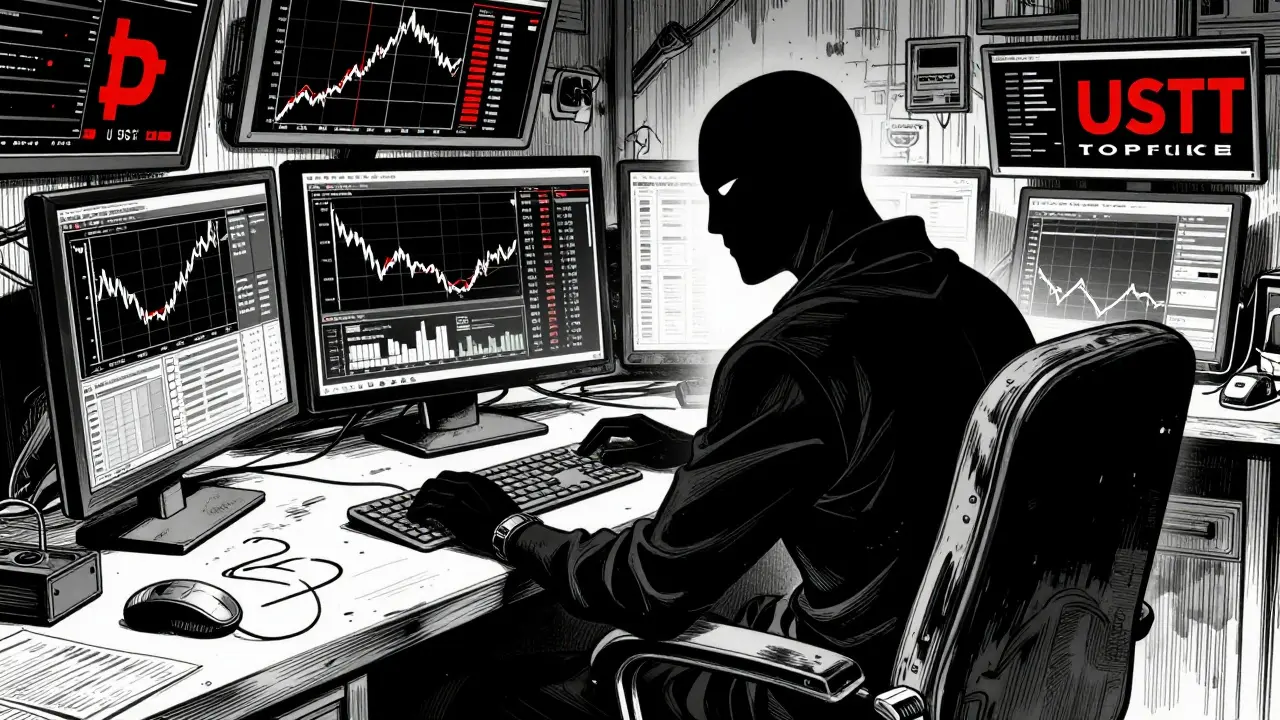
Imagine trying to send money abroad from Russia in mid-2026. You can’t just use a standard bank wire because of heavy restrictions. For years, Garantex was the go-to bridge for millions of users who needed to move rubles into stablecoins like USDT and vice versa. But the landscape has shifted dramatically since the U.S. Department of the Treasury’s Office of Foreign Assets Control (OFAC) slapped sanctions on the exchange. If you are tracking how these regulations affect everyday crypto activity, you need to understand that Garantex didn’t just disappear-it evolved.
The story isn't just about one exchange getting blocked. It is about a complex web of successor platforms, decentralized workarounds, and high-stakes legal battles that define the current state of cross-border finance in this region. Let’s break down what happened, where the money goes now, and what it means for traders navigating this gray area.
From Estonian Startup to Sanctioned Entity
To understand the impact, we have to look at the timeline. Garantex Europe OU was founded in late 2019 by Sergey Mendelev and Aleksandr Mira Serda. Originally registered in Estonia, the company quickly moved its operational heart to Moscow and Saint Petersburg. By 2022, it had become a critical infrastructure piece for Russians wanting to access global markets.
The first major blow came on April 5, 2022. OFAC sanctioned Garantex under Executive Order 14024, citing its role in the financial services sector of the Russian Federation economy. At the time, many thought this would cripple the platform. Instead, it forced a transformation. The exchange continued to operate, but under increasing scrutiny. The real turning point arrived on August 14, 2025, when OFAC re-designated Garantex under Executive Order 13694. This time, the accusation was more severe: facilitating cybercrime.
Treasury Secretary Janet Yellen stated clearly that the platform "directly facilitated notorious ransomware actors and other cybercriminals." The U.S. government alleged that Garantex processed over $100 million in transactions linked to illicit activities since its inception. This wasn't just a warning shot; it was an attempt to cut off the funding lines for darknet marketplaces and ransomware groups that relied on Garantex's ability to convert crypto back into fiat currency.
The Rise of Successor Platforms: Grinex, Exved, and MKAN Coin
Sanctions often push entities underground rather than eliminating them. Garantex is a prime example of this resilience. Following the intensified pressure, the ecosystem fractured into several new entities that replicate the original exchange's functions while attempting to evade detection.
| Platform Name | Primary Function | Jurisdiction / Base | Status |
|---|---|---|---|
| Grinex | Direct successor to Garantex trading operations | Decentralized / Multi-jurisdictional | Active (Targeted by Treasury) |
| Exved | Cross-border payment processing for dual-use goods | Moscow-City (International Business Center) | Active (Sanctioned Aug 2025) |
| MKAN Coin | Telegram-based crypto exchange interface | Dubai, UAE | Active |
| Feilian Company Limited | Hong Kong intermediary for fund conversion | Hong Kong / Alfa-Bank (Russia) | Active (Investigated) |
Grinex emerged as the direct spiritual successor. According to the Treasury Department, it was created by former Garantex employees specifically to support sanctions evasion efforts. Meanwhile, Exved took on a different role, focusing on facilitating the import of dual-use goods into Russia. Headquartered in Moscow's International Business Center, Exved acts as a payment processor that obscures the origin of funds.
Then there is MKAN Coin, which operates out of Dubai via Telegram. This platform replicates the core user experience of Garantex, allowing users to trade directly within a messaging app. This decentralization makes it incredibly difficult for regulators to shut down a single server or domain. The network now spans eight countries, including the UAE, Brazil, Kyrgyzstan, Spain, Thailand, Georgia, Hong Kong, and Russia itself.
How the Money Moves: A Step-by-Step Breakdown
You might wonder how a trader actually uses these systems today. It is no longer as simple as logging into a website and clicking "buy." The process has become multi-layered to hide the trail from banks and regulators.
Transparency International Russia investigated this flow by posing as a Hong Kong electronics exporter. Here is the typical journey a Russian user takes:
- Ruble Transfer: The Russian client transfers rubles to a local bank account, often associated with an intermediary entity.
- Intermediary Conversion: These funds are sent to Feilian Company Limited, a Hong Kong-registered entity that holds an account at Russia's Alfa-Bank.
- Offshore Processing: Feilian converts the funds and sends them from its foreign accounts to the recipient in dollars, yuan, or USDT.
- Final Delivery: The recipient receives the value, often through a crypto wallet, completing the transaction without leaving a clear "crypto" trace in traditional Russian banking records.
This structure keeps the cryptocurrency element invisible to domestic regulators. As noted in a September 2025 report by the Organized Crime and Corruption Reporting Project (OCCRP), this method allows funds to move across borders while maintaining plausible deniability. However, it comes at a cost. Users report that establishing relationships with these intermediary agents takes two to three weeks for verification, a significant increase from the pre-sanctions era.
Impact on Russian Crypto Traders
For the average user, the sanctions have made life harder, more expensive, and riskier. The Central Bank of Russia reported 18.7 million cryptocurrency users as of June 2025, a 22% increase from the previous year. Despite the crackdown, demand remains high because alternatives are scarce.
However, the user experience has deteriorated. Transaction fees have skyrocketed. On forums like BitBrothers, users noted fees rising from a manageable 0.1% to upwards of 1.5% following law enforcement actions in March 2025. This is a direct result of the increased complexity and risk premium charged by intermediaries.
Support has also vanished. Official customer service channels have been replaced by Telegram bots that offer minimal assistance. New users now face a steep learning curve. Where it used to take a week to get started, novice traders now require three to four weeks of guidance from community members to navigate the fragmented landscape safely. Documentation is poor, and trust is placed entirely on anonymous agents.
There is also the fear of frozen assets. With the U.S. State Department offering up to $6 million in rewards for information leading to the arrest of key figures like Aleksandr Mira Serda, the stakes are higher than ever. Any association with these platforms carries significant legal risk, not just for the operators but potentially for those moving large volumes of capital.
The Criminal Nexus: Why Sanctions Targeted Garantex
It is crucial to understand why the U.S. government targeted Garantex so aggressively. It wasn't just about blocking capital flight. The FBI and Treasury identified Garantex as a critical node in global cybercrime.
In March 2025, an international operation involving the U.S. Secret Service, German, and Finnish authorities seized three Garantex domains and confiscated servers. They froze $26 million in cryptocurrency. Forensic analysis revealed that a significant portion of Garantex's volume came from illicit sources. The FBI reported that cryptocurrency fraud surged 66% in 2024, reaching almost $10 billion in losses globally. Russia accounted for approximately 12% of global crypto-based illicit transactions according to Chainalysis' 2025 Crypto Crime Report.
Garantex was accused of processing payments for ransomware-as-a-service operations and one of the world's largest darknet marketplaces. Assistant Director Michael Nordwall told Congress that platforms like Garantex "provide critical infrastructure for criminal enterprises seeking to move value across borders while avoiding detection." This connection to organized crime is what distinguishes Garantex from other sanctioned exchanges; it wasn't just breaking rules, it was enabling serious felonies.
Future Outlook: Will Sanctions Work?
As we move through 2026, the effectiveness of these sanctions is debated. On one hand, the Treasury has disrupted specific operations and arrested key individuals, such as Aleksej Besciokov in India. On the other hand, the system has proven remarkably resilient.
Chainalysis CEO Michael Gronager noted in September 2025 that sanctions are creating "more sophisticated, harder-to-track money laundering systems rather than eliminating them." The shift toward decentralized networks like Grinex and MKAN Coin suggests that traditional regulatory tools are losing their grip. Transparency International researchers warn that the cat-and-mouse game is entering a new phase where jurisdictional arbitrage-using laws in one country to block enforcement from another-becomes the primary defense mechanism.
For traders, this means the environment will likely remain volatile. Expect more fragmentation, higher fees, and increased reliance on informal networks. The days of centralized, regulated ease are over for this segment of the market, replaced by a shadowy infrastructure that prioritizes anonymity over security.
Is Garantex still operational in 2026?
The original Garantex brand is largely defunct due to sanctions, but its operations continue through successor platforms like Grinex, Exved, and MKAN Coin. These entities function as a decentralized network designed to evade regulatory enforcement.
What are the risks for users trading on these platforms?
Users face significant risks including frozen assets, lack of customer support, high transaction fees (up to 1.5%), and potential legal repercussions due to the platforms' association with illicit activities like ransomware and money laundering.
How does Exved differ from Garantex?
While Garantex focused on general crypto-to-fiat exchange, Exved specializes in cross-border payment processing for importing dual-use goods into Russia. It acts as a backend processor that obscures the source of funds for exporters and importers.
Why did the U.S. Treasury sanction Garantex?
The U.S. Treasury sanctioned Garantex for facilitating cybercrime, specifically noting its role in processing over $100 million in transactions for ransomware actors and darknet marketplaces, thereby aiding illicit financial flows.
Can Russian users still convert rubles to USDT easily?
Yes, but it is much more complex. Users must navigate a multi-step process involving intermediaries like Feilian Company Limited, wait weeks for verification, and pay significantly higher fees compared to pre-sanction levels.
Ryan Peters
June 25, 2026 AT 20:22Typical Russian ingenuity. They get sanctioned for being the primary on-ramp for ransomware gangs and then just pivot to a decentralized shadow network like it's a software update. The Treasury didn't just slap a label on them; they cut off the oxygen supply for cybercriminals who were laundering millions through Garantex. Now they're using Telegram bots and shell companies in Dubai because their infrastructure is fundamentally built on illicit flows. It’s not 'adapting,' it’s evolving into something more dangerous and harder to track. We need to keep tightening the noose on these successor platforms like Grinex and Exved before they become untouchable. The fact that fees went up to 1.5% proves the market knows this is high-risk, criminal-adjacent activity.
ross harris
June 27, 2026 AT 12:35The irony is palpable, isn't it? You sanction the bridge, and the river simply finds a new path around the dam. Garantex wasn't just an exchange; it was a symptom of a financial system that had already rejected global norms. By pushing them underground with Grinex and MKAN Coin, you haven't stopped the flow of capital; you've merely made it opaque, turning clear water into murky sludge that chokes the regulatory pipes. The 'successor' platforms are not innovations; they are ghosts of the old regime, haunting the decentralized web. It is a fascinating study in resilience, or perhaps just stubbornness, depending on which side of the Atlantic you stand. The money doesn't care about your executive orders. It only cares about velocity and anonymity.
Carl Belgrave
June 29, 2026 AT 01:10This whole situation is a disgrace to anyone who believes in rule of law. These aren't 'traders adapting'; they are criminals finding new ways to launder blood money. The article mentions $100 million in illicit transactions, and that's probably just the tip of the iceberg. People think they're helping the economy by using these gray-market channels, but they're funding ransomware attacks on hospitals and schools abroad. It's selfish, short-sighted, and morally bankrupt. If you're using Grinex or Exved, you're complicit. There is no neutral ground here. The US did the right thing by targeting the infrastructure, even if it means some legitimate users suffer collateral damage. Tough luck. You can't have it both ways: access to global markets while supporting a regime that enables cybercrime.
Carl Hanzel
June 29, 2026 AT 10:29You all miss the point entirely. This isn't about morality or nationalism. It's about the inevitable decay of centralized control in a digital age. Garantex failed because it tried to be a bank in a world that wants cashless anonymity. The sanctions didn't create the black market; they just accelerated its maturation. Now we have Feilian Company Limited acting as a middleman, creating a labyrinth of jurisdictional arbitrage. It's messy, yes, but it's also efficient for those willing to pay the premium. The 'risk' you fear is just the cost of doing business outside the Western hegemony. Enjoy your regulated stagnation while the rest of the world learns to navigate the shadows.
Daniel J. Cox
June 30, 2026 AT 09:28I think we should look at this from a cultural perspective rather than just a legal one. In many parts of the world, trust is placed in people, not institutions. When banks become unreliable due to geopolitical tensions, communities naturally turn to peer-to-peer networks. The rise of Telegram-based exchanges like MKAN Coin reflects a shift towards social commerce, where reputation replaces regulation. It's not necessarily malicious; it's adaptive. Of course, the criminal element exploits this, but so do everyday people trying to survive economic isolation. It's a complex ecosystem, and labeling it all as 'evil' ignores the human need for financial autonomy. :)
Emma Rémond
June 30, 2026 AT 17:40Please. This romanticization of 'financial autonomy' is dangerously naive. What you call 'adaptive' is technically known as sanctions evasion and money laundering. The use of terms like 'jurisdictional arbitrage' by laymen shows a fundamental misunderstanding of compliance frameworks. Garantex wasn't a victim of circumstance; it was a facilitator of transnational organized crime. The sophistication of the Feilian intermediary structure is impressive, yes, but it serves only to obscure the audit trail for illicit funds. To suggest that this is a benign evolution of social commerce is to ignore the forensic evidence linking these platforms to ransomware-as-a-service operations. It is not 'trust'; it is fraud.
ELNORA JEFFERSON
July 1, 2026 AT 18:10I mean, honestly, why does anyone care? It's just numbers moving around on a screen. If Russians want to buy crypto, let them. It's not like it affects my daily life in Ohio. The article is way too long and full of jargon I don't understand. Just tell me if I can still buy Bitcoin easily. Also, the table in the post is confusing. Who is Feilian again? Whatever. Seems like a lot of drama over nothing. I'm going back to sleep.
Carol @minaszilda
July 2, 2026 AT 08:33Let's try to find some common ground here. While the legal implications are serious, it's important to remember that ordinary citizens are caught in the crossfire. For someone in Russia trying to pay for medicine or support family, these 'gray' channels might be the only option left. Instead of judging, we could explore how to build more inclusive financial systems that don't rely on exclusion. Education and transparency are key. Perhaps we can learn from these challenges to create better, more resilient global standards that protect everyone, not just those within specific jurisdictions. Let's keep the conversation constructive.