How Costa Ricans Use Crypto Without Regulations
Remittance Cost Calculator
Send Money to Costa Rica
How it works
Traditional services charge 8-12% in fees. Crypto transfers typically cost under 2%.
Costa Ricans use crypto to send money home from abroad without the high costs of banks and remittance services.
Your savings estimate
$0.00
in fees saved
Costa Ricans don’t wait for permission to use crypto. While most countries scramble to write rules around digital money, Costa Rica has done something unusual: they’ve built a thriving crypto economy without any specific laws governing it. No licensing. No official crypto exchanges. No government-approved wallets. Just people, businesses, and startups using Bitcoin, Ethereum, and other tokens like they’re cash - because in practice, they often are.
They treat crypto like cash, not a financial product
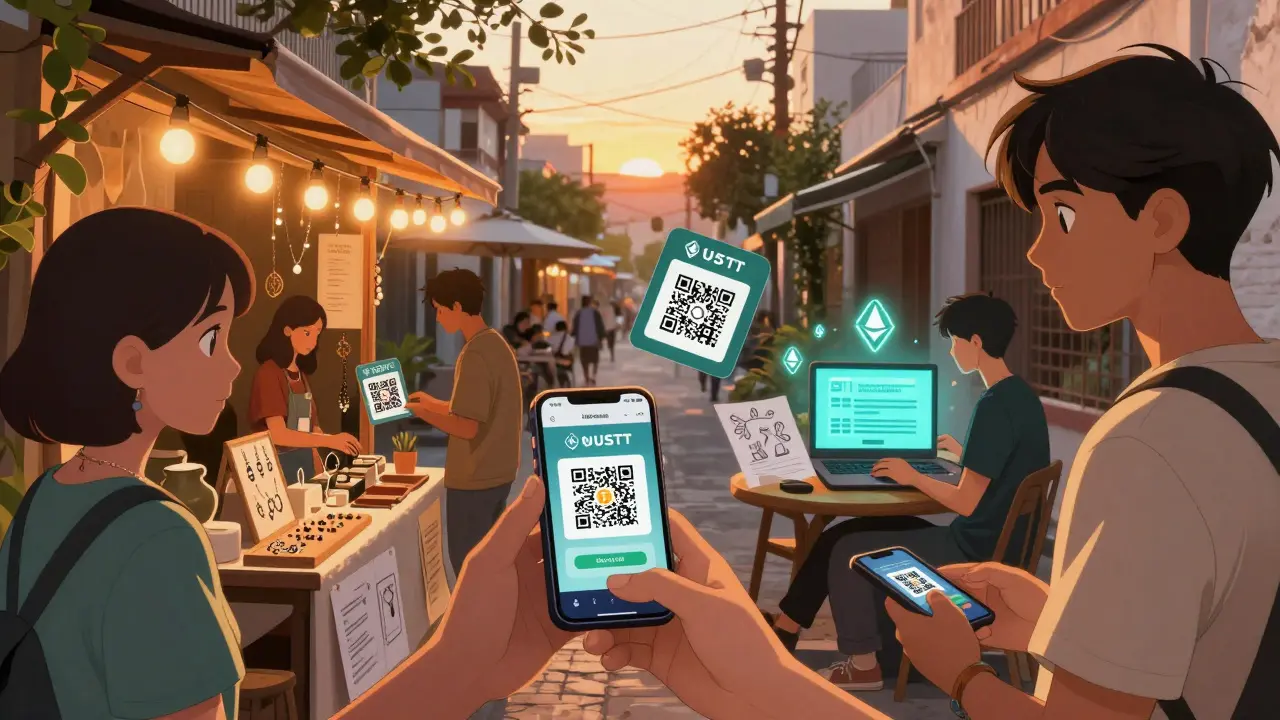
In San José, you’ll find small shops, cafes, and even street vendors accepting Bitcoin through QR codes. A local artisan sells handmade jewelry on Instagram and gets paid in USDT. A freelance designer in Heredia invoices clients in Ethereum and converts it to colones via peer-to-peer apps. No bank approval needed. No paperwork. No waiting days for a wire transfer. Why does this work? Because Costa Rica doesn’t treat crypto as a separate financial instrument. It’s not banned. It’s not regulated. It’s just… not mentioned. So people use it under existing laws that already cover barter, foreign exchange, and digital payments. If you trade something of value for something else of value - whether it’s a coffee or a Bitcoin - the law doesn’t stop you. The Central Bank says crypto isn’t legal tender. But it never said you can’t use it.Businesses operate in the gray zone - and it works
Crypto businesses in Costa Rica don’t need a special license. That’s not because they’re breaking the law. It’s because there’s no law saying they need one. A company can set up a crypto exchange, offer wallet services, or even run an NFT marketplace without registering with any government body. All they need is a standard business registration, a local bank account (if they can get one), and basic anti-money laundering practices. But here’s the catch: banks are nervous. Many still refuse to open accounts for crypto firms. So companies use fintechs, foreign banks, or even third-party payment processors to move money. Some use PayPal or Wise to receive fiat from customers, then buy crypto on peer-to-peer platforms like Paxful or LocalBitcoins. Others partner with international exchanges that allow Costa Rican users to deposit via bank transfer. It’s messy. It’s inefficient. But it’s legal. And it’s growing.ICOs, NFTs, and tokenized assets are all fair game
Costa Rica doesn’t have securities laws that clearly define what counts as a token. So if you launch a token that’s meant to be a utility - like access to a future app or service - you don’t need to register with the financial regulator, SUGEF. That’s why you’ve seen local startups issue tokens for gaming platforms, loyalty programs, and even community solar projects. NFTs? Totally legal. Artists mint digital art on OpenSea. Gamers trade in-game items using Solana. Collectors buy pixelated monkeys and rare sneakers. No one asks for permission. No one files a report. The government doesn’t track it. Even tokenized real estate is happening. A small group of investors recently pooled funds to buy a piece of land in the Nicoya Peninsula. They split ownership into 100 blockchain tokens. Each token represents 1% of the property. Owners can sell their tokens privately. No notary. No government registry. Just a smart contract and a WhatsApp group.
People use crypto to bypass banking limits
Many Costa Ricans don’t trust banks. High fees. Slow transfers. Low interest. And for those who send money abroad - like migrant workers sending remittances to family - traditional services like Western Union charge 8-12% in fees. Crypto cuts that to under 2%. A worker in the U.S. buys $500 in USDC on Coinbase, sends it to their sister’s MetaMask wallet in Cartago, and she cashes out via a local P2P trader for colones. Done in 20 minutes. No ID required beyond a phone number. No paperwork. No approval. Even tourists use it. A Canadian traveler buys Bitcoin at a kiosk in Tamarindo, uses it to pay for a surf lesson, and leaves with a souvenir T-shirt. No credit card. No currency exchange. Just crypto.The new law is coming - but it’s not a ban
In July 2025, Costa Rica’s Legislative Assembly passed the first debate of Bill 22.837. This isn’t a crackdown. It’s a formalization. The bill defines Virtual Asset Service Providers (VASPs) - exchanges, custodians, wallet providers - and says they must register with SUGEF. They’ll need KYC, transaction logs, and risk assessments. But here’s the key: registration is not permission. It’s just a way to track who’s operating. The government isn’t trying to shut down crypto. They’re trying to make sure it doesn’t become a tool for criminals. That’s why they’re copying global standards from the Financial Action Task Force (FATF). It’s not about control. It’s about compliance. And here’s the twist: most local crypto users won’t be affected. If you’re buying Bitcoin for personal use, holding it in a non-custodial wallet, or trading with a friend - you’re still invisible to the system. Only businesses that offer services to others will need to register.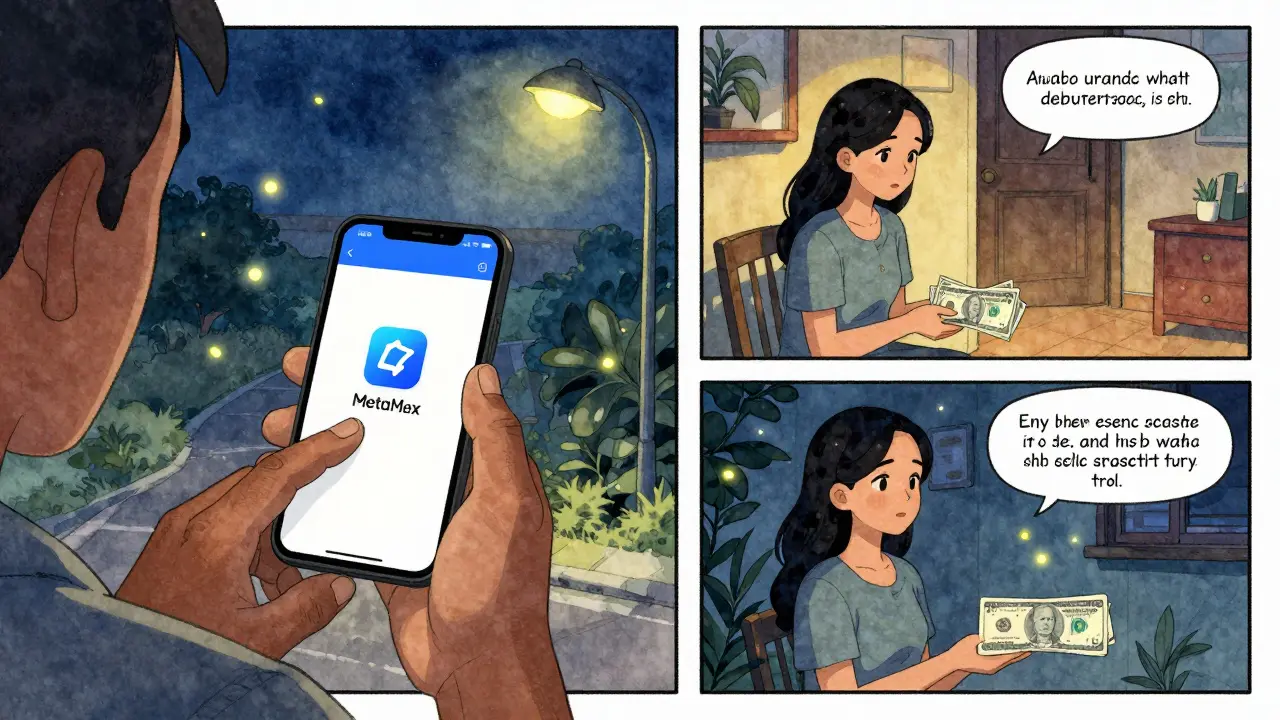
Vidhi Kotak
December 9, 2025 AT 19:36Man, this is wild. Costa Ricans just use crypto like it's groceries. No forms, no banks, no waiting. I wish my country had this kind of chill vibe. People here are still arguing if crypto is even real money. Meanwhile, someone in San José is buying coffee with ETH like it's 2007 and they're still using cash.
It's not about regulation-it's about trust. And honestly? That's the real innovation.
Lois Glavin
December 10, 2025 AT 21:34I love how this works. No bureaucracy, just people helping each other out. I’ve seen friends in Mexico do similar stuff with USDT. It’s not perfect, but it’s faster than any bank. And the best part? No one’s asking for your social security number just to send $50 to your cousin.
People just figure it out. That’s what freedom looks like.
Scot Sorenson
December 11, 2025 AT 22:42Oh wow, so Costa Rica is the libertarian paradise where nobody checks IDs and everyone just vibes with blockchain? Cute. Meanwhile, in the real world, people get scammed every day because ‘trust’ doesn’t pay the bills. You think a grandma sending money to her grandkid shouldn’t have *some* protection?
Let me guess-the next article is ‘How Venezuelans Use Bitcoin Because Their Currency Is Dead’ and you’ll call it ‘organic innovation.’
Ike McMahon
December 12, 2025 AT 07:35Real talk: this is how crypto should work. Not as a stock market gamble. Not as a government project. But as a tool. People use it because it solves a problem. No fluff. No permits. Just code and trust.
Stop overthinking it. Just let people use it.
Taylor Fallon
December 12, 2025 AT 21:14It’s beautiful, really. A society that doesn’t wait for permission to thrive. 🌱
They didn’t ask the state to bless their innovation-they just built it. Like the internet was built, before the lawyers showed up. No one taught them to trust code. They just learned it by doing.
Maybe regulation isn’t the answer. Maybe it’s the obstacle. Maybe the real question is: why do we think we need someone in a suit to say it’s okay to be free?
Peace out, bureaucracy. 💫
Sarah Luttrell
December 13, 2025 AT 22:06Ohhhh so now we’re romanticizing financial anarchy? 🙄
Let me get this straight-Costa Rica’s ‘crypto utopia’ is just a lawless free-for-all where scammers thrive and grandmas lose their life savings because ‘no one asked for ID.’
And you call that ‘culture’? Nah. That’s called negligence dressed up as rebellion. The US doesn’t need this mess. We have regulations for a reason: to protect people from themselves.
Also, NFTs? Really? 😒
PRECIOUS EGWABOR
December 15, 2025 AT 00:53Let’s be real-this isn’t innovation. It’s just chaos with a beach view. You think someone’s gonna sue a guy who stole their USDT via P2P? Please. No legal recourse. No recourse at all. That’s not freedom. That’s just being prey.
And calling it ‘organic’? Cute. Organic food doesn’t get you hacked. This is just crypto’s Wild West, and someone’s gonna get shot.
Kathleen Sudborough
December 16, 2025 AT 00:30This made me cry a little. Not because it’s perfect-but because it’s possible. People are building something real without waiting for permission. That’s rare. That’s beautiful.
I’ve lived in places where you need 17 forms to open a lemonade stand. Here, someone’s trading NFTs for surf lessons. That’s not a bug. That’s a feature.
Let them build. We’ll catch up.
Alex Warren
December 16, 2025 AT 01:15The article conflates absence of regulation with acceptance. The Central Bank explicitly states crypto isn’t legal tender. That means it has no legal standing in disputes. No recourse. No enforceable contracts. No consumer protection.
It’s not a thriving ecosystem. It’s a liability minefield with good Wi-Fi.
Hari Sarasan
December 17, 2025 AT 10:34As a fintech infrastructure analyst with 12 years in cross-border remittance architecture, I must assert that the operational risk profile of peer-to-peer crypto flows in Costa Rica exhibits non-compliant exposure vectors that violate the spirit, if not the letter, of FATF Recommendation 16. The absence of VASP registration creates systemic liquidity fragmentation, counterparty risk asymmetry, and latent AML vulnerabilities.
Furthermore, the reliance on WhatsApp for tokenized real estate governance constitutes a critical failure in audit trail integrity. This is not innovation-it’s regulatory arbitrage with a tropical aesthetic.
Lloyd Cooke
December 18, 2025 AT 12:58There’s a quiet revolution here-not in code, but in spirit. Costa Ricans didn’t invent crypto. They invented a way to live with it. No grand speeches. No press releases. Just people trading value, face to face, screen to screen, trusting the math more than the men in suits.
Regulation is the echo of control. But this? This is the hum of autonomy. The quiet song of a people who refused to wait for permission to be free.
And maybe, just maybe, that’s the only kind of freedom that ever lasts.
Kurt Chambers
December 18, 2025 AT 21:49USA could never. We’re too busy suing people for selling tacos without a permit. Meanwhile, Costa Ricans are trading NFTs for surfboards and calling it ‘business.’
Yeah, sure, ‘no rules’ sounds cool until your life savings vanish into a Phantom wallet.
But hey, at least they’re not living under the thumb of the Fed. So… I guess that’s something? 😎
Kelly Burn
December 20, 2025 AT 18:36Okay but imagine if your local barista could accept ETH for your latte and you didn’t have to explain it to your mom. 🤍
And NFTs? Girl, I bought a pixelated monkey last year and it made me feel like a digital goddess. 🐒✨
Crypto isn’t about banks. It’s about vibes. And Costa Rica? They got the vibe. 💯